Integrated Manufacturing Capability: From Machine Configuration to Complete-Line Commissioning
When you evaluate a tissue converting line, the supplier's manufacturing capability directly affects project lead time, installation quality, and how smoothly the line reaches stable production. A supplier that only assembles standard machines from bought-in parts can struggle with application-specific customization and integrated commissioning. DOUBLE's manufacturing facility is organized to close that gap.
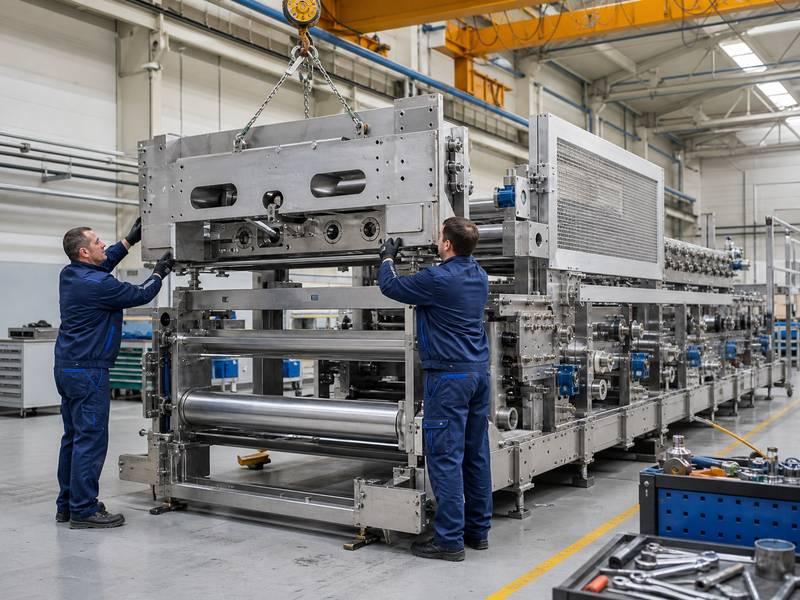
The facility combines equipment assembly, mechanical and electrical installation, application-based customization, and complete-line commissioning under one management system. This integration allows engineering, production, and commissioning teams to coordinate from the initial machine configuration stage through to final project delivery, reducing the friction that often appears when these stages are handled by separate subcontractors.
What This Means for Your Project Planning
For a buyer comparing suppliers, the practical benefit is simpler project coordination. Instead of managing separate vendors for the converting machine, the packing line, and the electrical installation, you work with one team that controls the full assembly and testing process. This approach supports:
-
Consistent mechanical and electrical integration – installation is planned and executed as one process, not as two disconnected work packages.
-
Earlier detection of interface issues – because assembly and wiring happen in the same facility, mismatches between mechanical parts and control wiring are found before the line ships.
-
Application-based customization – the facility can adapt machine configuration to your specific finished tissue format, parent roll specification, and target output, rather than offering only a fixed standard model.
-
Complete-line commissioning before delivery – the full line is tested as a connected system, which shortens on-site startup time at your factory.
How the Process Works
The coordination starts with your requirements. Based on the finished product size, required speed, automation level, and factory layout, the engineering team defines the machine configuration. From there, the facility proceeds through a structured workflow:
-
Equipment assembly – mechanical structure and key modules are assembled according to the confirmed configuration.
-
Mechanical and electrical installation – wiring, pneumatics, and control systems are installed and connected to the mechanical assembly.
-
Application-based customization – adjustments are made for your specific product format, material, and integration requirements.
-
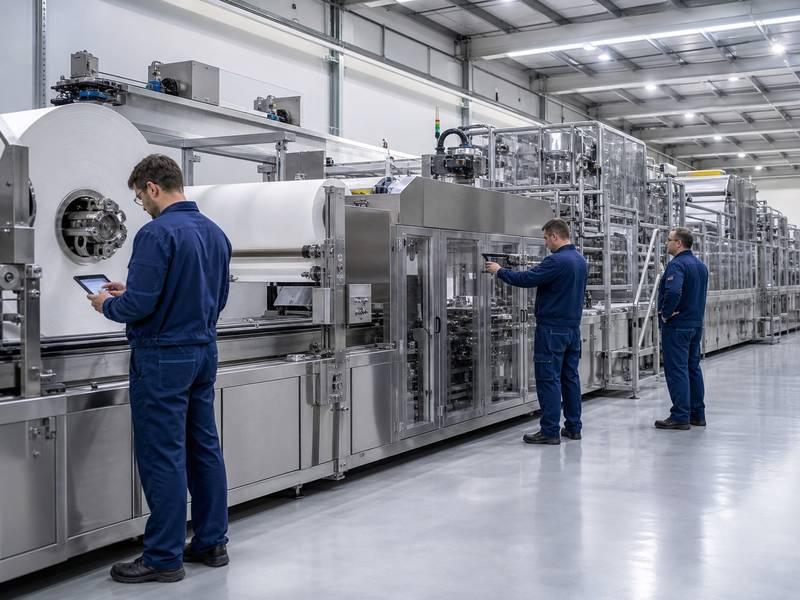
Complete-line commissioning – the assembled line is run and tested as a complete system to verify coordination between converting, packing, and auxiliary equipment.
This sequence means that by the time the line reaches your site, the major integration risks have already been addressed in the factory.
What to Confirm Before You Order
To make sure the integrated manufacturing capability matches your project, clarify these points with the supplier before placing an order:
-
Which specific machine models and line configurations are covered by the in-house commissioning process.
-
What information the engineering team needs from you to define the application-based customization (finished product size, parent roll width and diameter, target speed, factory utilities).
-
How the complete-line commissioning is documented and what test results are shared with you before delivery.
-
What on-site installation support is included after the line arrives at your factory.
Next Step: Define Your Line Requirements
To evaluate whether this integrated manufacturing approach fits your project, start by defining your production parameters. Share your finished tissue format, required output speed, automation level, and available floor space with the engineering team. This information allows them to propose a machine configuration that matches your actual production needs.
You can also review the available tissue converting machines to compare standard configurations, or contact the engineering team directly with your specific requirements.



 Tel: +86 139 0819 6540
 Email: info@doubletissuemachine.com
 MP/WhatsApp: +86 139 0819 6540
 Manufacturer Address:Dongguan, Guangdong, China