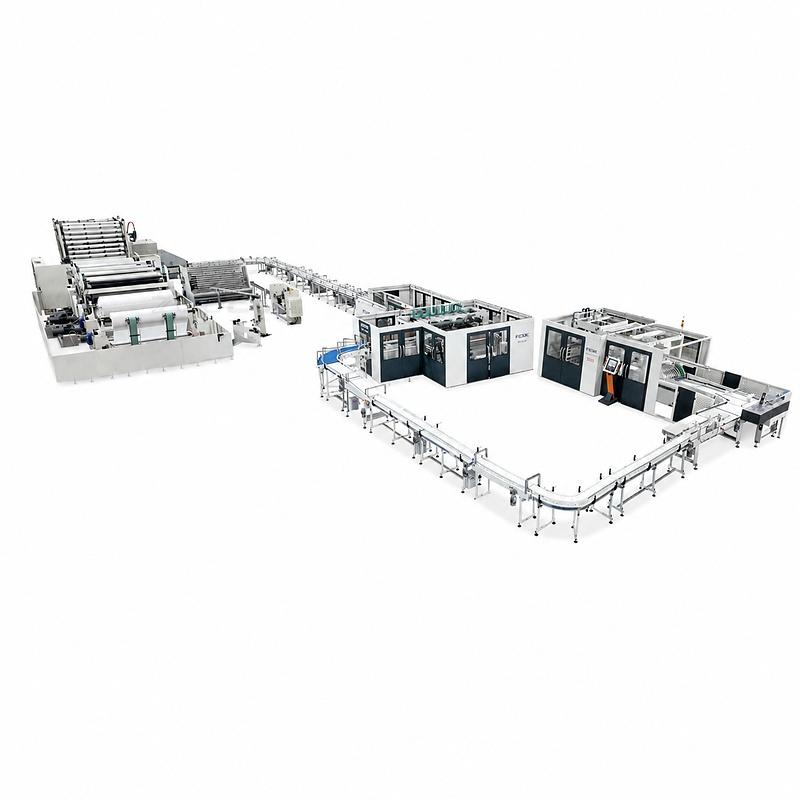
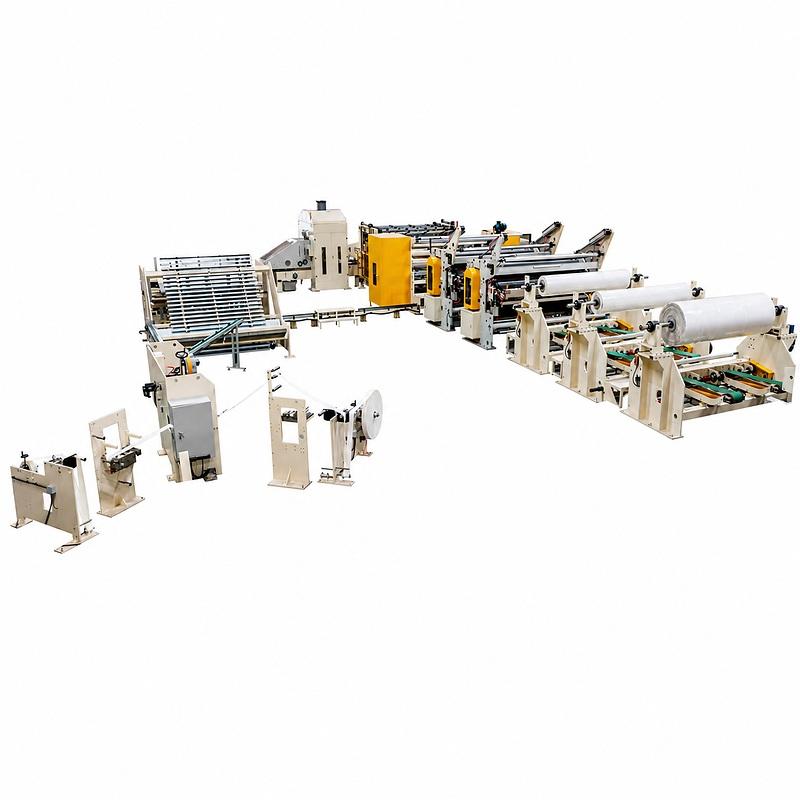
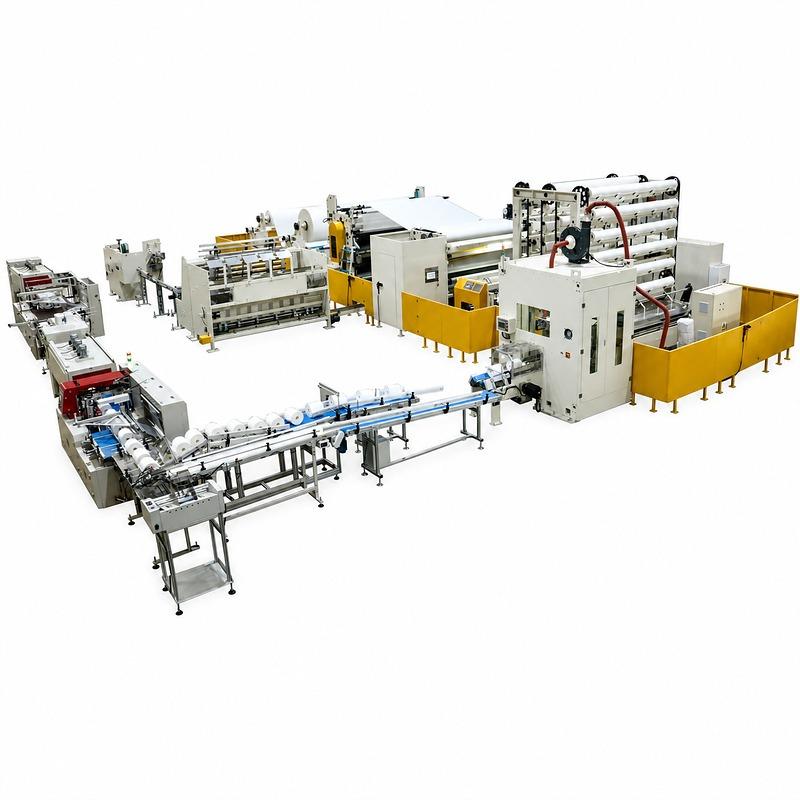
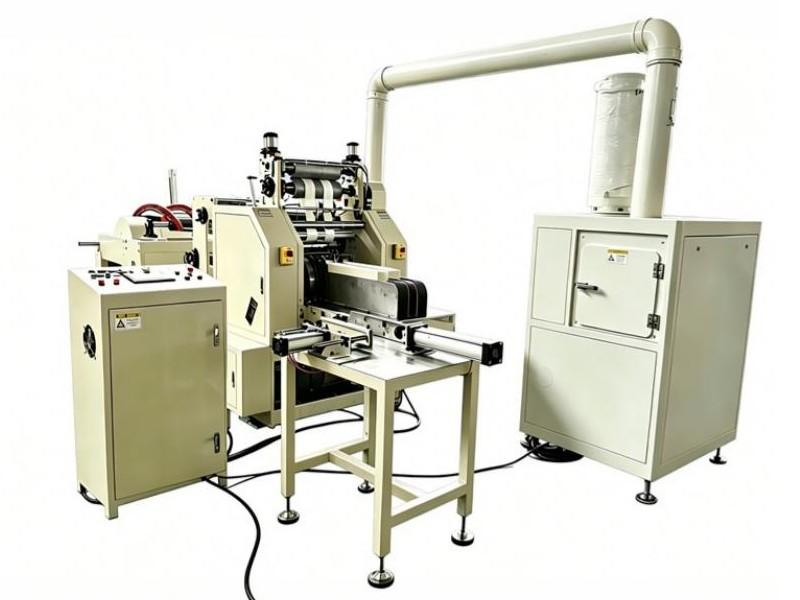
A tissue converting line is a set of matched stations. The finished product defines their order: folding, cutting and film packing for one tissue format; a different arrangement for towels, napkins or rolls. Start with the product and package, then write the boundary between every pair of machines.
Follow a real line example
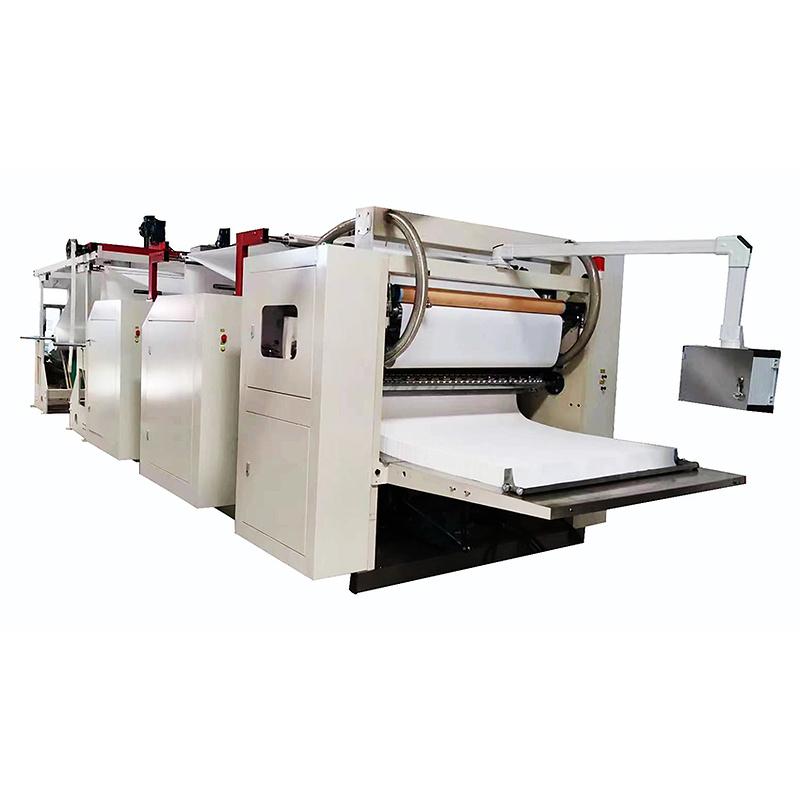
- Interfold the tissue. In the soft-pack facial tissue line, the DB-IF-V supplies interfolded tissue for the following stages.
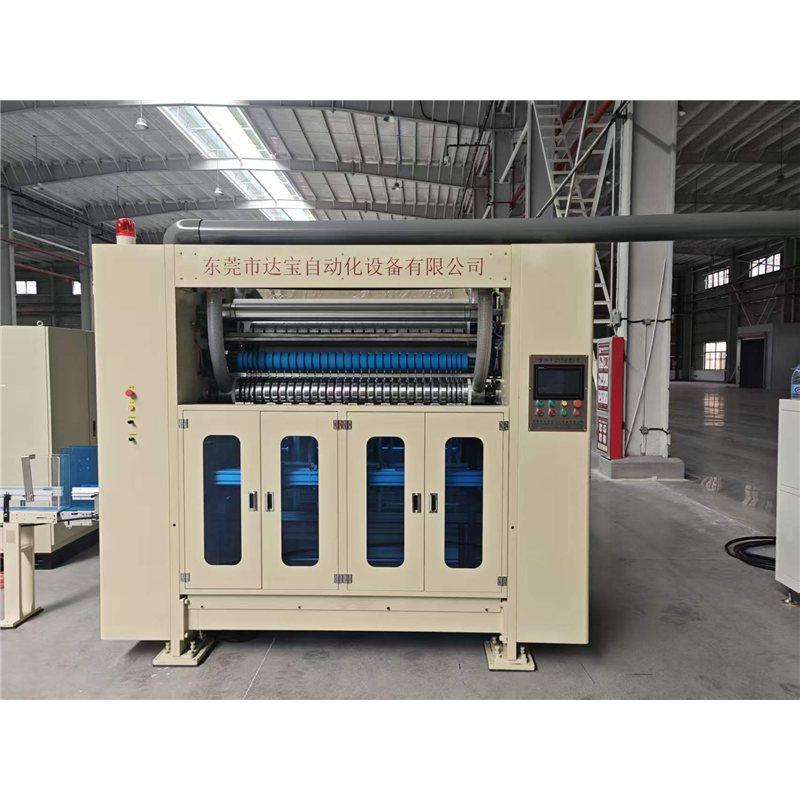
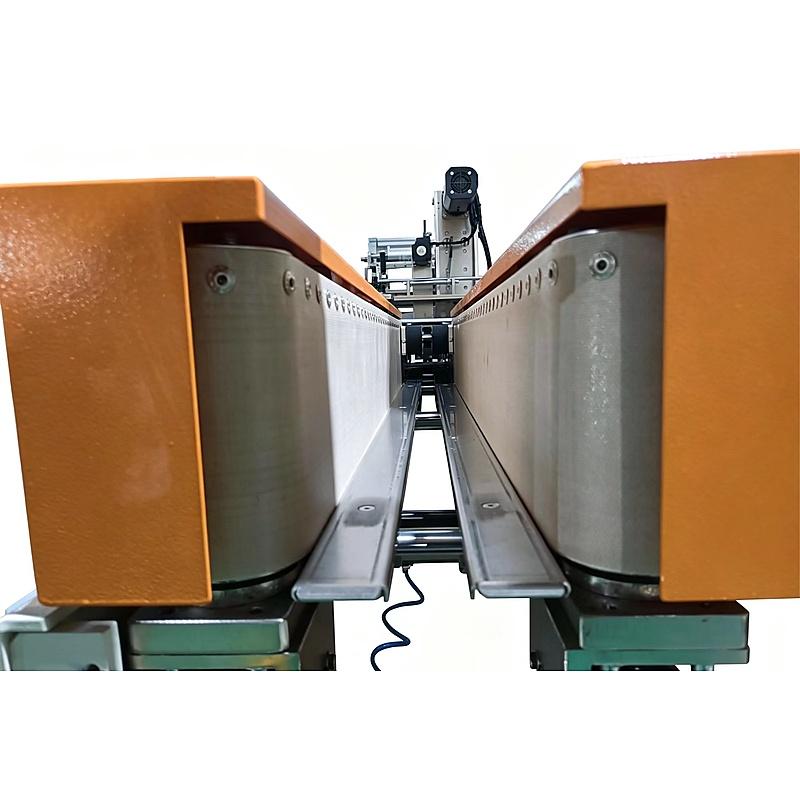
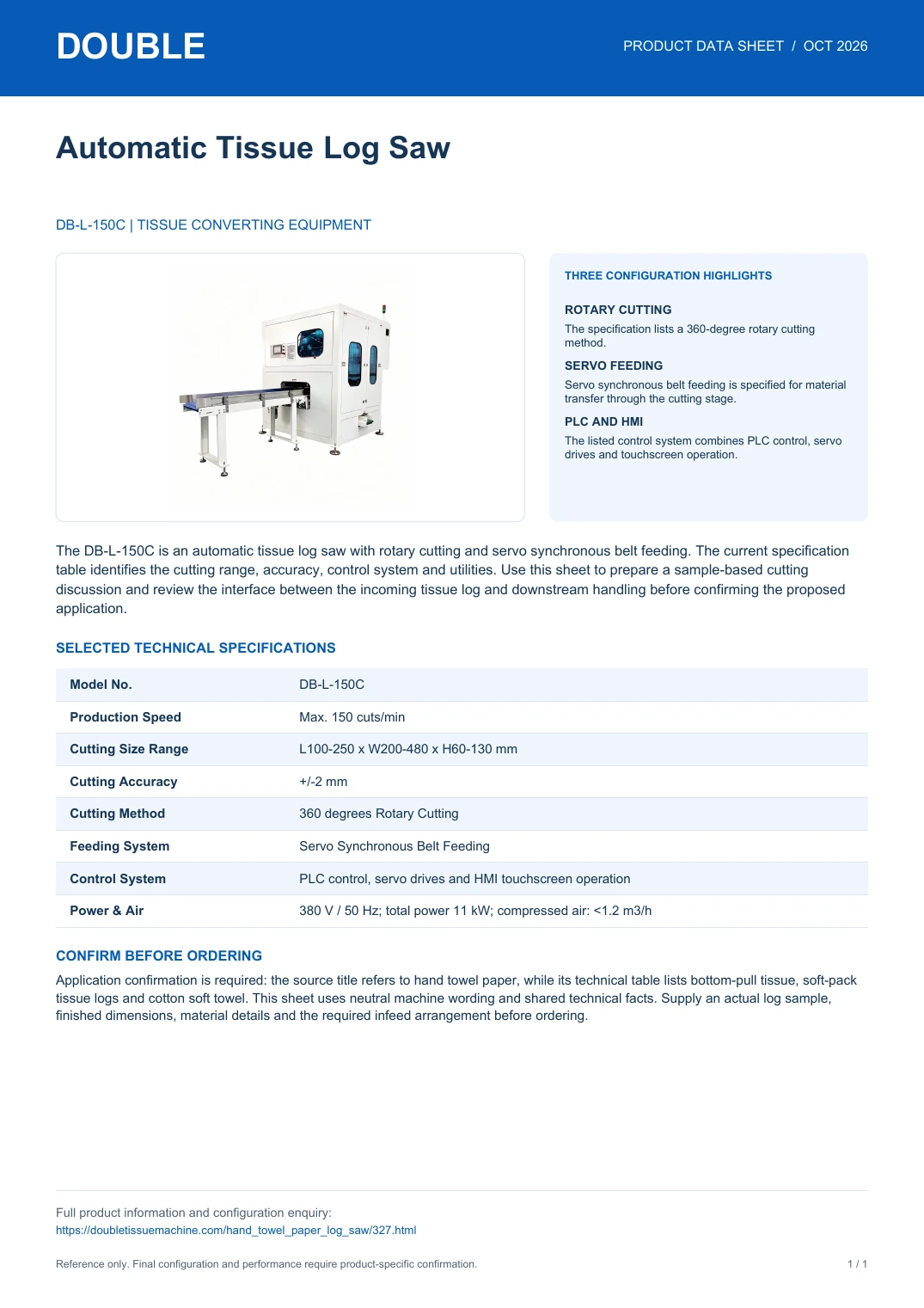
- Transfer and cut. Separation and handling connect the folded output with the DB-L-320C cutting section. The arrangement is confirmed against the tissue sample and factory proposal.
- Make the individual pack. The DB-IF-180P wraps the cut stack in film.
- Add an outer package when required. The DB-IF-30P bundle stage is optional; individual packing and outer bundling remain separate operations.
Use different products to expose different interfaces
The hand towel line links its own folding, transfer, cutting and full-seal packing stages. The DB-NK-270 napkin line includes a specific napkin converting, separation, packing, cartoning and palletizing arrangement. Neither example is a universal station list for every tissue product.
For each interface, record the incoming dimensions, count and orientation; the outgoing product; conveyor height; control connection; and who supplies the connecting equipment. State the final output unit and product used to assess it. Layout, utilities, service access and the optional-equipment schedule belong in the same proposal so that a single machine's rating is not mistaken for the connected line's accepted output.



 Tel: +8613908196540
 Email: info@doubletissuemachine.com
 MP/WhatsApp: +8613908196540
 Manufacturer Address:Dongguan, Guangdong, China