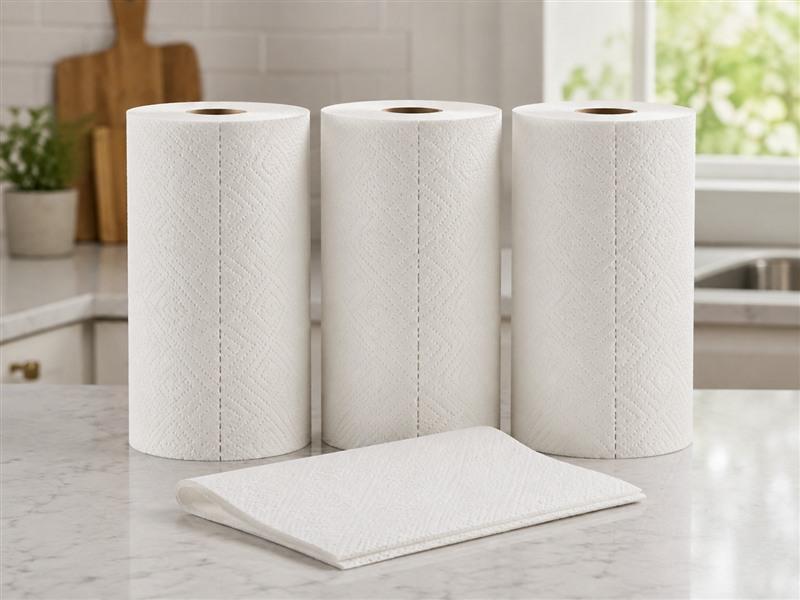
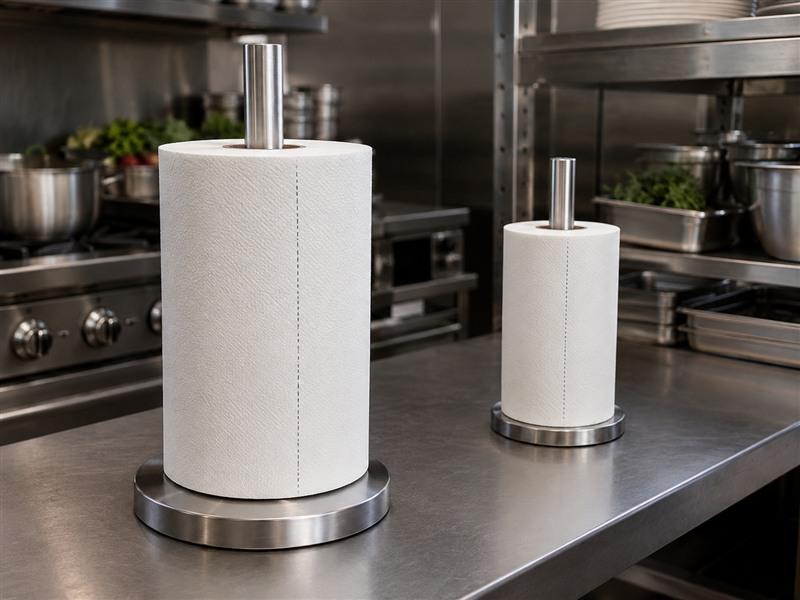
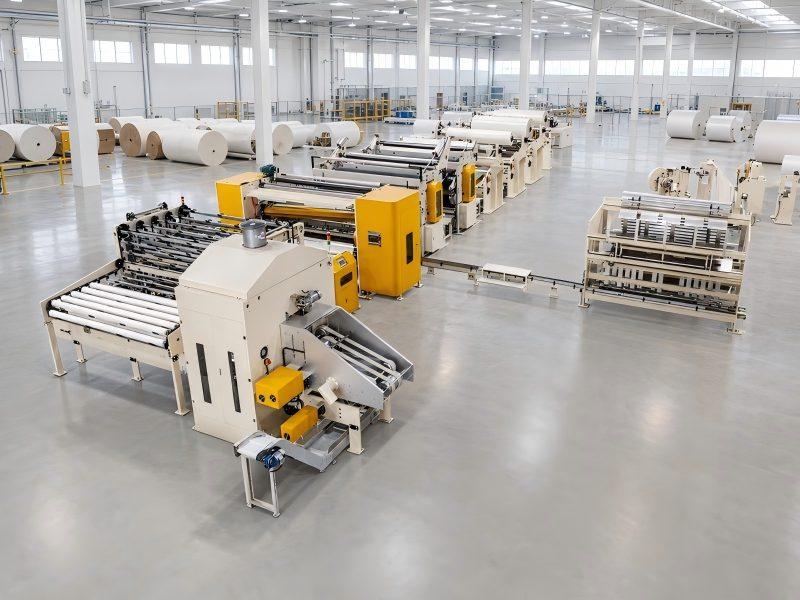
This kitchen towel production solution coordinates the complete converting and packing route from jumbo tissue roll to case-packed finished rolls. The line integrates embossing, optional lamination, perforation, non-stop rewinding, log transfer, automatic log cutting, finished-roll conveying, primary packaging and optional case packing, with the DB-R300 rated at a stable production speed of 300 metres per minute.
Production Process
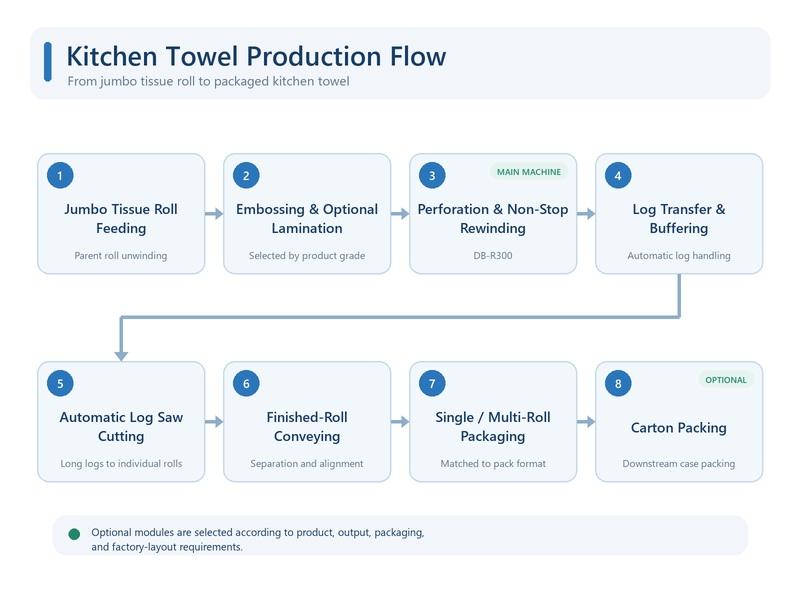
Kitchen Towel Rewinding Line Selection
Automatic Log Saw Cutting
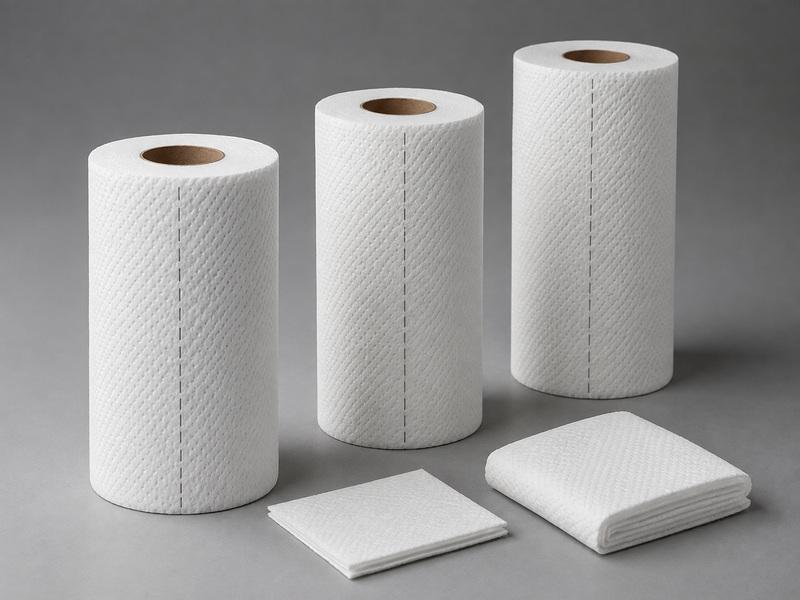
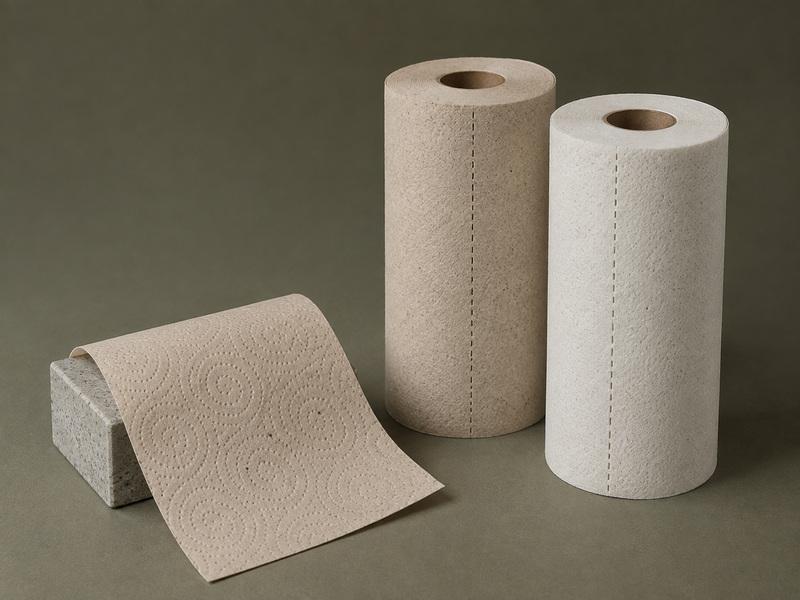
A compatible automatic log saw cuts the long round logs produced by the DB-R300 into individual kitchen towel rolls. The cutting machine receives logs from the upstream transfer section and uses automatic feeding and controlled positioning to maintain consistent roll widths and clean cut surfaces. Automatic blade sharpening and head-and-tail trim removal can be included according to the selected machine configuration.
The final log saw should be matched to the rewinder output, log diameter, finished-roll width, paper characteristics and downstream packaging speed.
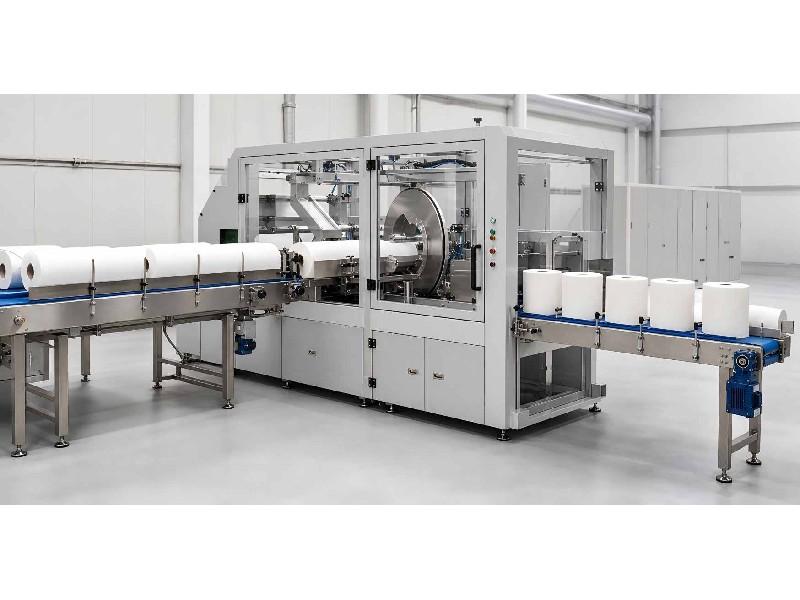
Finished-Roll Conveying and Packaging
A compatible conveying system receives individual kitchen towel rolls from the log saw and transfers them to the selected packaging equipment. The system can separate, align, accumulate and arrange the rolls while reducing manual handling between cutting and packaging.
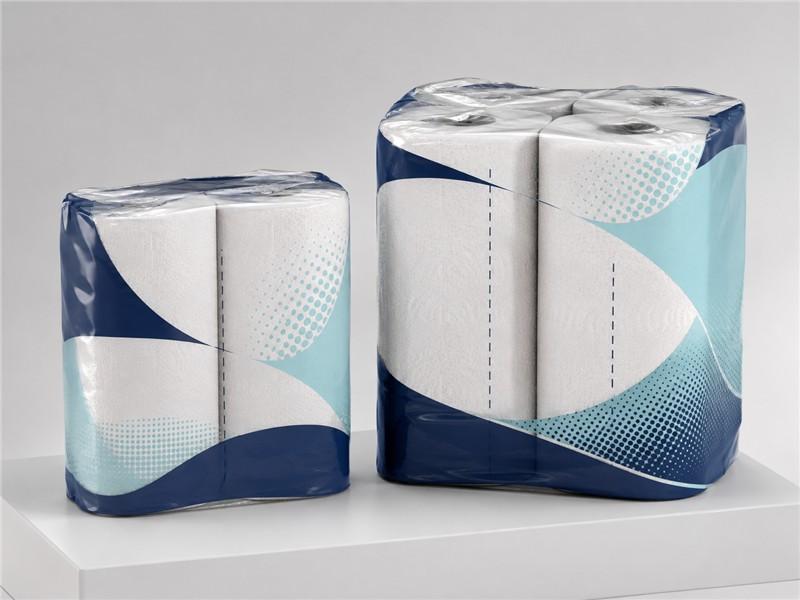
The packaging section can be configured for single-roll wrapping, multi-roll packing or shrink wrapping. The final system should be matched to the finished-roll diameter, roll width, pack arrangement, packaging material and required output speed. The DB-S-5525 High-Speed Shrink Packing Machine is one option for suitable shrink-packing applications.
Optional Case Packing
-
DB-C-12P Vertical Tissue Case Packing Machine for an automated downstream configuration
-
DB-C-8P Semi-Automatic Tissue Case Packing Machine for a lower-investment packing arrangement
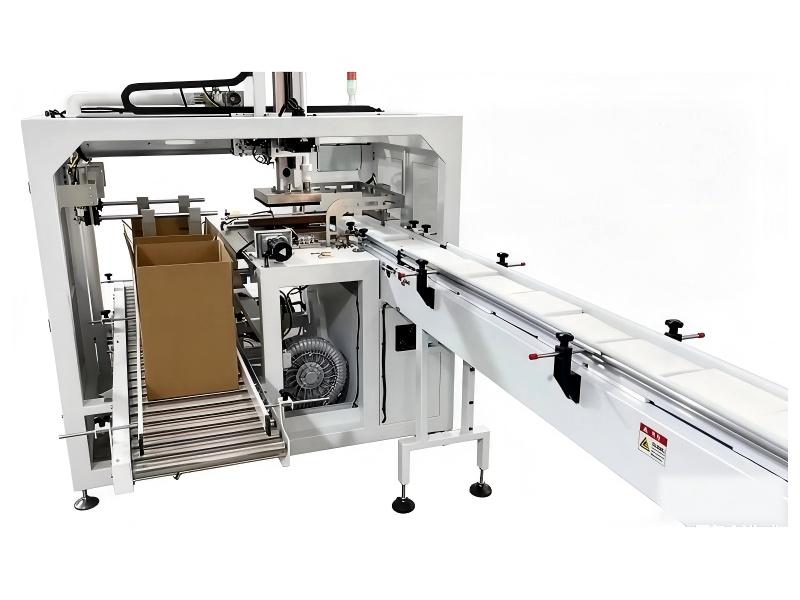
Final compatibility should be confirmed according to pack dimensions, case layout, conveying direction and line speed.
Configuration Decisions
Before engineering review, confirm the following parameters:
|
Decision Point
|
Required Input
|
|
Rewinder configuration
|
Target output, working width, cored or coreless production
|
|
Parent-roll specification
|
Roll width, diameter, basis weight, ply and core size
|
|
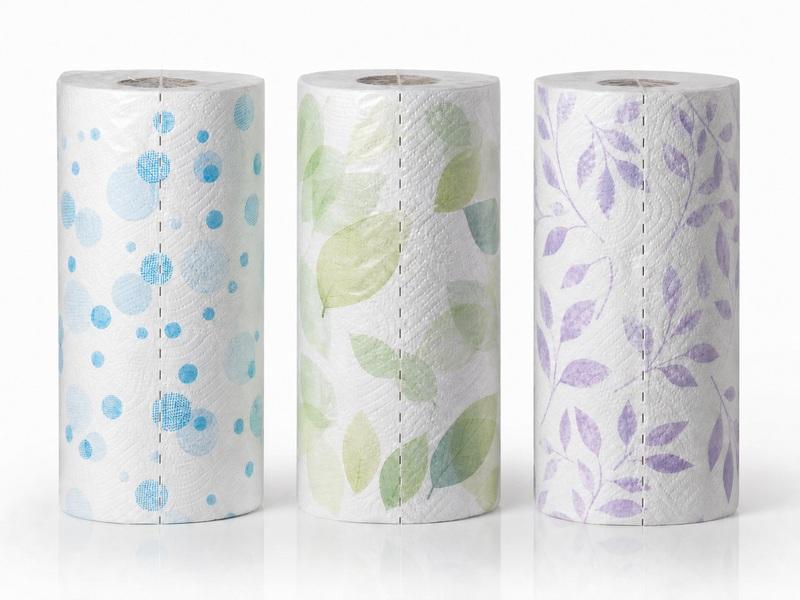
Finished kitchen towel
|
Roll diameter, roll width, sheet length and perforation pitch
|
|
Embossing and lamination
|
Embossing pattern, ply bonding and glue lamination requirements
|
|
Log saw cutting
|
Log diameter, log length, finished-roll width and cutting capacity
|
|
Primary packaging
|
Single-roll or multi-roll format, pack arrangement and packaging material
|
|
Case packing
|
Case dimensions, packs per case and case material
|
Layout & Integration
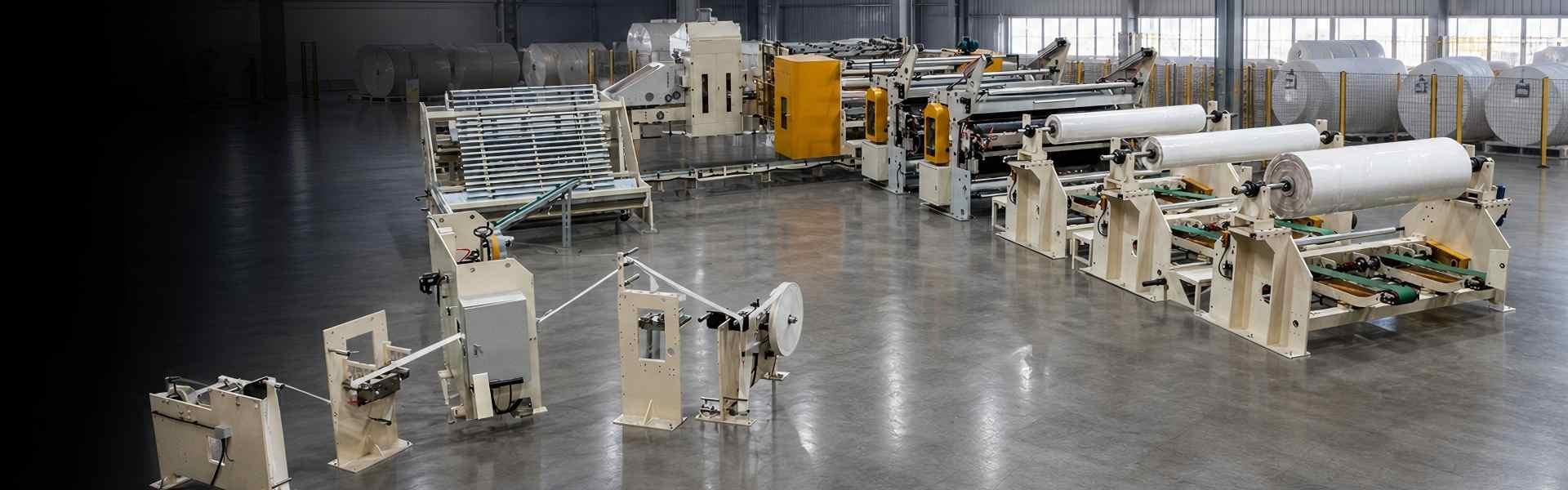
The line connects the DB-R300 rewinder, log transfer section, automatic log saw, finished-roll conveying system and packaging equipment.
The log transfer section receives completed logs from the rewinder and supplies them to the cutting machine. After cutting, the finished-roll conveyor separates and arranges individual rolls before feeding them to the selected packaging equipment. Packaged products can then be transferred to optional case-packing equipment.
Factory floor space, conveying direction, buffer capacity, operator access and maintenance space should be reviewed during layout planning.
Quality & Acceptance Checks
Before full production, verify the following through sample runs:
-
Embossing pattern clarity and ply bonding quality
-
Perforation consistency and sheet separation
-
Finished-roll diameter, density and winding stability
-
Log transfer stability between rewinding and cutting
-
Finished-roll width and cut-surface quality
-
Roll alignment and accumulation before packaging
-
Primary packaging integrity and seal quality
-
Case packing count accuracy and case closure quality
-
Line speed matching between rewinding, cutting, conveying and packaging stages
Final configuration depends on the finished kitchen towel specification, parent-roll specification, target output, embossing and lamination requirements, packaging format, automation level, utilities and available floor space. Confirm these parameters before engineering review.
Project Input Checklist
Prepare the following information for a configuration review:
-
Finished kitchen towel roll diameter and width
-
Sheet length, perforation pitch and number of plies
-
Parent-roll width, diameter, basis weight and core size
-
Required embossing pattern and lamination method
-
Cored or coreless production requirement
-
Target production output
-
Single-roll or multi-roll packaging format
-
Packaging film specification and pack arrangement
-
Case dimensions, packs per case and case material
-
Factory floor plan and available installation space
-
Electrical supply standard and compressed-air availability
Provide your finished kitchen towel specification, target output, packaging format and factory layout details to receive a matched line configuration recommendation for your kitchen towel production route.




 Tel: +86 139 0819 6540
 Email: info@doubletissuemachine.com
 MP/WhatsApp: +86 139 0819 6540
 Manufacturer Address:Dongguan, Guangdong, China