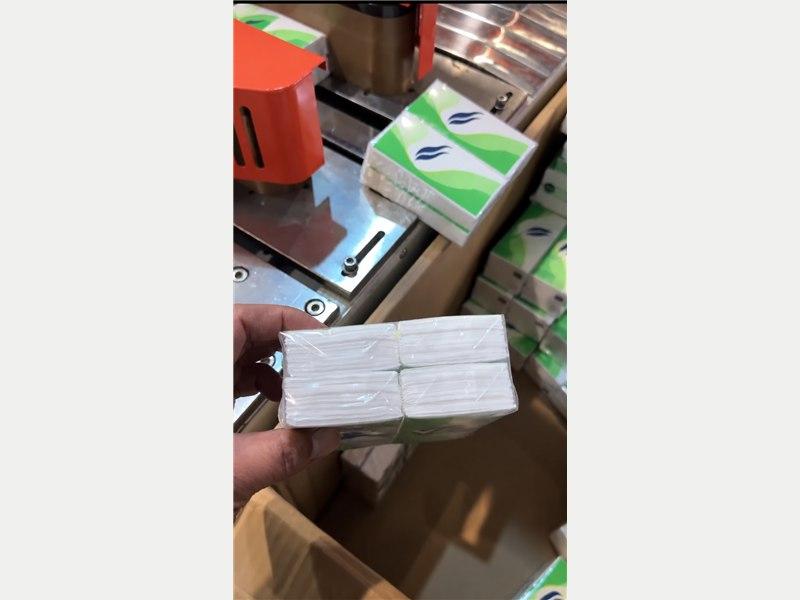
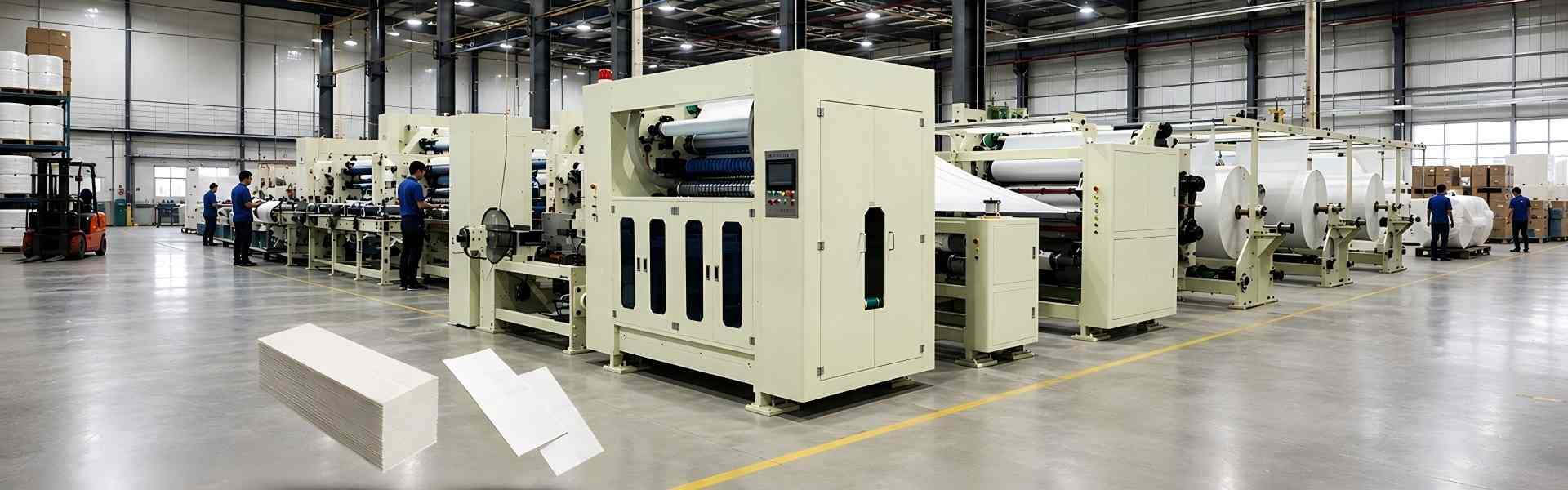
Workshop photos are one of the fastest ways to judge whether a pocket tissue production line matches your factory conditions. The images below follow the line from tissue-roll feeding and converting equipment through to the handling of finished pocket tissue packs, so buyers can compare machine layout, working positions, and the surrounding workshop environment before requesting a configuration.
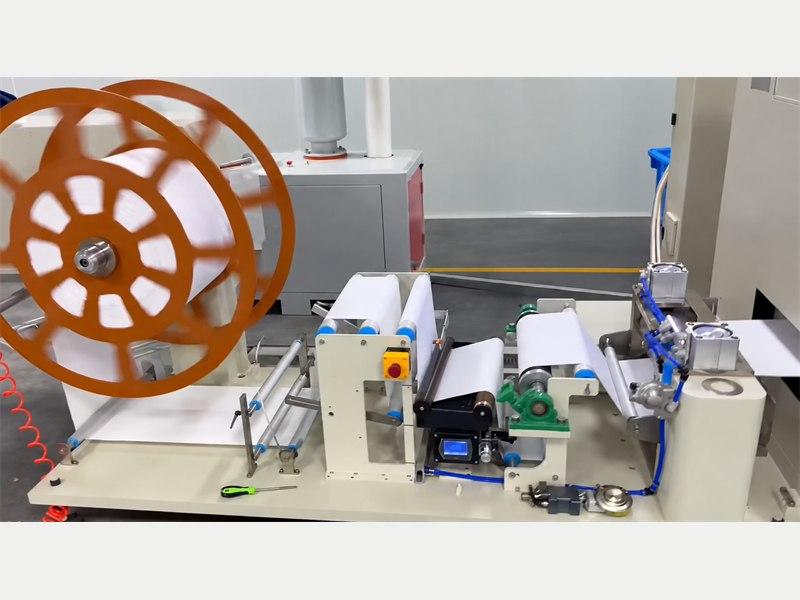
What These Pocket Tissue Production Line Photos Show
A pocket tissue production line is not a single machine. It is a connected sequence in which each unit depends on the speed, format, and stability of the units around it. Looking at workshop photos section by section helps buyers understand how the equipment is arranged on the floor and where operators, maintenance access, and material flow sit in relation to the machines.
The photos in this set move through the main stages of the process, from the parent tissue roll being fed into the converting section to the finished pocket tissue packs being collected and handled at the end of the line.
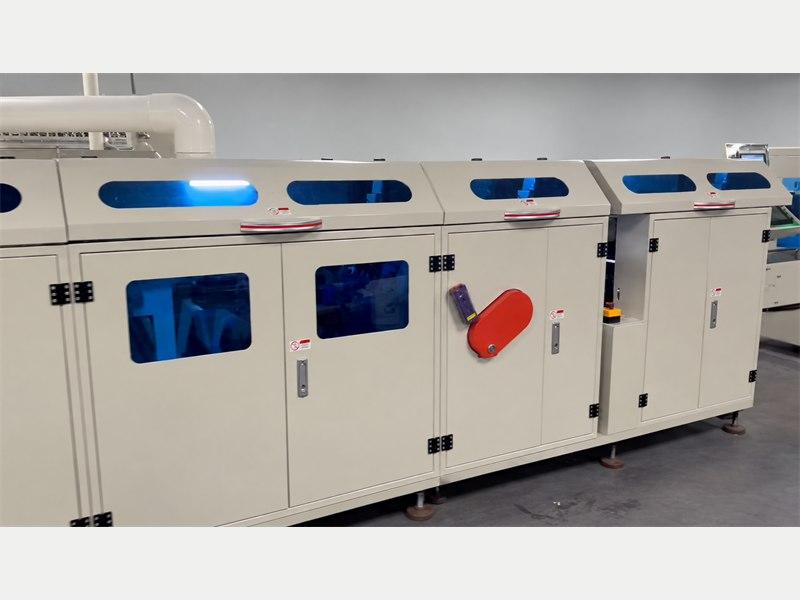
Reading The Line Section By Section
Tissue Roll Feeding And Converting
At the start of the line, parent tissue rolls are loaded and the web is fed into the converting section. This area determines how consistently the tissue is unwound, folded, and cut before it becomes a folded pocket tissue. Buyers reviewing this section usually check roll loading space, web path, and how easily the operator can reach the infeed area.
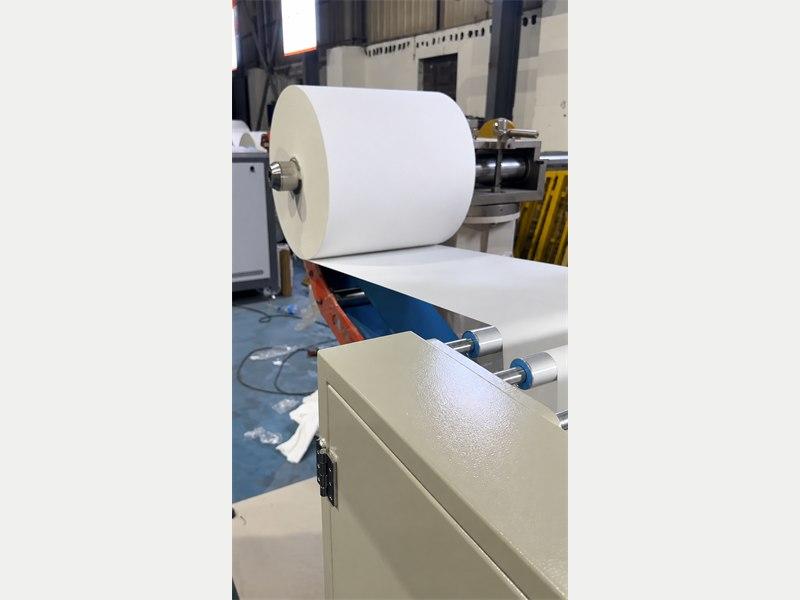
Folding, Cutting, And Pack Handling
After converting, the folded tissues are counted, grouped, and moved toward the packing and handling stage. The photos covering finished pocket tissue packs show how the output is collected, oriented, and transferred onward. This is the part of the line where pack format, counting accuracy, and transfer stability have the most visible effect on daily output.
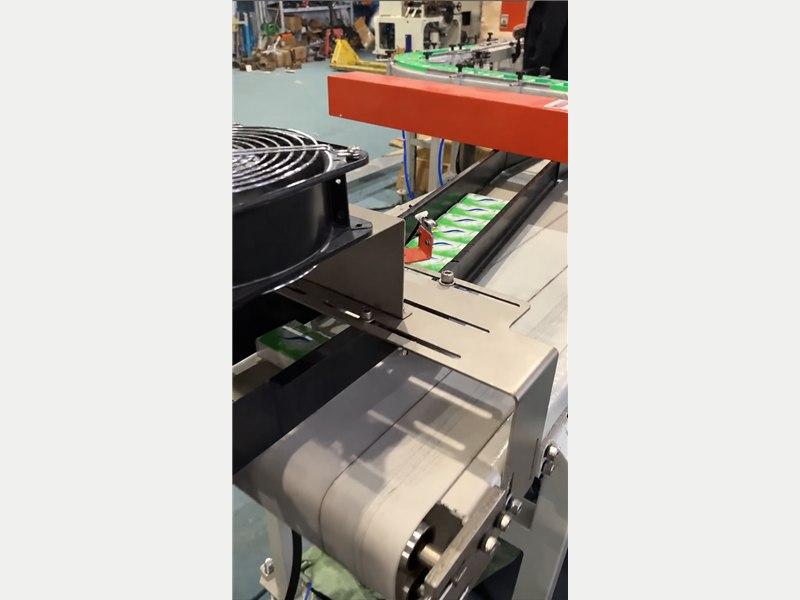
What Buyers Should Check In Workshop Photos
-
Line layout: whether the machine sequence fits your available floor length and width, including space for roll loading and finished pack collection.
-
Operator positions: how many stations need attention during normal running and whether the working positions are practical for your shift pattern.
-
Maintenance access: whether guards, covers, and service points can be opened without dismantling adjacent units.
-
Material flow: how parent rolls enter the line and how finished packs leave it, including any manual handling between stages.
-
Utilities and connections: where power, air, and control cabinets are positioned relative to the machines.
-
Workshop environment: lighting, floor condition, and clearance around the line, which affect both safety and stable running.
-
Why The Workshop Setting Matters
Two factories can order the same pocket tissue production line and get different results, because installation conditions affect how well the equipment performs. Floor levelness, ambient dust, humidity, power stability, and compressed air quality all influence web tension, folding accuracy, and pack quality over a full shift.
Photos taken in a working workshop are therefore useful beyond appearance. They show how the line behaves in a real production environment rather than in a staged showroom setting, and they help buyers plan their own installation, commissioning, and operator training more realistically.
How To Use These Photos In Your Selection Process
Compare the sections shown here with your own product plan. The finished pocket tissue format, pack size, target output, automation level, and downstream connection all influence which configuration is suitable. If your planned format or output differs from what the photos suggest, the machine arrangement and the number of channels may also need to change.
For a closer look at the equipment itself, review the pocket tissue machine range, and for a full view of how the line is planned and integrated, see the pocket tissue production solution.
Next Step
Send us your finished pocket tissue format, pack size, target output, available floor space, and utility conditions. Our engineering team can review your requirements against the line configuration and advise on the suitable arrangement.



 Tel: +86 139 0819 6540
 Email: info@doubletissuemachine.com
 MP/WhatsApp: +86 139 0819 6540
 Manufacturer Address:Dongguan, Guangdong, China