Overseas Customer Visits DOUBLE Machinery for Tissue Converting Equipment
An overseas customer recently visited the DOUBLE Machinery factory to inspect our tissue converting equipment and discuss a new production project. The visit gave the customer an opportunity to see the machines directly, understand the converting process, and review possible equipment configurations with our sales and engineering teams.
The discussion focused on selecting equipment that could match the customer’s finished tissue products, expected production capacity, available factory space, and future packaging requirements.
Understanding the Customer’s Production Plan
Before recommending a machine, our team discussed the products the customer plans to manufacture, including the finished tissue size, folding or roll format, paper specification, sheet count, and packing style.
The customer also explained the planned production volume and current factory conditions. These details helped our team understand whether the project required an individual tissue machine, separate converting and packing equipment, or a more complete tissue production line.
Important project information included:
-
Finished tissue type and dimensions
-
Parent roll width, diameter, paper weight and number of plies
-
Required production capacity
-
Embossing, folding, cutting and counting requirements
-
Finished-product packing method
-
Available installation space
-
Local voltage and compressed-air conditions
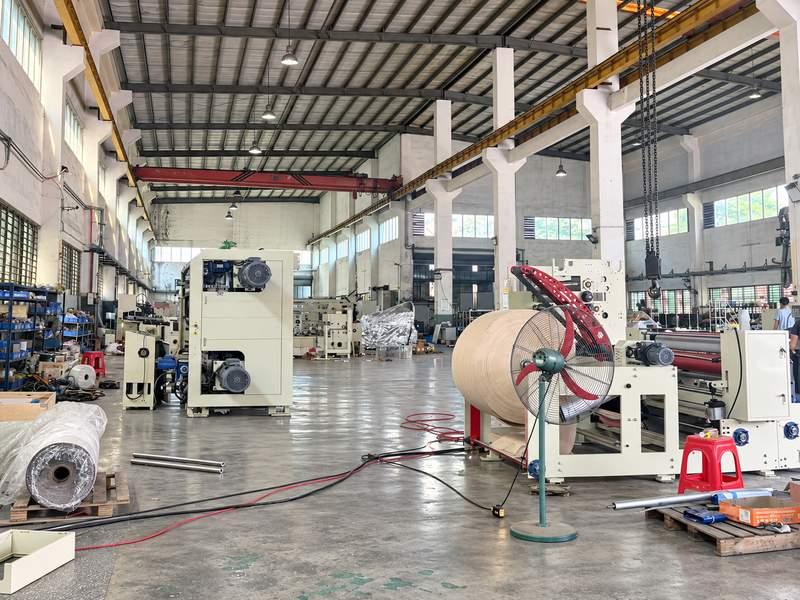
Tissue Converting Machines Reviewed During the Visit
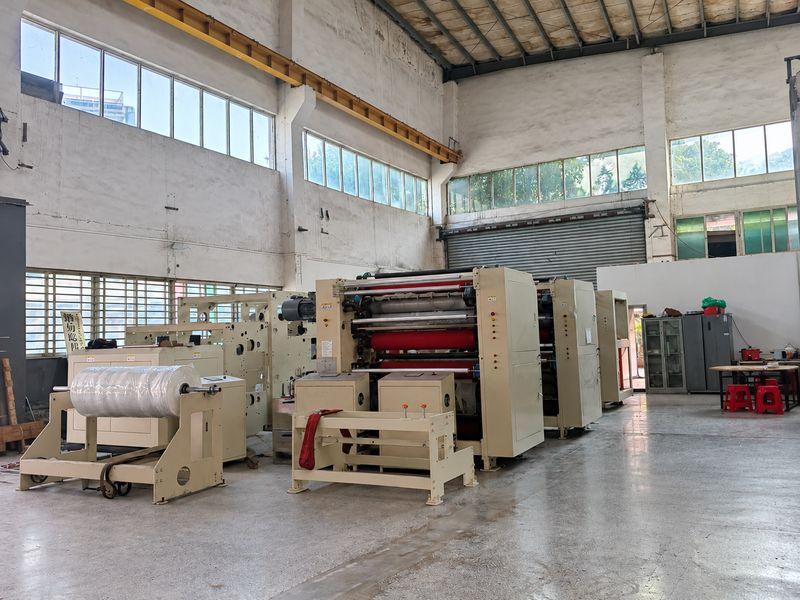
During the factory tour, the customer inspected several tissue converting machines in the workshop. Our sales representative introduced the function of each machine and explained how raw paper moves through the converting process.
The customer paid particular attention to machine construction, paper feeding, folding and cutting systems, operator access, finished-product discharge, and connection with downstream packing equipment.
Our team also explained that actual production speed depends on more than the machine’s design speed. Paper quality, finished-product specifications, operator experience, and the performance of the packing section all affect the stable output of a complete production line.
Technical Discussion with the Engineering Team
After the workshop tour, the customer discussed the project requirements with our engineering team. The conversation covered equipment capacity, automation level, factory layout, utility conditions, and future product development.
Instead of selecting a machine based only on the model number, the team compared the customer’s requirements with the working width, output range, finished-product format, and connection method of the available equipment.
The proposed configuration also considered operation and maintenance space, parent-roll loading, product collection, and the transfer of finished tissue to the packing section.
Preliminary Equipment Plan
Based on the information discussed during the visit, our team prepared a preliminary direction for the tissue converting project. The plan included the recommended converting equipment, possible packing arrangement, required utilities, and the information still needing confirmation.
Values that had not yet been finalized, such as the exact finished size or production target, were left open for further review. This allows the final machine configuration to be based on confirmed product requirements rather than assumptions.
The customer can now review the proposed equipment arrangement, compare it with the available factory space, and provide additional product samples or technical information before the final quotation is prepared.
Moving Toward the Next Project Stage
This factory visit allowed the customer to examine the tissue machinery directly and gave both teams a clearer understanding of the project requirements. It also helped identify the technical details that must be confirmed before equipment production and factory layout planning begin.
If you are planning a tissue converting or packaging project, share your product type, product size, target output, raw material, factory layout, and automation requirements. The engineering team can then review the details and prepare a suitable equipment configuration for your project. You can also review the tissue production solutions for related line arrangements, or look at how technical details are coordinated before a machine proposal.



 Tel: +86 139 0819 6540
 Email: info@doubletissuemachine.com
 MP/WhatsApp: +86 139 0819 6540
 Manufacturer Address:Dongguan, Guangdong, China