From Exhibition Meeting to Tissue Machine Proposal
An exhibition meeting is often the beginning of a tissue machinery project rather than the final purchasing decision. Initial discussions help the buyer and supplier understand the product category, production target and possible equipment scope. A reliable technical proposal, however, requires more detailed information after the exhibition.
Confirm the Finished Product Specification
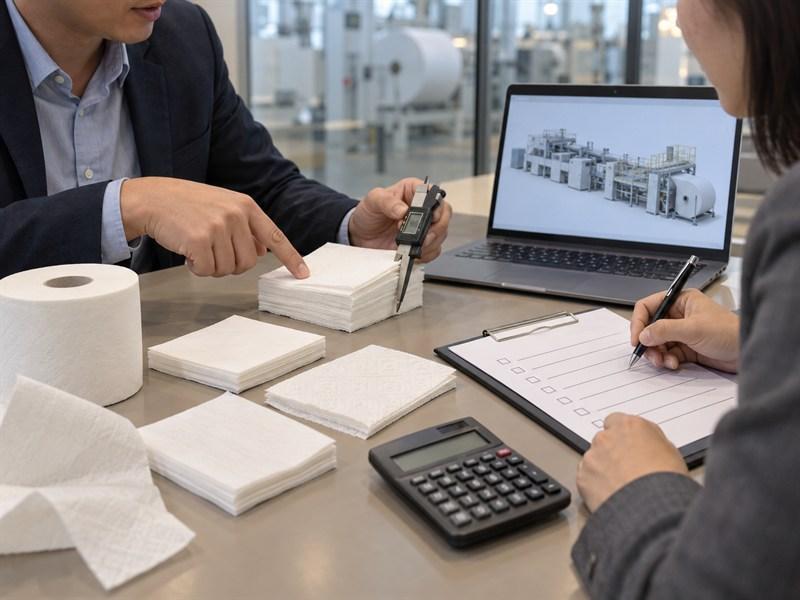
The supplier should receive a clear specification for every planned product. This may include finished dimensions, ply, fold type, perforation, embossing, sheet count, roll diameter or package size.
If possible, provide photographs and physical samples. Explain which characteristics must remain unchanged and which can be adjusted to suit the production process. Avoid requesting one machine configuration for several very different products without explaining the required changeovers.
Provide Complete Raw-Material Data
Parent-roll information directly affects unwinding, tension, folding, rewinding and cutting. Provide the expected width, diameter, core size, tissue grade, grammage and number of plies.
If the paper specification has not been finalized, tell the supplier which options are under consideration. This allows the proposal to identify limits instead of assuming one fixed material.
Share the Factory Layout
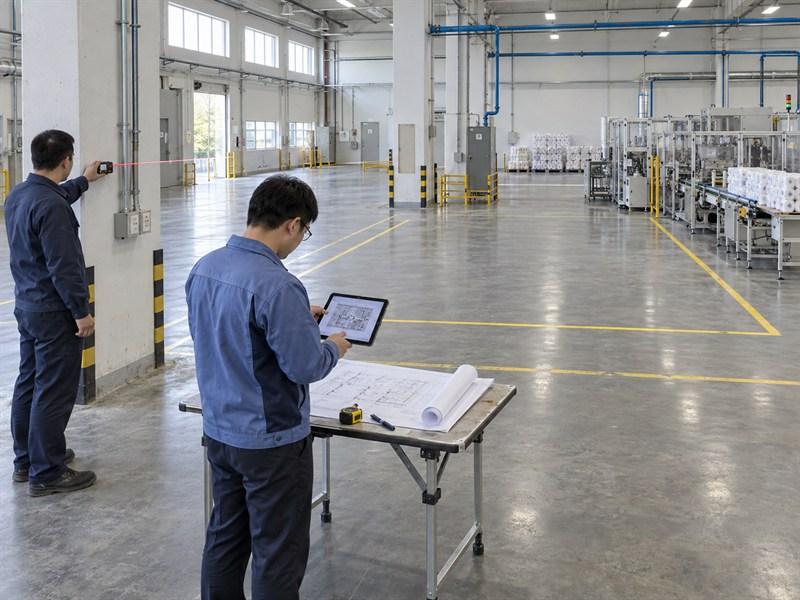
A layout does not need to be a complex engineering drawing during the initial stage. A clear floor plan with dimensions, columns, doors, utility points and existing machines is normally enough for preliminary planning.
The supplier can then study:
-
Machine orientation
-
Material movement
-
Operator access
-
Maintenance clearance
-
Packing area
-
Finished-product storage
-
Installation access
A line that fits on paper may still be difficult to operate if these areas are ignored.
Define the Required Automation
Clarify which production stages should be automatic and which can involve manual handling. The answer depends on output, labor availability, product variety and investment priorities.
Ask the supplier to separate the quotation into logical equipment modules when possible. This makes it easier to understand the function and cost of each stage.
Request a Clear Technical Proposal
A useful proposal should identify the main machine configuration, applicable product range, input material, finished format, utilities, approximate layout and service scope.
If optional functions are included, they should be listed separately. Buyers should also clarify installation, training, spare parts, warranty and remote support.
Review Technical Scope Before Price
Two quotations with similar machine names may contain very different equipment and services. Before comparing price, confirm that both proposals cover the same product, automation level and downstream process.
Create a question list for any unclear points and arrange a technical meeting if necessary.
Establish the Next Project Step
The next step may be sample confirmation, layout revision, raw-material testing or a detailed commercial quotation. Assigning a clear next action prevents the project from stopping after the exhibition.
For examples of different machine configurations, review our tissue machinery project records.
To start a technical proposal, send us your finished product specification, parent-roll information, target output, available layout, voltage and packaging requirements.



 Tel: +86 139 0819 6540
 Email: info@doubletissuemachine.com
 MP/WhatsApp: +86 139 0819 6540
 Manufacturer Address:Dongguan, Guangdong, China