Choose a facial tissue fold with the finished pack in hand. The folded sheet must fit the package, present an accessible first tissue and release the following tissues in the intended way. A machine name or an unfolded sheet dimension cannot settle those questions. Open a target pack, measure a complete sheet and its folded footprint, then follow the stack through cutting and packaging. That sequence gives the equipment supplier a physical specification to assess. It also exposes decisions that are easy to miss when the enquiry starts with an output target.
A product sample helps explain the fold; a photograph alone cannot establish its dimensions or dispensing behaviour.
Open the pack before selecting the interfolder
Keep one unopened reference pack and dismantle a second. The unopened pack preserves the appearance expected at delivery. The opened pack reveals the paper arrangement hidden by the wrapper or carton. Record the way the first sheet is presented and how the neighbouring sheets relate to it. Do not label that arrangement from the package artwork. Product descriptions sometimes use broad commercial terms that leave the actual fold unclear.
Measure the sheet after gently opening it without stretching the paper. Record the folded footprint separately, and label the measurement directions on a sketch. Two people can quote the same width and length while measuring opposite axes. Mark the withdrawal direction too. A carton opening or a soft-pack slit can make the orientation of an otherwise suitable stack decisive.
Ask which parts of the sample are essential and which can change. The marketing team may require a familiar pack silhouette while purchasing is willing to alter sheet count. Alternatively, an existing dispenser may constrain the folded width more tightly than the wrapper does. Establish that order of priorities before discussing a machine configuration. Otherwise a proposal can satisfy the wrong dimension and still fail the actual product requirement.
Keep sheet, stack and pack measurements separate
The unfolded sheet describes the paper available to the user. The folded sheet describes the geometry produced by the converting process. The stack describes the group delivered to the next operation. None of these is a substitute for the outside dimensions of a wrapped pack. Film thickness, folds in the wrapper and compression during packing can change the measured package without changing the individual tissue.
Object being specified
What to record
Decision it supports
Opened tissue
Length, width, ply definition and visible fold lines
Paper requirement and proposed folding arrangement
Folded tissue
Footprint, orientation and edge arrangement
Fit within the intended dispensing opening
Unwrapped stack
Count, height under an agreed condition and squareness
Cutting, separation and packaging infeed
Finished pack
External dimensions, opening and first-sheet presentation
The product the customer will actually receive
Stack height needs a measurement condition. A loose stack and a compressed stack can give different readings even when their counts agree. State whether the sample was measured freely or held in a simple agreed fixture. This is a procurement convention to establish with the supplier, rather than a universal compression value. It makes the proposed packing clearance understandable and repeatable.
If several packs share one sheet format, keep their counts in separate rows. If several sheet formats share one pack outline, retain their individual fold drawings. Combining them into a single minimum-to-maximum box hides the combinations that the equipment must handle. A short list of real product combinations is usually more useful than a large theoretical range.
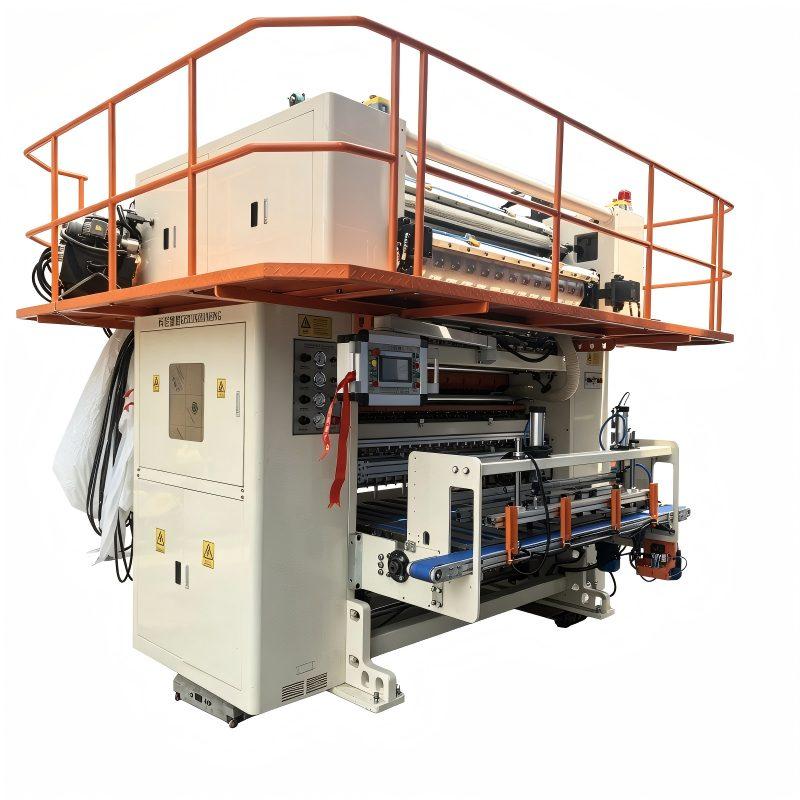
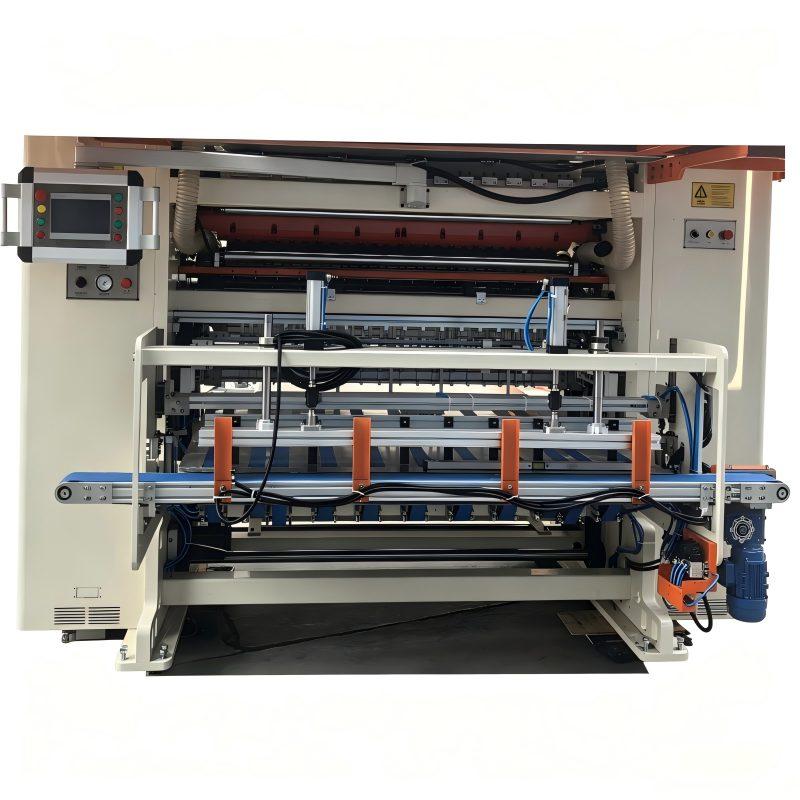
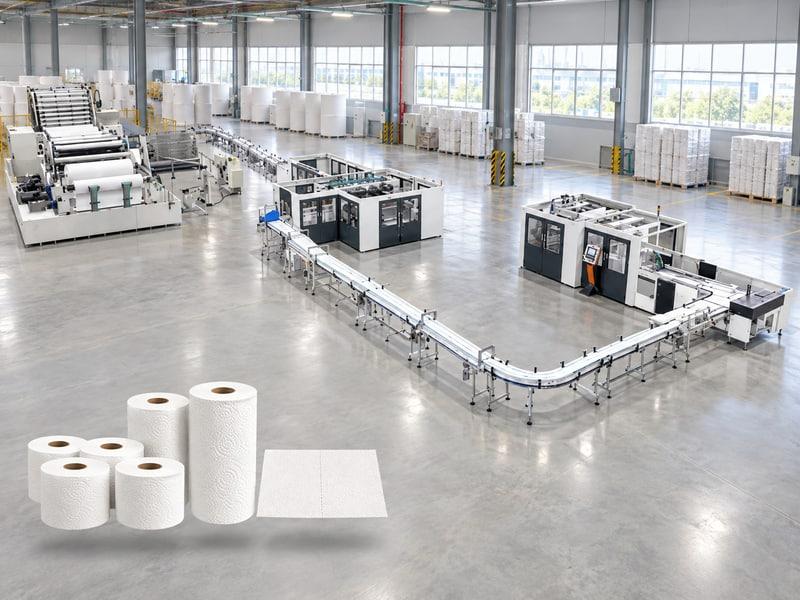
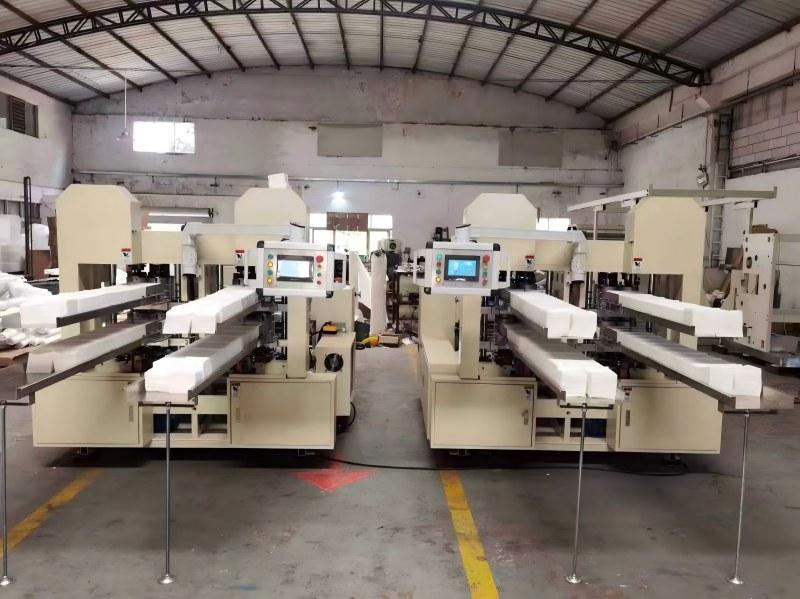
The DB-F-V-200 product view shows the machine and its output area. The order specification must identify the required fold and discharge arrangement.
Read the model description as a configuration boundary
DOUBLE lists the DB-F-V-200 V-Fold tissue interfolder for facial tissue and bottom-pull tissue converting. Its published description includes V-fold folding, counting, two independent unwinding units and front or side discharge options. It also identifies an optional half-fold output configuration. These details provide a starting point for an enquiry; they do not establish that every pack submitted by a buyer is already covered.
In particular, an optional configuration should be written into the proposed equipment scope if the product needs it. Ask the supplier to mark the selected fold on the product drawing and explain what changes when an alternative format is requested. A list of options describes choices available for review. It should not be read as a promise that all choices can be switched freely on the delivered machine.
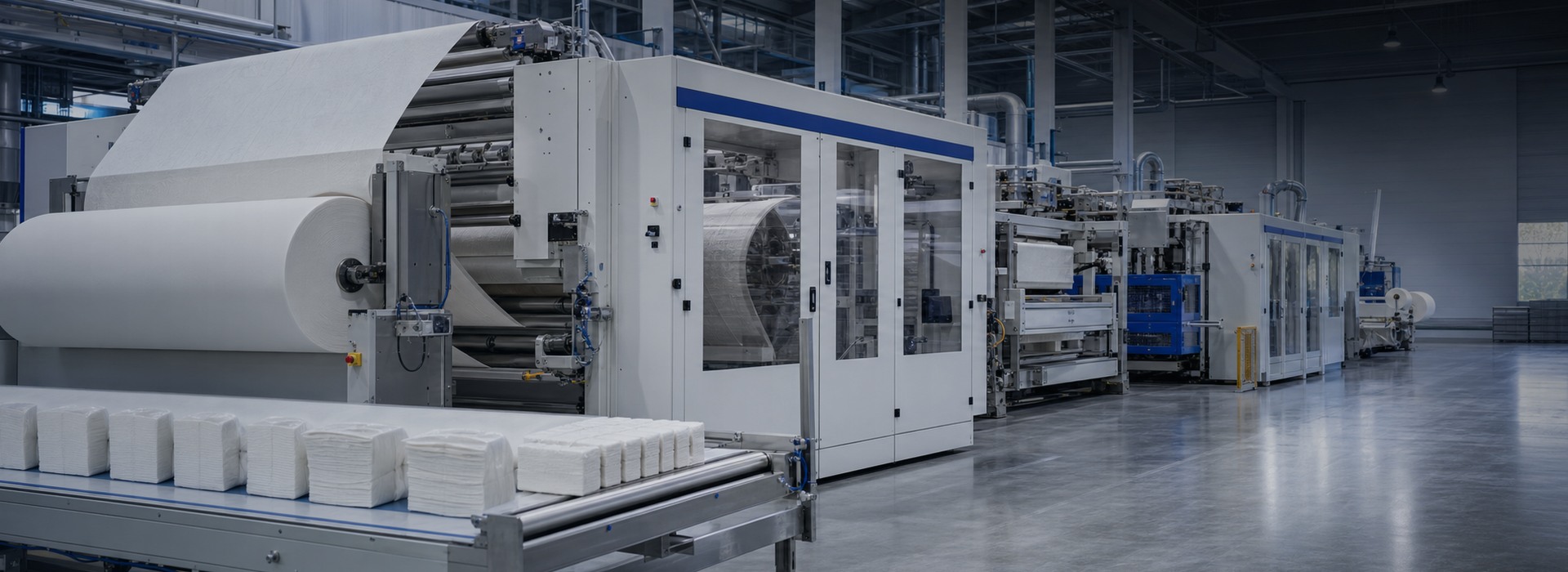
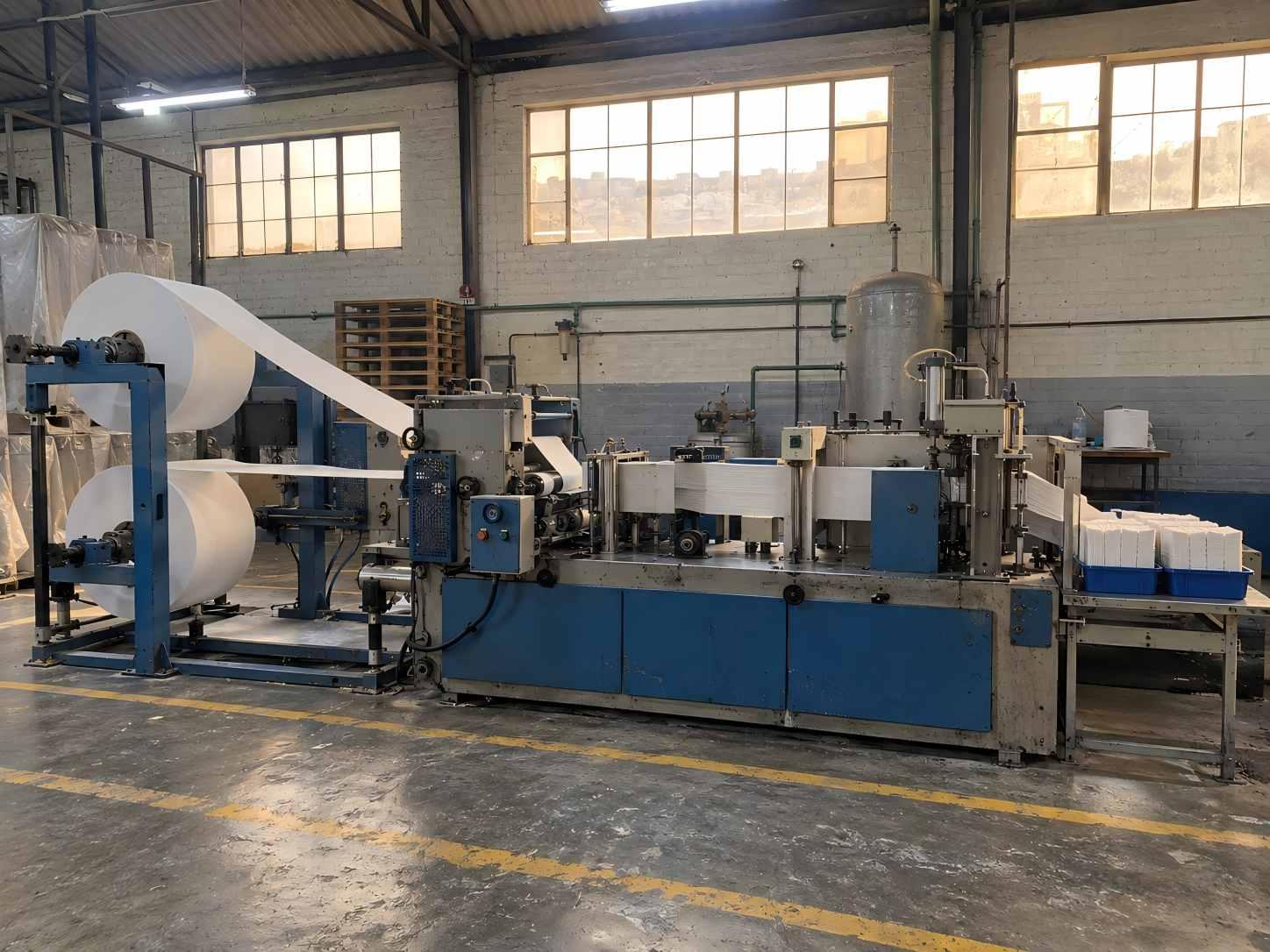
The interfolder also has a defined place in the production flow. It converts parent tissue rolls into folded output. Whether cutting, stack transfer and packaging are supplied with it depends on the agreed scope. Keep the enquiry focused on the condition of the material at each boundary: a folded log, a separated stack or a finished pack. The buyer and supplier should use the same name for the same object.
Follow one stack to the packaging inlet
Trace the sample from the folding discharge to the packaging inlet on a simple layout drawing. Note its travel direction, orientation and support at each transfer. A front discharge and a side discharge can lead to different arrangements of cutting equipment, conveyors and operator access. The choice belongs in the line layout discussion alongside the product geometry.
At a transfer, ask what maintains the stack shape. A stack that looks square when stationary may move differently after separation or acceleration. The useful question is whether the planned handling method can preserve the agreed product arrangement with the paper and count being purchased. A static photograph of a good stack does not answer that question.
Existing downstream equipment makes the boundary more specific. Provide its inlet drawing and the orientation it expects. Identify who supplies any transfer device and who is responsible for confirming that the two machines can communicate. Matching conveyor heights alone leaves timing and product support unresolved. The interface review should cover the actual stack, the release signal and the response when the receiving machine stops.
Consider how the first tissue is prepared for the user after packing. If the proposed pack needs an exposed leading sheet, identify which operation establishes that presentation and how it is preserved through wrapping or cartoning. Do not leave it as an assumed action somewhere downstream. Conversely, if the product is deliberately supplied with no sheet protruding, retain that requirement in the reference sample. The fold selection must serve the chosen opening method.
During a proposed demonstration, keep a sample before packing and its corresponding finished pack. Comparing the pair helps distinguish a folding issue from a handling or packaging issue. If an edge becomes displaced only after transfer, changing the nominal fold drawing may address the wrong cause. The sample trail keeps the decision tied to the operation that changes the product.
The output area deserves its own interface review when cutting or packing equipment is connected downstream.
Pair the fold sample with the intended parent paper
A purchased retail pack is a useful geometric reference, but it may contain a different paper from the buyer's planned supply. Send the intended paper specification and a representative sample alongside it. Identify the basis weight, ply arrangement and parent-roll dimensions without treating them as interchangeable. A folded sample explains the product; the roll data explains the material entering the machine.
Where multiple paper grades are planned, name them individually and state which one is the normal production grade. Ask the supplier which combinations need a trial. Do not assume that a fold demonstrated on one paper will behave identically on another. Differences in the material can affect the ease of forming, handling and dispensing a stack, even if the drawing dimensions stay constant.
Keep visual requirements separate from those functional checks. An embossing pattern or pack artwork may be commercially important, but it cannot compensate for unsuitable withdrawal behaviour. Treat any proposed paper or configuration change as a new sample combination to review, rather than accepting an attractive pack photograph as equivalent evidence.
Finish with a sample agreement the order can use
Bring the chosen paper, fold drawing, stack count and finished pack together in one reference set. Give it a revision identifier and retain matching copies for both parties. Record acceptable dimensional variation and the intended dispensing behaviour in terms that can be observed. The supplier can then respond to a defined product rather than a collection of unrelated numbers.
When proposals differ, compare how each one reaches that same reference set. One may offer a different discharge direction, while another may include more downstream handling. Those are scope differences to resolve explicitly. They should not disappear inside a general claim about flexibility. Accept a configuration only after its product boundary and its connection to the intended pack are clear.
The resulting enquiry is compact: a physical sample, an annotated fold drawing, the planned parent paper and a layout showing the next operation. It gives the supplier enough context to discuss the machine choices that matter. It also gives the buyer a reference that can be used later when the ordered equipment is demonstrated.




 Tel: +86 139 0819 6540
 Email: info@doubletissuemachine.com
 MP/WhatsApp: +86 139 0819 6540
 Manufacturer Address:Dongguan, Guangdong, China