Facial Tissues for Homes & Apartments
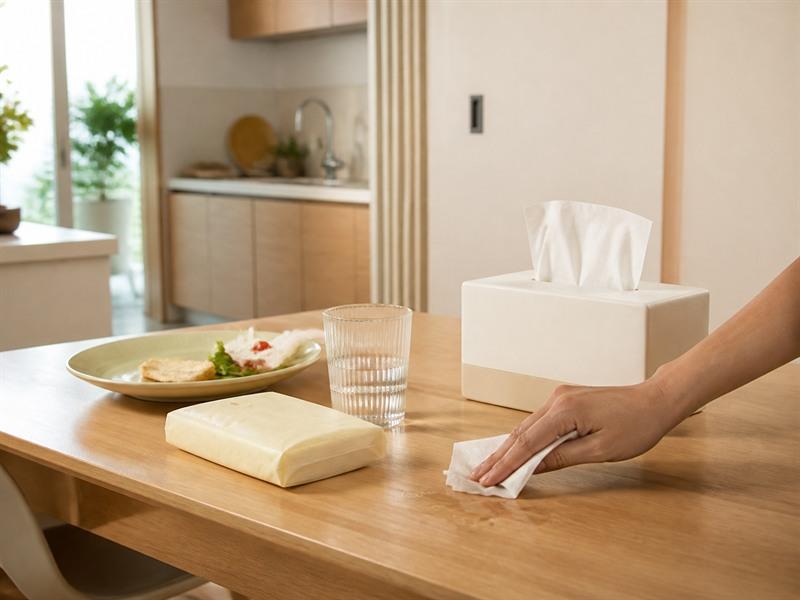
Facial tissue is a daily essential in households and apartment buildings, supporting personal care, dining, cleaning, and quick spill removal. For buyers planning a tissue converting line, the key question is how to match machine configuration with the finished product format, packaging style, and daily output target.
Project Background
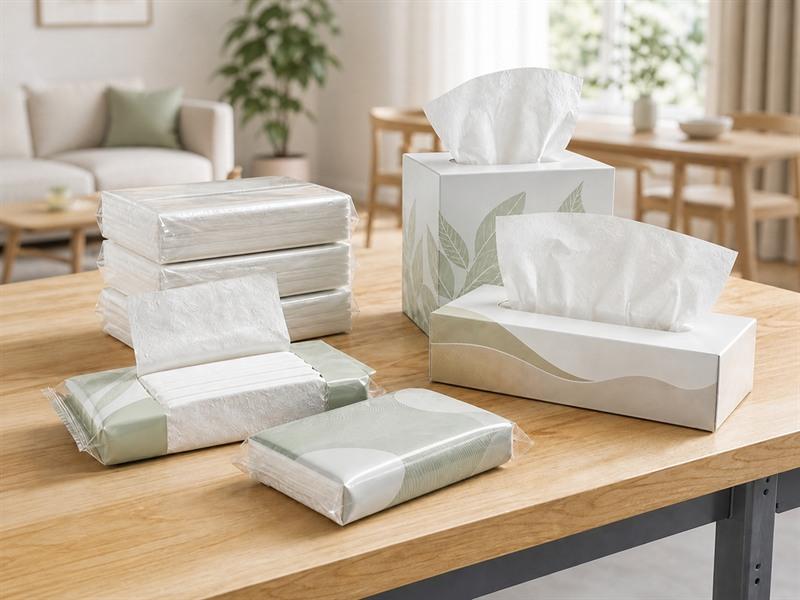
This application scenario covers a residential supply context where facial tissue is consumed in high volume across multiple rooms. The buyer's goal is to produce soft, reliable facial tissue in formats that suit home use, such as flat packs, cube boxes, or boxed tissues, while keeping packaging simple and cost-effective.
Customer Requirement
-
Finished tissue format: flat facial tissue or boxed facial tissue for household use.
-
Target output: to be confirmed based on daily demand and available floor space.
-
Material condition: parent roll or jumbo roll input, with final width and sheet count depending on the chosen format.
-
Automation level: semi-automatic or fully automatic packing, depending on labor availability.
-
Utilities: standard voltage and air supply, to be confirmed with the factory layout.
Solution
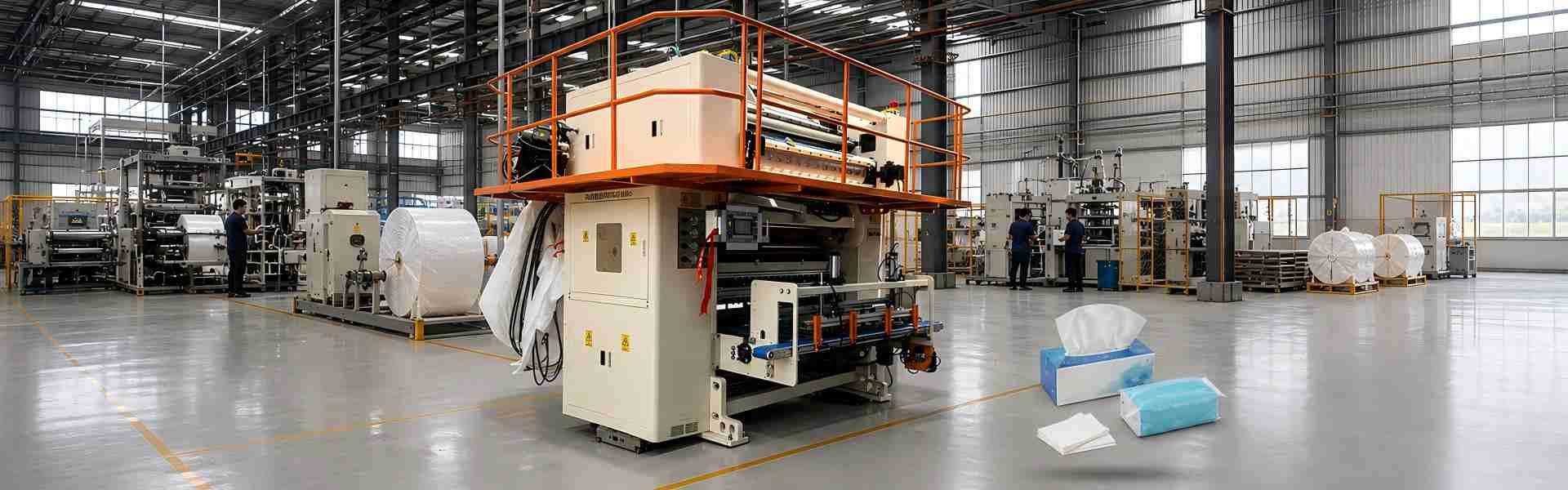
For a household-focused facial tissue line, the converting process typically includes folding, cutting, counting, and packing. The equipment selection depends on whether the buyer needs flat-pack facial tissue or boxed tissue. A facial tissue machine handles the folding and cutting stages, while a packing machine completes the wrapping or cartoning step.
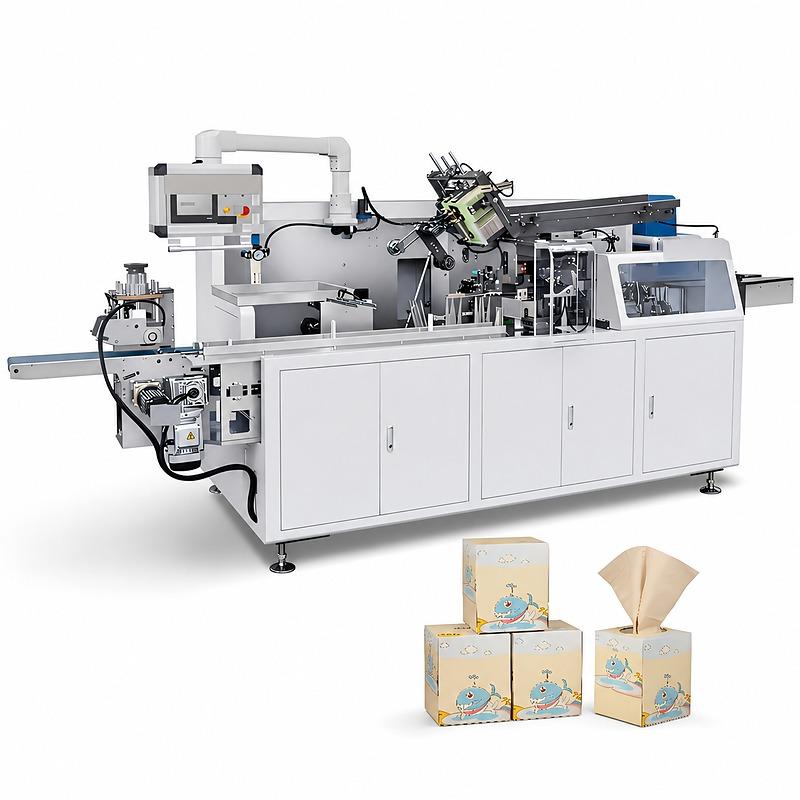
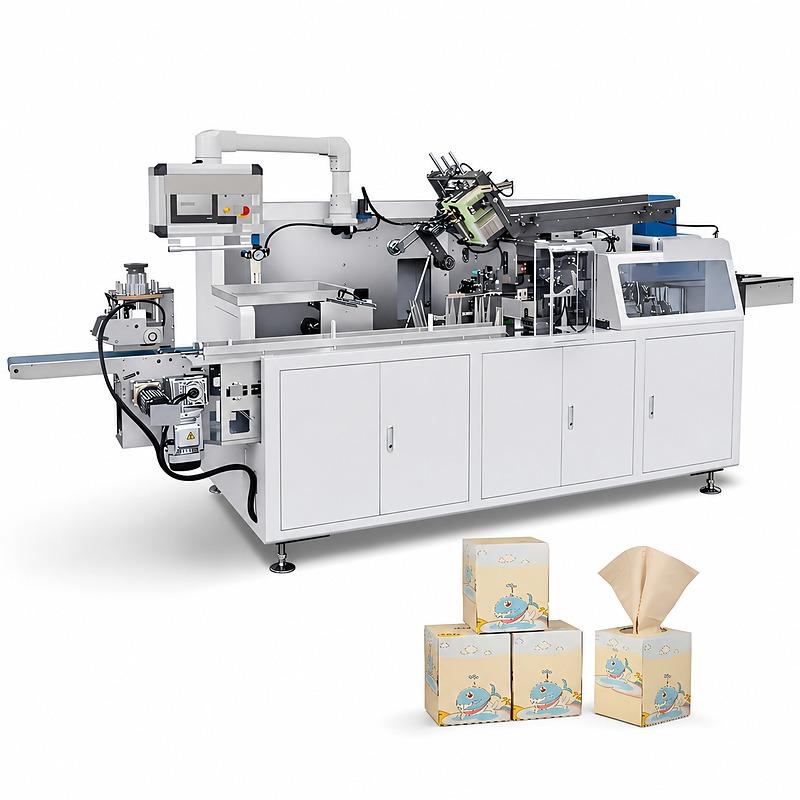
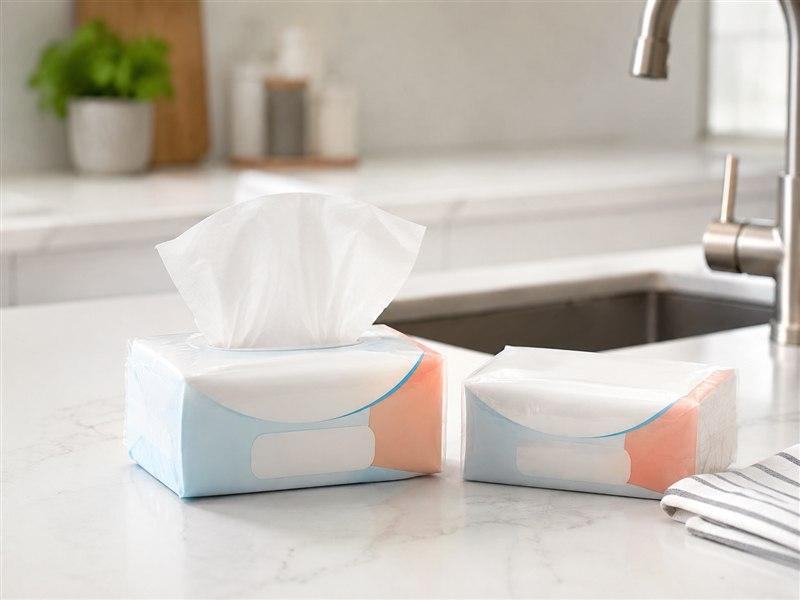
When the finished product is a flat pack, an automatic facial tissue soft packing machine such as the DB-IF-180P can handle the wrapping stage. For boxed tissue, a box packing machine like the DB-BF-80B is a practical match. The final configuration should be confirmed against the target sheet count, pack size, and line speed.
Commissioning and Delivery Process
During project planning, the buyer should confirm the parent roll width, finished tissue size, and packing style before ordering. This allows the machine layout to be matched to the available floor space and utility connections. After delivery, commissioning includes checking the folding accuracy, cut length, counting consistency, and packing seal quality. Operator training is part of the handover so that daily changeover between pack sizes can be managed efficiently.
Result and Buyer Takeaway
For a household tissue line, the main benefit is a stable converting process that matches the buyer's chosen format and output target. Because the exact speed, sheet count, and packaging style depend on the finished product specification, the buyer should share the target tissue format, pack size, and daily output when requesting a quotation. This allows the supplier to confirm the right machine combination and layout.
Next step: To prepare a clear quotation, share your finished tissue format, target output, parent roll condition, available floor space, voltage, and automation requirements. A verified product catalog is available for reference: Facial Tissue Soft Packing Machine.





 Tel: +86 139 0819 6540
 Email: info@doubletissuemachine.com
 MP/WhatsApp: +86 139 0819 6540
 Manufacturer Address:Dongguan, Guangdong, China