Facial Tissues for Offices & Workspaces
Modern offices and shared workspaces need a reliable, hygienic supply of facial tissues across desks, meeting rooms, reception areas, and staff lounges. This application case outlines how a DOUBLE facial tissue converting line supports consistent in-house supply for facility managers, office suppliers, and workplace distributors.
Project Background
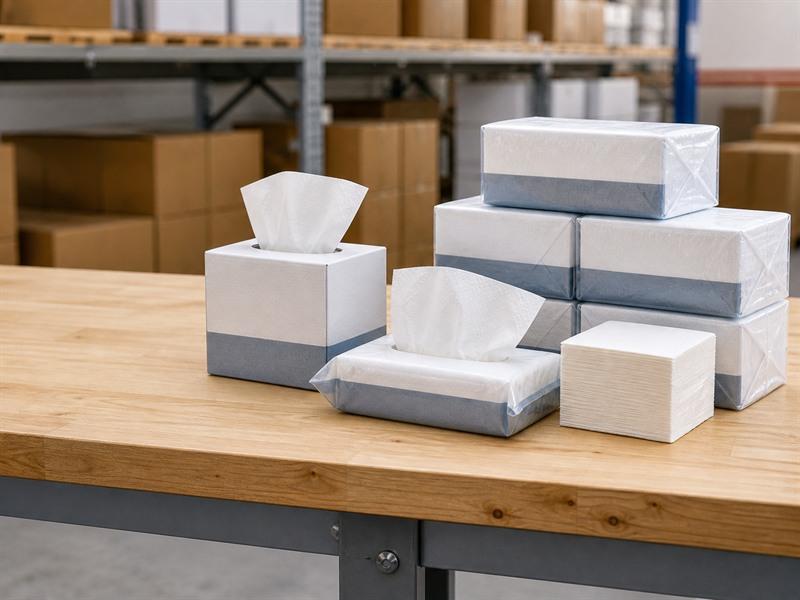
Workplace facilities often face two recurring issues: inconsistent tissue availability and the administrative cost of frequent small-quantity purchases. A centralized converting solution allows facility teams or regional distributors to produce facial tissue formats on demand, matching daily consumption patterns without overstocking.
Key Requirements
|
Requirement
|
Typical Workplace Need
|
|
Product format
|
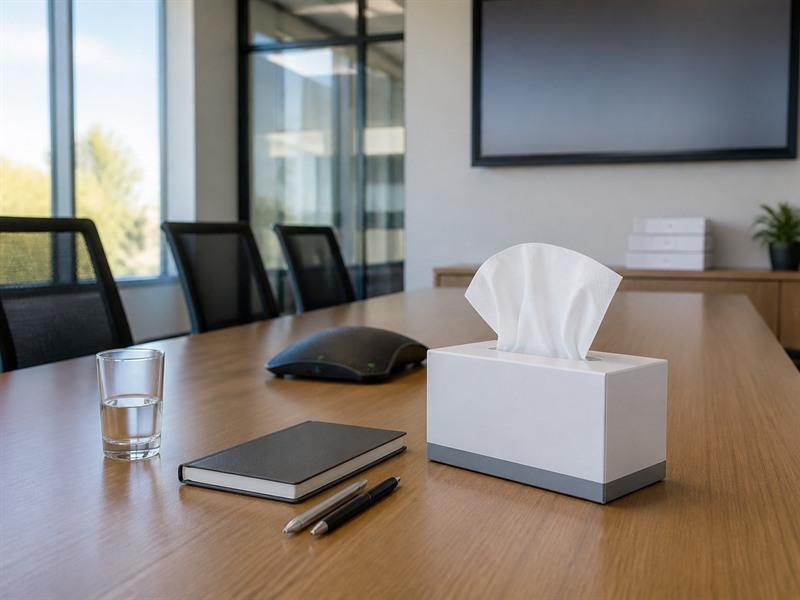
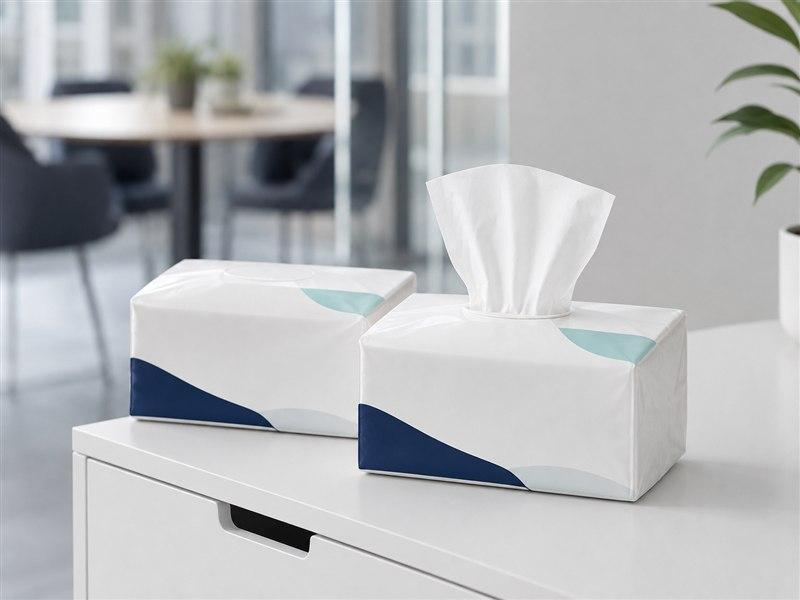
Flat or interfolded facial tissues for desktop dispensers, meeting rooms, and lounge areas
|
|
Output target
|
Moderate, flexible batch sizes to match daily usage without excess inventory
|
|
Material condition
|
Standard parent rolls (tissue paper) with consistent ply and softness
|
|
Automation level
|
Semi-automatic to fully automatic folding and packing to reduce manual handling
|
|
Factory layout
|
Compact footprint suitable for an office supply warehouse or light production area
|
Solution Overview
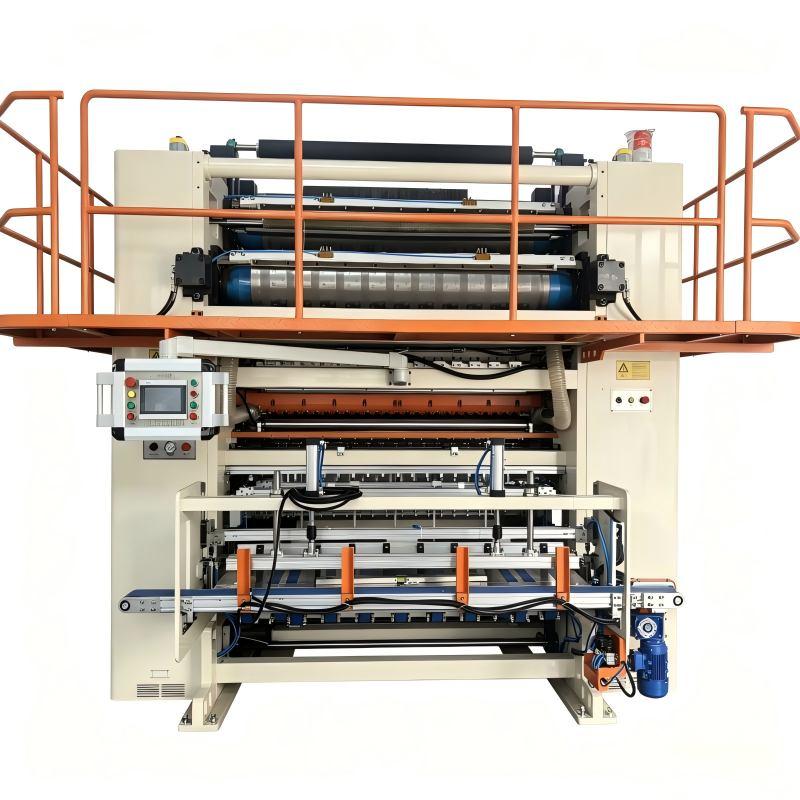
For this scenario, a facial tissue converting line is configured to process parent rolls into finished flat or interfolded tissues. The line integrates folding, cutting, and counting, followed by manual or automatic packing depending on the required daily volume. This setup gives the operator control over sheet count, fold style, and pack size, matching the specific dispenser types used in offices.
The equipment selection is based on the required finished tissue format and target output. For example, a line with a higher degree of automation suits a distributor supplying multiple office buildings, while a semi-automatic configuration may be sufficient for a single large facility. The final configuration depends on the parent-roll specification, available floor space, and downstream packing needs.
Why This Equipment Matches the Requirement
-
Format flexibility: The line can produce flat or interfolded tissues, covering desk dispensers, meeting room boxes, and lounge dispensers.
-
Controlled output: Batch sizes can be adjusted to avoid overproduction and reduce storage pressure.
-
Material compatibility: Works with standard tissue parent rolls, preserving softness and strength required for frequent use.
-
Operational simplicity: Clear changeover procedures and straightforward operation reduce training time for facility staff.
Delivery and Commissioning Process
During project planning, the line layout is reviewed against the available floor space and utility connections. Installation is carried out by trained technicians, followed by a structured commissioning phase. Key checks include web tension alignment, fold accuracy, and counting consistency. Operator training covers routine adjustment, cleaning, and basic maintenance to ensure stable daily operation.
After commissioning, a test run with the customer's parent rolls verifies that the finished tissue dimensions and sheet counts meet the specified requirements. Any adjustments to folding or cutting are made during this phase to confirm output quality before regular production begins.
Result and Buyer Takeaway
For facility managers and office suppliers, the main benefit is a dependable, on-site supply of facial tissues without frequent reordering. The converting line reduces dependency on external packaging variations and allows the operator to control pack sizes according to actual usage. This leads to simpler inventory planning and fewer interruptions in daily operations.
When planning a similar project, buyers should confirm the finished tissue format (flat or interfolded), target output per day, parent-roll width and diameter, available floor space, and voltage/utility supply. These details directly influence the machine configuration and quotation.
Note: Exact production speeds and technical specifications depend on the final machine configuration and the specific parent-roll material used. Please provide your finished tissue format, target output, and factory layout for a precise equipment match.
Related Resources
For more details on machine configurations and production capabilities, review the Facial Tissue Machine product page or explore the Facial Tissue Production Solution for line integration guidance. For a deeper look at the folding process, see the DB-F-V-200 V-Fold Tissue Interfolder. To understand the packing stage, review the DB-IF-180P Automatic Facial Tissue Soft Packing Machine.
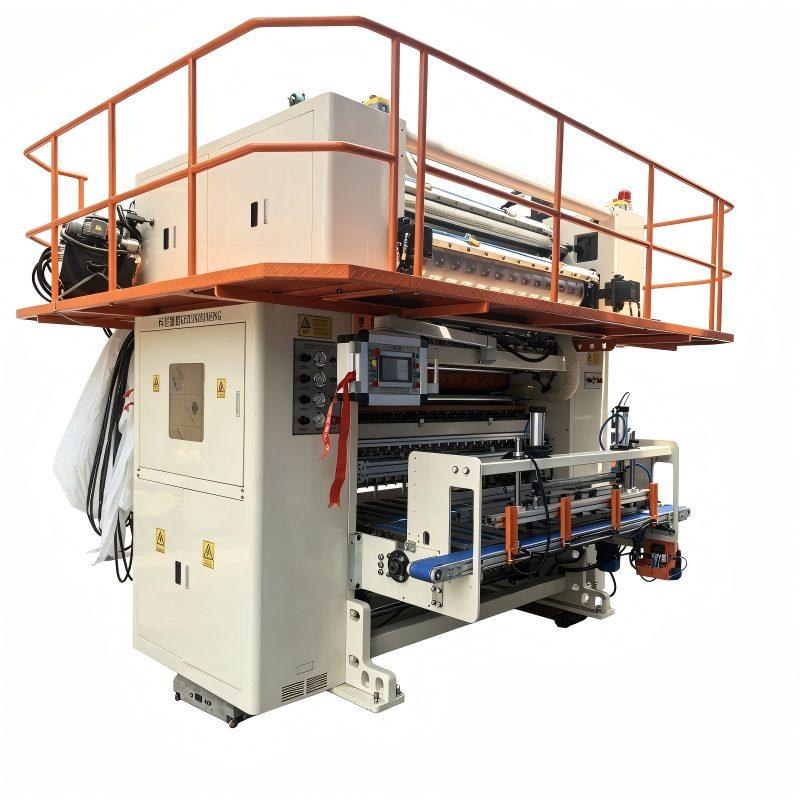
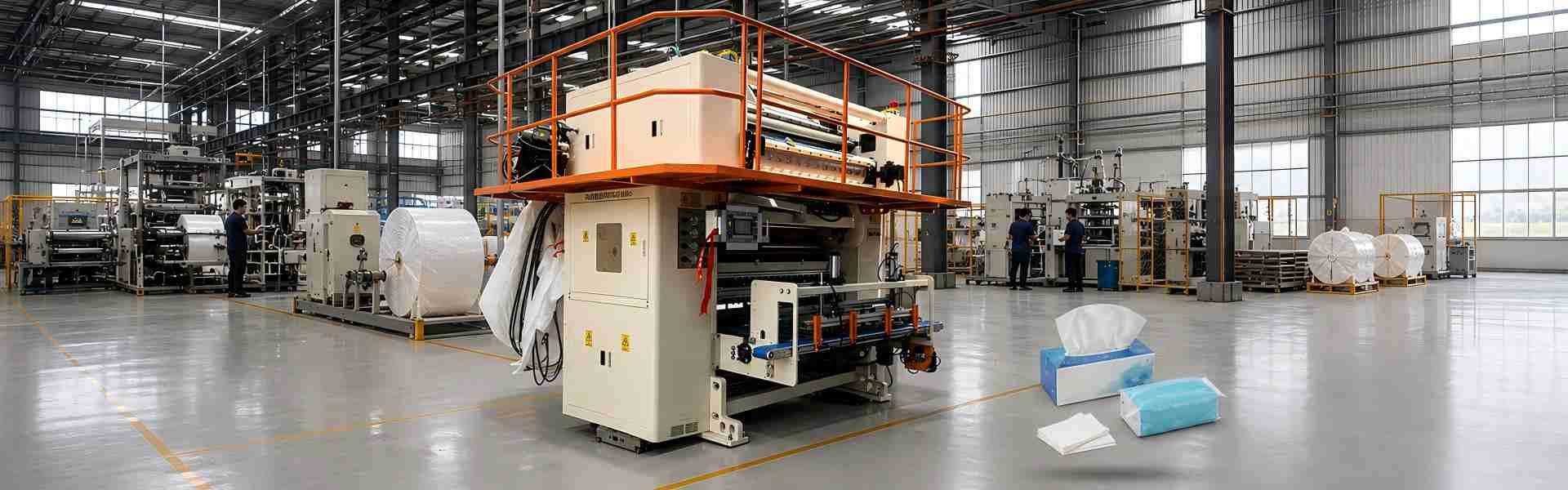
To plan a facial tissue converting line for your office supply operation, share your finished tissue format, target output, parent-roll condition, available layout, and utility specifications. Our team will help you match the right equipment configuration.





 Tel: +86 139 0819 6540
 Email: info@doubletissuemachine.com
 MP/WhatsApp: +86 139 0819 6540
 Manufacturer Address:Dongguan, Guangdong, China