Recycled-Fiber Kitchen Towel Production Material Qualification and Rewinder
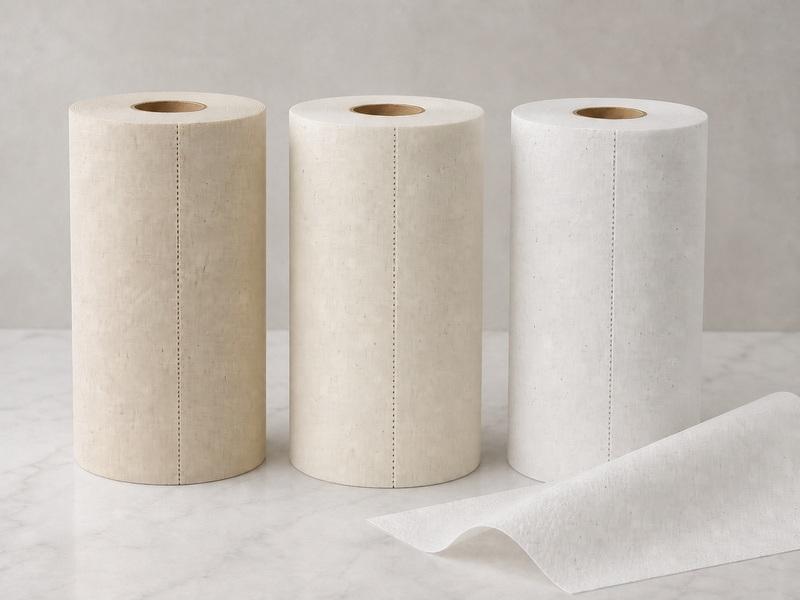
This project scenario addresses the converting of recycled-fiber kitchen towel rolls for producers evaluating natural, off-white, or bleached grades. The central challenge is that recycled content alone does not confirm whether a parent roll is suitable for a specific production speed or finished product format. Converting performance depends on the properties and consistency of the supplied tissue.
Customer Requirement and Material Variability
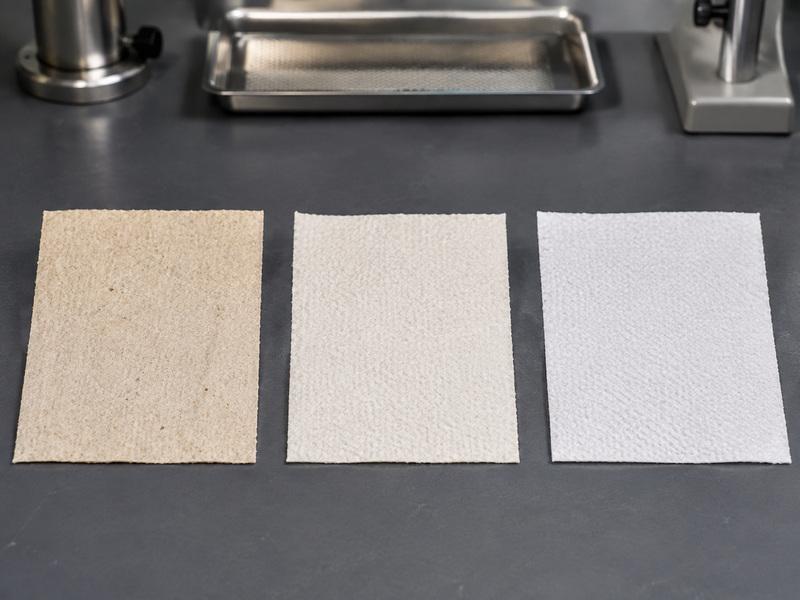
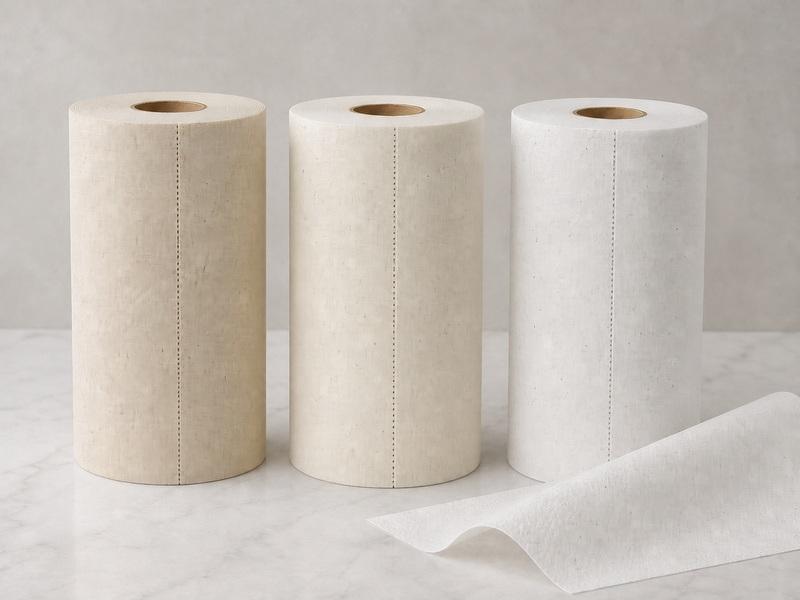
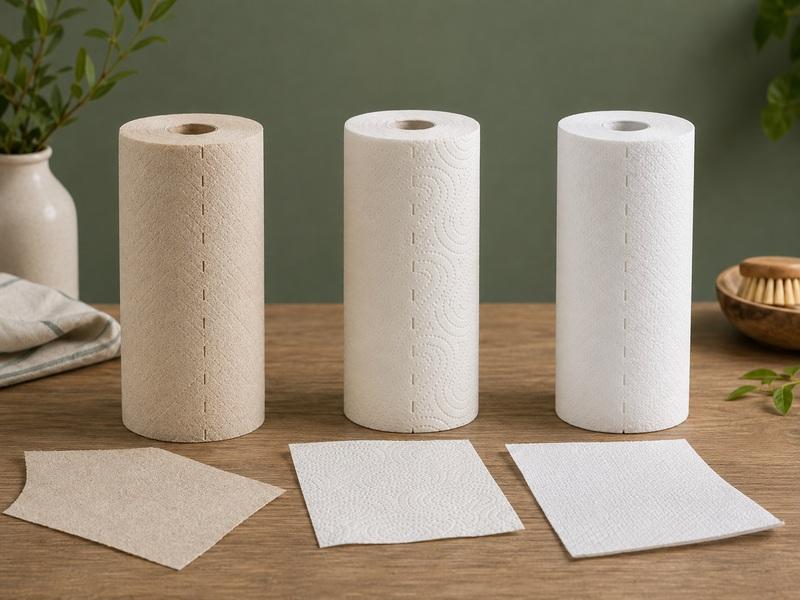
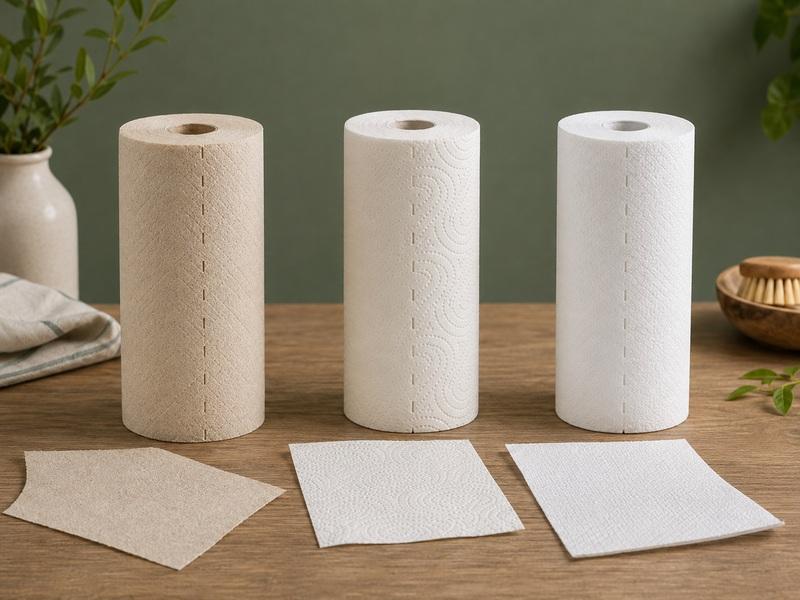
Buyers planning a recycled-fiber line typically need to confirm how the parent roll will behave during unwinding, embossing, and rewinding. Recycled-fiber kitchen towels may vary in fiber composition, color, ply count, basis weight, tensile strength, moisture level, dust generation, embossing pattern, roll dimensions, and packaging format. Each variable can influence converting stability and finished roll quality.
Application Scope
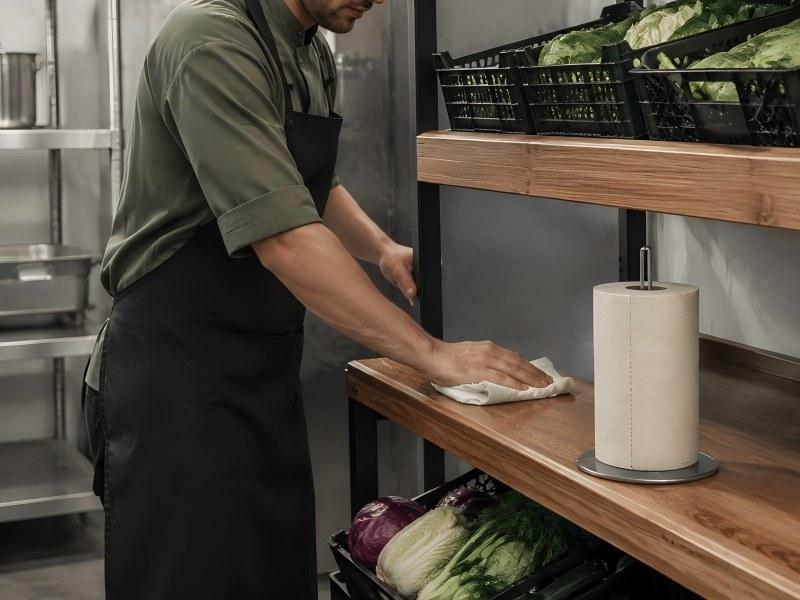
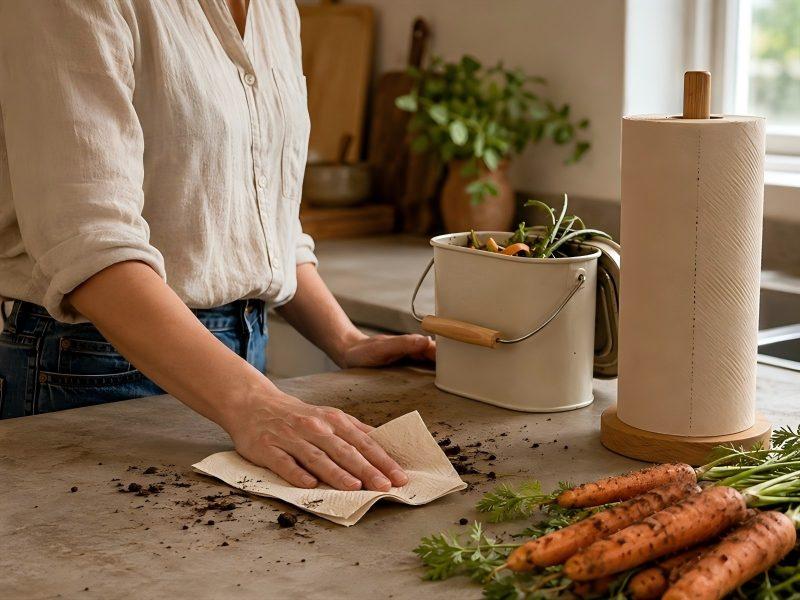
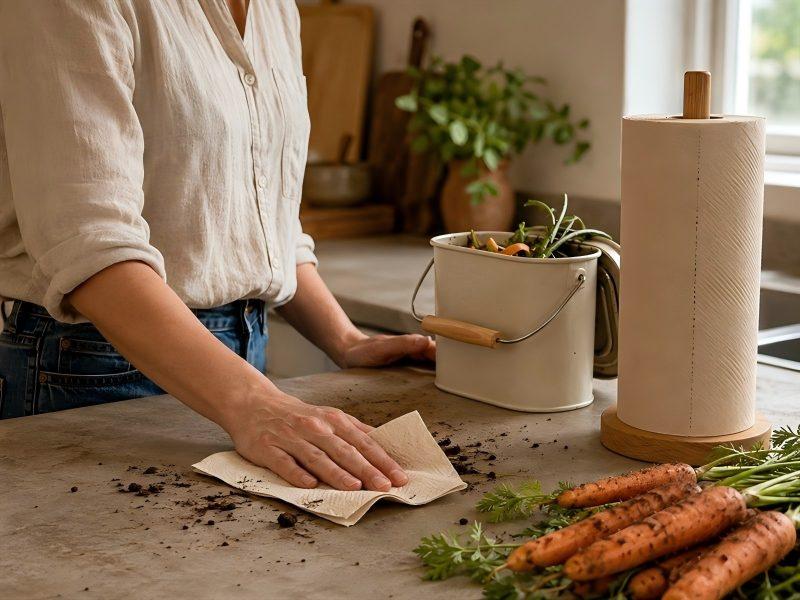
Qualified recycled-fiber kitchen towels may be used for household or commercial surface wiping. The exact performance depends on tissue strength, absorbency, and the finished structure. It is important to note that food-contact or compostability claims must not be made without appropriate supporting certification.
Solution: Equipment Selection and Raw-Material Confirmation
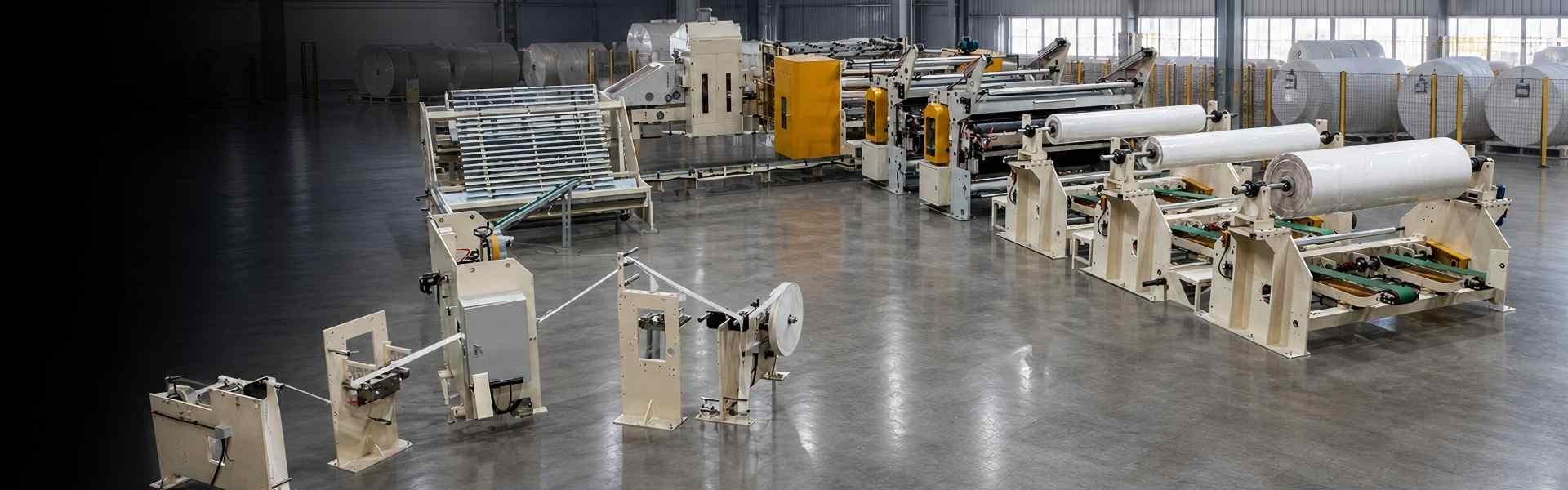
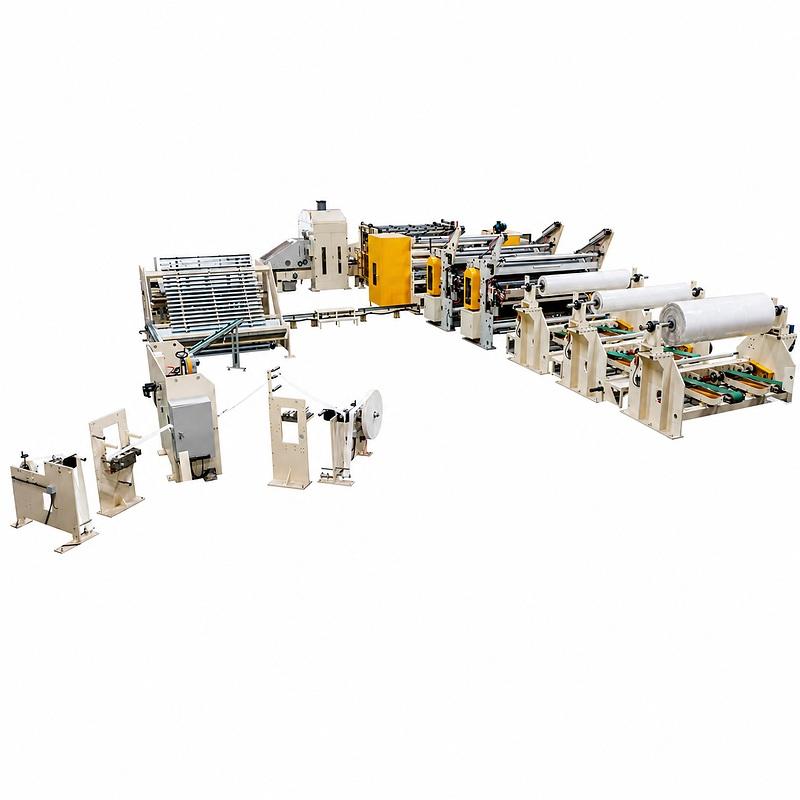
The DB-R300 or DB-R500 may be selected according to the required product and target output. Before final line configuration, the recycled parent tissue should be evaluated for tensile strength, moisture, basis weight, dust, and stable converting performance. Optional embossing, lamination, and printing must also be matched to the paper to avoid web breaks or poor roll formation.
Model
Typical Role in Recycled-Fiber Line
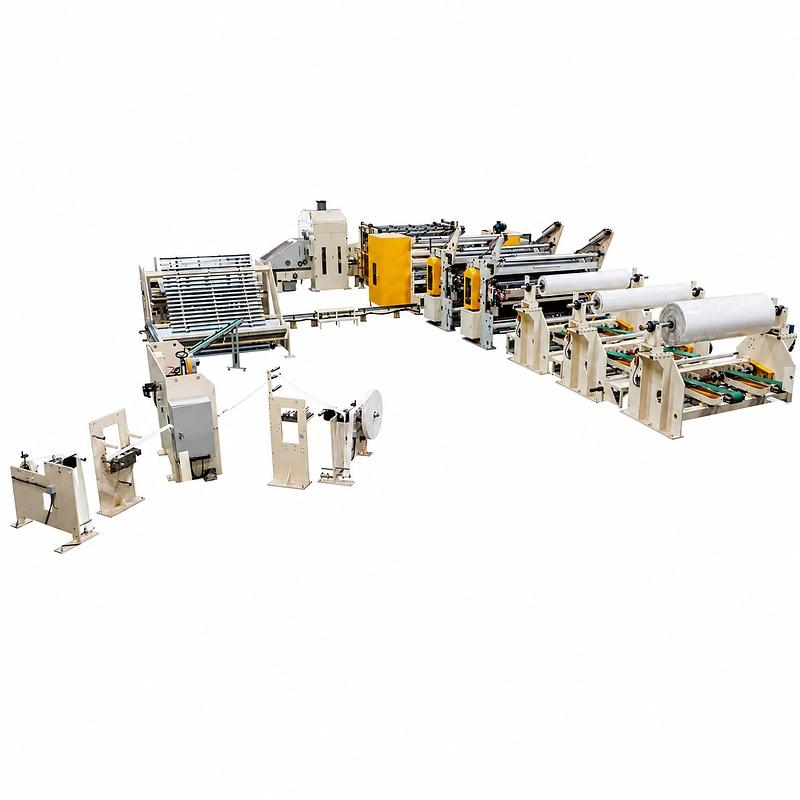
DB-R300
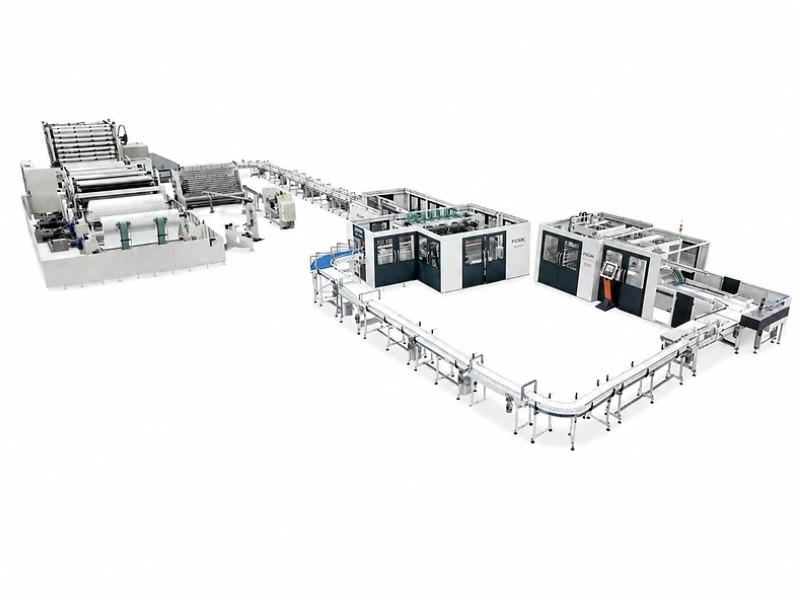
Non-stop rewinder line for kitchen towel rolls where production speed and roll quality need to be balanced with recycled-fiber input variability.
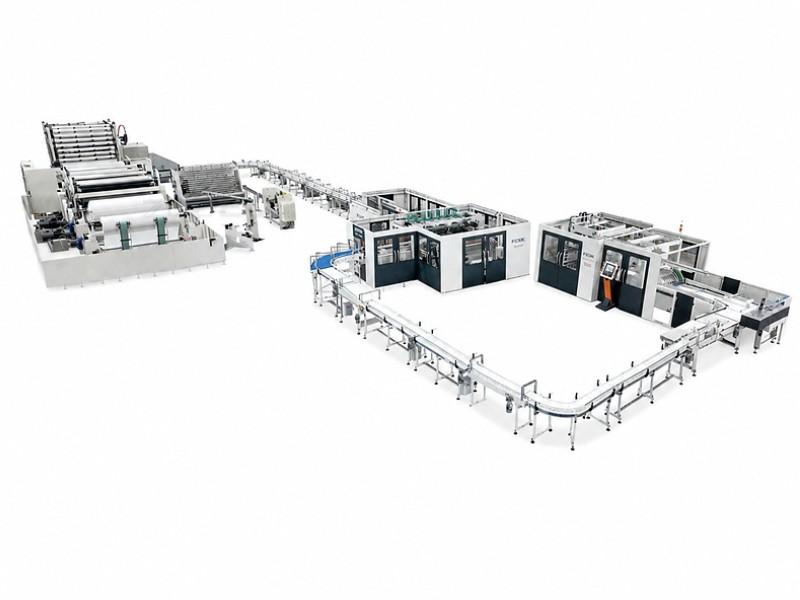
DB-R500
Higher-output non-stop rewinder line for producers running consistent recycled-fiber parent rolls at increased target output.
Model No.: DB-R300
Model No.: DB-R500
Commissioning and Production Flow
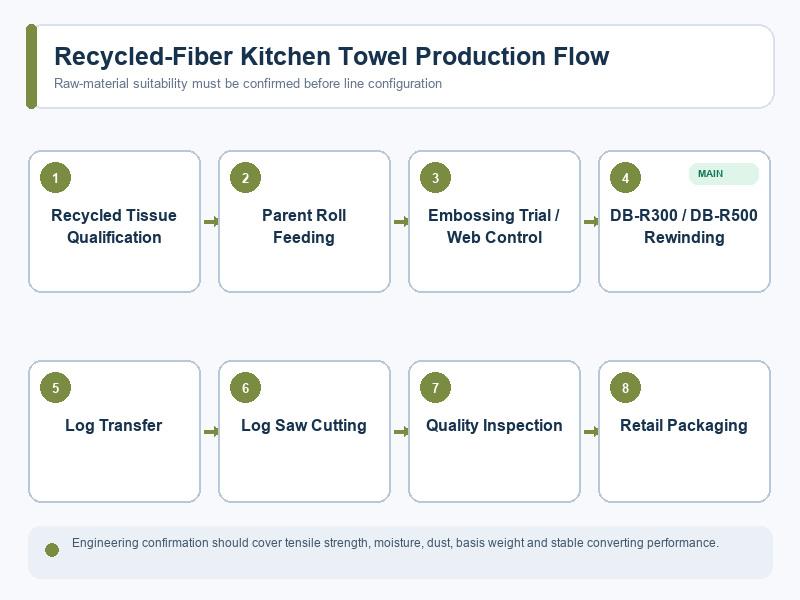
The converting process follows a structured sequence designed to qualify the recycled tissue before committing to full production. The flow is: Recycled Tissue Qualification → Parent-Roll Feeding → Embossing Trial and Web Control → DB-R300 or DB-R500 Rewinding → Log Transfer → Log-Saw Cutting → Quality Inspection → Retail Packaging.
Result and Buyer Takeaway
The practical takeaway for buyers is that recycled-fiber kitchen towel converting requires a material-first approach. Confirming tensile strength, moisture, and dust behavior before selecting the rewinder model reduces the risk of downtime and off-spec rolls. The DB-R300 and DB-R500 both offer non-stop rewinding capability, but the final choice depends on the verified parent-roll condition and the target output.
To evaluate a recycled-fiber kitchen towel project, contact DOUBLE Machinery with the finished tissue format, target output, parent-roll or material condition, available layout, voltage/utilities, downstream packing, and automation requirements. This information allows the line configuration to be matched to the actual recycled-fiber input.




 Tel: +86 139 0819 6540
 Email: info@doubletissuemachine.com
 MP/WhatsApp: +86 139 0819 6540
 Manufacturer Address:Dongguan, Guangdong, China