Commercial Kitchen Towel Roll Production Line Selection Guide
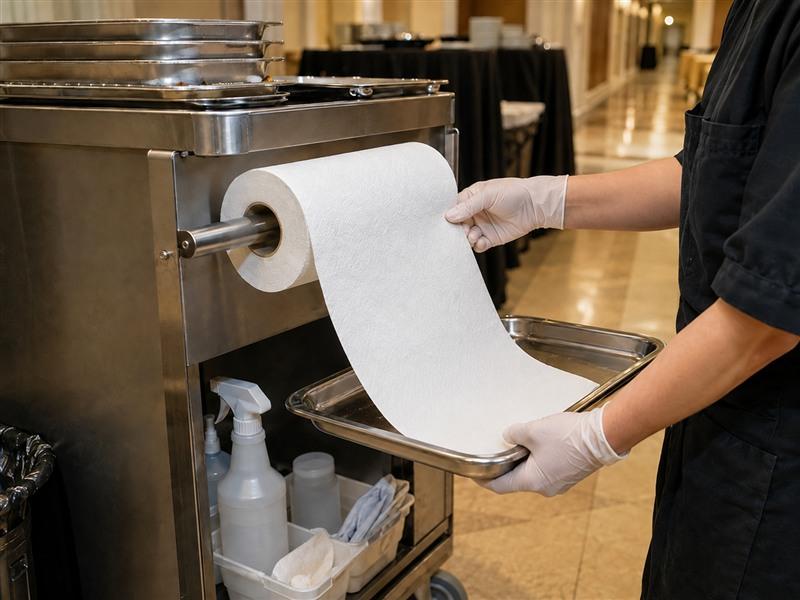
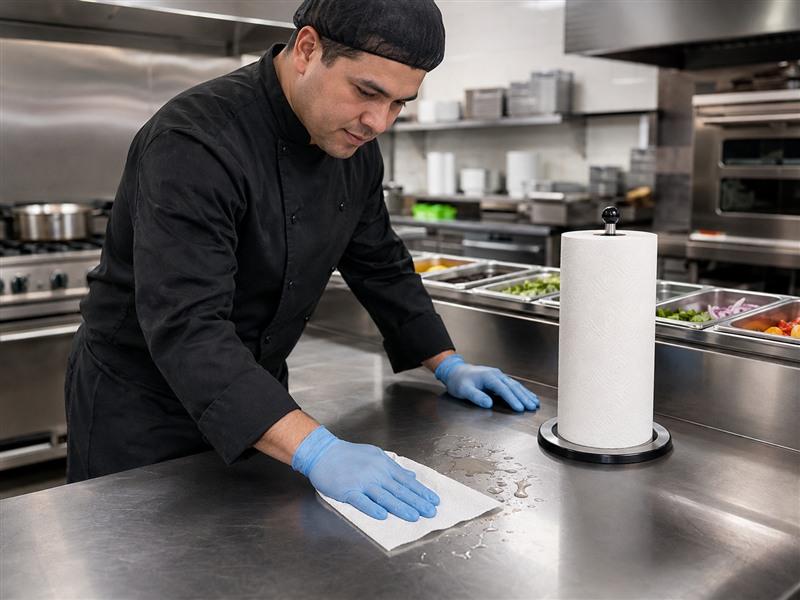
Commercial kitchen towel rolls are designed for frequent wiping, spill pickup, and general cleaning in restaurants, catering operations, and professional food-preparation environments. These rolls are a core consumable in foodservice and professional cleaning workflows, where reliable absorbency and consistent sheet separation directly affect daily operating efficiency.
Common Product Formats
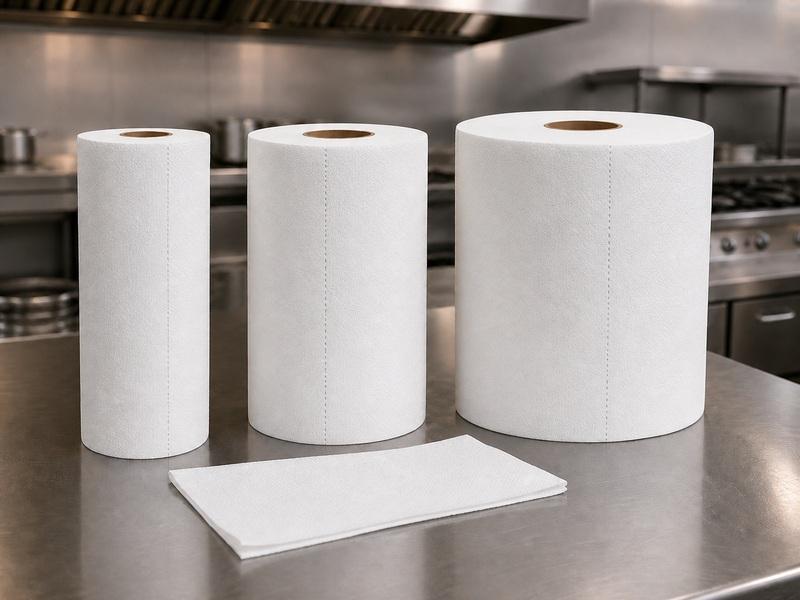
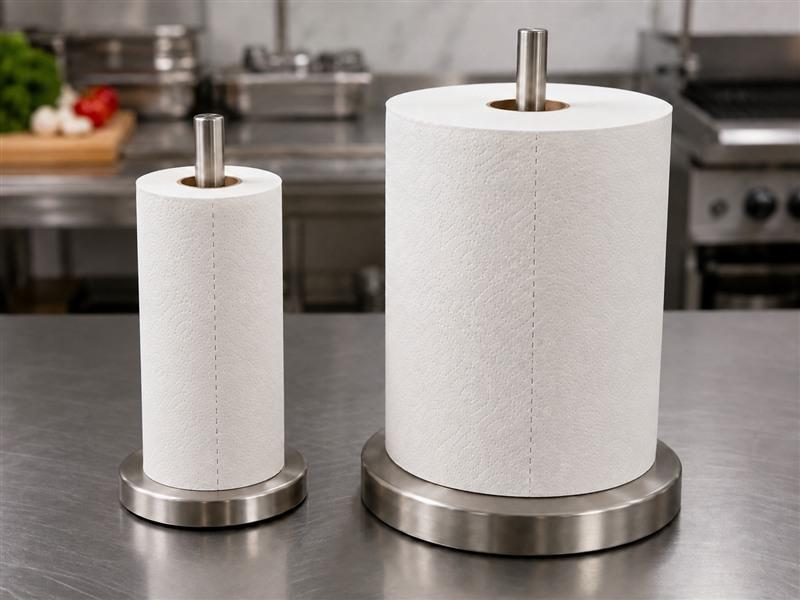
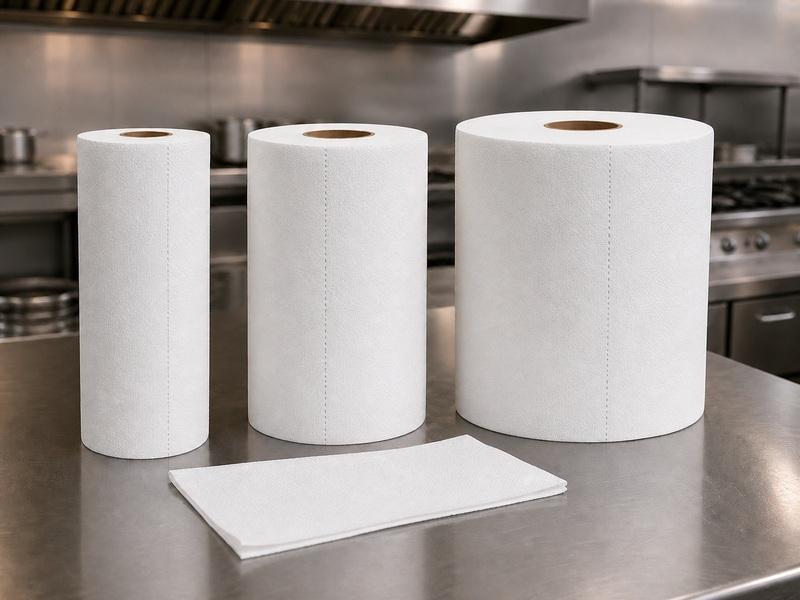
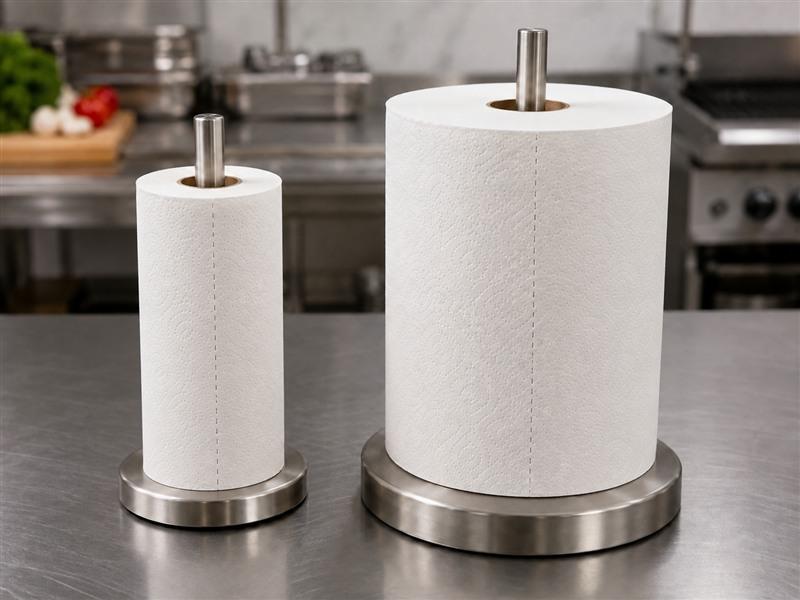
Commercial kitchen towels are commonly produced as perforated single-ply or multi-ply rolls. Key variables include roll width, roll diameter, sheet length, basis weight, embossing pattern, and core specification. These parameters determine how the finished roll fits into the buyer's existing holder system and how often staff need to replace the roll during a shift.
Compact rolls may suit counter use, while larger-capacity rolls may reduce replacement frequency. Finished dimensions must match the intended holder and available storage space. Buyers should confirm the exact sheet count and roll diameter before selecting a converting line, as these values directly influence the rewinder and log-saw configuration.
Application Scope
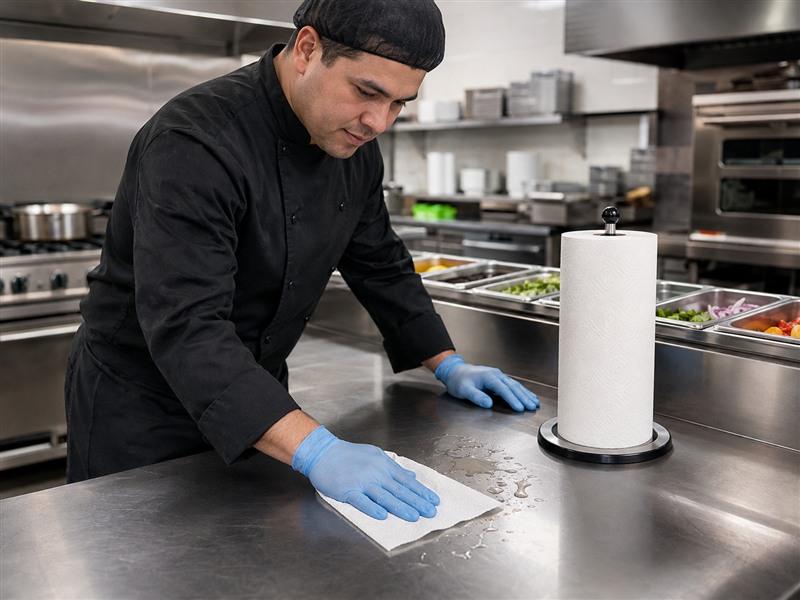
Commercial kitchen towels may be used for:
Worktop wiping
Spill pickup
Cleaning stainless-steel preparation surfaces
Catering support
Routine foodservice cleaning
Professional housekeeping operations
In each of these scenarios, the buyer's priority is a roll that delivers consistent sheet length, clean perforation, and sufficient strength for wet wiping tasks. The converting line must therefore be matched to the parent-roll quality and the target finished format, not selected on speed alone.
DB-R300 or DB-R500 Selection Logic
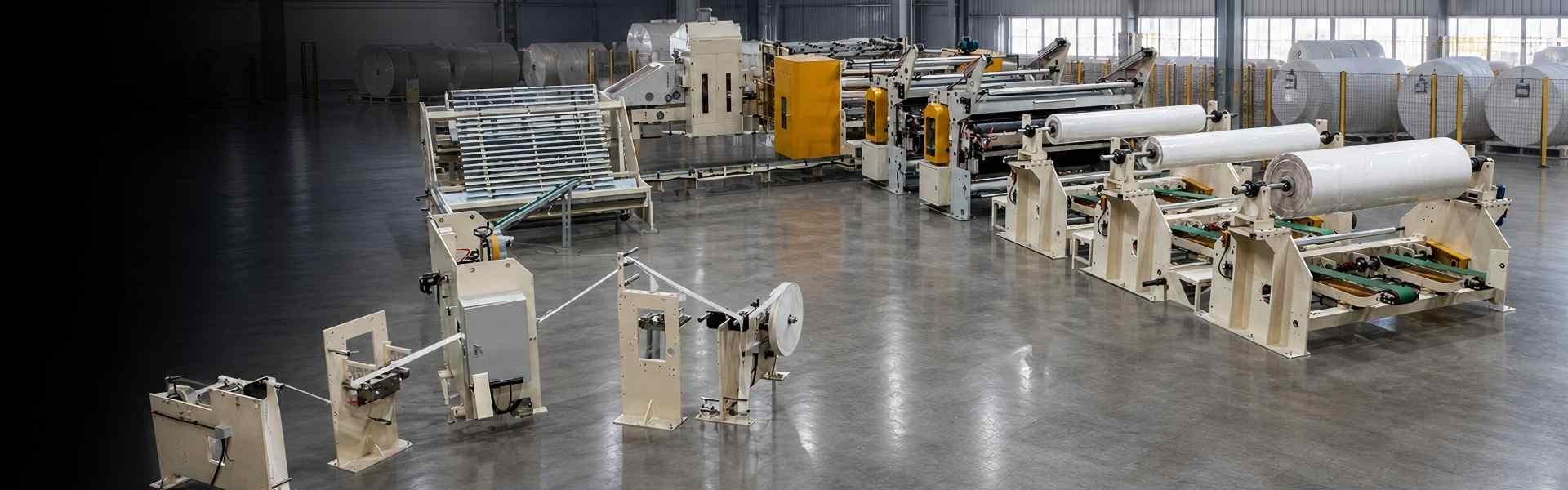
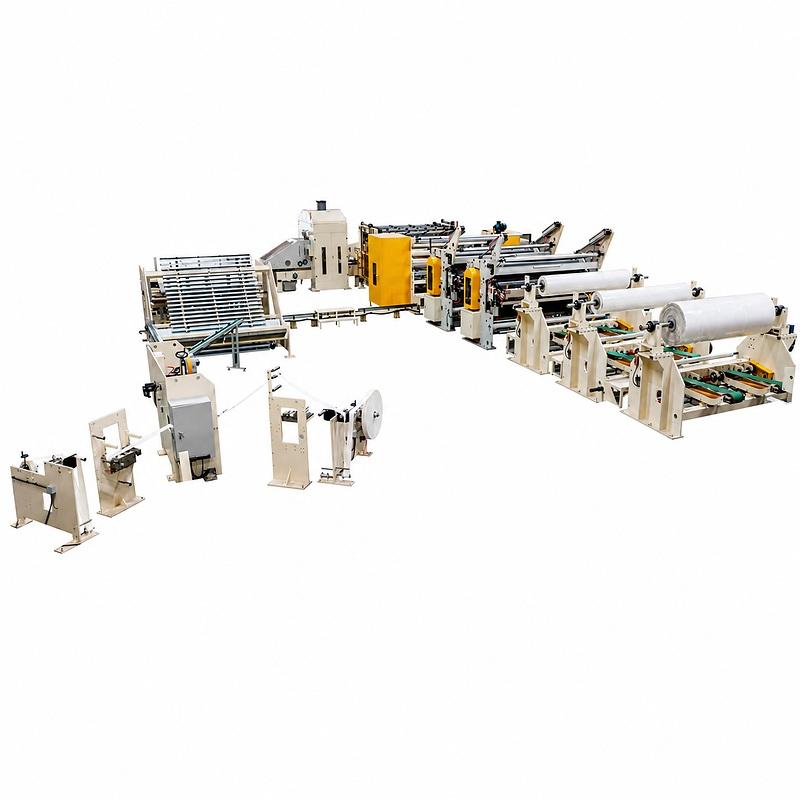
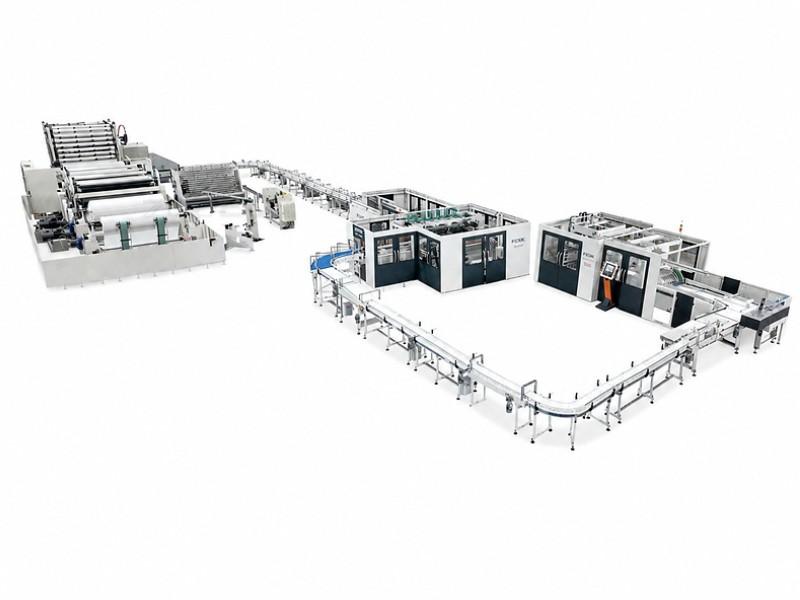
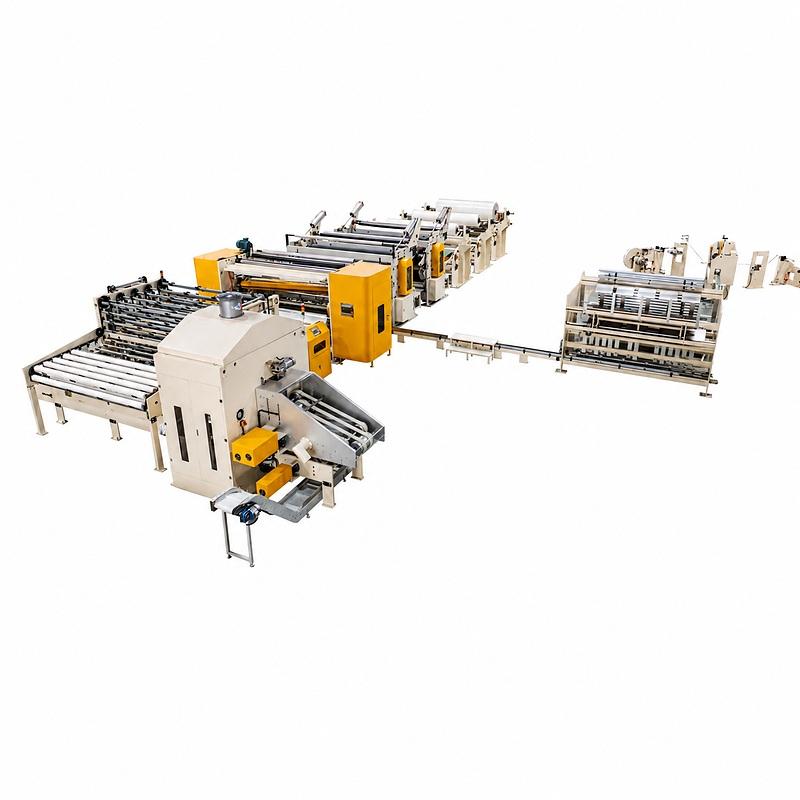
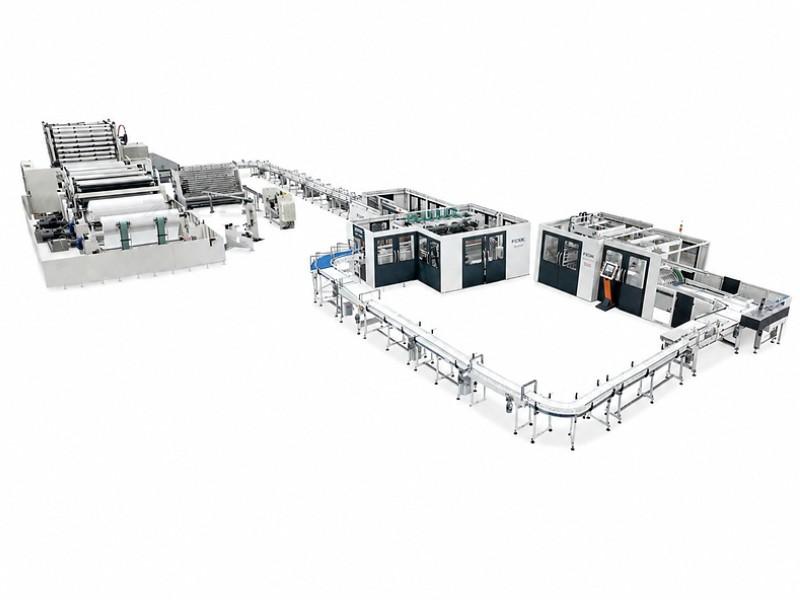
The DB-R300 or DB-R500 should be selected according to the confirmed roll specification and target output. The DB-R300 is suitable for standard kitchen towel production projects, while the DB-R500 provides a higher-speed option for large-scale production. The decision should be based on the required sheets per minute, the number of working shifts, and the available floor space for the rewinder and downstream cutting equipment.
Production flow:
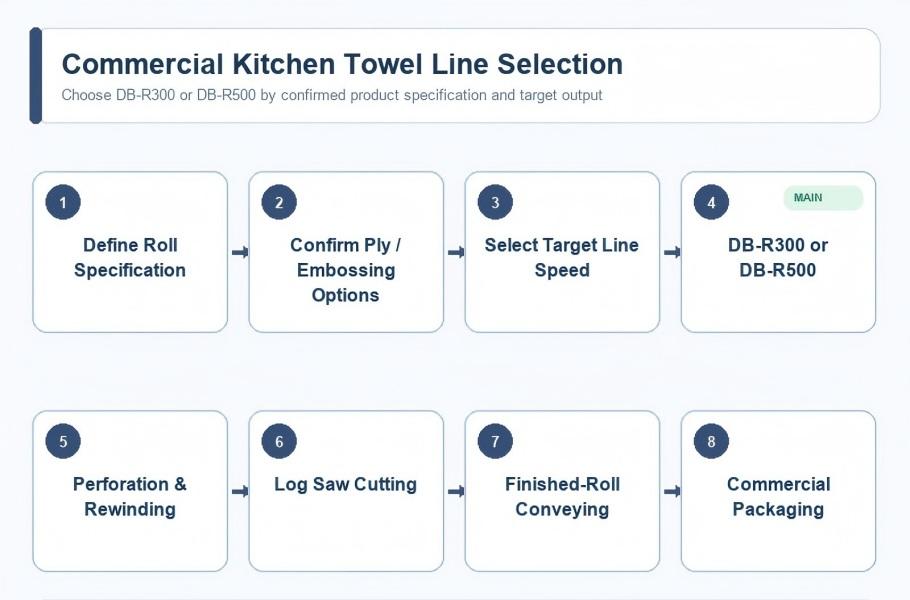
Define Roll Specification → Confirm Ply and Embossing → Confirm Target Output → Select DB-R300 or DB-R500 → Perforation and Rewinding → Log-Saw Cutting → Conveying → Commercial Packaging
Model No.: DB-R300
Model No.: DB-R500
The commercial kitchen towel line selection flow is shown below. This sequence helps buyers translate a finished-roll requirement into a concrete equipment configuration before requesting a quotation.
Project Planning Notes
When planning a commercial kitchen towel project, the buyer should confirm the parent-roll width and diameter, the finished roll width and sheet length, the ply structure, and the embossing requirement. These values determine whether the DB-R300 or DB-R500 is the appropriate rewinder and how the log saw and packaging stage should be arranged.
If the target output exceeds the capacity of a single rewinder, the buyer may need to plan for parallel lines or additional cutting shifts. The final configuration should also account for the available voltage, air pressure, and floor layout at the installation site.
Buyer takeaway: The correct rewinder choice depends on the finished roll specification, the target output per shift, and the downstream cutting and packaging arrangement. Confirming these parameters before equipment selection reduces the risk of a line mismatch after installation.
Contact DOUBLE Machinery for commercial kitchen towel equipment selection. Share your finished roll width, sheet length, ply structure, target output per shift, parent-roll specification, available floor space, and utility conditions so we can recommend the appropriate rewinder and cutting configuration.
Get Better Quote
Please FillIn The Correct Tel & E-mail,We'll Contact You As Soon As Possible!




 Tel: +86 139 0819 6540
 Email: info@doubletissuemachine.com
 MP/WhatsApp: +86 139 0819 6540
 Manufacturer Address:Dongguan, Guangdong, China