Glue-Laminated Kitchen Towel Rolls Bonded Structure and Product Options
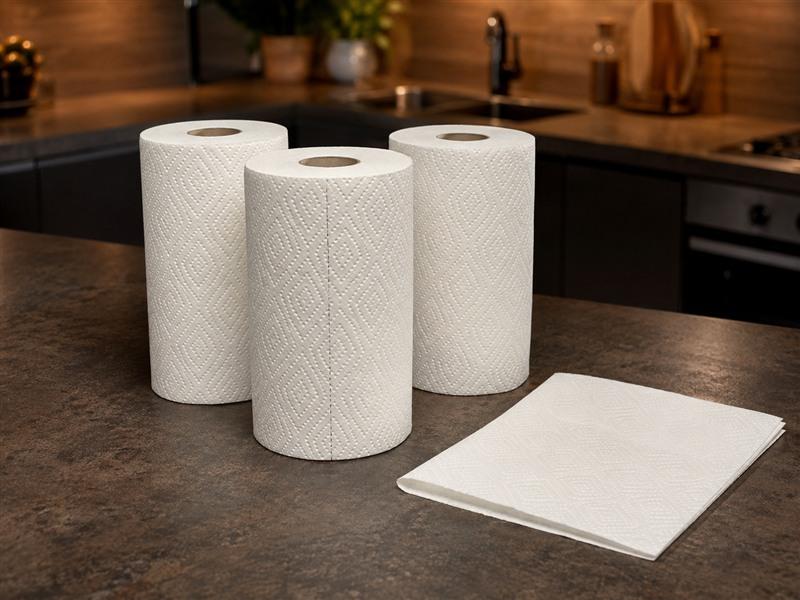
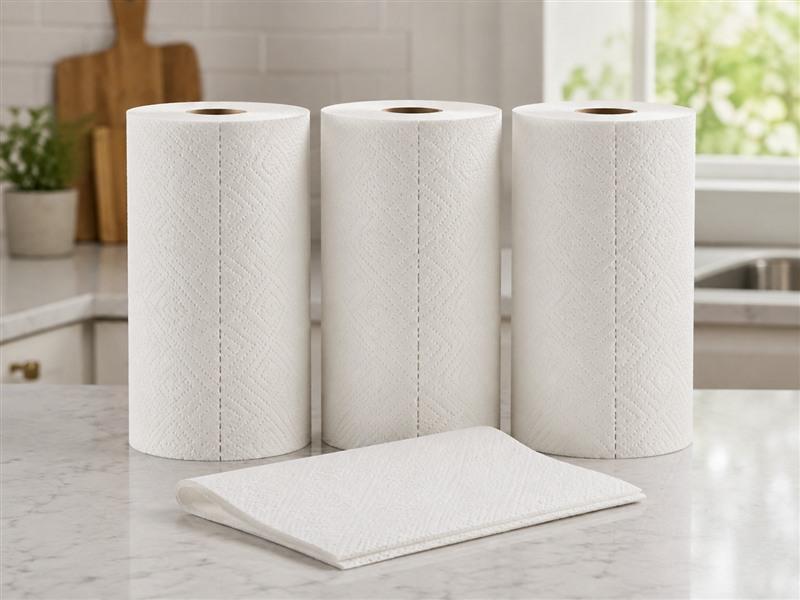
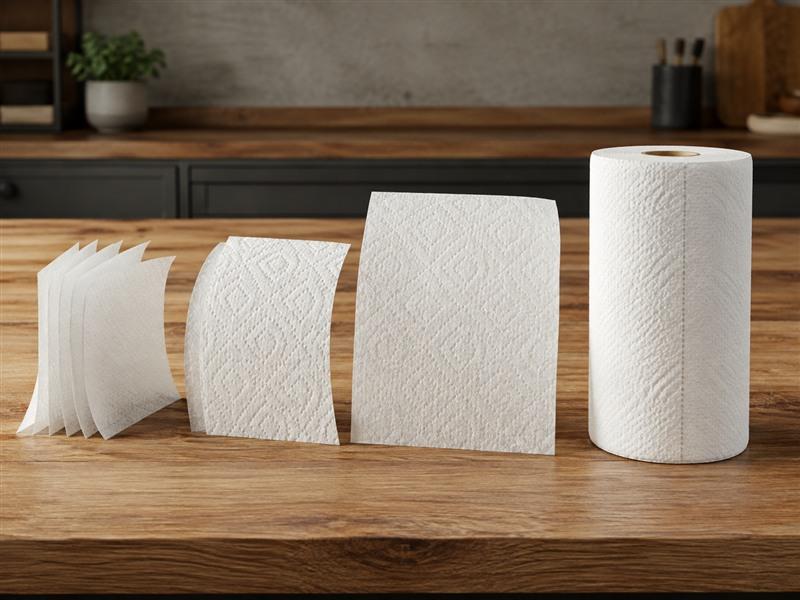
Glue-laminated kitchen towel rolls are made by bonding selected tissue plies at controlled points within an embossed structure. Unlike an ordinary stack of loose tissue layers, the bonded plies are designed to remain aligned as the paper is unwound, separated at the perforation, and used for wiping.
This construction is generally selected when a producer wants a kitchen towel with a coordinated embossed appearance and a more unified multi-ply sheet. The final result depends on the tissue grade, number of plies, embossing pattern, bonding arrangement, and finished-roll specification.
Glue lamination is a particular finished-product structure. It should not be used as a general description for every multi-ply kitchen towel.
What Makes a Glue-Laminated Kitchen Towel Different?
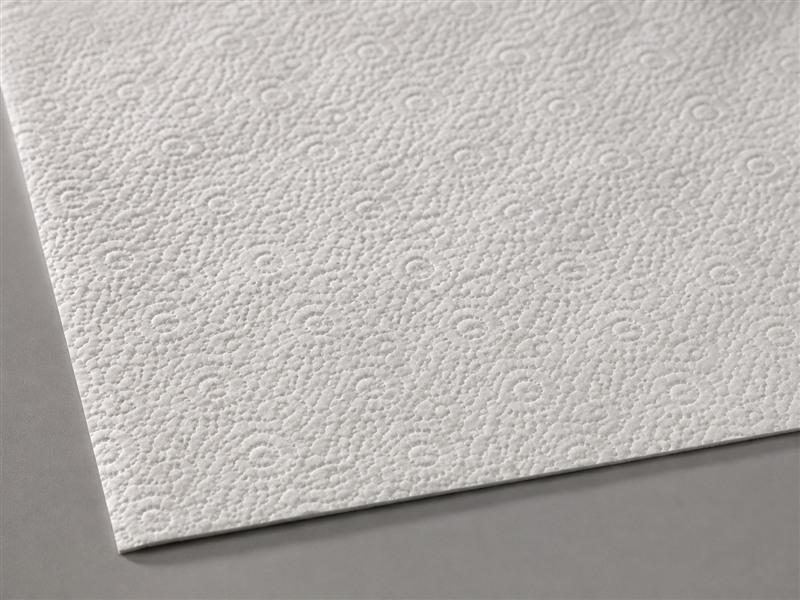
An ordinary multi-ply kitchen towel may rely on edge embossing or another mechanical method to help hold its layers together. A glue-laminated product uses a controlled bonding pattern between selected embossed areas.
The adhesive should not be visible as wet glue, heavy spots, or continuous glue bands. In a correctly presented finished product, the main visible features should be:
Aligned tissue plies
A coordinated embossed pattern
A unified finished sheet
Clean perforation
Consistent roll formation
Neat sheet edges
Stable separation from the roll
The purpose of the bonding arrangement is to maintain the intended sheet structure. It does not automatically prove higher absorbency, wet strength, or softness. Those properties depend on the raw material and must be verified through product testing.
Finished-Product Structure and Variables
Glue-laminated kitchen towels may be developed in different tissue grades, colors, embossing styles, and roll formats. Important product variables include:
Tissue fiber composition
Basis weight of each ply
Number of tissue plies
Embossing depth and pattern
Bonding-point distribution
Adhesive compatibility
Finished sheet thickness
Perforation spacing
Roll width and diameter
Core or coreless format
Sheets per roll
Retail packaging format
The tissue plies should remain properly registered. Misaligned layers, exposed adhesive, excessive stiffness, or irregular bonding can reduce the visual and functional quality of the finished product.
Embossed Appearance and Product Positioning
Glue lamination is often combined with a defined embossing design. Geometric, micro-dot, wave, and decorative patterns may be selected according to the intended product range.
A private-label or premium retail product may use a more distinctive embossed appearance. A practical household product may use a simpler pattern and product structure.
The visual design should remain consistent around the roll. Overly deep embossing may damage weaker tissue, while insufficient bonding may allow the plies to separate.
Product positioning should be based on the confirmed finished sample rather than general descriptions such as "premium quality" or "super absorbent."
Typical Applications
Glue-laminated kitchen towel rolls may be developed for:
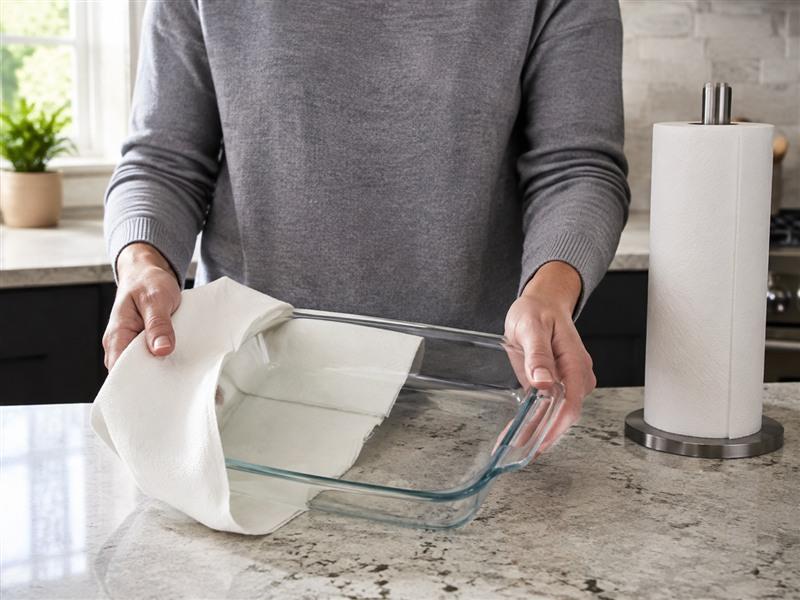
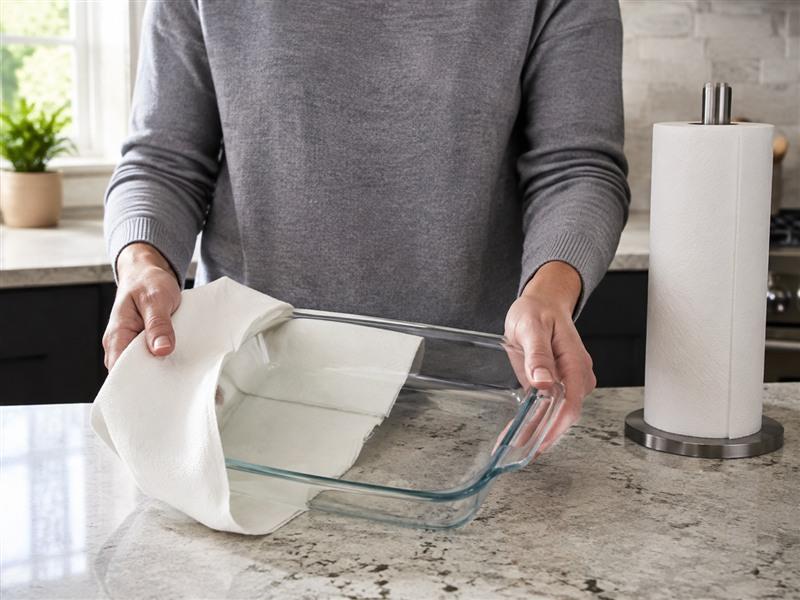
Household spill pickup
Cleaning around kitchen sinks
Wiping kitchen worktops
Routine surface cleaning
Retail private-label programs
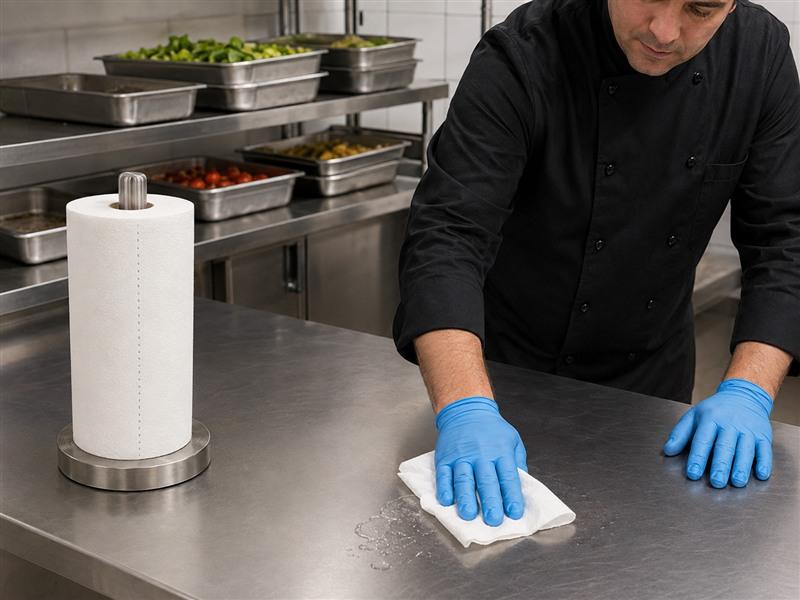
Selected professional kitchen applications
Differentiated embossed kitchen towel ranges
Actual suitability depends on the raw material, adhesive system, and approved product construction. Food-contact, antibacterial, biodegradable, or compostable claims must not be made without the appropriate test evidence or certification.
Finished-Product Quality Inspection
Quality inspection should concentrate on the finished kitchen towel rather than only on the appearance of the roll. Recommended inspection points include:
Ply alignment
Bonding consistency
Embossing definition
Sheet flexibility
Layer separation
Perforation quality
Finished-roll diameter
Roll firmness
Sheet count
Core alignment, where applicable
Packaging integrity
A bonded sheet should not be permanently rigid. It must still retain the flexibility expected of kitchen towel tissue. Adhesive suitability and any applicable chemical or food-contact requirements must be confirmed with the adhesive supplier and the buyer.
Production Sequence and Equipment Match
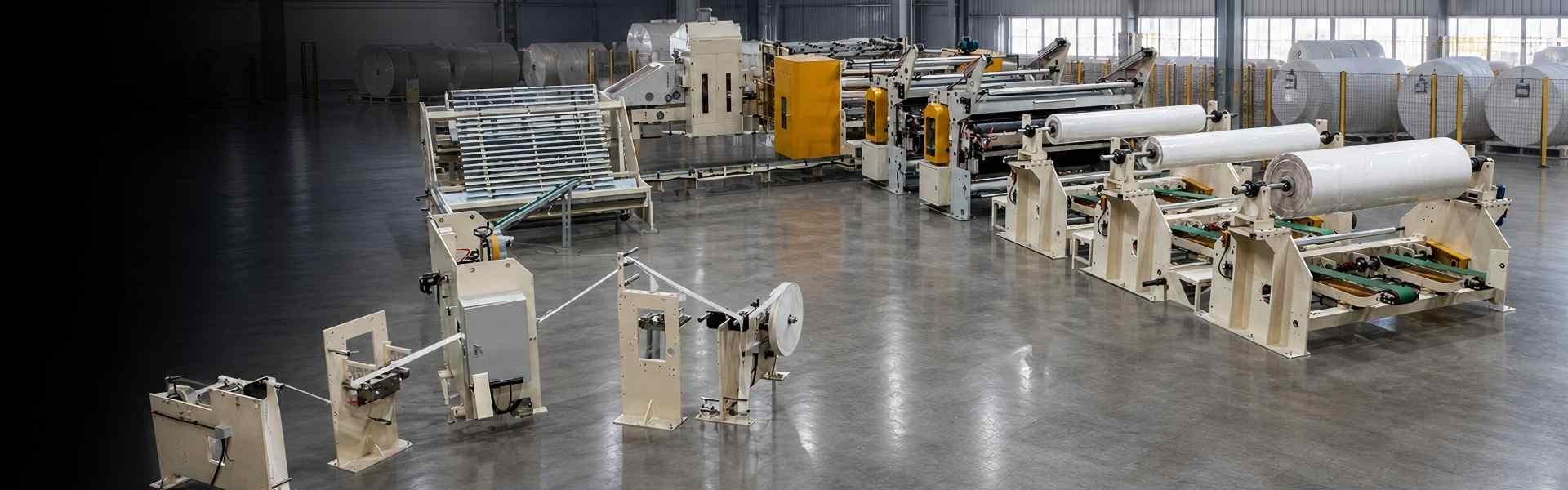
Glue-laminated kitchen towels require coordinated unwinding, embossing, adhesive application, ply alignment, and rewinding. A typical production sequence is:
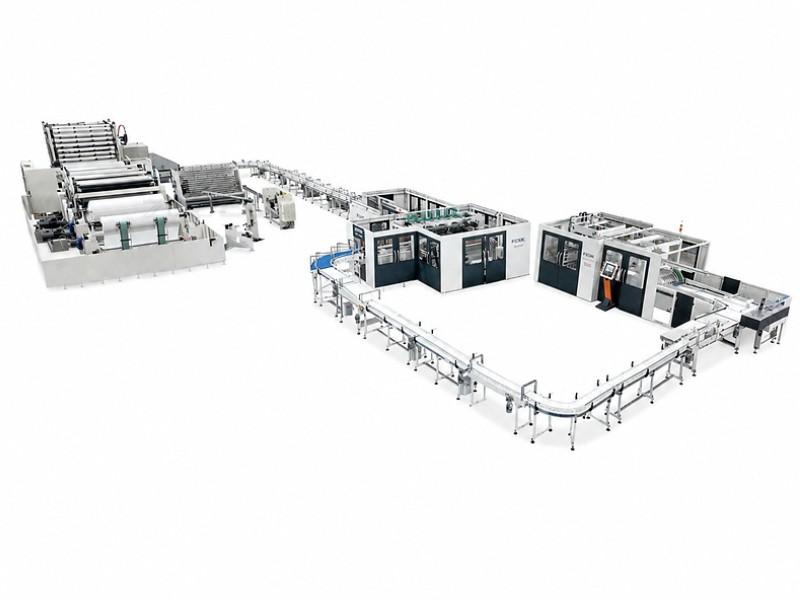
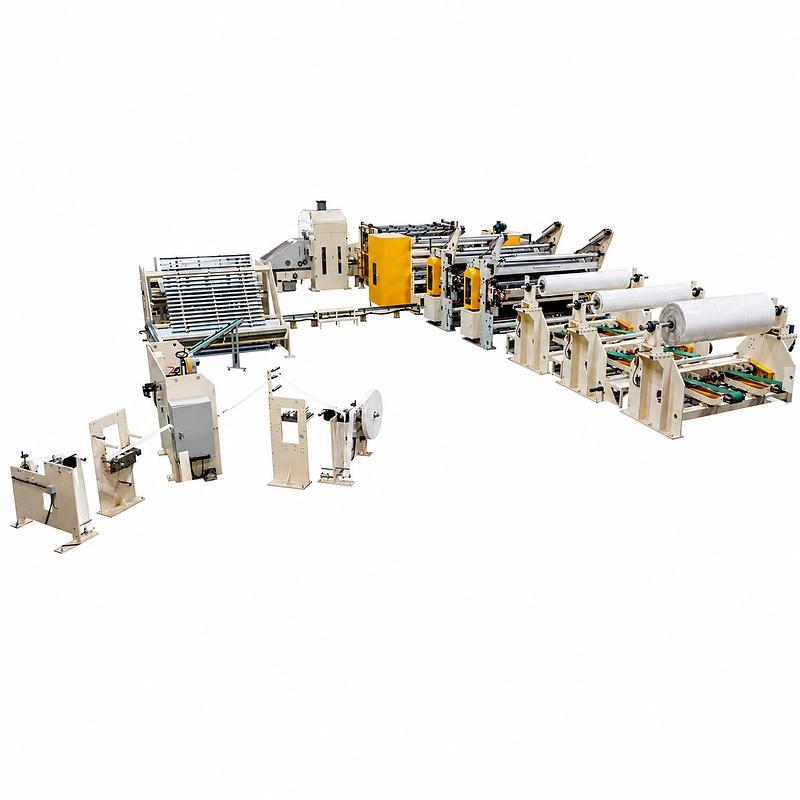
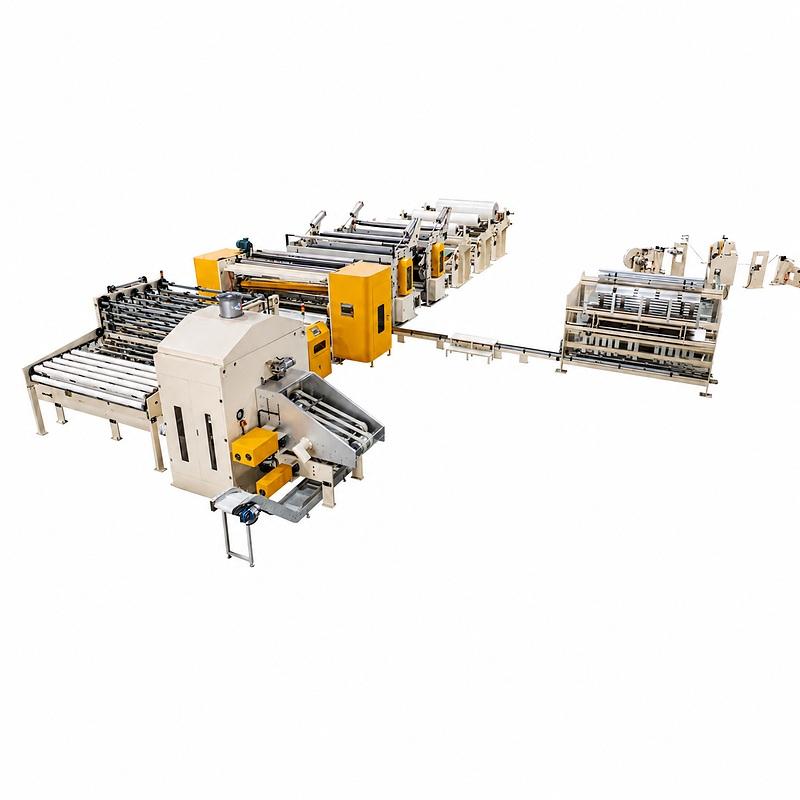
Depending on the confirmed project configuration, the DOUBLE DB-R300 or DB-R500 can provide the perforation and non-stop rewinding platform after the required embossing and glue-lamination sections. Glue lamination is an optional, configuration-dependent arrangement and must not be described as a standard function of every DB-R300 or DB-R500.
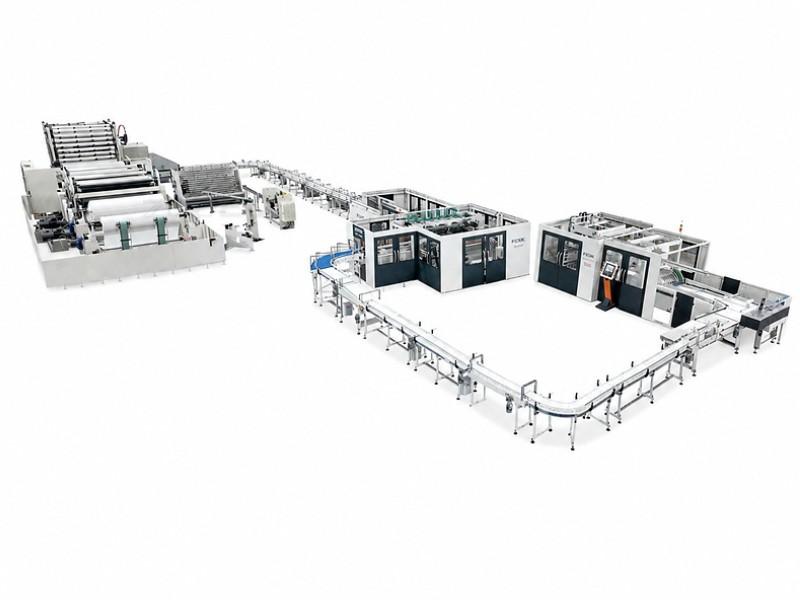
The rewinder produces long logs. A matched log saw subsequently cuts these logs into individual kitchen towel rolls, followed by conveying and packaging equipment.
DB-R500 Non-Stop Rewinder
DB-R300 Non-Stop Rewinder Line
Selecting a Glue-Laminated Kitchen Towel Product
Buyers developing this product should provide the following information for a configuration review:
Reference kitchen towel sample
Tissue grade and basis weight
Required number of plies
Embossing reference
Required finished-roll dimensions
Core or coreless format
Sheet length and sheet count
Packaging format
Target output
Applicable adhesive requirements
Product-testing and approval criteria
DOUBLE Machinery can review the intended finished product and recommend a suitable converting configuration. For a related production scenario, see the Kitchen Towel Rewinding Solution in Vietnam.
To evaluate a glue-laminated kitchen towel project, please share your finished tissue format, target output, parent-roll or material condition, available factory layout, voltage/utilities, downstream packing requirements, and automation needs. DOUBLE Machinery will review the product specification and recommend a suitable converting configuration.
View the DB-R300 Kitchen Towel Non-Stop Rewinder Line or the DB-R500 Kitchen Towel Non-Stop Rewinder Line for more details. For a complete overview of available converting equipment, download the Tissue Paper Machine Catalog.e DB-R500 Kitchen Towel Non-Stop Rewinder Line




 Tel: +86 139 0819 6540
 Email: info@doubletissuemachine.com
 MP/WhatsApp: +86 139 0819 6540
 Manufacturer Address:Dongguan, Guangdong, China