


Assessing Napkin Stack Transfer Into Wrapping
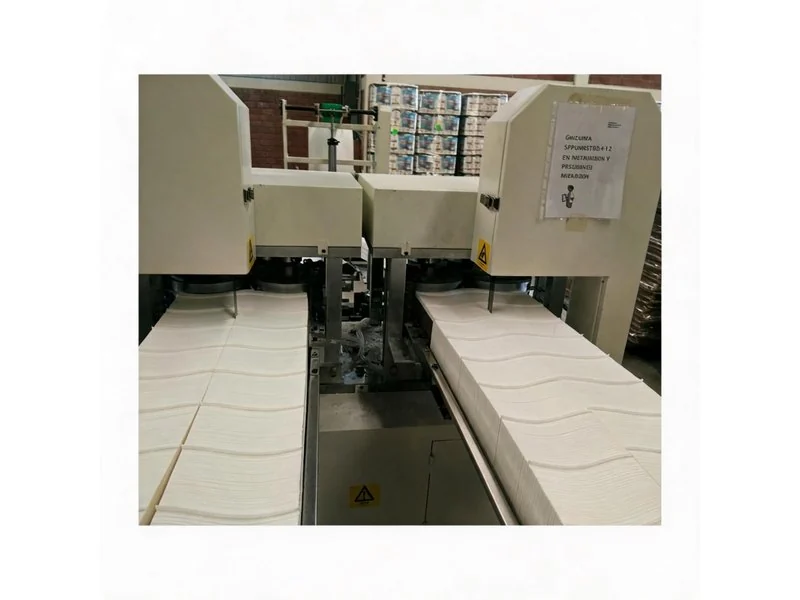
Examine napkin stacks before and after transfer toward wrapping. Define an acceptable stack condition and identify where additional alignment checks may be needed.
 Line Model | Automatic Napkin Tissue Production Line |
 Power Supply / Installed Power | AC 380 V, 50 Hz, 3 phase |
 Design Output | Configured to the target line output and process balance |
| Line Layout Size | approximately 8,930 × 7,619 mm. Final complete-line layout must include the selected cartoning, palletizing, safety clearance, and operator access area. |
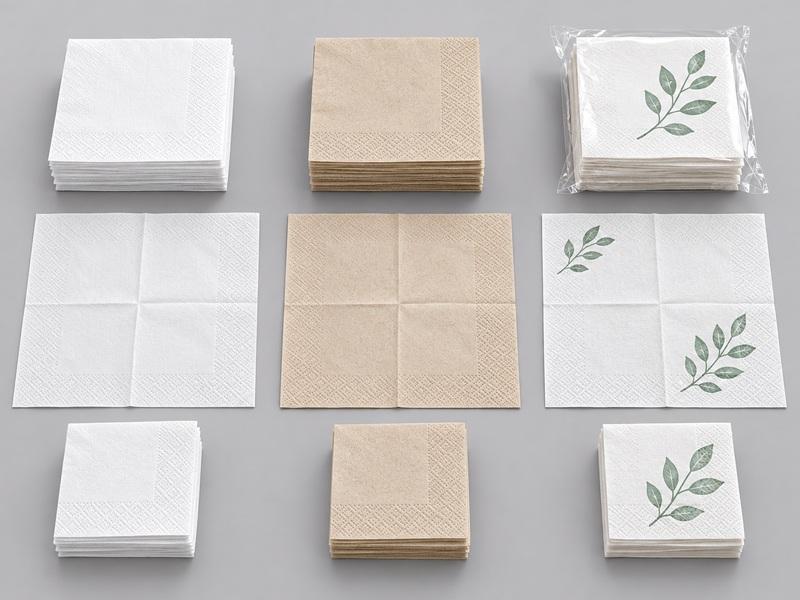
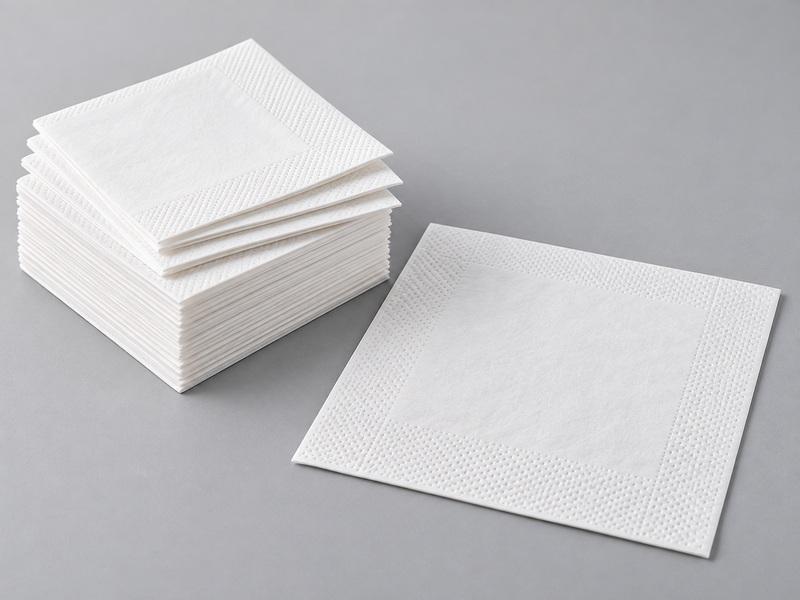
| Finished Tissue Product | Full-embossed and border-embossed 1/4-fold napkins; unfolded size 270 × 270 mm, folded size 135 × 135 mm |
| Stable Working Output | Up to 180 packs/min at the packing stage; final line output is matched to the agreed sheets per pack, tissue specification, pack size, and end-of-line arrangement |
| Compressed Air Requirement | Minimum 0.5 MPa for converting |
 Line Weight | Confirmed with the final line scope and layout |
 Certification | Specified for the destination-market safety requirements |
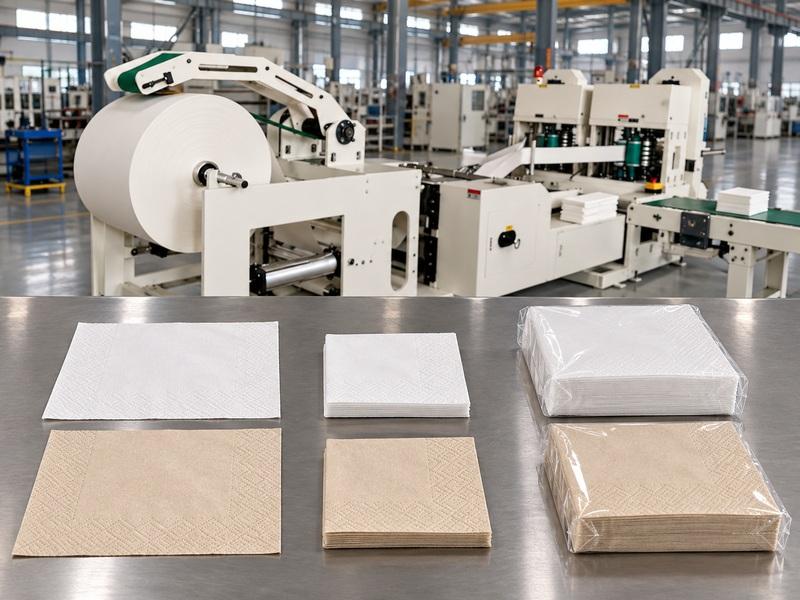
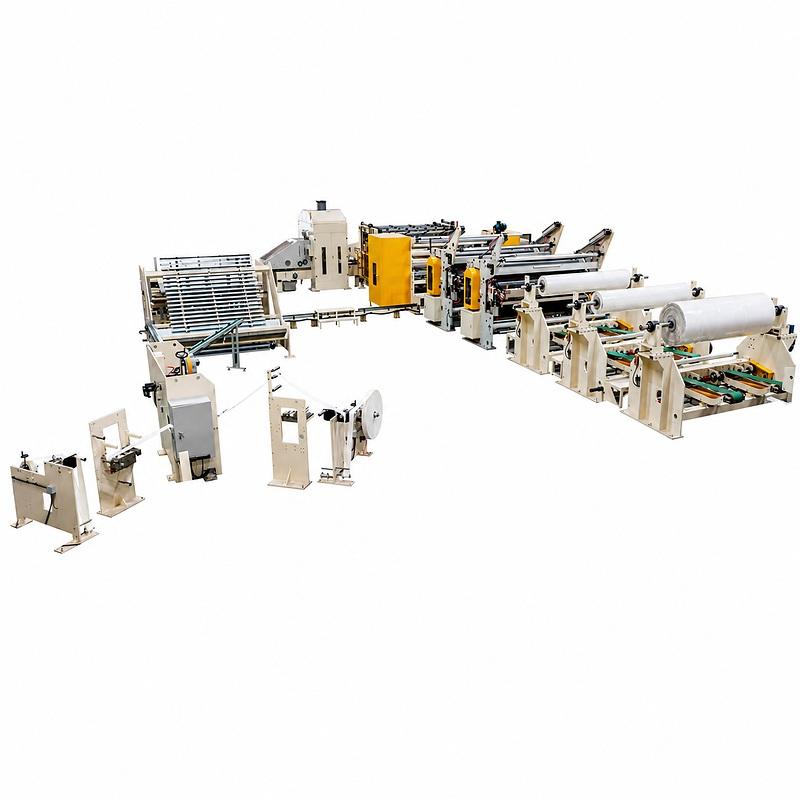
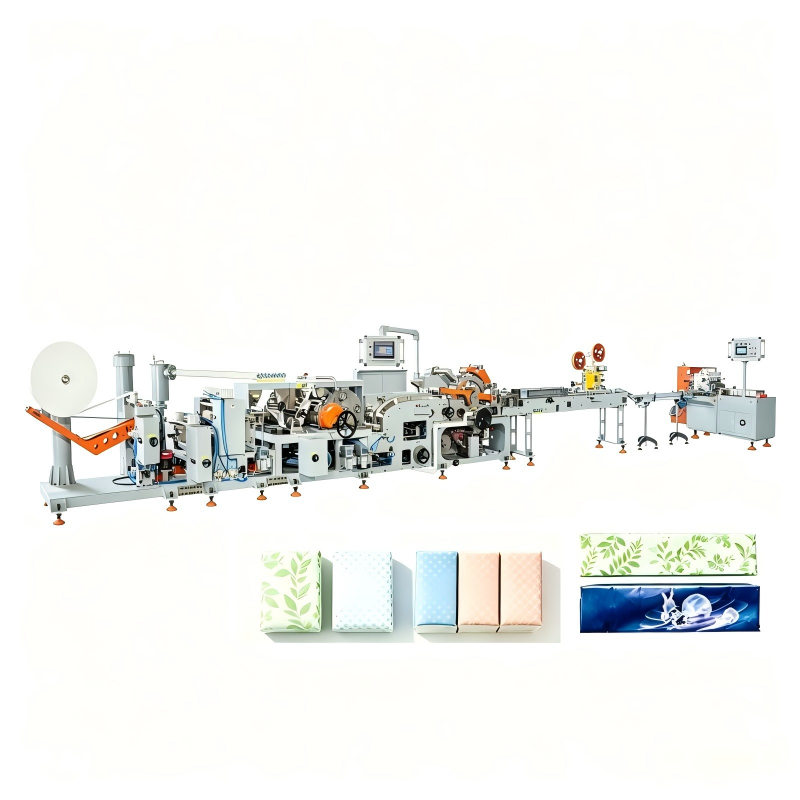
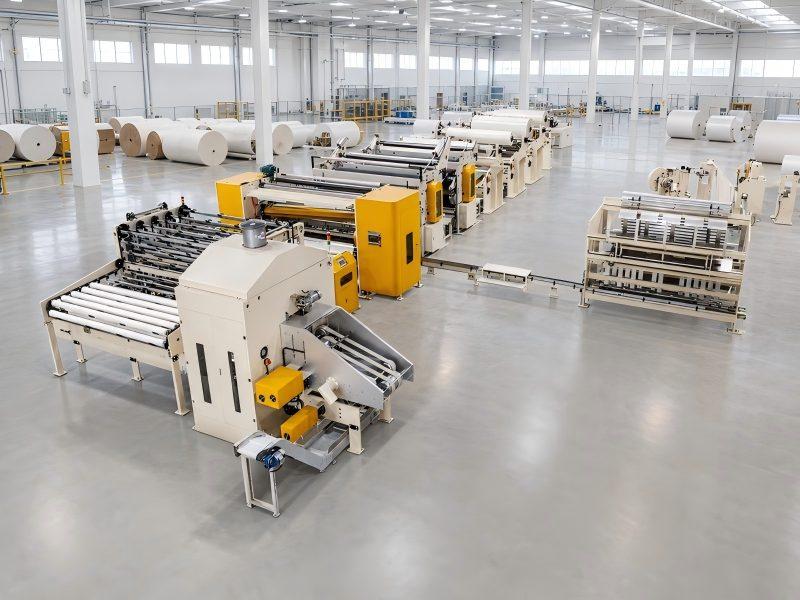
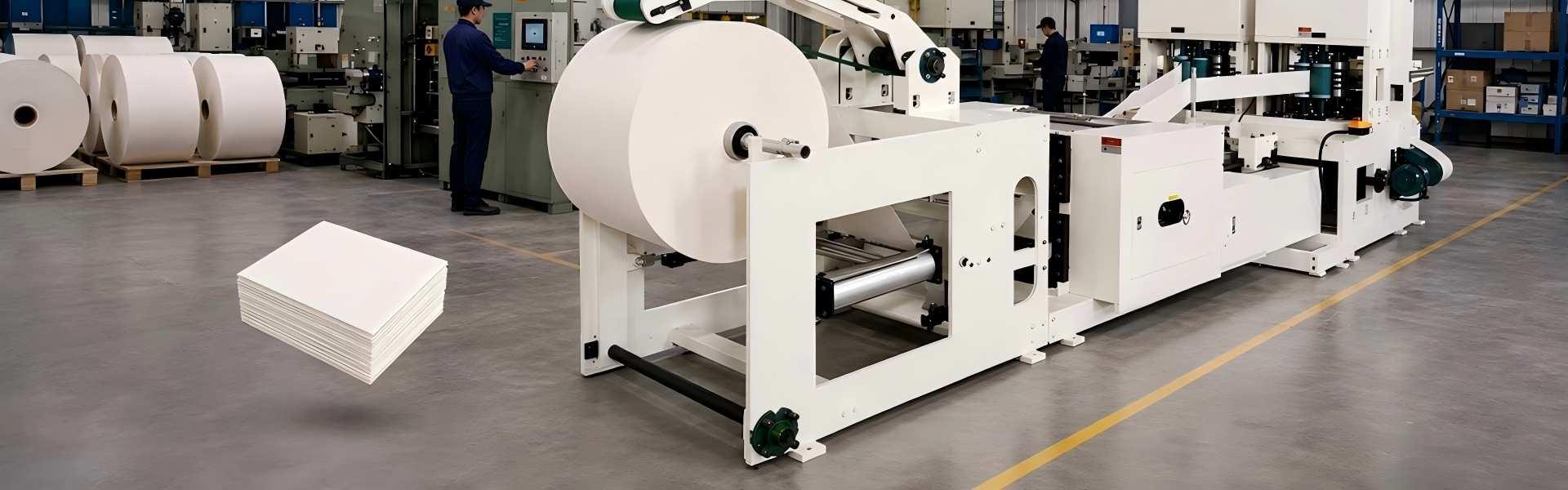
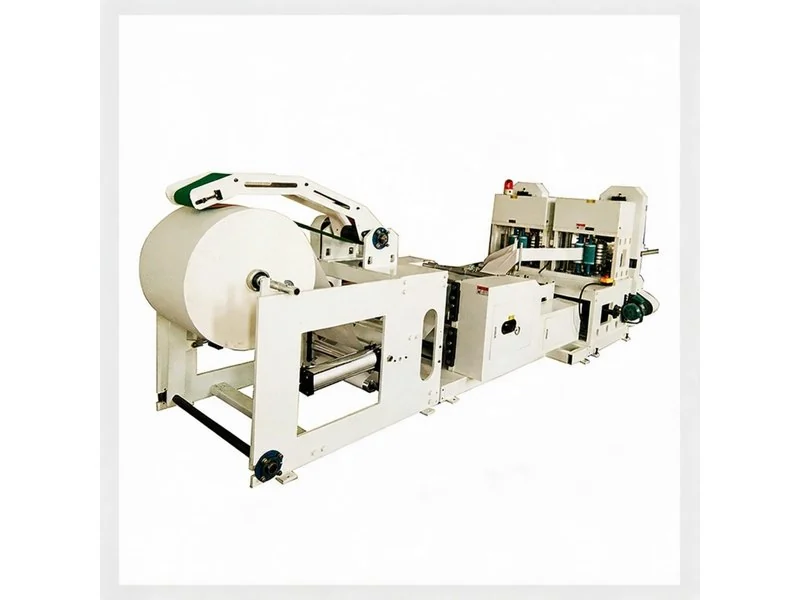
The DB-NK-270-based automatic napkin tissue production line links embossing, folding, cutting, stack separation, individual packing, conveying, cartoning and palletizing into one coordinated production flow. The equipment configuration is designed for 270 × 270 mm napkins with full embossing and border embossing.
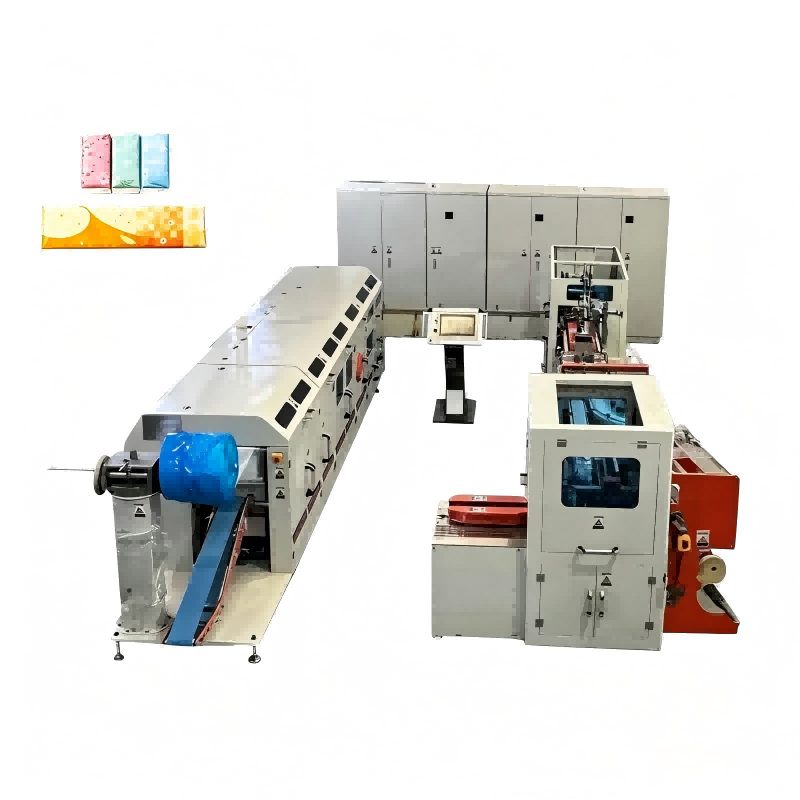
Each section is matched to the required napkin specification, sheets per pack, package format, carton arrangement and factory layout, allowing the converting and end-of-line packaging stages to operate as one complete production line.

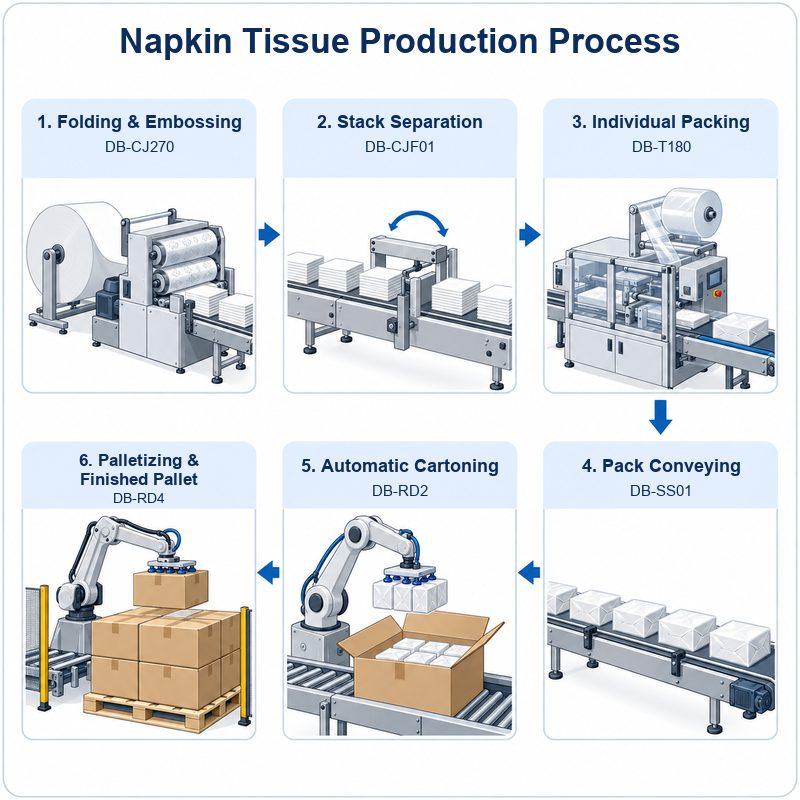
The line follows a defined sequence: parent-roll feeding, full embossing and border embossing, 1/4 folding, cutting, napkin-stack separation, individual packing, pack conveying, robotic cartoning and palletizing.
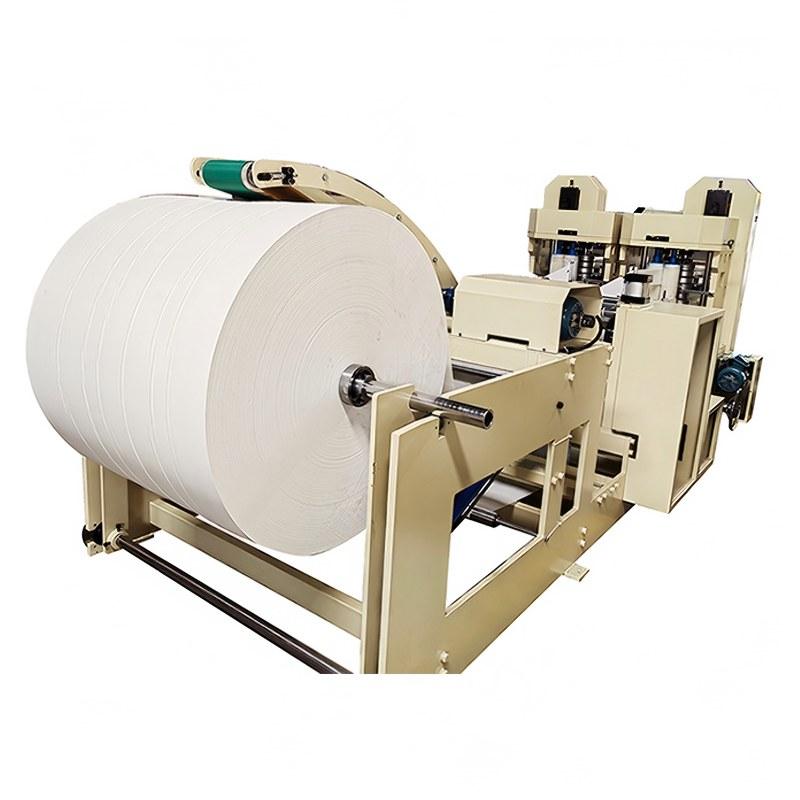
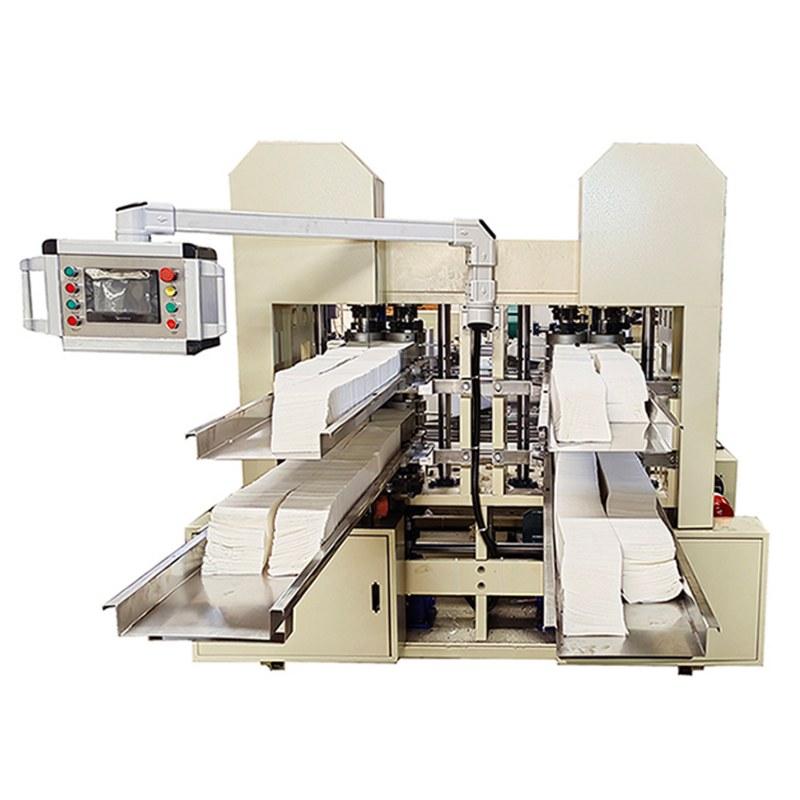
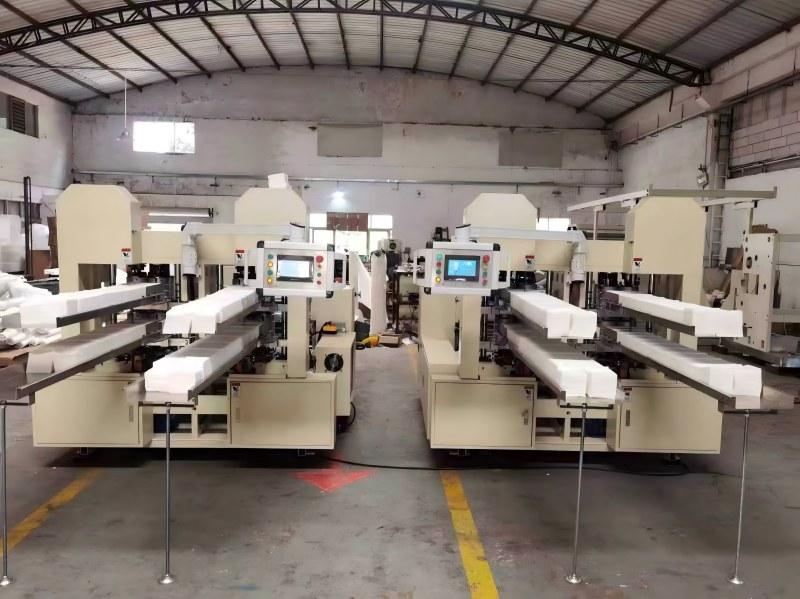
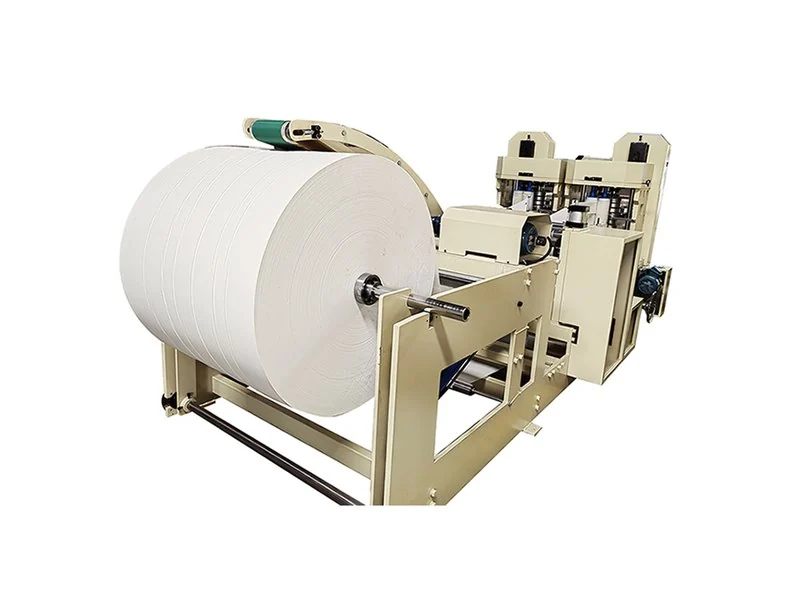
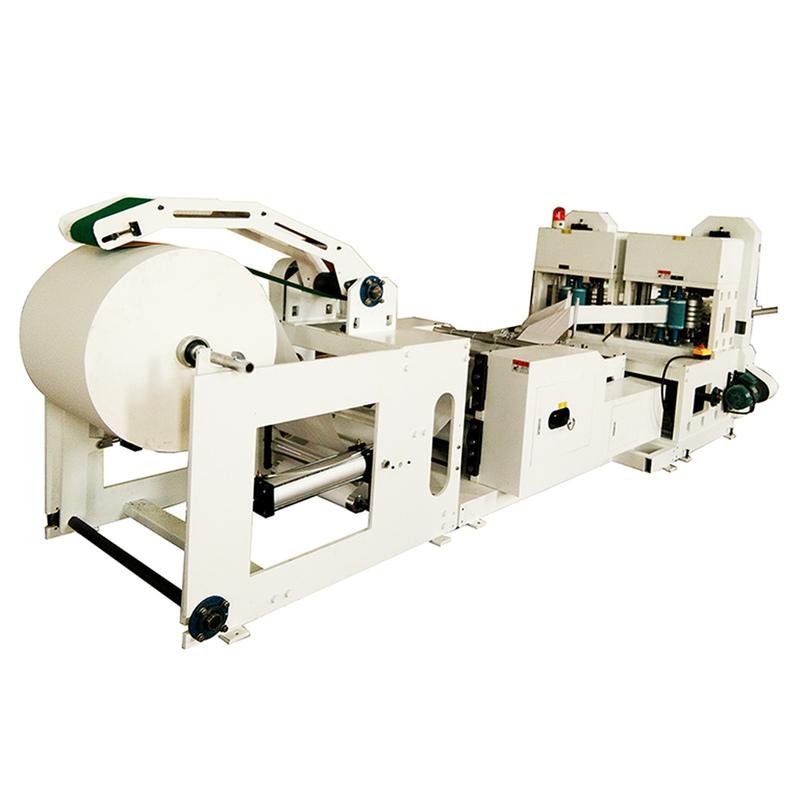
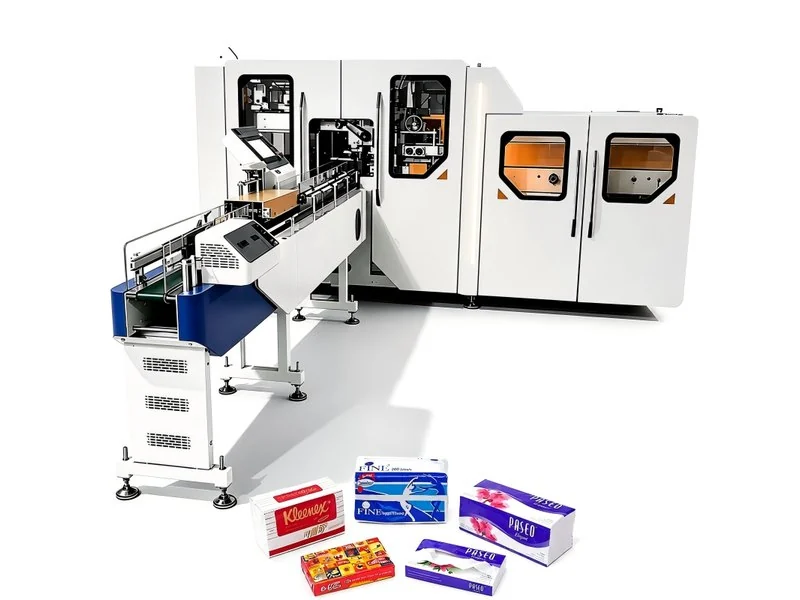
The DB-NK-270 converts the parent paper roll into folded napkins. The DB-CJF01 separates and transfers the napkin stacks to the DB-T180 packing machine. Finished packs move through the DB-SS01 conveyor system to the DB-RD2 cartoning robot, followed by the DB-RD4 palletizing robot.
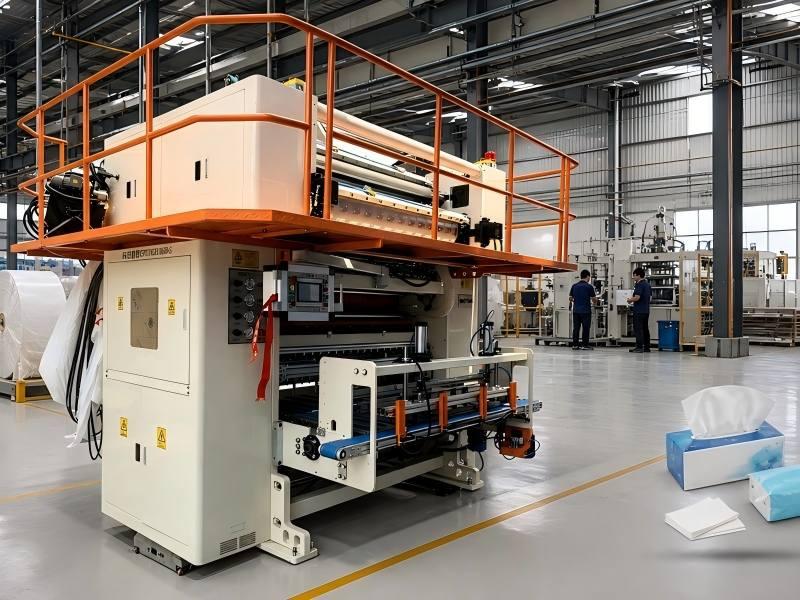
DB-NK-270 Single Outlet Napkin Paper Machine
Because all stages are connected, practical line output depends on the balance between napkin converting, stack separation, packing and downstream carton handling rather than on the maximum speed of one machine alone.
Before the production line is finalized, several configuration decisions determine how the converting and packaging stages connect:
Confirmed line parameters, including napkin size, raw-paper specification, converting speed, packing speed, power supply, compressed-air requirement and main process area, are listed in the Technical Specifications field. Final values are agreed against the factory technical proposal.
| Project Input | What It Determines | Status Before Order |
|---|---|---|
| Finished napkin sample or unfolded / folded dimensions | Folding, cutting and embossing configuration | To be confirmed with sample |
| Paper grammage, ply and parent-roll specification | Converting section setup and web tension | To be confirmed |
| Sheets per pack, stack thickness and film specification | Separator and packing-machine settings | To be confirmed |
| Packs per carton and carton dimensions | Cartoning robot scope and program | To be confirmed |
| Pallet dimensions and stacking pattern | Palletizing configuration and floor space | To be confirmed |
| Local voltage, compressed air and factory layout | Utilities, conveyor routing and operator access | To be confirmed |
The line is designed to produce 270 × 270 mm unfolded napkins with a finished folded size of 135 × 135 mm. The standard product uses a 1/4 fold with full embossing and border embossing.
Finished napkins can be packed for restaurants, hotels, catering services, food-service distributors and retail markets. The embossing pattern, sheet count, package appearance, carton quantity and pallet arrangement are confirmed according to the intended market and finished-product sample.
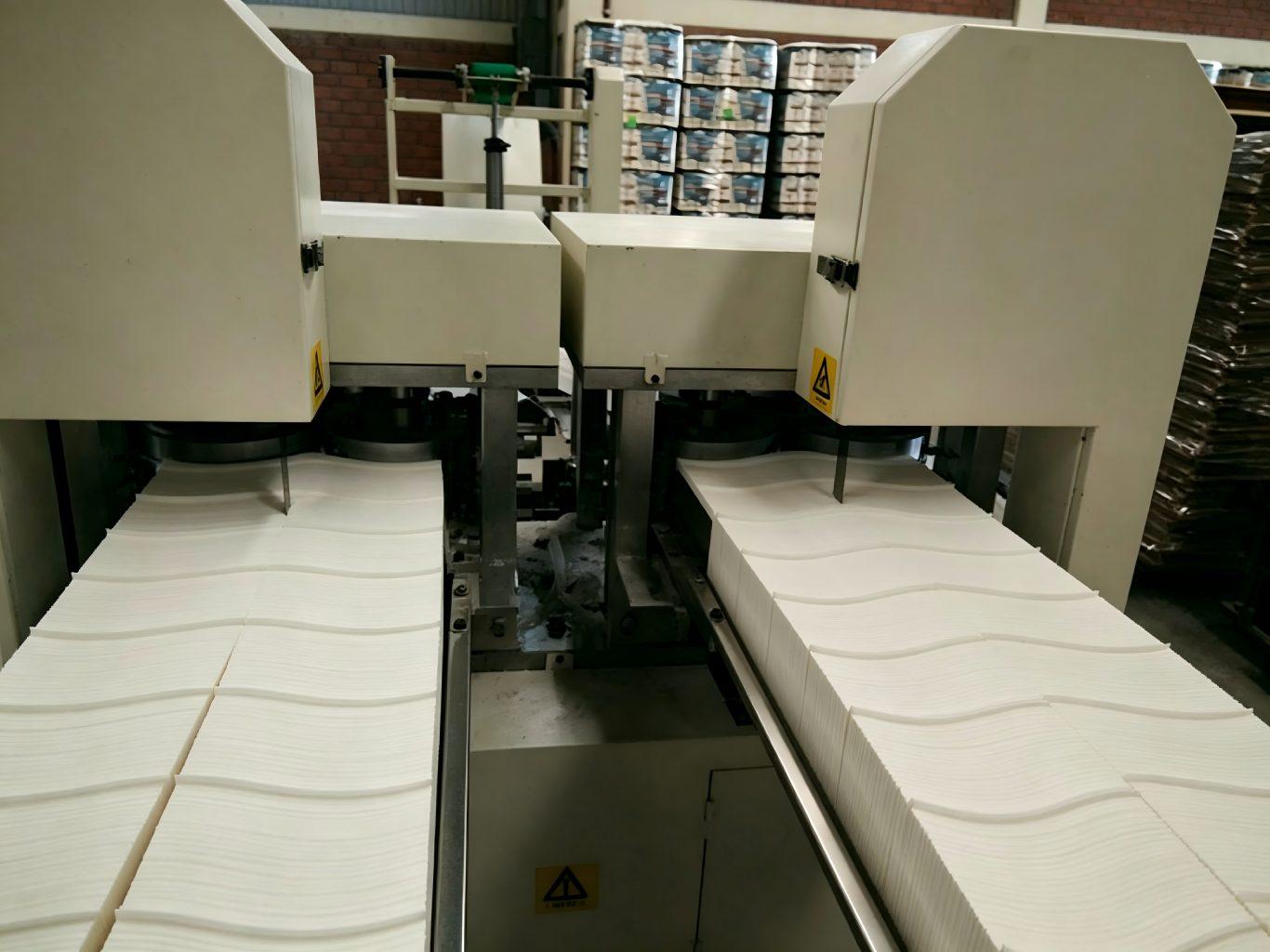
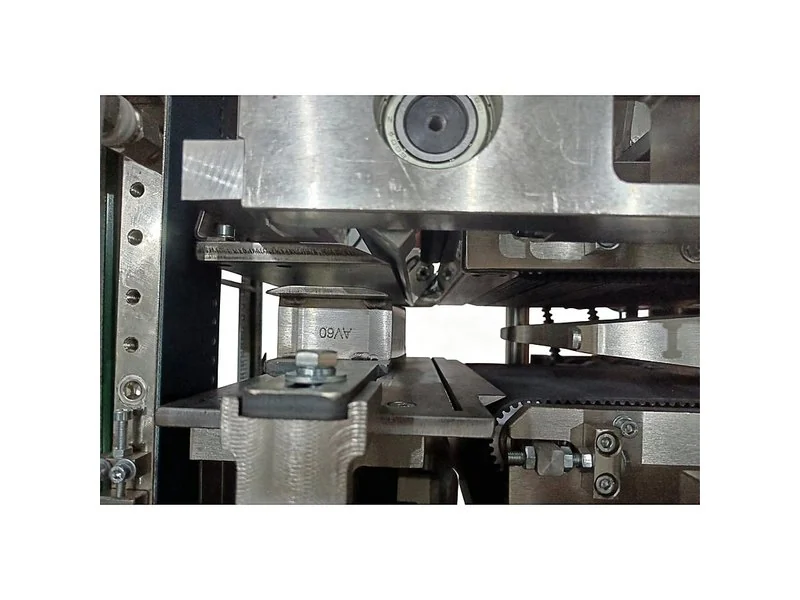
Stable production depends on consistent parent-roll quality, correct web tension, accurate embossing pressure and aligned folding and cutting. The separator must transfer napkin stacks cleanly to the packing machine without disturbing the stack shape or sheet count.
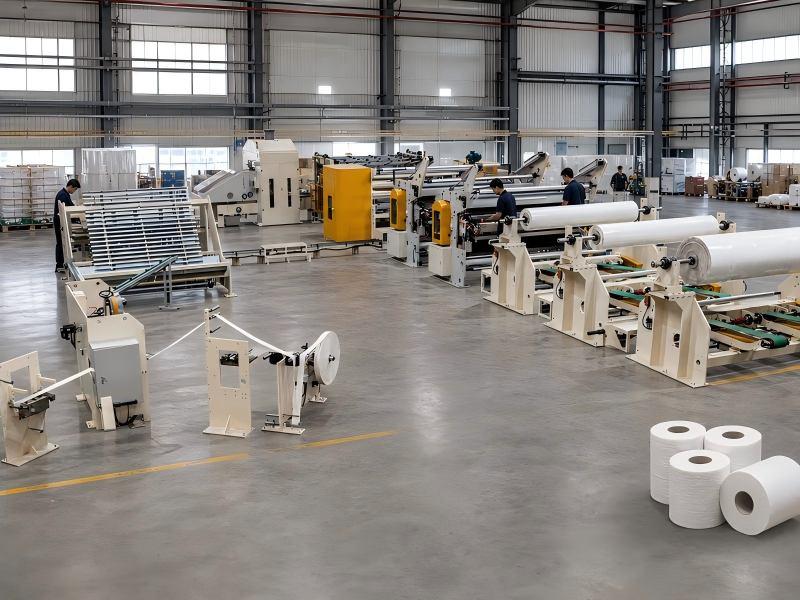
Operators should have clear access to the folding, separating, packing and conveyor sections for routine inspection, paper and film replacement, cleaning and jam clearing. Cartoning and palletizing areas should include sufficient space for cartons, empty pallets, finished pallets and safe robot operation.
Planning spare parts and wear items for the cutting, folding, sealing and conveyor sections before commissioning helps reduce unplanned production stops.
What information should I provide to get an accurate line proposal?
Send your finished napkin sample or required unfolded and folded dimensions, paper grammage and ply, embossing requirements, sheets per pack, package dimensions, packs per carton, pallet specification, target output, factory layout and local voltage.
What napkin size is this production line designed for?
The referenced line is designed for a 270 × 270 mm unfolded napkin with a 135 × 135 mm folded size and 1/4 fold. Other napkin formats require a separate technical review of the folding, cutting, separating and packing configuration.
How is the production-line output determined?
Practical finished-pack output depends on sheets per pack, stack thickness, packaging format and the capacity balance between the converting, separating, packing and cartoning stages. The stable output of the connected line is determined by its slowest matched stage.
Does the line include cartoning and palletizing?
The referenced production-line configuration includes the DB-RD2 automatic cartoning robot and DB-RD4 palletizing robot. The final scope can be matched to your required automation level, carton format and pallet arrangement.
Can the line produce different pack and carton formats?
Pack size, packs per carton and pallet pattern are confirmed before the line is finalized. Changes outside the approved working range may require adjustments to the separator, packing machine, conveyor system, cartoning robot or palletizing program.
What is confirmed before the order is placed?
The napkin specification, embossing pattern, sheets per pack, packing-film specification, carton arrangement, pallet pattern, production target, equipment scope, factory layout and utilities are confirmed before order. Final technical values are agreed against the approved factory proposal.
Send us your napkin sample, paper specification, package format, carton arrangement, output target and factory layout, and we will prepare a matched napkin converting, packing, cartoning and palletizing proposal. Contact us by WhatsApp or submit the inquiry form for a fast factory response.
Review the full napkin tissue production line range or check the automatic napkin packing machine details before requesting a quotation.
Napkin Tissue Production Line | DB-NK-150P Automatic Napkin Tissue Packing Machine
|
Model No. |
DB-NK-270 |
|
Production Speed |
900–1,200 sheets/min |
|
Napkin Size |
270 × 270 mm unfolded; 135 × 135 mm folded |
|
Folding Type |
1/4 fold |
|
Base Paper |
13.5–16 g/m² double-ply; 16–25 g/m² single-ply |
|
Parent Roll |
Max. Ø1,500 × 540 mm; core Ø76 mm |
|
Embossing |
Full + border embossing |
|
Main Motor |
4 kW |
|
Total Motor Power |
6.2 kW (folding-machine module only) |
|
Power & Air |
380 V / 50 Hz; compressed air ≥0.5 MPa |
Examine napkin stacks before and after transfer toward wrapping. Define an acceptable stack condition and identify where additional alignment checks may be needed.
Set a visual standard for wrapped napkin packs. Compare trial packs with that reference so unusual stack placement or pack shape can be identified for inspection.
Plan how napkin converting, stacking and packing operators will coordinate material flow. Where palletizing is included, extend the handoff review to the final carton stage.
Map the napkin route from fold forming to carton palletizing. Confirm that each proposed handoff can be monitored and discussed by the operators responsible for it.
Review how wrapped napkin packs enter cartons and how cartons reach palletizing. Confirm the planned sequence and define inspection responsibilities for both handoff points.
Establish an acceptable shape for folded napkin stacks at the next station. During trials, record whether extra manual straightening is needed before releasing stacks onward.
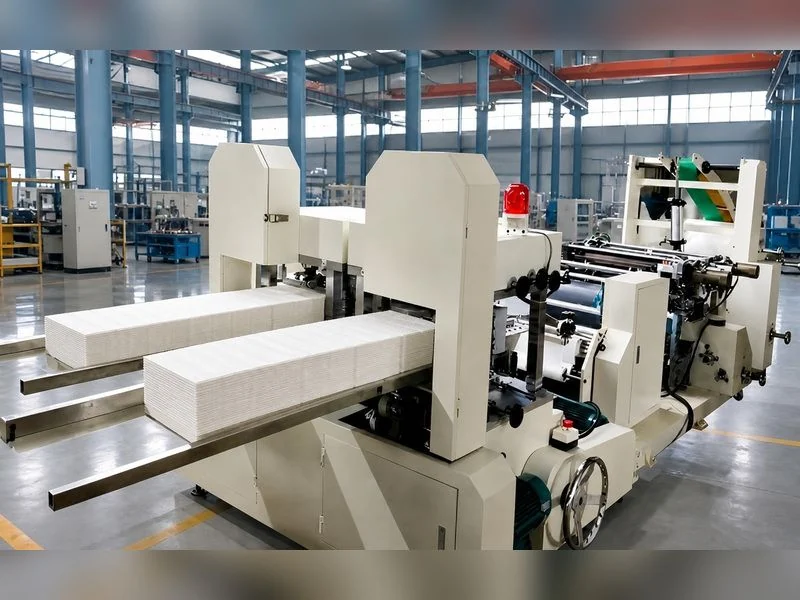
For a napkin line with cartoning and palletizing, review carton handling between those stages. Confirm the scope and define checks for an orderly final handoff.
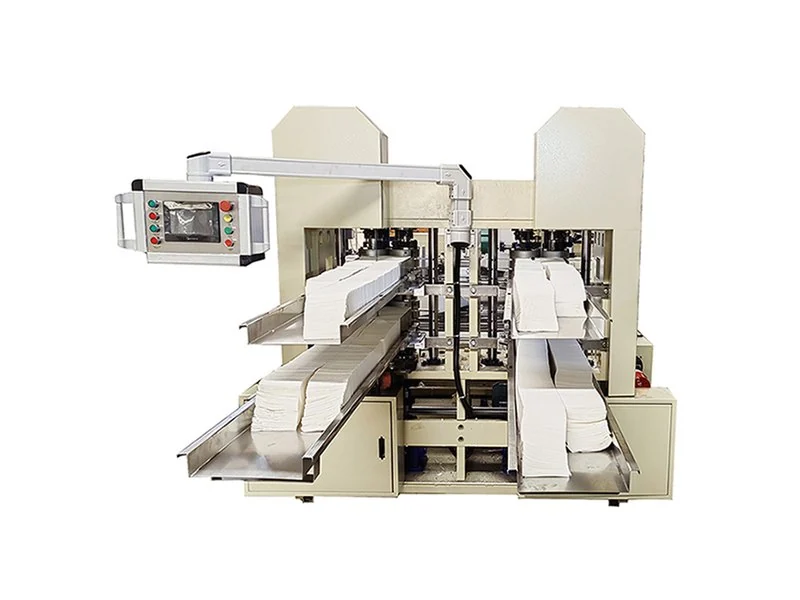
For a quarter-fold napkin project, review wrapping, cartoning and palletizing together. Confirm the configuration and assess carton handling alongside the presentation of the wrapped packs.
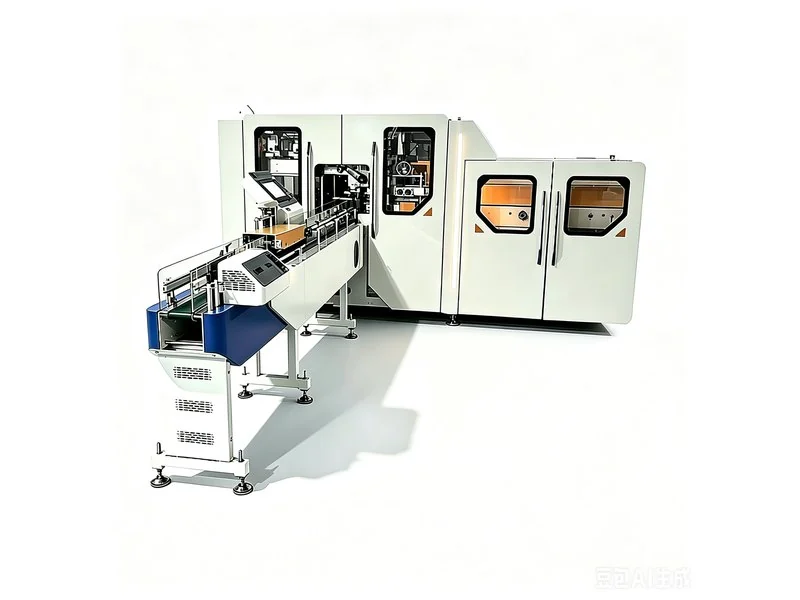
Inspect napkin stacks arriving at the wrapping infeed. Compare their condition with the transfer exit to identify where presentation checks or alignment adjustments may be useful.
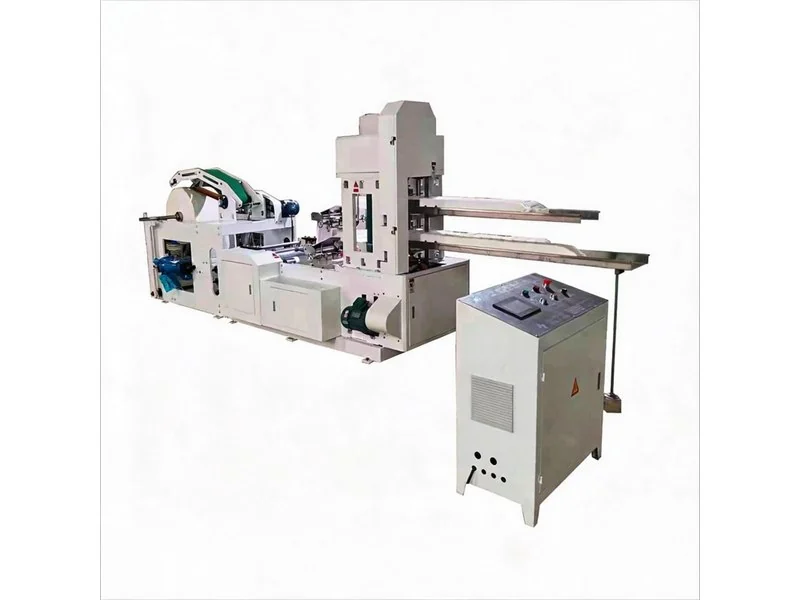
Compare quarter-fold napkin placement inside trial wrapped packs. Check whether the pack presents evenly before it reaches the proposed cartoning stage of the line.

 Tel: +8613908196540
 Email: info@doubletissuemachine.com
 MP/WhatsApp: +8613908196540
 Manufacturer Address:Dongguan, Guangdong, China



No reviews yet.