Side discharge changes the space needed beside a hand towel machine. The output position, the next handler and access for clearing or servicing the area belong on the layout before the equipment footprint is approved. Begin at the point where the finished stack leaves the folder and draw its route to the receiving operation. Then add the people, containers and access movements that occupy that same side. A narrow gap that looks adequate on an empty drawing may be unavailable as soon as production begins.
Give side discharge a physical reference
DOUBLE's DB-N-225 hand towel folding machine description includes automatic paper collection and side discharge, with layout and operator-side customization listed for discussion. Use those details to request a layout for the proposed configuration. The phrase side discharge alone does not establish its direction relative to the buyer's building or the orientation expected by an existing packing machine.
On the drawing, mark the web entry, the output position and one fixed reference side of the machine. Identify the supplier's viewing direction when left or right is used. Add an arrow showing the stack's movement after release and a second mark showing its folded orientation. A travel arrow tells the receiving team where the product goes; the orientation mark tells it how the product arrives.
Keep the finished towel specification alongside this drawing. The public DB-N-225 description does not confirm an exact fold pattern, so the supplier must name the selected product arrangement. An operator's hand position or a receiving guide may depend on that arrangement. A stack of white paper in a photograph cannot establish it, nor can a model name replace the approved sample.
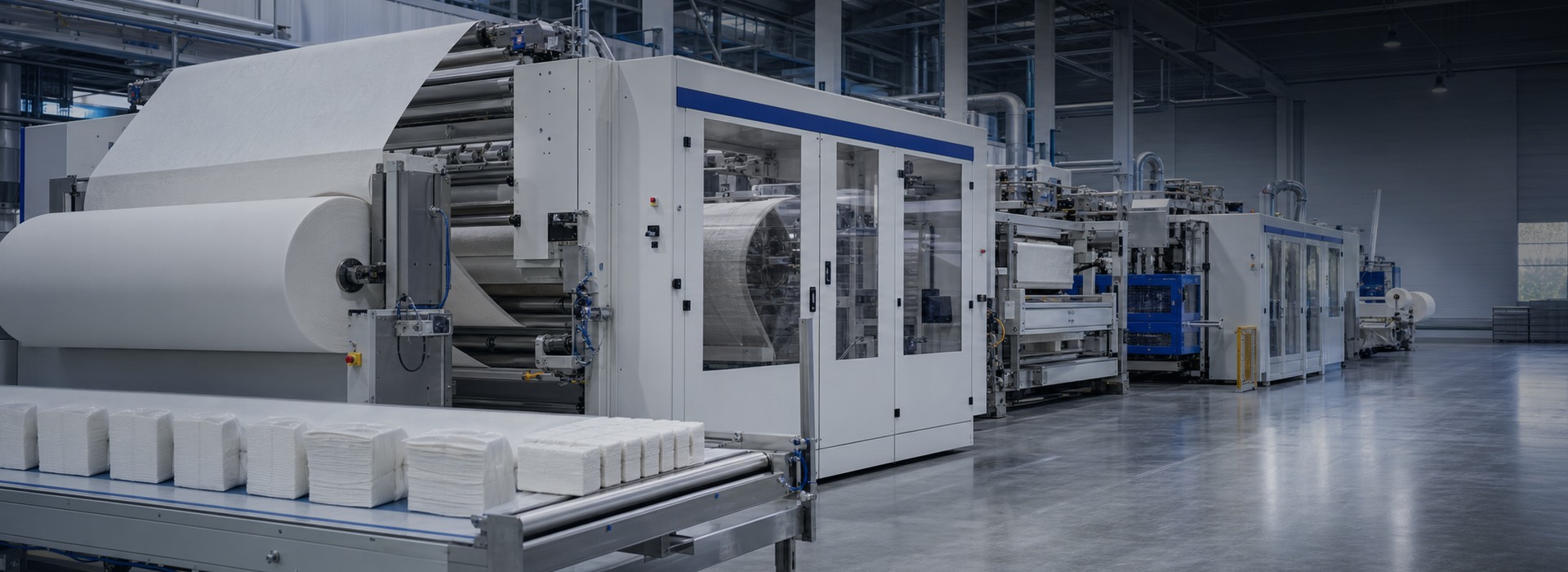
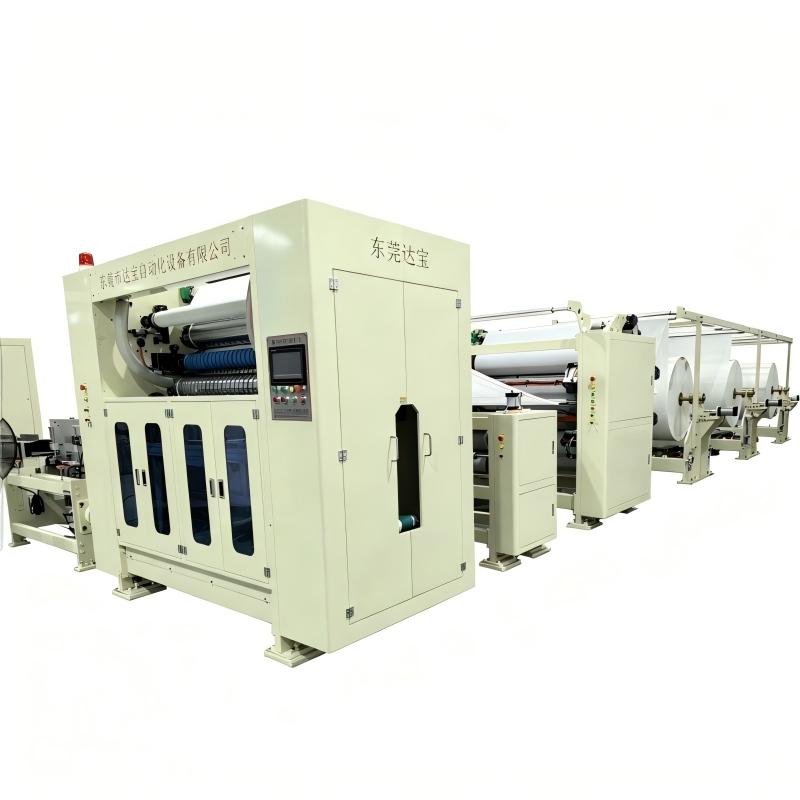
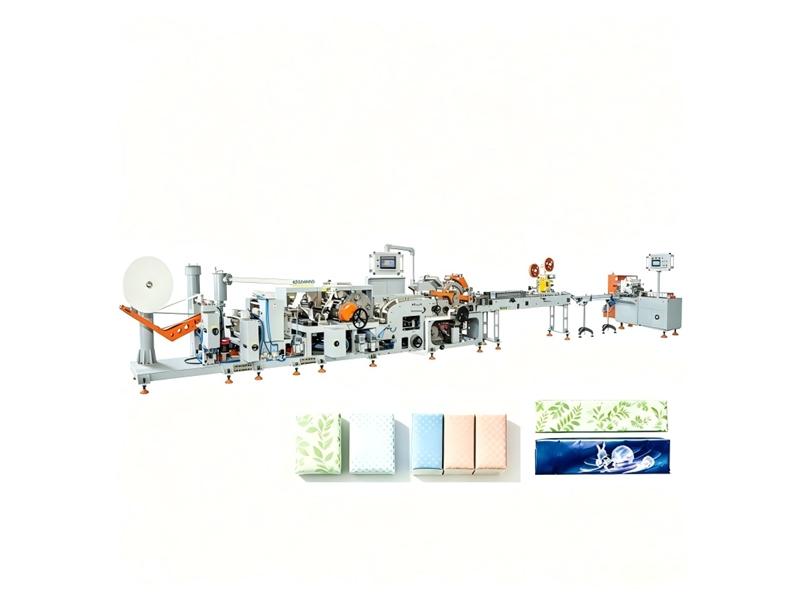
The DB-N-225 gallery view shows the equipment and paper supply. The ordered discharge direction is established on its layout drawing.
Plan the collection place as an occupied area
If stacks will be collected manually, show where the person stands and where the receiving table, trolley or container sits. Consider the movement from the output to that destination. A layout that draws the trolley in one place but expects the operator to move it repeatedly may leave the required movement space undefined. Use the actual proposed container dimensions rather than a generic rectangle.
Ask how the stack is presented at collection and when a group is ready to remove. Those are product and equipment questions for the supplier. The buyer can then review whether the proposed position is accessible under the intended working method. Do not prescribe reaching over guards, handling moving mechanisms or any collection action outside the supplied procedure.
Show where a full container goes and where an empty one waits. The second container can occupy the space originally reserved for access. If it cannot fit there, decide how replenishment will occur without blocking the output or a required passage. This is especially useful when the site is comparing a compact machine arrangement with the floor area needed to operate it.
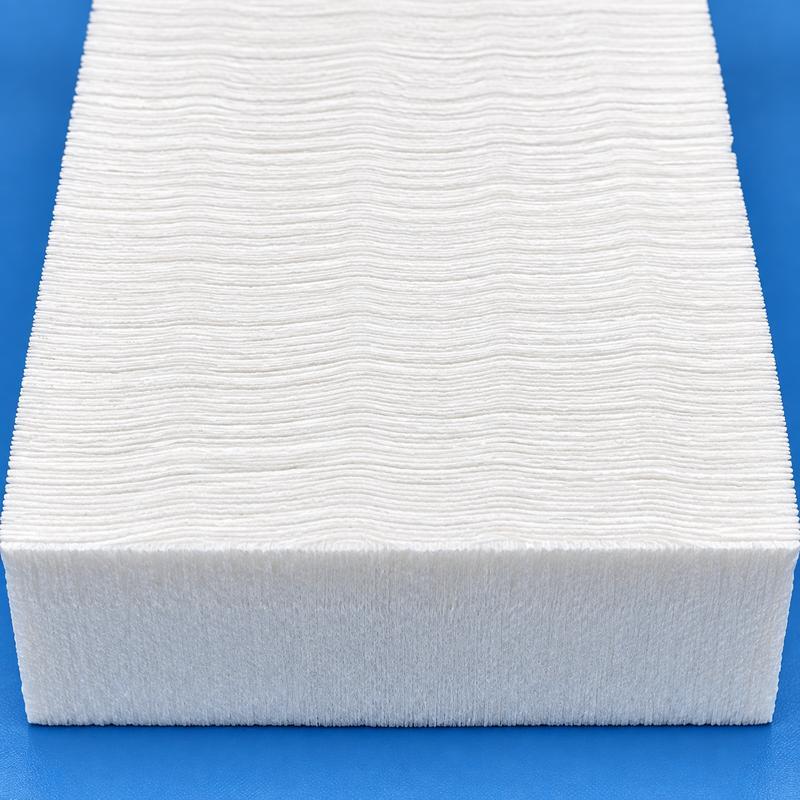
A representative stack helps the receiving team examine support and handling. Its height and footprint should describe the product being ordered, with a stated count and measuring condition. The layout decision is where that stack can be received and removed as intended. It is different from a dispenser test or a claim about the folder's production rate.
The stack is the object being handled at the side discharge; its product definition belongs with the collection arrangement.
Choose the next operation before adding a turn
For a connected packing machine, obtain its inlet drawing and required product orientation. Compare them with the proposed discharge. Mark the gap, height relationship and receiving direction on one combined drawing. These are the conditions to resolve with the equipment suppliers; matching a photograph of one conveyor to another leaves the actual interface uncertain.
Use one floor reference when comparing those heights. An output dimension on the folder drawing and an inlet dimension on another drawing may be based on different supports or installed floor levels. Identify the reference and any proposed leveling arrangement before concluding that the surfaces align. This is a drawing check, not a suggested modification to the machine frame. The final interface must be confirmed for the supplied installation.
Receiving arrangement
Space to show beside the folder
Unresolved item to identify
Manual stack collection
Working position, receiving surface and container exchange route
Approved presentation and removal method
Direct transfer to another machine
Actual transfer envelope and access to both ends
Product orientation, support and included interface
Proposed change of travel direction
Transfer equipment and its access area
How the stack turns or moves without losing the agreed arrangement
A corner in the floor route is not evidence that the stack can turn automatically. Ask what equipment or manual action performs that movement and what its scope includes. If an automatic transfer is proposed, identify who supplies it and who verifies the receiving condition. If the route remains manual, keep that work visible in the operating arrangement instead of drawing it as an unexplained conveyor connection.
Review what happens when the receiver cannot take another stack. The supplier should describe the approved waiting or stop condition and the space occupied by product under it. Avoid reserving an arbitrary accumulation length merely because there is unused floor. The product support and control arrangement must have a defined purpose, and its occupied space should remain compatible with operator access.
Check the paths that cross the output side
Draw the parent-roll delivery route, even if it approaches a different end of the machine. Mark where handling equipment moves and where another roll may wait. If that route crosses the side collection place, the drawing exposes a practical conflict to resolve before installation. The roll envelope and handling method should be confirmed by the responsible supplier; no universal aisle width is supplied by this article.
Do the same for cartons, packing materials and finished product leaving the receiving operation. A passage used intermittently for materials can still coincide with stack removal. Separate pedestrian access from the movement space required by the site's selected handling equipment through the site's layout review. The machine footprint alone does not decide which traffic pattern is acceptable.
Consider control access during those movements. An operator should be able to use the supplied control position under the approved procedure while containers and materials occupy their normal places. Moving a control panel or changing its side may affect the proposed configuration, so request supplier confirmation. Do not treat operator-side customization as a promise that every mirrored layout is equivalent.
Add access movements to the supplier's drawing
Ask the supplier to identify the areas needed for opening covers and performing the specified cleaning and maintenance work. A clearance around the outside casing may not describe the space occupied by an open panel or a removed component. Use the delivered configuration and its service procedure to establish that requirement. Inventing one standard distance for every hand towel folder would obscure the very differences the layout review needs to expose.
Where a task needs temporary access through the output side, identify how the nearby receiving equipment or container is moved under the approved arrangement. Show its temporary position too. Simply writing removable on a drawing does not establish that a conveyor can be displaced, disconnected or returned correctly. That capability needs a defined supplier response, with the relevant handling and isolation procedure.
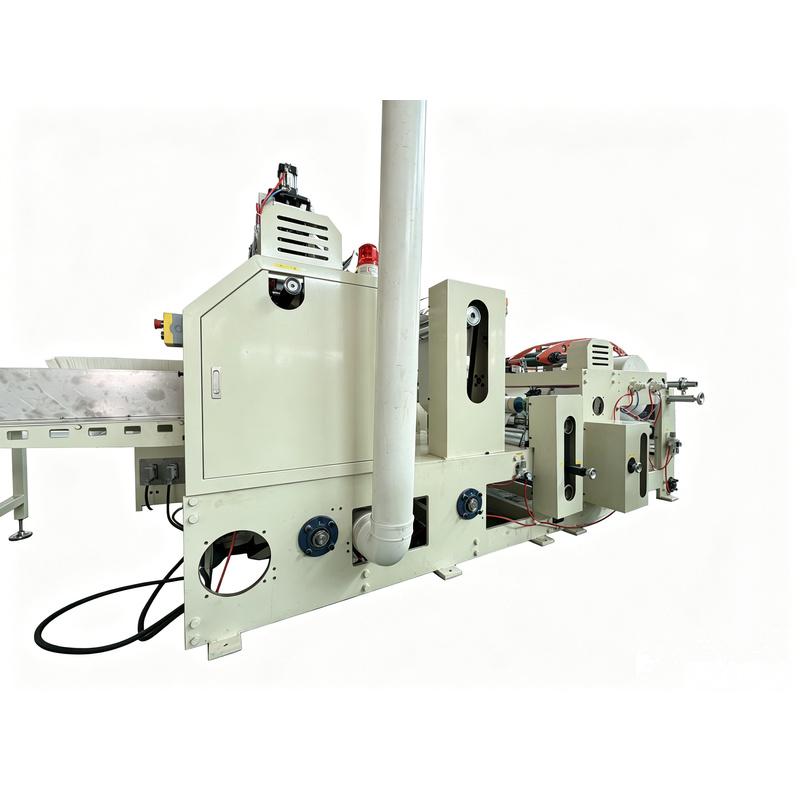
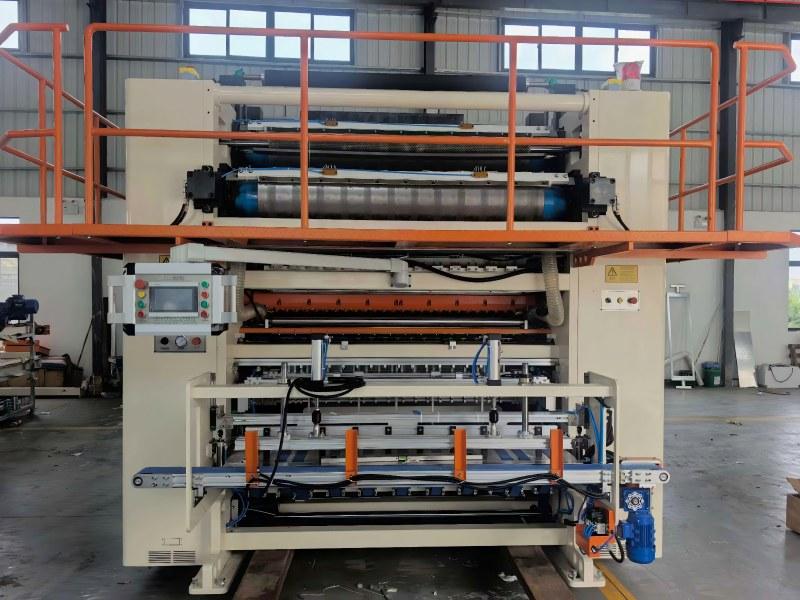
This DB-C-250 gallery photograph is a separate-model illustration of side-mounted components. It does not establish the DB-N-225 service envelope.
The DB-C-250 is another hand towel configuration described by DOUBLE, with C-fold production and dual-lane output. Its side photograph illustrates why a broad equipment category does not determine one layout. A receiving arrangement selected for that machine should not be copied to the DB-N-225 by changing the model label. Use each supplier drawing to establish the actual output and access conditions.
Review the occupied layout before signing it
Bring the machine, receiving equipment, normal containers and material routes onto one revision of the layout. Review a working position, a container exchange and the supplier-defined access tasks in turn. Each case occupies the floor differently. Where two required activities conflict, resolve their positions or operating sequence with the responsible parties before treating the layout as complete.
Return the marked drawing to the supplier with the towel specification and receiving-machine details. Ask the response to confirm the discharge reference side, the product orientation and the selected access arrangement. Keep any proposed turn or additional transfer equipment named in the scope. The final drawing should explain how a stack leaves the machine and how that side remains usable throughout the agreed operation.



 Tel: +8613908196540
 Email: info@doubletissuemachine.com
 MP/WhatsApp: +8613908196540
 Manufacturer Address:Dongguan, Guangdong, China