Mexico Kitchen Towel Project: DB-R500 Non-Stop Rewinder Line
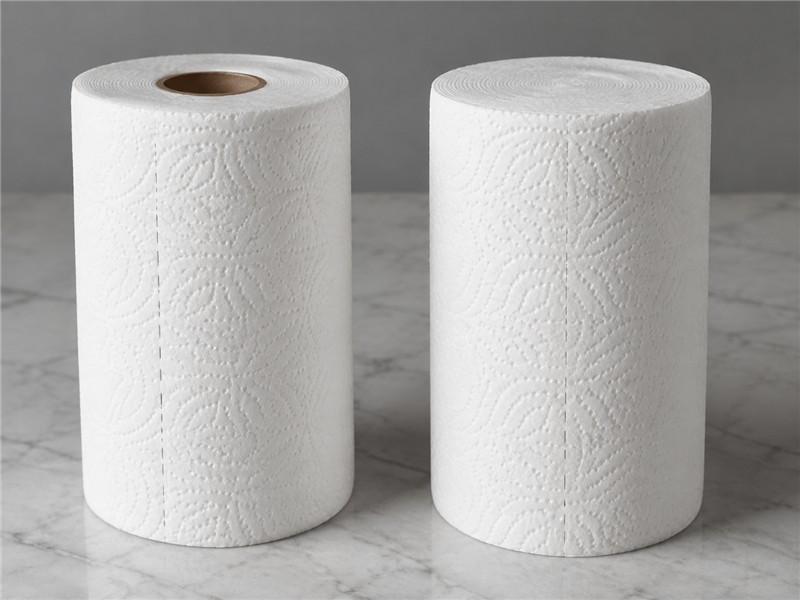
This project covers a DB-R500 non-stop rewinder production line supplied to a tissue converter in Mexico for kitchen towel roll manufacturing. The converter needed to expand kitchen towel output while improving production continuity, roll consistency, and flexibility across different embossing and finished-roll specifications.
Project Background and Requirements
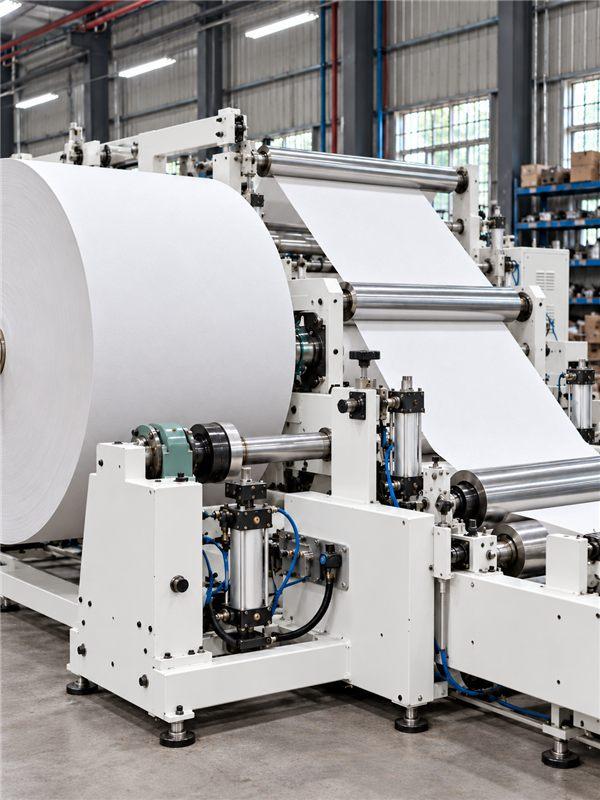
The production line needed to handle wide parent rolls and support continuous high-speed rewinding. The customer also required perforation, embossing, and accurate log cutting for different kitchen towel products.
The main requirements included stable production at high speed, flexible roll specifications, reliable web-tension control, and convenient connection between the rewinding, accumulation, cutting, and product handling sections.
Equipment Solution
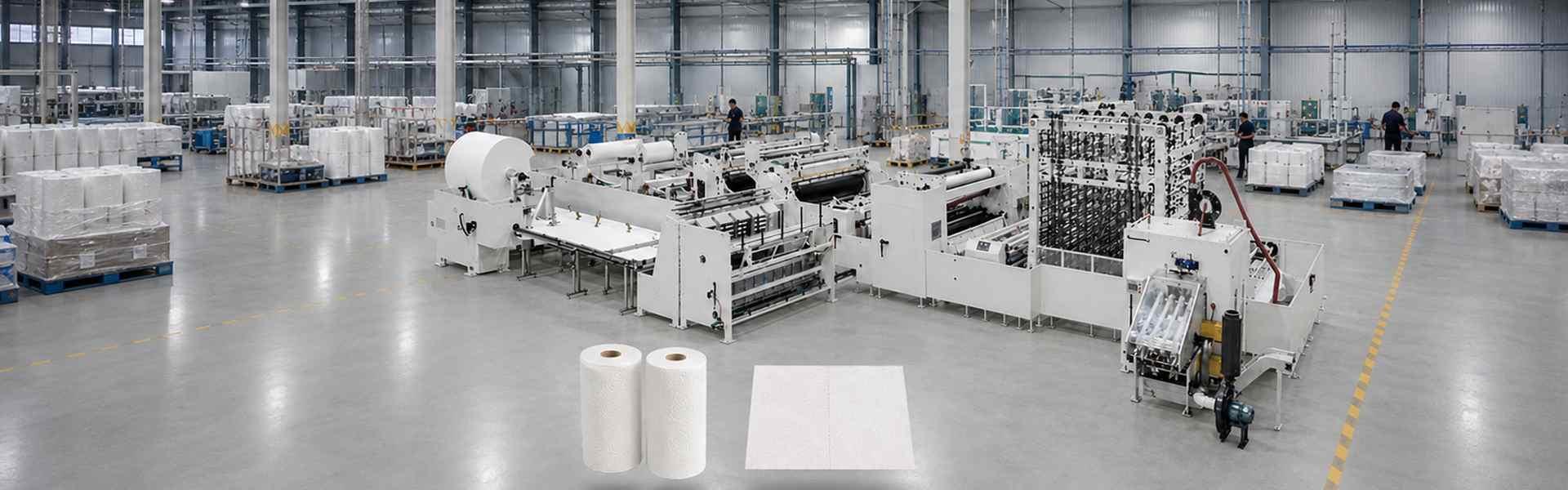
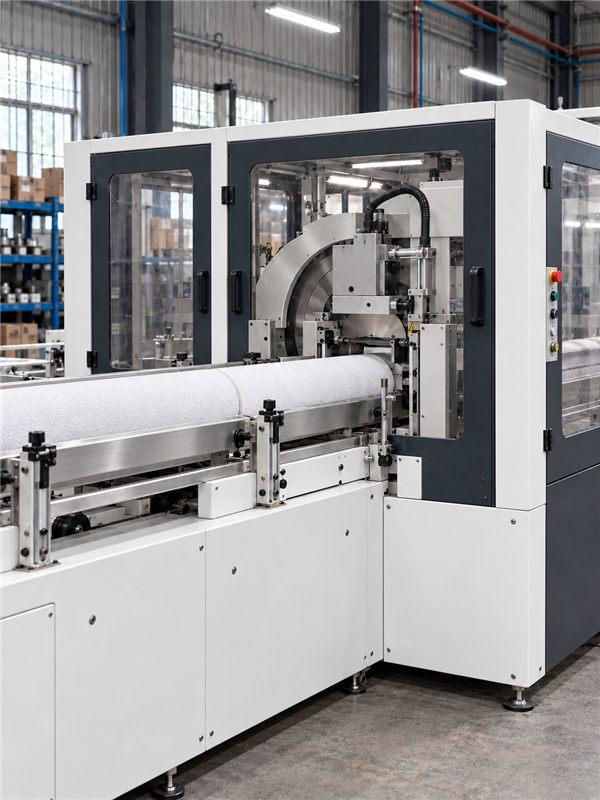
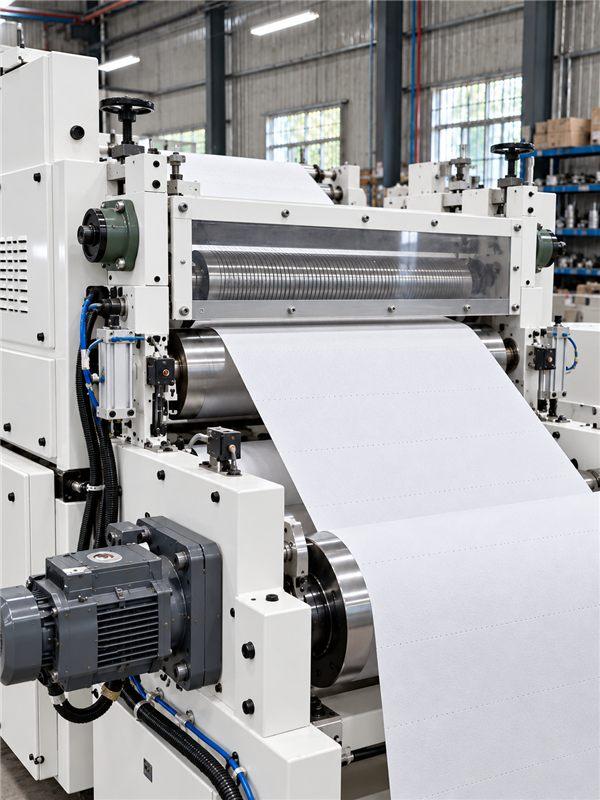
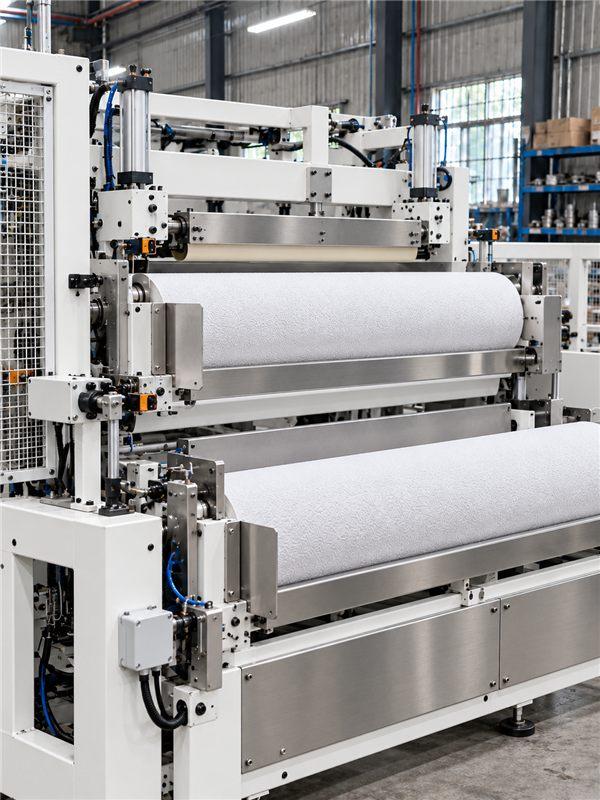
The DB-R500 integrates parent-roll unwinding, rewinding, perforation, and log-saw cutting into a continuous production system. The selected configuration included:
-
DB-R500 non-stop surface rewinder
-
Four independent paper-feeding channels
-
Parent-roll width from 2000 to 3650 mm
-
Stable rewinding speed up to 500 m/min
-
Steel-to-rubber or steel-to-steel embossing
-
Optional glue lamination and printing
-
Automatic web-break detection
-
Log-saw cutting at 150–180 cuts/min
-
Finished-roll conveying and handling
The backstand can be configured for one to five plies according to the customer's kitchen towel product requirements. For buyers comparing kitchen towel rewinding options, the DB-R500 toilet and kitchen paper non-stop rewinder line provides a closer look at the same machine family.
Installation and Commissioning
The line layout was planned according to the factory's available floor space, parent-roll handling route, and finished-product packing area.
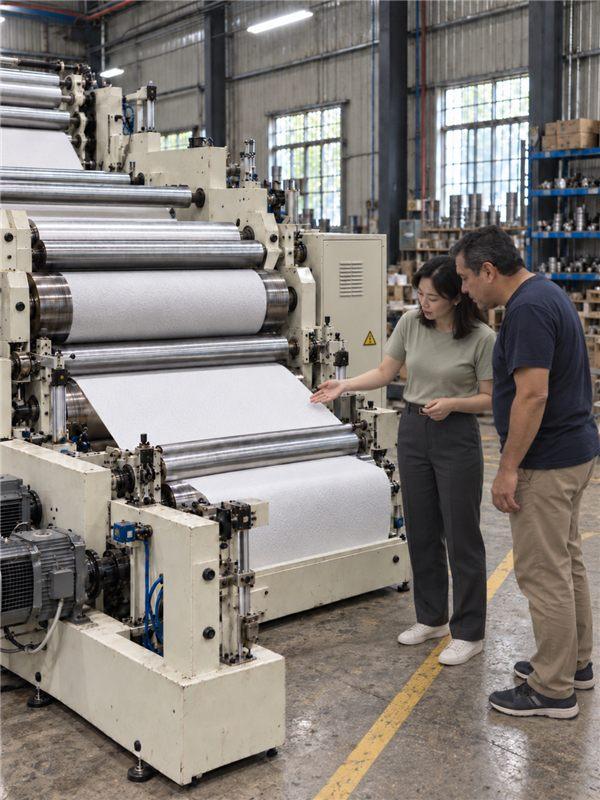
During commissioning, the production team tested paper feeding, embossing pressure, perforation length, rewinding tension, and cutting accuracy. Different kitchen towel roll specifications could then be stored and adjusted through the control system.
Project Results
The completed line established a continuous production process from parent-roll unwinding to finished kitchen towel roll output.
The non-stop rewinding configuration reduced interruptions during production, while the flexible embossing and ply options allowed the customer to manufacture kitchen towels for different retail channels.
Buyer Takeaway
When planning a kitchen towel line, confirm parent-roll width, ply count, embossing type, and finished-roll format before finalizing the rewinder and log-saw configuration. These inputs directly affect line layout, tension control settings, and downstream handling.
Planning a Kitchen Towel Production Line?
Share your parent-roll width, roll diameter, paper GSM, number of plies, embossing requirements, finished-roll size, and target capacity for a customized equipment proposal. You can also review the kitchen towel production solution for related configuration options.




 Tel: +86 139 0819 6540
 Email: info@doubletissuemachine.com
 MP/WhatsApp: +86 139 0819 6540
 Manufacturer Address:Dongguan, Guangdong, China