High-Speed Kitchen Towel Rewinding Line in Argentina
High-Speed Kitchen Towel Rewinding Line Installed in Argentina in 2022
In 2022, a tissue products manufacturer in Argentina invested in a high-speed non-stop kitchen towel rewinding line to increase its converting capacity. The customer supplied household kitchen rolls to regional wholesalers, supermarkets, and private-label buyers and needed a more continuous production process for larger orders.
Project Background
The customer's existing kitchen towel equipment required regular production stops during roll changes and finished-log discharge. These interruptions limited daily output and increased the amount of manual work around the rewinding section.
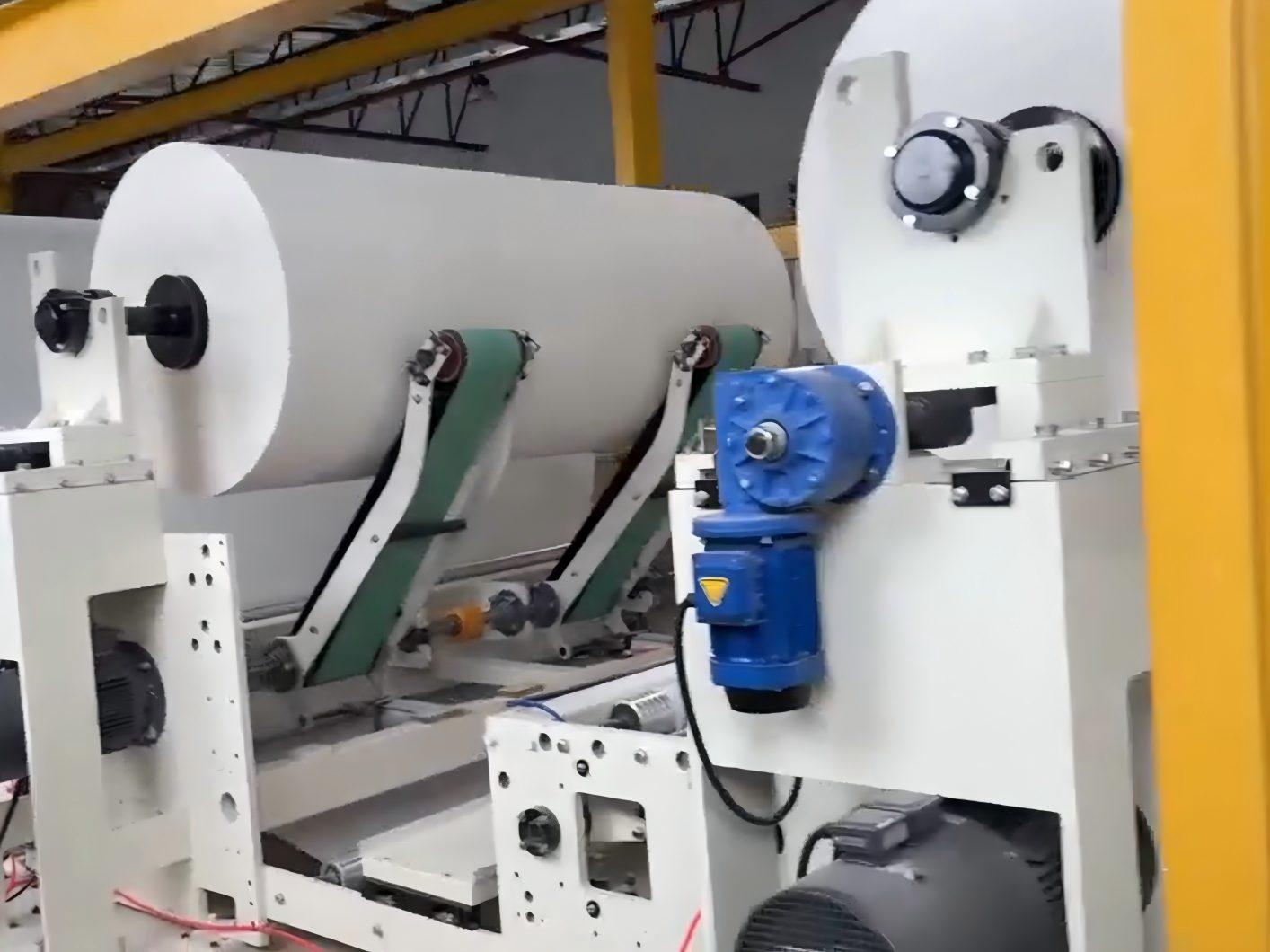
The factory also processed parent rolls from different paper mills. Variations in paper softness, tensile strength, basis weight, and moisture meant that stable tension control was essential. The customer therefore wanted equipment that could maintain more consistent rewinding performance across several tissue grades.
Customer Requirements
The project was planned around the customer's existing parent-roll supply and finished kitchen roll specifications. Before confirming the configuration, the customer provided information about:
Parent-roll width and diameter
Paper basis weight and number of plies
Finished kitchen roll diameter
Core diameter and perforation length
Required embossing pattern
Target production capacity
Available workshop space
Downstream cutting and packing method
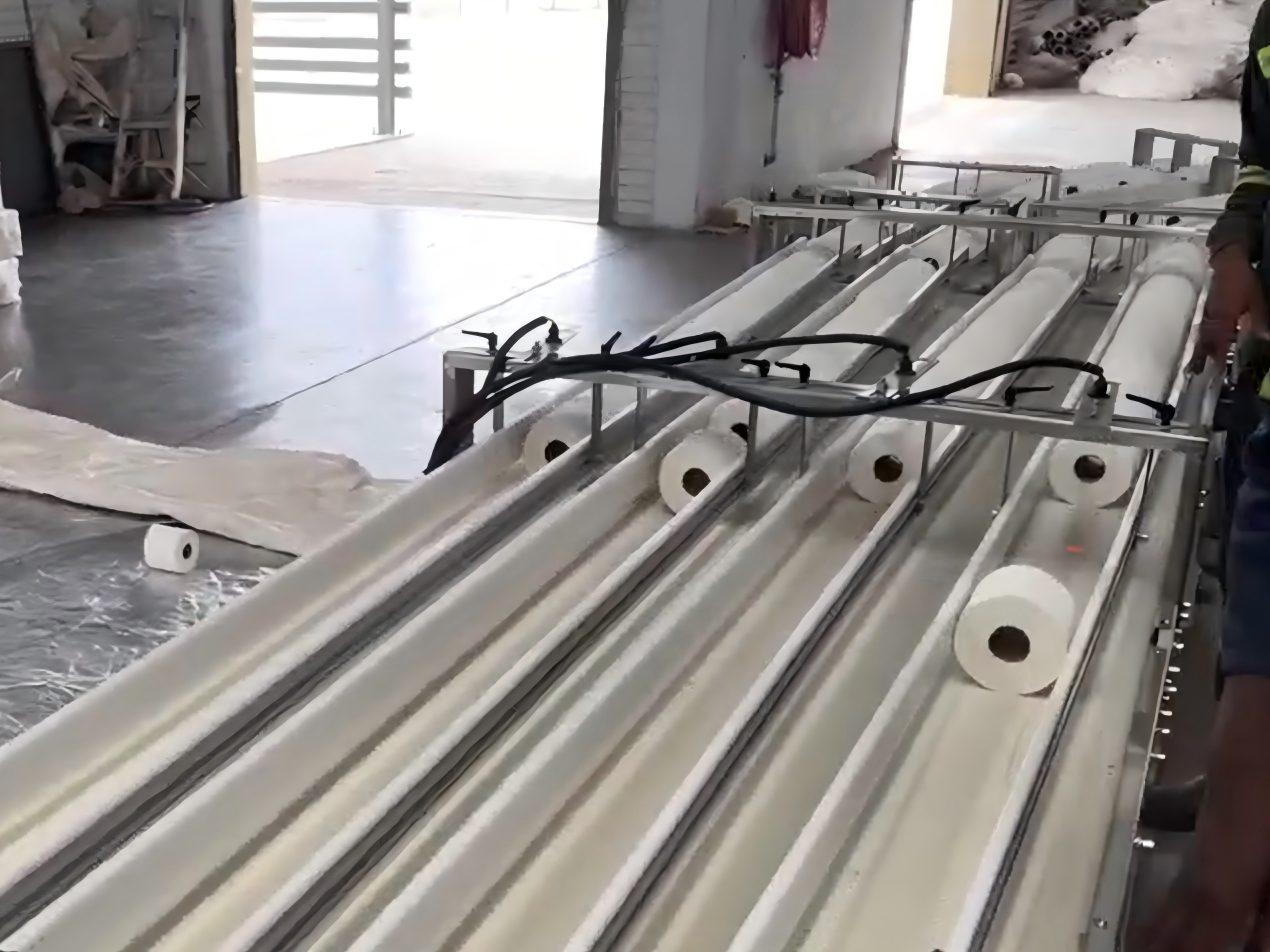
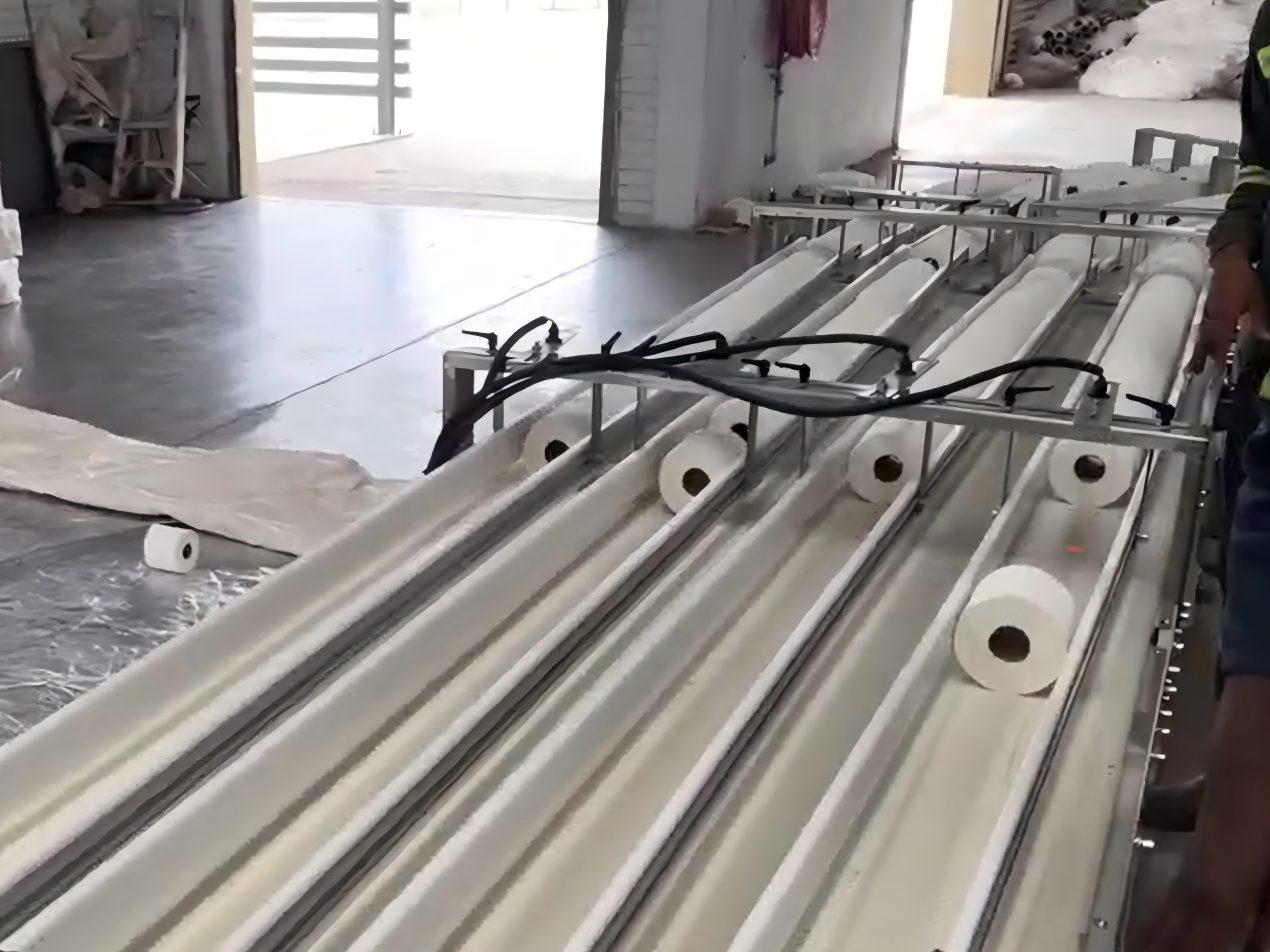
The customer also wanted the new rewinder to connect with an automatic log saw, reducing manual transfer between rewinding and roll cutting.
Equipment Configuration
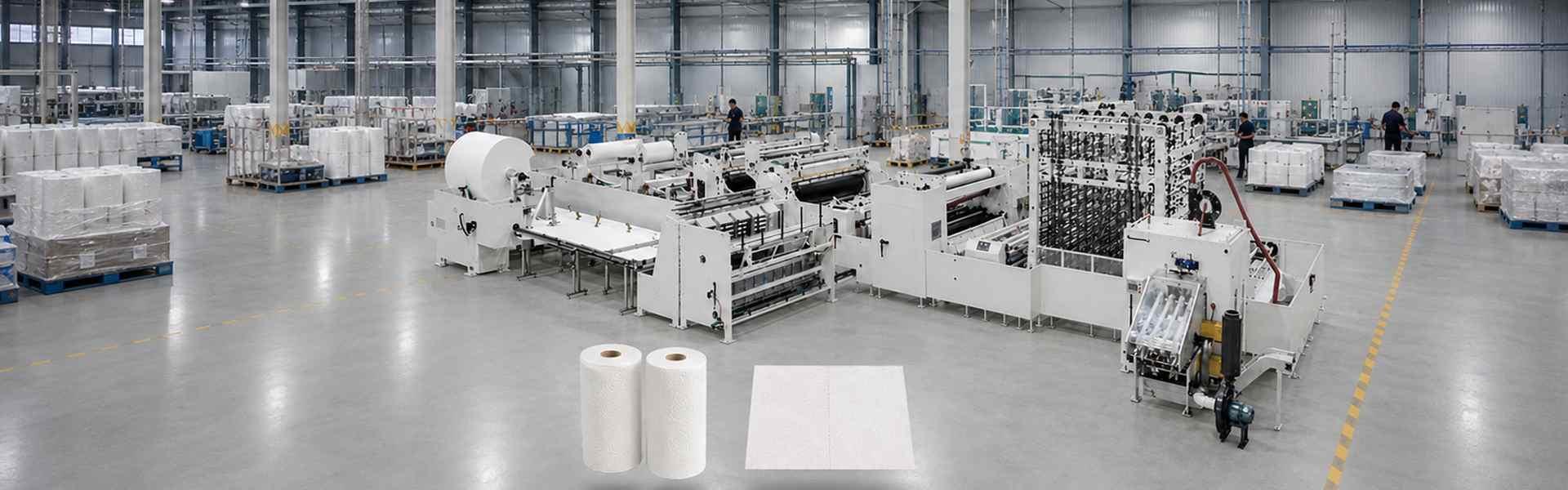
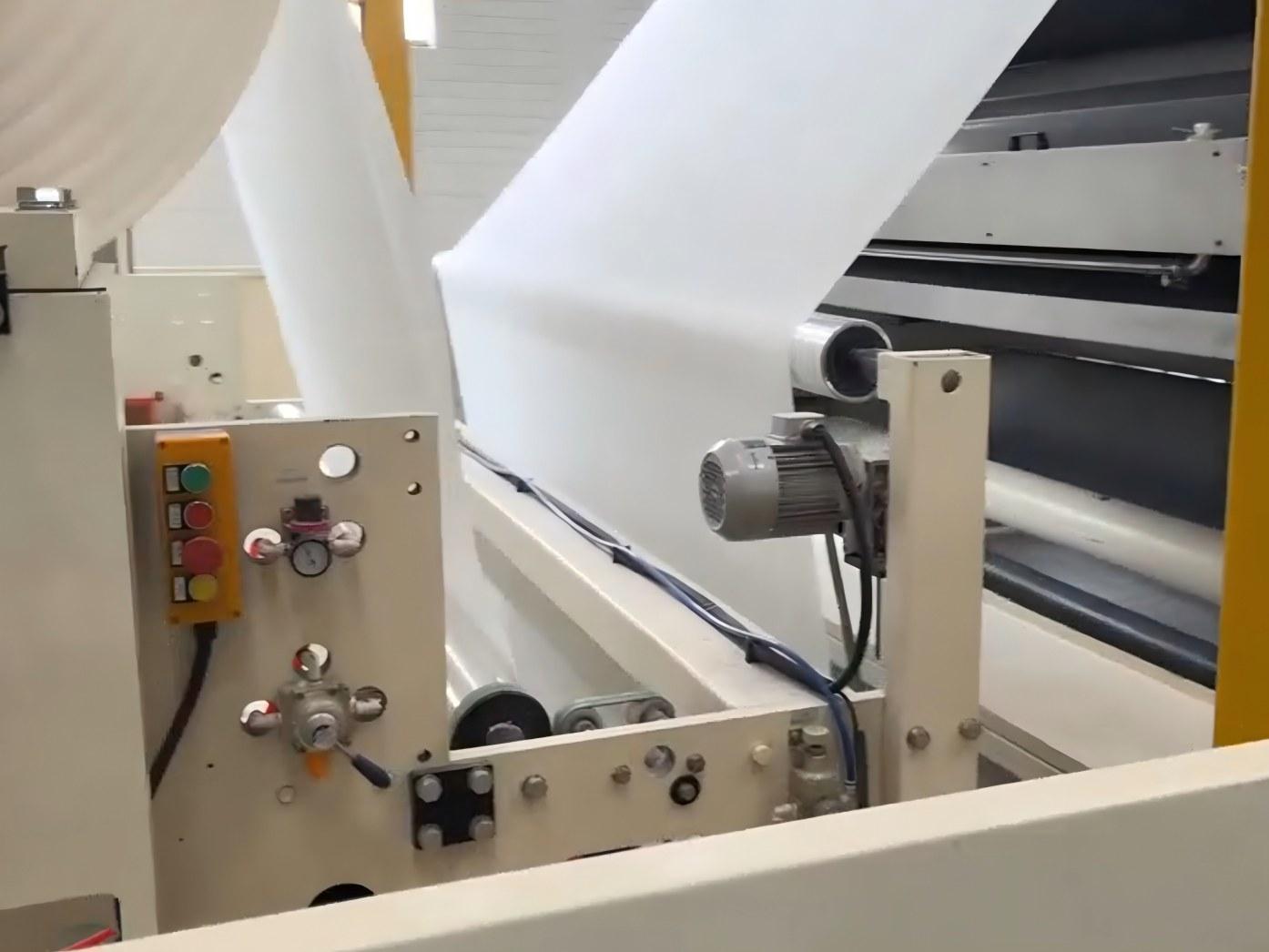
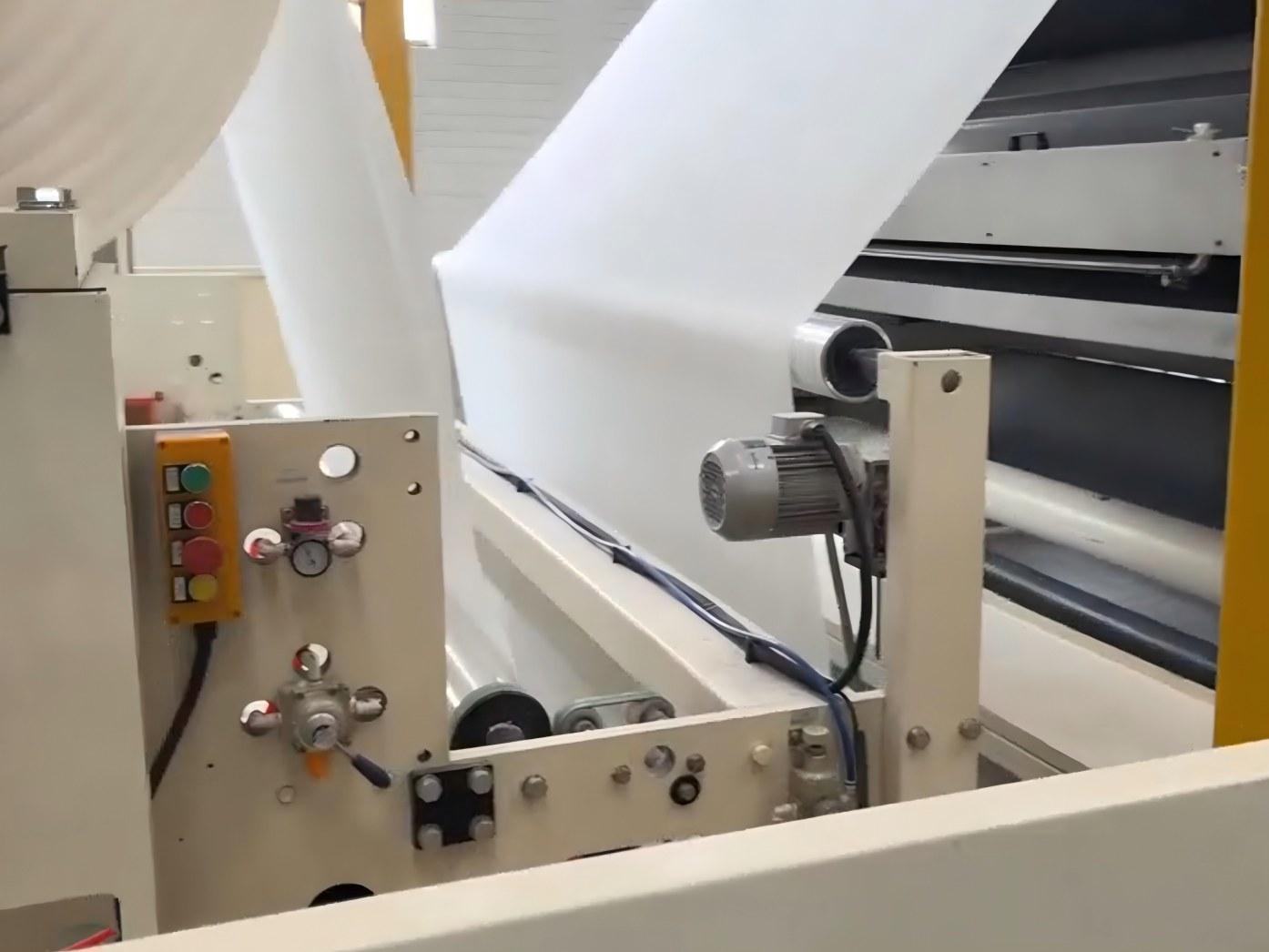
The DB-R500 toilet and kitchen paper non-stop rewinder line was selected for the project. It uses a non-stop surface rewinding configuration and full-servo control to maintain stable paper tension during continuous production.
The machine can be configured for parent-roll working widths from 2,000 to 3,650 mm and is suitable for producing toilet paper and kitchen towel logs. Its published stable rewinding speed is up to 500 m/min, although the actual production speed depends on the paper grade, finished roll format, embossing configuration, perforation setting, and downstream equipment.
For this project, the line included the rewinding section and automatic log-cutting process. The final arrangement was matched to the customer's kitchen roll specification and factory material flow. Product information can be reviewed on the kitchen and toilet paper production solution page, and the full line specification is available in the DB-R500 non-stop rewinder line data sheet.
Factory Testing and Installation
Before shipment, trial production was carried out using tissue paper with characteristics close to the customer's regular raw material. Testing focused on web tension, perforation accuracy, embossing pressure, log diameter, winding firmness, tail sealing, and the transfer of finished logs to the cutting section.
During installation, the machine was positioned according to the direction of parent-roll loading and finished-roll discharge. The rewinder, log saw, and downstream collection area were then coordinated so that one section would not operate significantly faster than the next.
Operator training covered:
Parent-roll loading and web threading
Tension and speed adjustment
Perforation-length setting
Embossing-pressure adjustment
Finished roll diameter control
Log saw setup and blade inspection
Alarm handling and routine cleaning
Separate operating settings were recorded for the customer's main paper grades because lighter and heavier tissue materials did not perform equally well under the same tension and speed parameters.
Project Result
The new line gave the customer a more continuous workflow from parent roll to cut kitchen rolls. Non-stop rewinding reduced the production interruptions associated with the previous equipment, while servo-controlled tension helped maintain more uniform logs during longer production runs.
Connecting the rewinder with the automatic log saw also reduced manual log handling. Finished rolls showed more consistent diameter, perforation, and cut width, making the subsequent packing process easier to organize.
The additional capacity allowed the factory to schedule larger orders more efficiently while retaining the flexibility to adjust the machine for different kitchen roll specifications. The customer could use a lower, more balanced operating speed for difficult paper grades and increase production when running stable, uniform parent rolls.
Buyer Takeaway
A high-speed kitchen towel rewinding machine should be selected according to the complete production process rather than its maximum published speed alone. Parent-roll quality, working width, finished roll size, embossing, perforation, log cutting, packing capacity, and operator experience all affect the stable output of the line.
For a similar project, provide your parent-roll specification, finished kitchen roll sample, required capacity, core size, factory layout, power supply, and downstream packing method before confirming the equipment configuration.
Planning a kitchen towel rewinding upgrade? Share your parent-roll width and diameter, finished roll size, core diameter, perforation length, target output, available floor space, voltage and utilities, and downstream cutting or packing method. Our engineers will review the details and recommend a suitable configuration.




 Tel: +8613908196540
 Email: info@doubletissuemachine.com
 MP/WhatsApp: +8613908196540
 Manufacturer Address:Dongguan, Guangdong, China