A request for a different cutting length can refer to two different objects in a facial tissue line. The folding machine cuts the incoming tissue web, while a downstream log saw cuts material that has already been folded. Both affect the finished product, but they need separate dimension names. Before comparing machine proposals, establish which object is being measured and where it exists in the process. A single length written beside the finished pack leaves too much for the equipment suppliers to interpret.
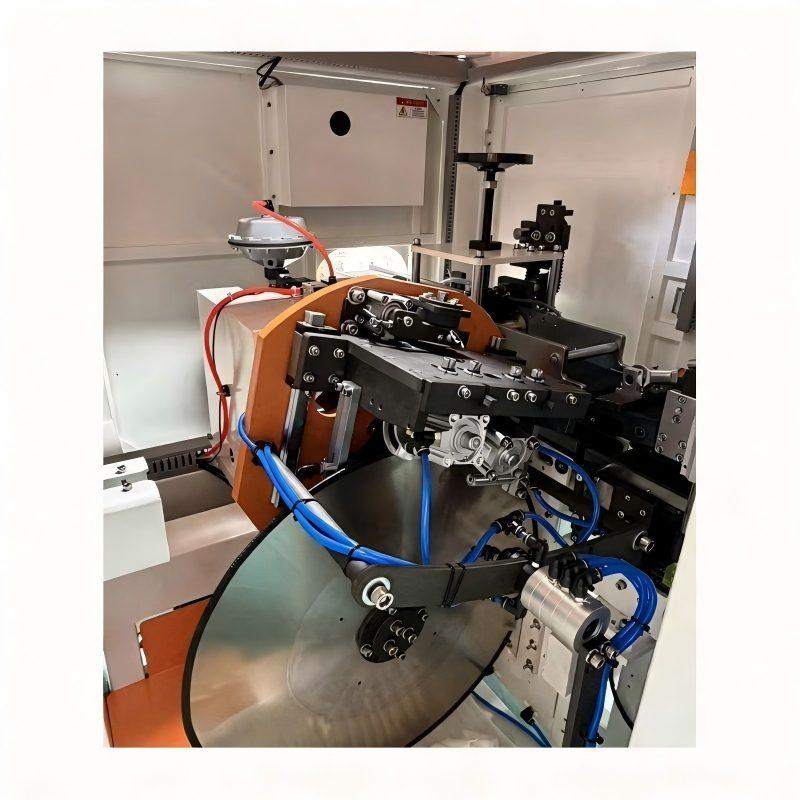
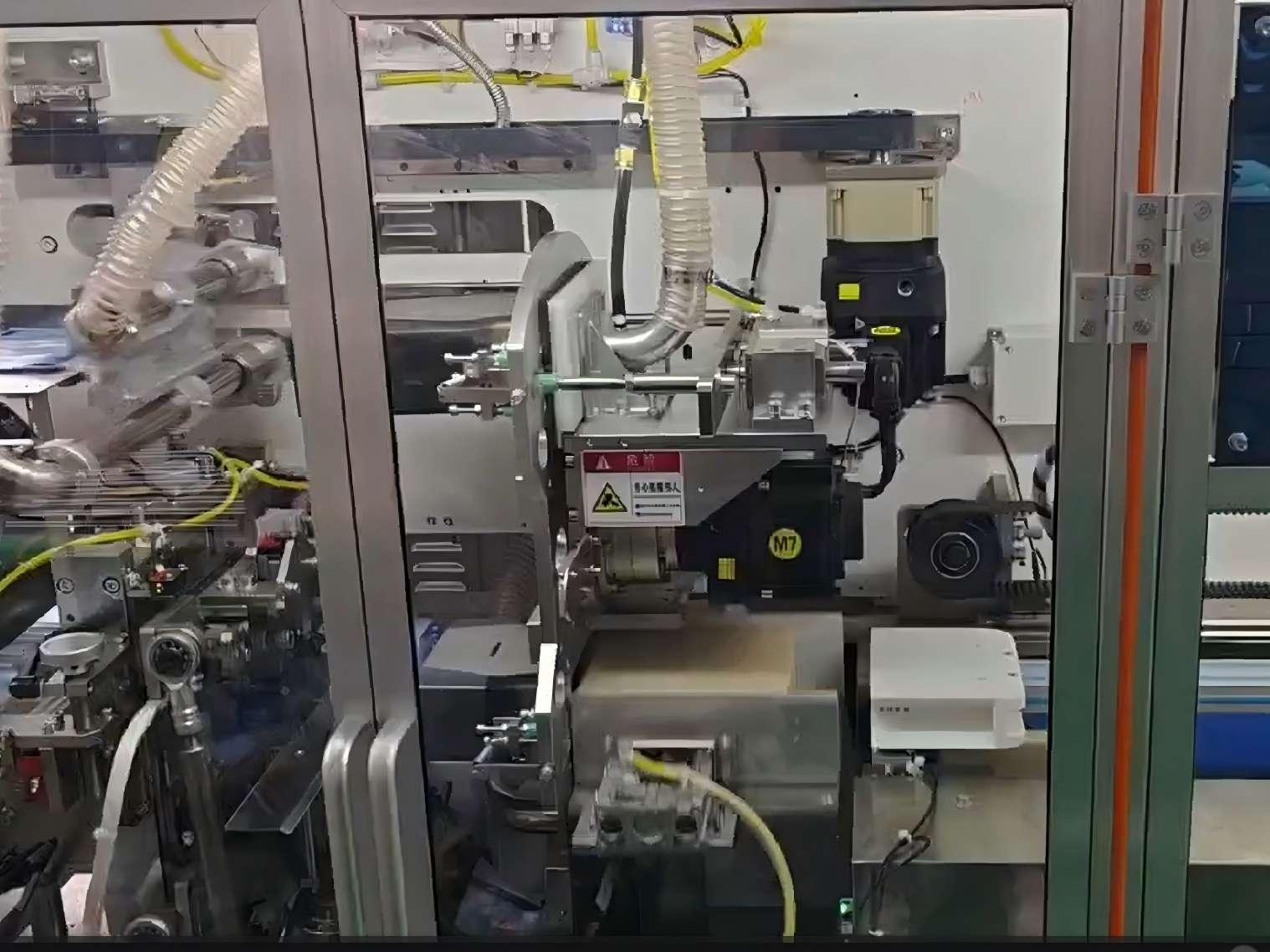
A circular blade is visible in this detail from the soft-pack line gallery. The picture does not provide an operating adjustment or a verified cut-size measurement.
The folding section cuts the tissue web
The DOUBLE DB-IF-V facial tissue machine description identifies vacuum-assisted transverse cutting and folding. Its technical specification describes fixed and rotary blades, and its quotation guidance asks for the required cutting length. That is a cutting requirement within the folding-machine discussion. It should not automatically become the cut length requested from a separate log saw.
Describe the sheet that the folding section is intended to produce. Give its opened dimensions and the corresponding folded arrangement, with named reference edges. The supplier can then identify the dimension associated with its transverse cut. The buyer should obtain that explanation on the product drawing rather than assigning a machine direction from the order in which two dimensions appear in a catalogue.
This distinction matters when a retail specification simply says tissue size. The outside package, the folded tissue and the opened sheet can each have a different footprint. A packet that fits a shelf is not a complete sheet specification. Open a representative tissue, retain the folded reference and ask for both states to be shown in the technical response.
The folding-machine page also offers customized unfolded and folded sizes. Treat that as a reason to request confirmation of the intended format. It does not establish every combination of dimensions, or explain which supplied components would achieve it. The response should connect the requested sheet to the proposed cutting and folding configuration.
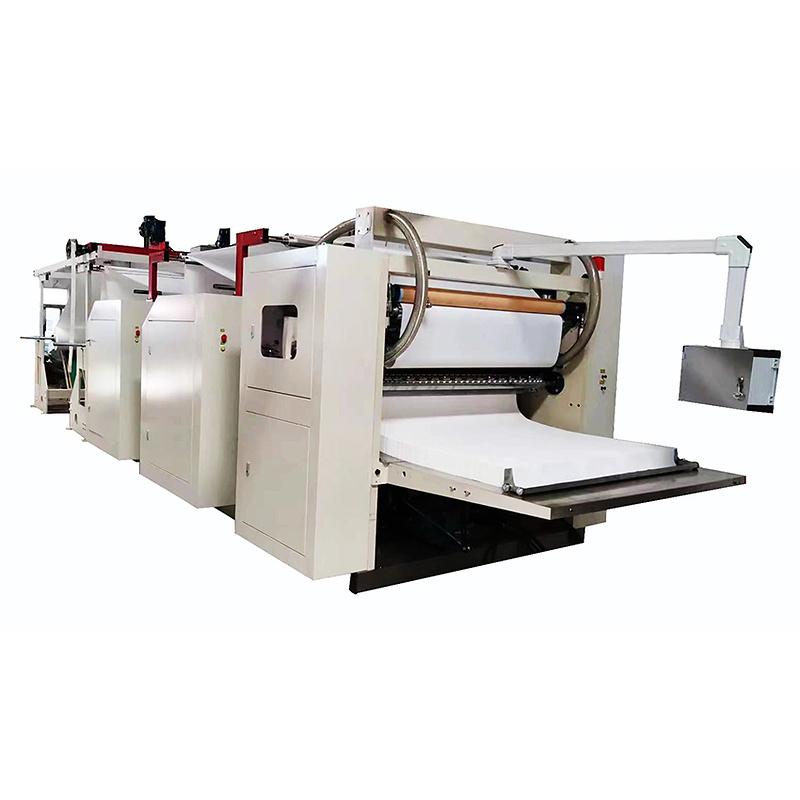
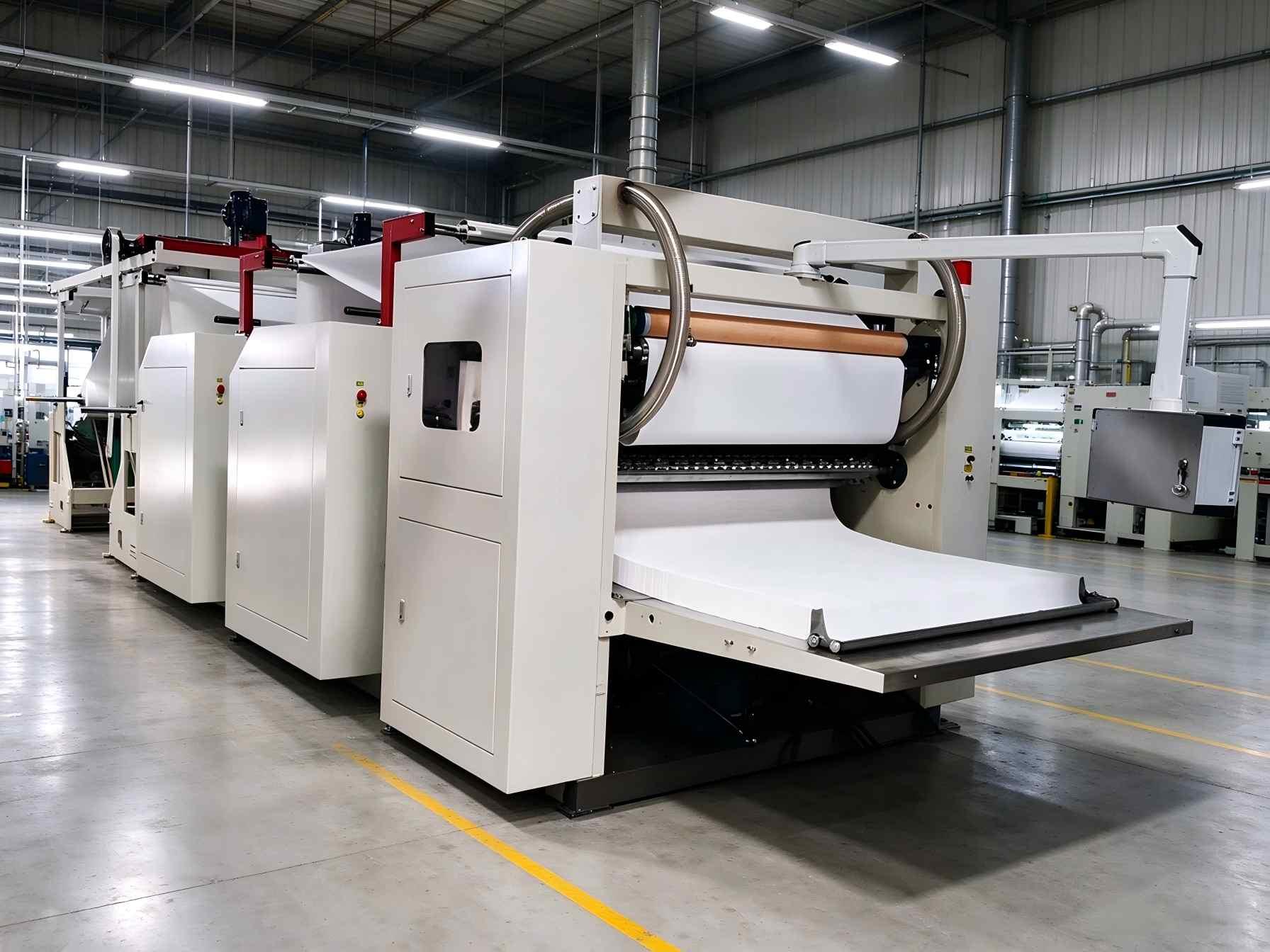
The folding-machine gallery shows paper and an output table. The photograph supplies equipment context; it does not identify a cutting-length setting.
The log saw receives folded material
DOUBLE's automatic soft-pack facial tissue production line description places log cutting after interfolding, separation and transfer. It names the DB-L-320C as the machine that cuts folded facial tissue logs to the required single-pack length. The material arriving at this operation is therefore different from the web arriving at the folding section.
In this usage, a tissue log is folded tissue prepared for downstream cutting, not a toilet tissue roll. Keep that object visible in the proposal. Ask the line supplier to identify the incoming folded log and the stack leaving the saw. Those two drawings make the meaning of log cut length much clearer than a lone number attached to the line name.
At the folder: identify the tissue web and the sheet geometry associated with transverse cutting and folding.
At the log saw: identify the folded log and the individual tissue stack delivered toward soft packing.
The distinction is about the operation, not a claim that the two stages can be specified independently of each other. Their product requirements have to agree. The line description expressly matches the folding, transfer, cutting and packing stages to the intended tissue and package. A suitable individual machine specification does not by itself settle the connected product format.
Give each length a name and a reference object
A dimension ledger should explain more than the unit. It should identify the object, its state and its reference edges. The same millimetre value might appear on several drawings without describing the same requirement. Conversely, two different numbers may both be correct because one describes an opened tissue and another describes the folded product.
Dimension name
Object to show
Supplier clarification
Sheet cutting length
Opened tissue associated with the folder's transverse cutting
Identify its reference edges and corresponding cut direction
Folded tissue dimensions
One tissue in its intended folded state
Show how it relates to the opened tissue
Log saw cut length
Individual stack separated from a folded tissue log
Identify the measured faces on the receiving stack
Package dimensions
Formed soft pack around the intended stack
Keep the wrapper envelope separate from paper dimensions
The DB-IF-V page publishes opened and folded product dimensions as paired values. Those values are useful references for an enquiry. They should not be rearranged into a log saw specification without the supplier's orientation drawing. Nor should a package allowance be subtracted from an outside pack dimension and presented as a confirmed cutting requirement.
For example, its published reference is 200 ± 2 × 220 mm unfolded and 100 ± 2 × 220 mm folded. Preserve those descriptions together when discussing the listed product. The smaller first value describes the folded state in that specification; it is not identified there as a downstream log saw setting. The buyer still needs the line drawing to connect the listed tissue to the stack cut for packing.
Use the names consistently in emails, sample labels and the purchase specification. A supplier reply stating length accepted should identify which row it accepts. This small distinction prevents an apparently clear agreement from leaving the actual cutting object unresolved.
Keep one orientation key through the drawings
Mark a reference edge on the opened tissue drawing and carry that identifier into the folded representation. Ask the supplier to show its relationship to the folded log and cut stack. The purpose is to preserve the product's identity as its physical state changes. The buyer does not need to infer the internal paper path to ask for this explanation.
When drawings come from separate equipment suppliers, compare the reference labels before comparing numbers. One drawing may describe a stack as viewed at the saw outlet, while another describes it as viewed at the wrapper inlet. A rotated view can make the same product appear to have conflicting width and length values. Resolve the viewing direction explicitly rather than changing a dimension to make the lists look similar.
Keep the sheet count outside this dimension comparison. Count helps define the stack, but it does not identify either cutting length. If the enquiry includes a specific number of tissues per pack, record it as another product field. That allows the packing supplier to review the stack without treating its height or quantity as evidence of sheet geometry.
Give tolerances the same reference discipline. A permitted variation attached to an opened-sheet dimension cannot simply be assigned to the saw's cut stack. Ask the proposal to state the agreed limit for each object and how that object will be measured. The tissue's folded edge is also different from an outside package face. A result should therefore identify its reference before being compared with a tolerance, even when the measurements happen to use the same nominal value. Ask both suppliers to identify the measurement condition as well as the reference faces.
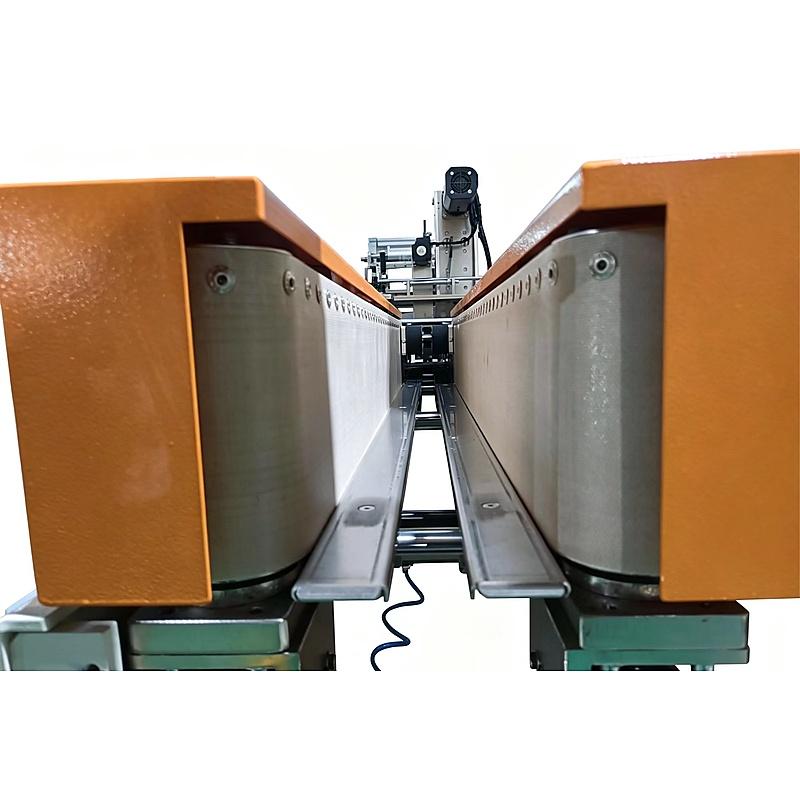
Belt and guide details from the line gallery illustrate equipment between product states. Their visible shape does not establish the orientation of a particular ordered tissue.
Describe a cutting concern on the correct sample
If the concern is that an opened tissue has the wrong size, identify the measured edges on that tissue. If the concern is the length of the stack received for packing, identify the measured faces of the stack. These observations ask different questions. Retain both objects where necessary instead of allowing a photograph of the final package to stand for the whole cutting process.
Visible edge condition needs the same distinction. A buyer may observe an incomplete separation, a torn edge or an uneven-looking stack face. Record which sample carries that observation and compare it with the agreed product reference. The appearance alone does not establish its cause, and the blog cannot provide blade positioning or adjustment instructions for an unknown machine configuration.
Where further investigation is needed, let the responsible supplier determine the safe inspection and operating procedure. The buyer's useful contribution is a clearly identified sample, its material reference and the location where it was collected. That evidence makes a discussion about sheet cutting or log cutting specific without turning it into an unsupported diagnosis.
Ask the proposal to cover both cutting objects
For a standalone folder enquiry, request confirmation of its cutting and folding scope. For the soft-pack line, request a connected response showing the folder's product, the folded log, the saw's output and the stack required by the wrapper. A folding-machine quotation should not silently inherit the log saw described on a separate line page.
The returned specification should name each cut, its product drawing and the supplied machine responsible for it. Any dimensional relationship still awaiting confirmation belongs beside those drawings. With the objects identified, the buyer can assess the proposed facial tissue format without asking one undefined cutting length to describe two operations.




 Tel: +8613908196540
 Email: info@doubletissuemachine.com
 MP/WhatsApp: +8613908196540
 Manufacturer Address:Dongguan, Guangdong, China