A change from one tissue box to another can involve moving an existing setting, exchanging a selected part, or resolving an unanswered configuration question. Those are different purchasing commitments. Ask a Facial Tissue Box Packing Machine proposal to classify the transitions your factory will actually make. The DB-BF-100B listing describes size changeover in 10–20 minutes by adjustment or replacement of selected parts. That statement needs a defined format pair and work boundary before it becomes a usable production-planning allowance.
Name the transition, including its direction
Give the current format and the next format separate identifiers. Link each to its carton dimensions, tissue product and supplied configuration. Write the transition as A to B, rather than simply listing A and B as supported products. Restoring a previous setup and introducing a new format may require different preparation, documents or parts, even when both products sit within a published size range.
Start with the changes that recur in your sales schedule. A factory making several heights of one carton family may have a different requirement from one alternating between substantially different box styles. Tell the supplier which sequence matters commercially. This lets the quotation address repeated changeovers instead of presenting a broad dimensional range as evidence that every move between its extremes is equally straightforward.
Keep dimensions together as actual combinations. A minimum length, maximum width and maximum height do not necessarily describe a product you will manufacture. A transition record should identify the two real boxes and their tissue contents. The equipment supplier can then state which parts of the change are covered by the supplied arrangement and which require an additional configuration decision.
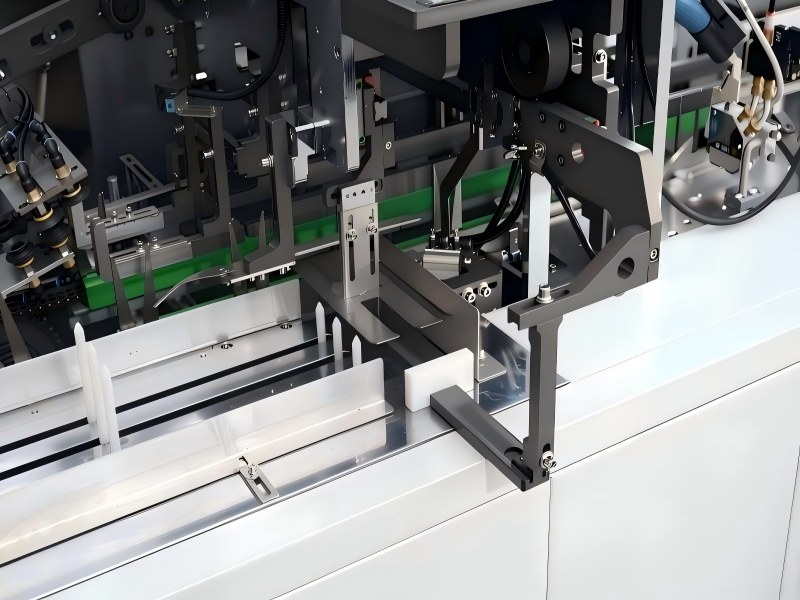
The published detail shows guides and supporting structures. Their adjustment or replacement role must come from the supplied instructions, rather than the photograph.
Separate an adjustment from a replacement
An adjustment uses an existing supplied component in a different approved position or setting. A replacement exchanges a component for one suited to the next format. Neither classification identifies the actual work by itself: ask the supplier to name the affected location, the relevant instruction and the configuration to which it applies. Avoid purchasing language such as “easy adjustment” when no one has identified what changes.
Existing arrangement
Identify the approved adjustment and its reference instruction. Confirm whether the current supplied parts cover the next format.
Selected replacement
Identify the required part or set, its format assignment and whether it is included in the quotation.
Unresolved change
Ask for technical confirmation before assigning a duration, ordering a part or scheduling the next product.
The DB-BF-100B page describes changeover by adjustment or replacement of selected parts, without large-scale mold changes. It does not supply a universal list of interchangeable parts for every carton. Have the order distinguish a supplied change part from an additional part to be purchased later. A statement that a format is possible does not establish that everything needed to run it is already in the delivery.
Its PLC and touchscreen are published control features. They do not establish stored format recipes, automatic positioning or a tool-free change. Ask which information the operator enters or checks and which work remains mechanical. Record the supplier's answer for each transition; do not let the presence of a touchscreen replace an explanation of the selected changeover arrangement.
Give the 10–20 minute statement a work boundary
The source lists a 10–20 minute changeover range. It does not define the starting event, finishing event, preparation state or operator conditions for every product pair. Request those details for your planned sequence. For example, the buyer can ask whether the stated interval begins after the previous run has stopped and ends when the specified adjustments and replacement work are complete.
Material clearance, obtaining the correct parts and preparing the next carton supply are separate scheduling questions. Ask which of them are included in the quoted interval. Also distinguish completion of the change work from release of saleable output. A machine can be prepared for the next format before the factory's authorized production-release steps are complete. Do not silently include or exclude those steps when comparing suppliers.
Use the same agreed boundary when recording an actual transition. Keep its format identifiers and any exceptional delay beside the duration. A delay waiting for a missing component describes a different condition from the supplier's stated prepared change. This is a way to make planning records comparable; it is not a claim that the machine has demonstrated the published time in your factory.
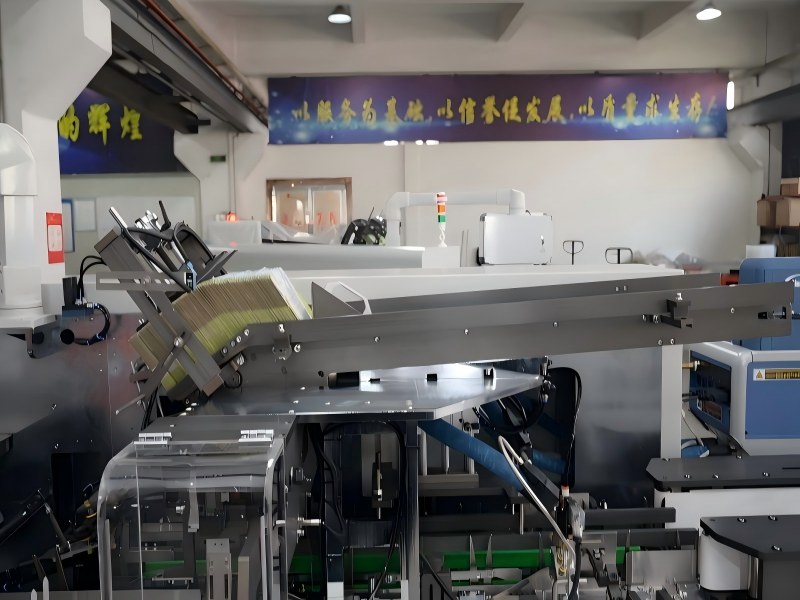
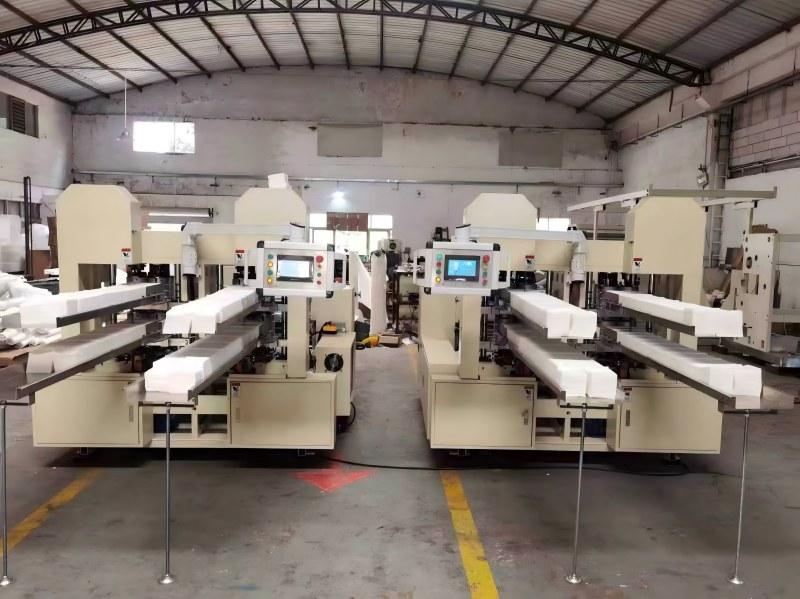
Equipment from the DB-BF-100B gallery. This photograph does not document a particular format transition or its duration.
Put the quotation into a directional format matrix
A format matrix makes the changeover offer reviewable. Give each transition a row, then ask the supplier to complete the work classification and required-part identity. Leave unanswered fields visibly open. Purchasing should be able to tell whether a price includes the necessary format parts, an adjustment arrangement alone, or further engineering that has not yet been confirmed.
Transition record
Supplier confirmation
Commercial consequence
Current and next product identifiers
Both combinations covered by the quoted configuration
Separates ordered formats from future possibilities
Adjustment locations
Existing arrangement and applicable instruction
Identifies work without inventing a new part
Replacement items
Part identity, set contents and format assignment
Shows included items and separately priced items
Duration and boundary
Events, preparation and personnel conditions
Provides a comparable scheduling basis
Do not assume that confirming A to B also answers B to A. Ask whether restoring the first format uses the same references and supplied parts. Likewise, A to C remains a separate question when C changes another feature. The matrix is useful precisely because it prevents one described transition from becoming a promise covering every future box in the product range.
When comparing quotations, price the same transition coverage on both offers. One may include selected format sets, while another leaves them as later purchases. Ask each supplier to identify the difference rather than comparing only the base machine price. If a format is removed from the initial order, have the affected row and part scope updated explicitly. That prevents a revised commercial offer from retaining an outdated assumption about which transitions its price covers.
Keep optional coding, labeling or downstream connections visible when they affect the selected order. Ask the relevant supplier whether a format change requires separate work at those interfaces. Do not invent such work for every installation, but do not treat an unresolved optional device as covered by the main box-packer's time statement. Each included component needs its own confirmed scope.
Make the required parts available for the next format
Where a transition requires replacement parts, request a named set with an itemized contents list. A phrase such as “changeover kit” is insufficient if it hides which format it serves or which pieces belong together. Link the set to the supplier's part references and applicable instructions. Do not prescribe components from a gallery close-up or assume that a visually similar piece is interchangeable.
Agree how a shared component is distinguished from a format-specific one. If an item serves more than one confirmed transition, the record should say so. If it serves only one product, give it that assignment. This helps the factory avoid removing a part from one prepared set without realizing that the next scheduled format will then be incomplete.
Allocate responsibility for keeping the set identifiable and ready. A designated storage location, readable labels and a reference to the current list can support preparation without dictating a machine procedure. Report a missing or damaged item before the planned production change. The equipment supplier should determine the appropriate replacement; the operator should not improvise a substitute solely to meet a schedule.
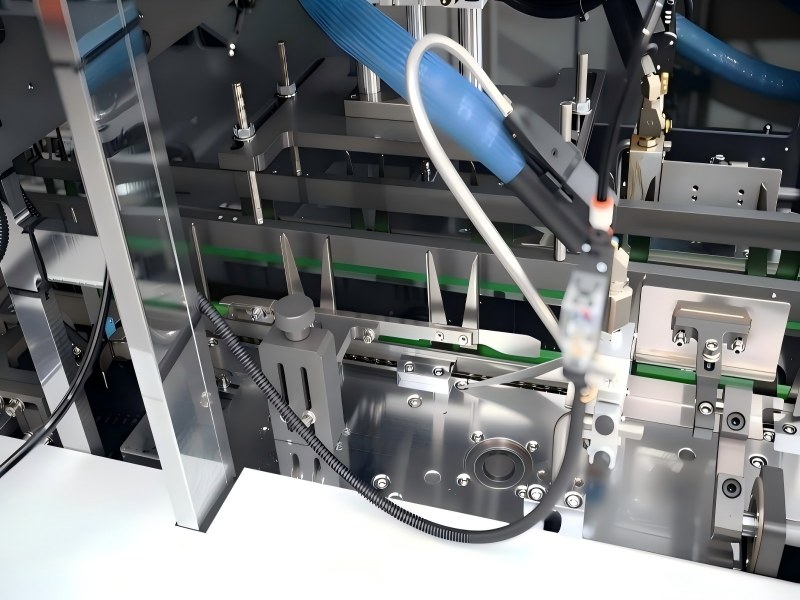
This gallery close-up does not establish which components are format parts. Use the configuration's parts list and instructions to make that distinction.
Hand over a transition record that scheduling can use
Before committing a production sequence, resolve the matrix rows for the initial product family. Identify which transitions use the supplied adjustment arrangement, which need included replacement sets and which remain outside the confirmed scope. That information lets planning allow for preparation and procurement instead of discovering an unquoted part when the previous carton run has already ended.
Changes to a product should trigger review of the affected transition record. An altered box style or tissue combination may need a different arrangement even if one headline dimension remains unchanged. Have the responsible person obtain the supplier's confirmation, update the row and identify the applicable instructions. Preserve the earlier row for comparison rather than treating an old duration as automatically valid.
The useful purchasing result is a defined set of transitions with their work class, necessary parts, commercial scope and timing boundary. The published 10–20 minute statement remains a source value, while your factory's schedule rests on the conditions confirmed for its products. That distinction gives the changeover requirement a practical meaning without turning an advertised range into a universal guarantee.





 Tel: +8613908196540
 Email: info@doubletissuemachine.com
 MP/WhatsApp: +8613908196540
 Manufacturer Address:Dongguan, Guangdong, China