For a toilet roll wrapping machine enquiry, specify one finished roll together with its paper wrapper. The roll drawing says what must be enclosed. The wrapper specification says what is supplied around it. Neither document can replace the other, and a photograph of a wrapped roll seldom provides enough detail to prepare both. Start by keeping the two items separate, then ask the machinery supplier to show their relationship in the proposed package.
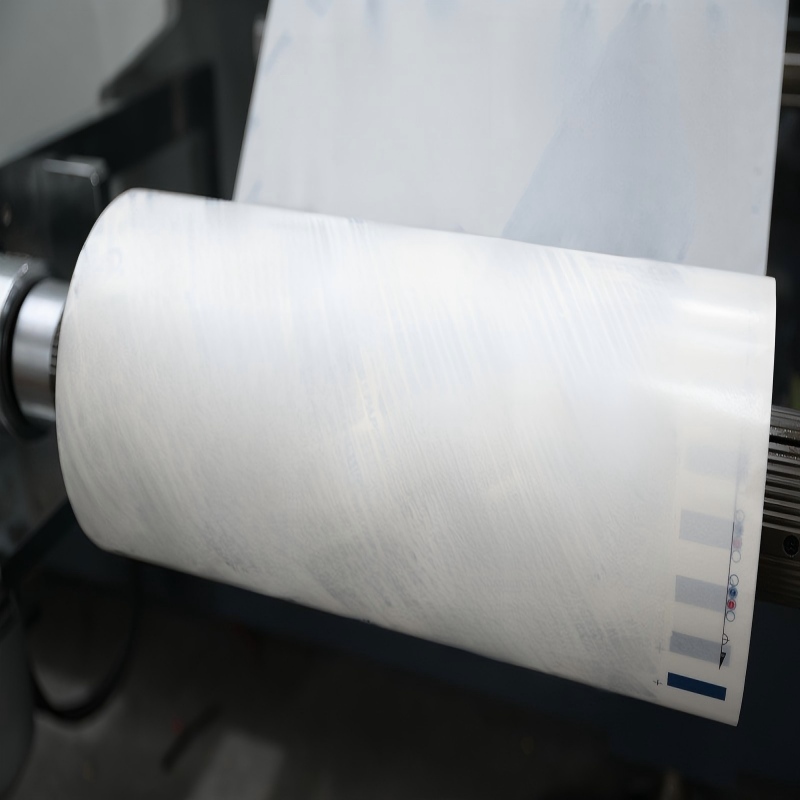
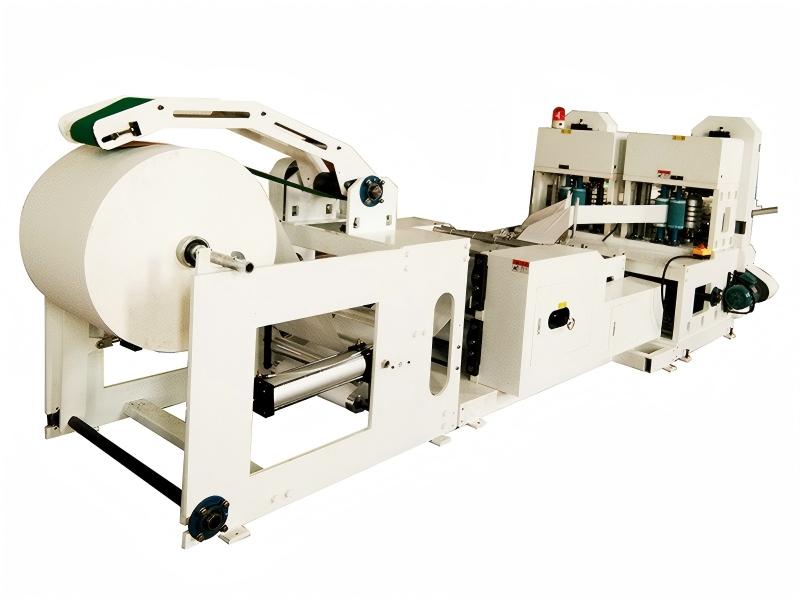
A wrapping-paper reel appears in the DB-TR-120P gallery. Printed blocks are visible near an edge; the image does not provide an approved wrapper size or artwork repeat.
Name the package before comparing machines
The DOUBLE DB-TR-120P toilet tissue paper wrapping machine is described for automatic paper wrapping of individual toilet tissue rolls. That scope needs to remain visible when enquiries pass between purchasing, production and an equipment vendor. A request shortened to toilet roll packing may otherwise be interpreted as a film pack, a shrink-wrapped product or a bundle containing several rolls.
Describe the intended sale unit as one roll enclosed by paper. If the sales plan also includes an outer bundle or shipping case, record that as a later package level. The single-roll wrapper is not evidence that every later packing operation is included. The immediate question is whether the proposed machine and material can deliver the individual paper-wrapped product being specified.
Keep a reference photograph for appearance, with a plain description of what it is intended to show. A competitor's pack can communicate a broad presentation, but it does not establish a compatible paper grade, a wrapper blank or the supplied equipment configuration. Avoid treating the outside appearance of a reference sample as a complete manufacturing instruction.
Give the unwrapped roll its own identity
Identify the finished roll supplied to wrapping by its product reference, nominal dimensions and available sample. The DB-TR-120P listing gives a product range labelled L 90–130 mm and diameter 95–130 mm. Keep the published labels with those values, then have the supplier identify the measured features on the drawing for the selected roll. A dimension named length needs a visible reference when several parties are discussing a cylindrical object.
The range is useful for an initial comparison. It does not establish that every possible pairing of the smallest and largest values is accepted in the same configuration. Ask the machinery supplier to confirm the requested roll, including its supplied condition, against the order. If several rolls are planned, list them as separate products rather than writing the entire catalogue range into a single acceptance requirement.
Include the core arrangement in the product description where relevant to the actual roll. An outer diameter cannot describe every feature of the incoming item. The public wrapper page does not publish a universal core requirement, so the buyer should supply the intended roll construction and ask for its confirmation. Do not import core dimensions from a separate rewinding machine's page.
A sample is most useful when it keeps its identity. Label it with the roll reference and drawing revision, and state whether it represents the current production supply or a proposed new product. If the sample differs from the requested dimensions, explain the difference. An unlabelled roll sent as an approximate example leaves the supplier to decide which features are requirements and which are incidental.
Specify wrapping paper as a material
The published wrapping material is paper with a thickness of 0.03–0.05 mm. That is a material-thickness statement, not a wrapper-width calculation and not a film specification. Retain the unit when sharing it with the paper supplier. Do not substitute a grammage value and assume that it establishes the same declared property; the material proposal needs the information its suppliers can actually confirm.
Ask the wrapping-paper converter for an identifiable material reference, declared thickness and the proposed supplied form. Include a physical paper sample if one has already been chosen. The machine supplier should review that proposal with the intended roll and pack presentation. A generic description such as white paper or printed paper is insufficient to identify a repeat supply.
Keep finishing and printing details attached to the same material reference. If a finish or material changes, show the change rather than presenting only a new artwork file. The public range does not by itself approve every paper sold at the stated thickness. The supplier review should connect the actual material proposal with the actual roll, without turning a catalogue interval into an unrestricted compatibility claim.
Two samples, two jobs: an unwrapped roll identifies the product being handled; a wrapping-paper sample identifies the proposed enclosing material. Retain both identities when a wrapped presentation sample is later reviewed.
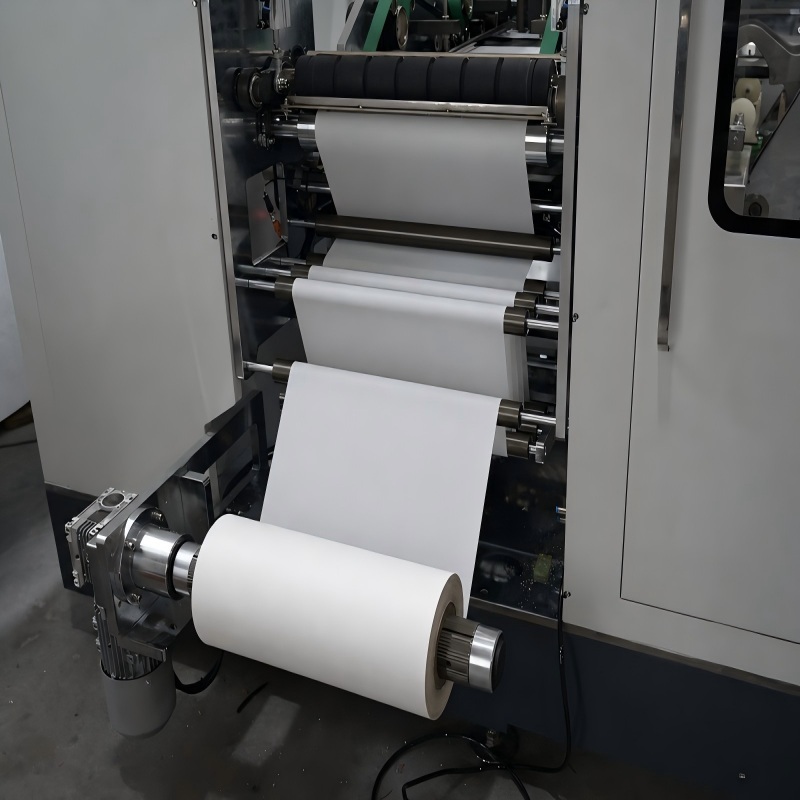
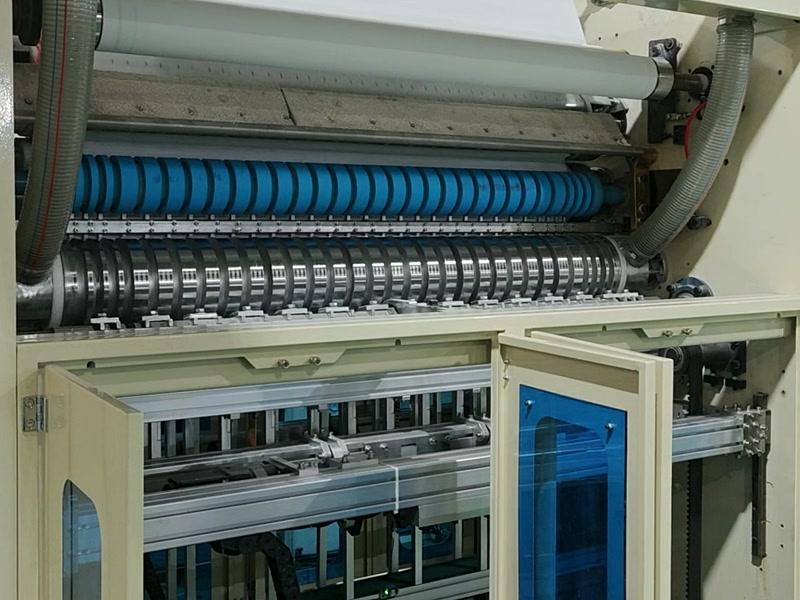
Paper passes over rollers in this published gallery detail. The photograph does not establish a universal paper width, feed orientation or operating setting.
Request the wrapper drawing instead of guessing it
Ask the machinery supplier which paper dimensions and supplied arrangement are required for the selected roll. Have the result shown on a wrapper drawing with a viewing face and named edges. The buyer can then pass that drawing to the paper converter for a precise response. Do not derive an order solely by multiplying the roll diameter or adding an allowance remembered from a different machine.
The DB-TR-120P description identifies paper cutting, suction, clamping and pressing within its process. It does not publish the complete wrapper geometry for every permitted roll. Its general process description cannot settle the extra paper needed in a particular closing arrangement or the final orientation of a printed design. Those values belong in the supplier's product-specific response.
Keep the flat wrapper view separate from the wrapped view, while giving them a shared reference. The flat view supports the paper order and printing discussion. The wrapped view shows the intended presentation around the roll. Ask for visible reference features to connect them, so that the same word front does not describe opposite faces in the two drawings.
Mark artwork that must remain visible on the intended finished pack. Have the supplier identify the closing regions before the print file is released. A brand owner can review wording and appearance, while the machinery supplier reviews the proposed technical arrangement. Both reviews are needed for their own purposes; a visually approved design does not supply missing wrapper dimensions.
If a supplied reference pack is opened for inspection, retain the roll and paper as separately labelled objects. Note that the paper has been removed from a formed package, so it should not automatically become the authoritative flat drawing. The machinery supplier and paper converter still need to define the intended supplied dimensions. The opened reference helps the discussion without pretending to be a manufacturing specification.
Keep each roll paired with its wrapper
Use a separate record for every requested roll and wrapper combination. A useful reference might connect a roll drawing, paper material reference, wrapper drawing and artwork revision. These are suggested document fields, not claims about a control-system recipe. Their purpose is to prevent the paper ordered for one retail product from being assumed suitable for another simply because the artwork looks similar.
When a roll diameter or length changes, ask whether the existing wrapper specification remains accepted. When only the printed design changes, ask whether the technical paper drawing stays the same. The two situations should not be merged into an unspecified new size. Keeping the changed field visible helps both suppliers review the actual difference instead of restarting from an ambiguous photograph.
The product page describes changeover by adjustment or replacement of selected parts. That statement should not be read as confirmation that every proposed pair uses the same parts. Request the applicable arrangement for the combinations being purchased. The blog does not provide adjustment instructions or a promised transition time for an unconfirmed product.
Make the pair reference visible on later communications as well as the purchase order. A request to change the paper for the hotel roll should identify which recorded roll and wrapper it concerns. Informal names can refer to several sizes or artwork versions over time. A stable reference lets the supplier assess the intended change without confusing an older product with the current one.
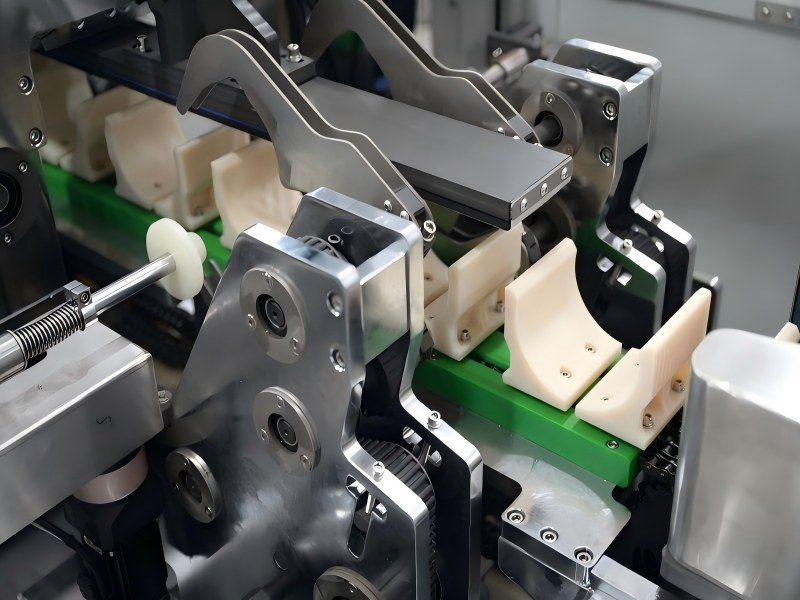
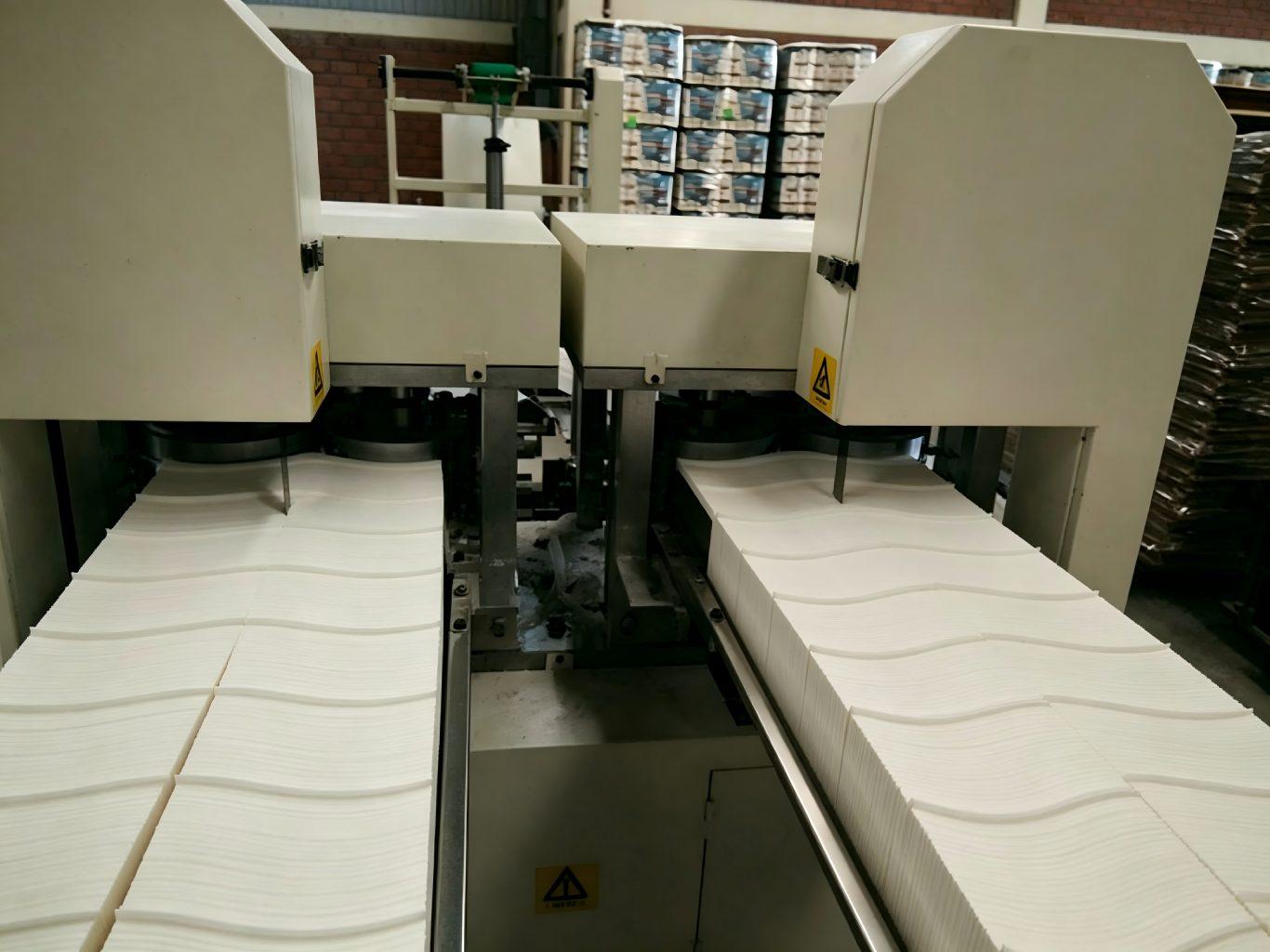
A roll is visible among handling components in the DB-TR-120P gallery. This is equipment context, not a verified result for a buyer's roll or wrapping paper.
Close the discussion around an agreed pair
Before authorizing a paper order, reconcile the material supplier's proposal with the machinery supplier's wrapper drawing. Identify the selected roll and record any point still requiring confirmation. Where a presentation sample is requested, state what the participants will assess and preserve the product references beside it. A proposed review is not evidence that a trial has already succeeded.
The resulting order should describe one identifiable roll and one identifiable wrapper together. That relationship is more useful than a broad promise that a machine handles toilet rolls. It lets purchasing order the correct paper and gives the equipment supplier a concrete package to confirm, while keeping later bundle and case packing outside this individual-wrapper decision.



 Tel: +8613908196540
 Email: info@doubletissuemachine.com
 MP/WhatsApp: +8613908196540
 Manufacturer Address:Dongguan, Guangdong, China