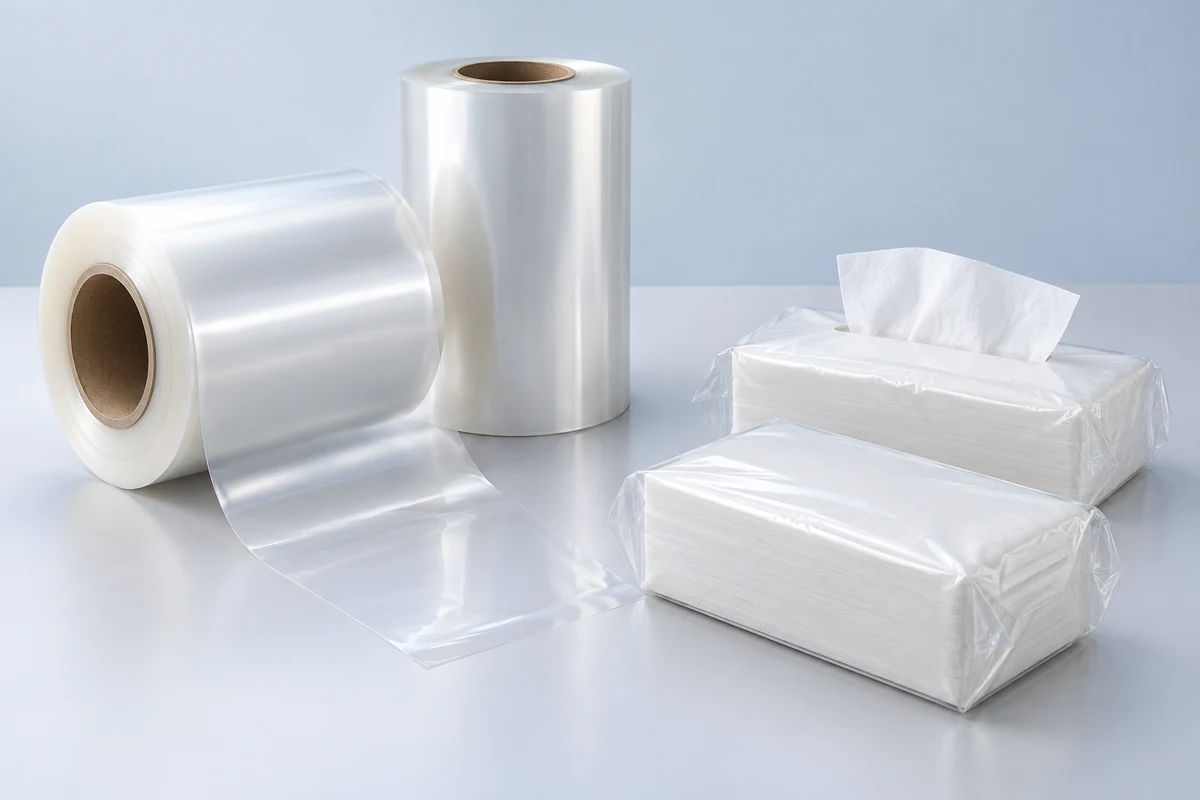
Film for a soft tissue pack should be selected together with the intended package and packing machine. A material described simply as clear film does not define its sealing behaviour or machine compatibility. Start with a filled reference pack and ask the film supplier to propose a structure for that specific application.
Define the pack and seal arrangement
Record the tissue stack dimensions, sheet count, finished pack size, seal positions and intended opening feature. Confirm whether the equipment uses rollstock or a different packaging format. Describe the required appearance, including a transparent window, opaque print or visible tissue area, without assuming that one film grade can provide every feature.
Jindal Films' film range overview distinguishes coated and uncoated films, single-web and laminated constructions, and different packaging processes. This illustrates why the exact grade and construction matter more than the polymer name alone; it does not establish suitability for a particular tissue pack.
Request a complete film specification
Ask the supplier to identify the sealing surfaces, recommended sealing conditions and storage instructions for its proposed material. Check film width, thickness, core size, reel diameter, winding direction and maximum reel weight against the packing machine. For printed rollstock, agree artwork orientation, print repeat and registration mark location with the machine team before printing a production batch.
- Obtain the actual material structure and grade reference.
- Confirm which face contacts the tissue and which face is printed.
- Agree how reel joins and material batches will be identified.
- Request evidence for any specific product or environmental claim.
Trial real tissue stacks and seals
Use the intended tissue stack for the trial and document the machine settings. Evaluate feeding, registration, cutting, seal appearance and opening performance together. Check packs after cooling and handling, including the corners and areas where folded film overlaps. If a resealable label or opening device is included, test it as part of the complete package.
Do not copy sealing temperatures from an unrelated film data sheet. Agree the trial settings with the film supplier and equipment team, then keep the observed results with retained filled packs. Change one material or setting at a time so that problems can be investigated clearly.
Approve the complete package
Keep the approved film specification, artwork version, machine trial record and filled sample together. Recheck the package after changes to the tissue stack, film structure or opening design. The goal is a documented pack specification that both material supplier and converter can reproduce.
Share your filled pack sample, proposed film data sheet and packing machine details with DOUBLE to review the packaging format and trial requirements.





 Tel: +86 139 0819 6540
 Email: info@doubletissuemachine.com
 MP/WhatsApp: +86 139 0819 6540
 Manufacturer Address:Dongguan, Guangdong, China