Specify embossing and lamination as separate decisions when ordering a toilet-paper converting configuration. Embossing defines a patterned tissue surface; lamination concerns how the selected plies are joined. An embossed roll is not proof that a glue-lamination unit is included, and feeding several plies does not establish a particular bond between them. DOUBLE lists embossing and glue-lamination options for the DB-R300 and DB-R500. Start with the intended paper construction, then identify the selected pattern and joining arrangement independently. This makes the quotation easier to compare and prevents a visually convincing roll sample from approving an unspecified material or module.
Start with the layers the product needs
Write the finished product's ply requirement beside the parent-paper specification. Where different papers will form the layers, identify each one separately. Include grammage, the intended face and any product-specific distinction between the inner and outer layers. A phrase such as “premium two-ply” can describe a market position without telling the equipment supplier what material combination must be handled.
The DB-R500 page lists a customized unwind-stand configuration for one to five plies; the DB-R300 option list describes one to five layers with independent drive. These statements establish input configurations to discuss. They do not confirm every possible paper combination or a joining result. Ask the proposal to identify the actual unwind arrangement and the papers on which its converting scope is based.
Paper input and ply construction belong in the specification before selecting the downstream pattern and joining options.
Define what it means for the layers to remain together in the intended product. If lamination is wanted, identify that requirement directly. If the buyer is uncertain whether a separate joining arrangement is necessary, leave the decision open for technical review. Do not let a general ply count answer it implicitly.
For a single-ply product, there is no second tissue layer to join within the stated construction. The enquiry can still require a particular embossed appearance. If a future multi-ply product is planned, list it separately rather than adding lamination to the present requirement simply because the intended roll is described as premium. The supplier can then explain the appropriate configuration for each product.
A mixed product programme also needs confirmation of how each selected module is used for each roll. Do not assume that an included lamination unit can be left inactive for another product without a technical review. Ask the proposal to distinguish the required arrangements and to identify any product-specific items. Purchasing additional modules and confirming the intended operating combinations are related but separate decisions.
Approve the surface and the joining function separately
Surface decision: describe the motif, decorated area and intended tissue appearance. Refer to a pattern drawing and a physical sample when available.
Joining decision: describe the required association between the plies and identify the proposed lamination arrangement, including any material supplied for it.
These decisions can interact in a proposed configuration, but neither should disappear inside the other. A pattern name may describe a geometry used in the supplier's arrangement; it does not fully define adhesive, application conditions or the resulting product. Ask the supplier to explain the named pattern in relation to the exact module being quoted.
Keep the approvals recognizable in the sample record. One reviewer may focus on the visual texture while another needs to assess how the plies behave during ordinary use. Both can examine the same identified sample without treating their observations as interchangeable. If appearance is acceptable but the joining requirement remains unresolved, record a partial decision rather than approving the entire construction.
Use each model's option vocabulary accurately
The DB-R500 toilet and kitchen paper rewinder line lists steel-to-rubber and steel-to-steel embossing, an edge-embossing system with independent cylinder pressurization, and a glue-lamination unit with point-to-point, DES or nested patterns. Keep those named selections attached to their stated functions. The edge-embossing description does not define the complete glue-lamination system.
The DB-R300 page uses a different grouping: its embossing options include steel-to-rubber, point-to-point, nested and DECO, with steel-to-steel edge embossing listed separately. A glue-lamination system is another optional item. Do not merge these two lists into a universal package or assume that similarly named choices establish identical equipment on the two models.
For a comparison quotation, ask each offer to name the selected embossing unit and the selected lamination unit in separate lines. Where an abbreviation or pattern name is unfamiliar, request the supplier's explanation and drawing. Replacing the published name with an assumed technical expansion can create an agreement about equipment that neither side actually proposed.
Also distinguish a listed option from an included module. A product page can establish that an option is offered in the range; the signed equipment scope must state what this machine includes. This distinction matters when one proposal includes lamination while another prices a rewinder with embossing alone.
Read a sample without assigning every effect to embossing
Use the sample to examine two questions: whether its surface matches the intended pattern, and whether its layers meet the agreed joining requirement. State the method for each observation. A buyer might compare visible motif definition on an opened sheet, while the joining review might consider the plies under an agreed handling condition. The supplier should confirm an appropriate evaluation for the intended tissue product.
If a layer comes away from the sample, record where and under what handling it occurred. Avoid calling it a lamination fault solely from an informal observation. The approved product may have a defined joining pattern or another intended construction. Compare against that definition first, and retain the affected sample so that the supplier can review the relevant condition.
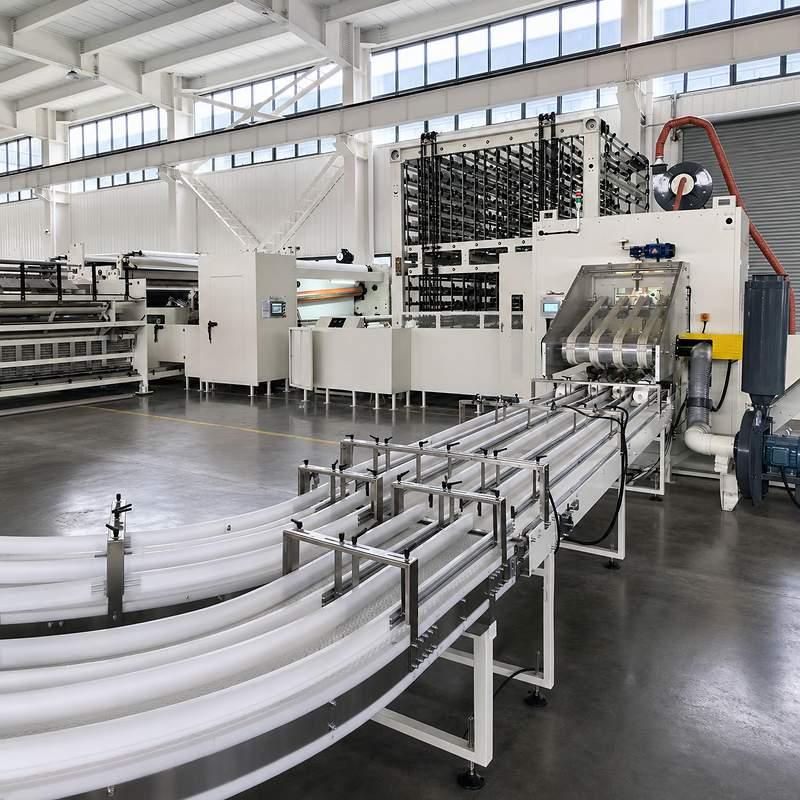
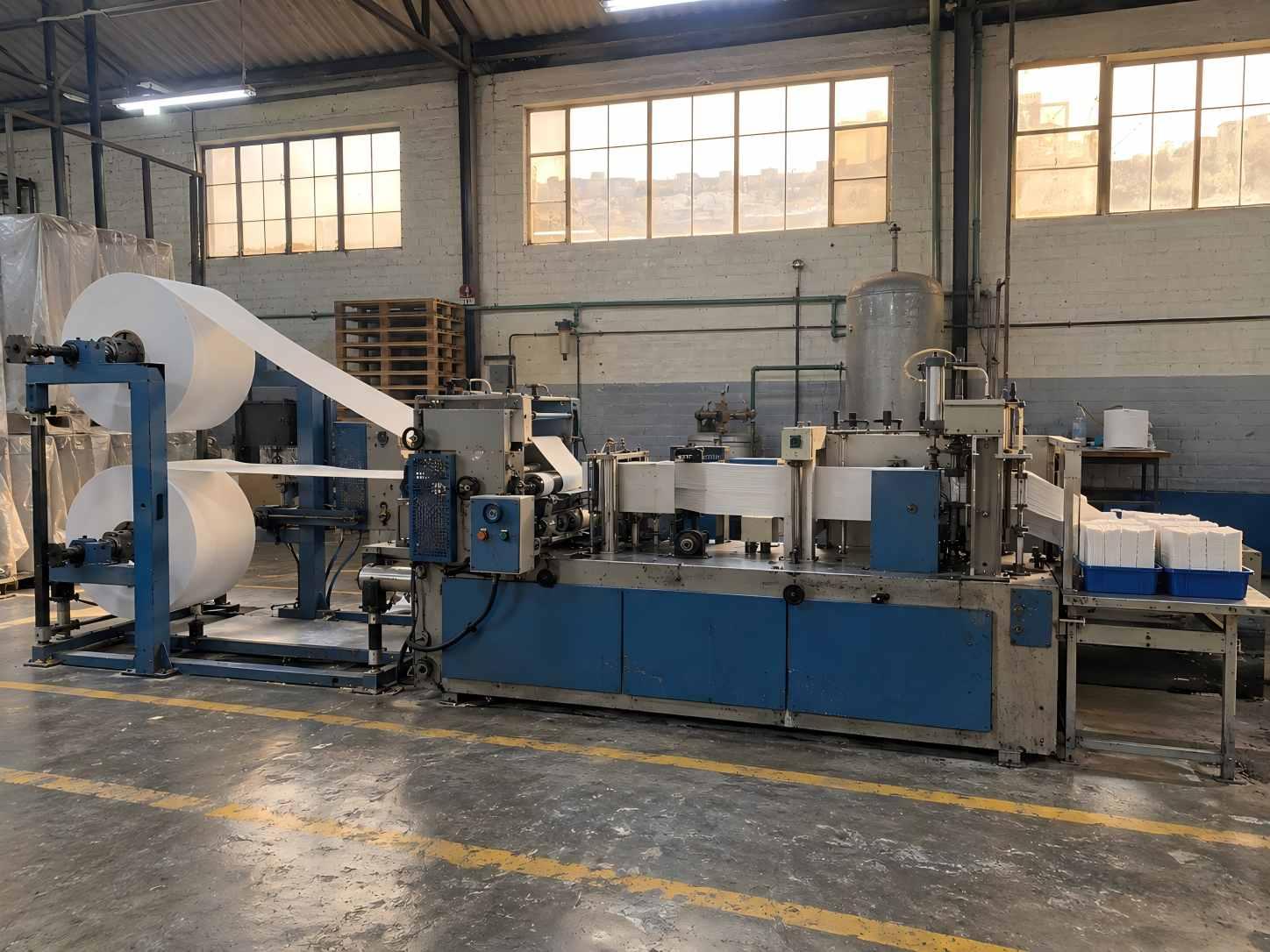
The workshop view shows connected equipment. The quotation should identify which embossing and lamination modules belong to the supplied arrangement.
Do not use apparent thickness, softness or pattern prominence as a substitute for the joining decision. Different paper inputs can change those observations. When comparing alternatives, identify the paper and ply for each sample so that a change in material is not credited automatically to a different embossing or lamination option.
Confirm lamination material before assigning performance claims
If glue lamination is selected, obtain the supplier's proposed material specification and the conditions under which it is to be used. Ask who supplies the initial material and who approves a later substitute. The equipment option alone does not establish that an adhesive is compatible with every tissue grade or suitable for every intended market.
Bring the material supplier into any application-specific review that is required. Keep safety information, handling requirements and product-use requirements associated with the actual proposed material. A generic assertion that glue improves strength, softness or absorbency is not a sufficient acceptance description. Those outcomes would need their own supported evaluation on the agreed finished tissue.
Record a material change as a change to the product construction, even if the visible pattern remains identical. The new combination may require confirmation of the joining result and the supplier-approved operating conditions. A previous appearance approval should remain useful as a visual reference without being stretched into approval of the replacement material.
Price the modules and their continuing requirements
Separate the selected embossing tooling from the lamination equipment in the offer. Identify what is included for each pattern, which additional items are required and which consumables are outside the equipment price. If a design family is planned, distinguish the supplied initial pattern from later patterns that would require another quotation. This makes price differences intelligible without assigning an unsupported benefit to the more complex package.
Ask for the documentation and service provisions associated with the selected modules. For lamination, the supplied instructions should cover the proposed material and the manufacturer's required care. For embossing, identify how the selected tooling and replacement items are referenced. Review those requirements with the factory team responsible for production and maintenance; do not assume that an existing routine covers newly selected equipment.
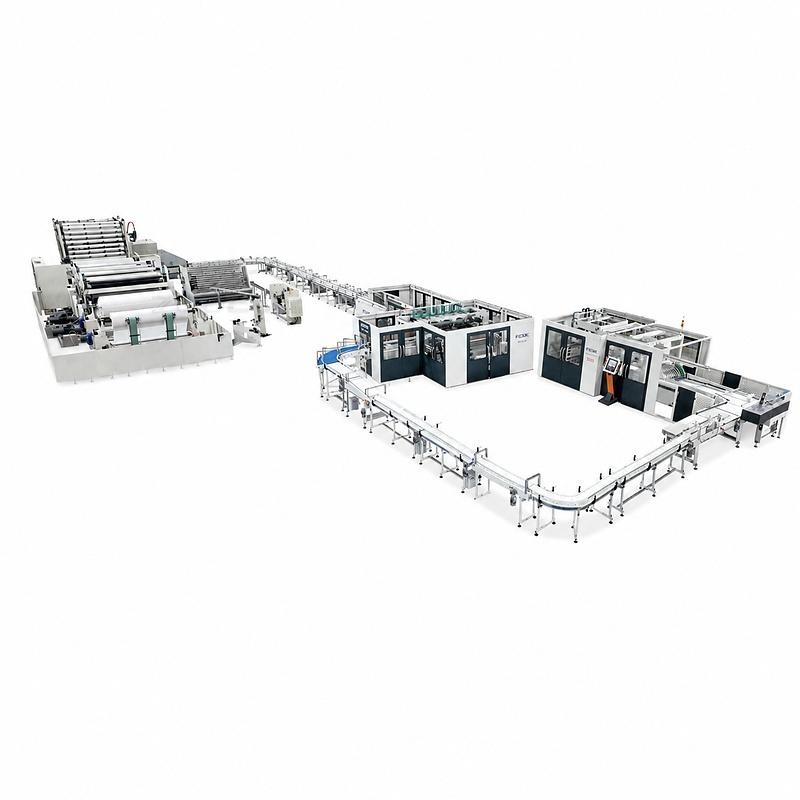
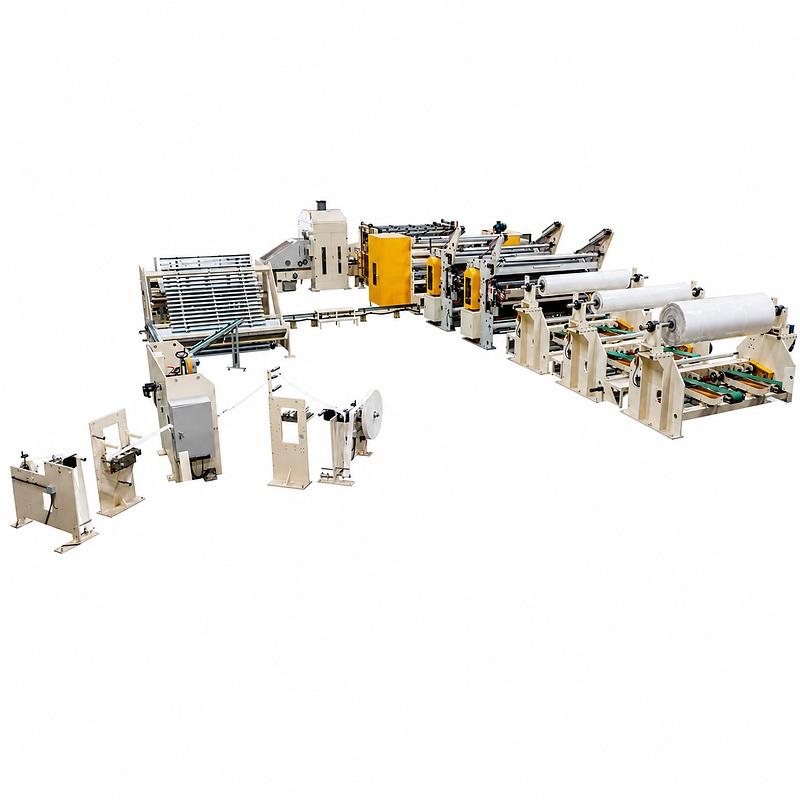
Request the final layout for the actual configuration. Added equipment may affect access and service arrangements, but the product option list does not establish the amount of space needed. Keep utilities and access requirements in the supplier's proposal rather than estimating them from a whole-line image.
Use a confirmed configuration drawing for installation planning; this published gallery overview is a product illustration.
Preserve the two decisions for the next product
Keep the selected paper construction, pattern identifier and lamination arrangement together in the product record. When another roll is added, state which of those elements changes. A new visual pattern can leave the joining requirement unchanged; a new ply or adhesive can reopen joining approval even when the pattern stays the same. That distinction keeps later enquiries specific and makes the original purchase useful as a reference without turning it into an unconfirmed promise for the entire future product range.



 Tel: +8613908196540
 Email: info@doubletissuemachine.com
 MP/WhatsApp: +8613908196540
 Manufacturer Address:Dongguan, Guangdong, China