Printed film is often ordered from a picture of the finished napkin pack. That picture shows the intended appearance, but it does not tell the film converter which material construction, reel or print layout the packing machine expects. Settle the film specification with the machine supplier before approving a production print run. A reel that meets a maximum width limit still needs to match the selected napkin stack and the agreed package construction.
Put material identity before the artwork file
The DOUBLE DB-NK-150P paper napkin packing machine lists double-side heat-sealable CPP film with a thickness of 0.04–0.05 mm. Preserve the full material description when asking a film converter for a proposal. CPP on its own leaves out a stated part of the machine's published material requirement. Likewise, a transparent sample does not establish the supplied film grade or its heat-sealable surfaces.
Ask the film supplier to identify the proposed material by its own product reference and declaration. The machinery supplier can then review that specific proposal for the selected package. Keep the declared thickness and units together; do not replace the stated millimetre range with an informal description such as thin film. A purchasing record should allow the material delivered later to be traced to the material reviewed now.
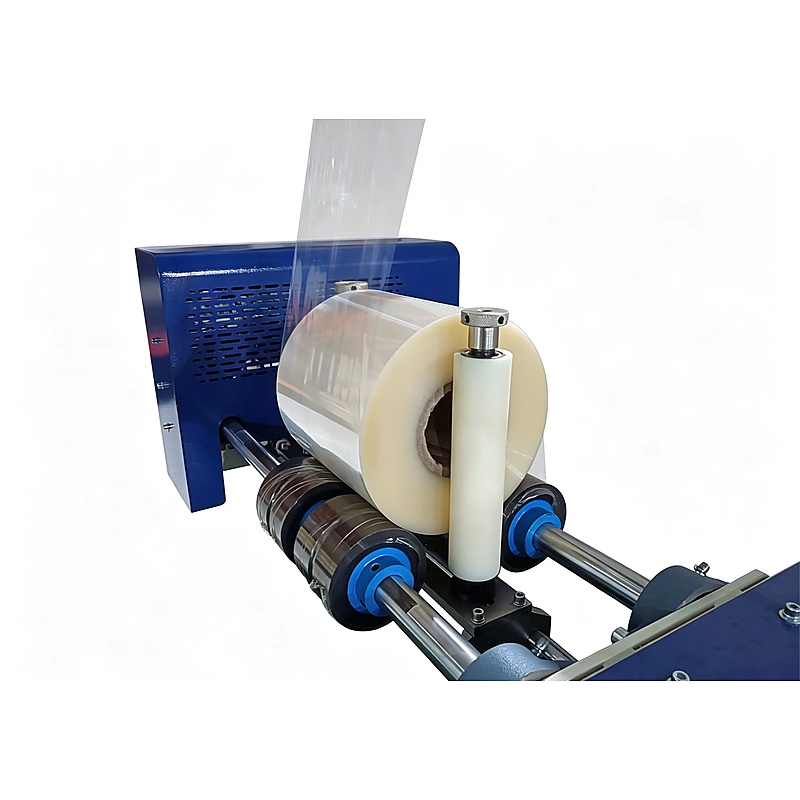
A film reel and rollers in the DB-NK-150P published gallery. Appearance does not identify the film's grade, thickness or approved printing specification.
The catalogue does not provide a complete buying specification for every printed film. It does not settle the proposed ink system, surface treatment or all properties of a particular converter's supply. Return those matters to the named film and machinery suppliers. Record the accepted material reference without making a general claim that every film sold under a similar name will behave identically.
Read the three reel dimensions separately
The listed reel limits are a maximum outside diameter of 500 mm, a core diameter of 76 mm and a maximum width of 340 mm. These values describe different physical features. Keep each value under its own label in the enquiry and on the film supplier's response. A single expression such as 500 by 340 reel leaves the core requirement and the meaning of the two other numbers unclear.
Published reel field
What it describes
What still needs agreement
Maximum outside diameter: 500 mm
The outside size of the wound reel
The proposed supplied reel and handling arrangement
Core diameter: 76 mm
The stated centre-core dimension
The supplier's complete core and reel specification
Maximum width: 340 mm
An upper width in the equipment listing
The film width selected for the particular pack
A maximum film width is not the width to order for every napkin pack. Nor does it specify the repeat length of the printed artwork. The equipment supplier should return the proposed film width and print-repeat information against the selected package. Purchasing can then compare the returned values with the film converter's drawing, rather than using the largest available reel as a default specification.
Keep reel winding and the presentation of the printed face explicit in the supplier discussion. Ask for the supply orientation to be shown on the approved film drawing and reconciled with the machine arrangement. The public specification does not establish a universal winding direction for every order. A labelled diagram is a better purchasing reference than an arrow drawn on an unlabelled photograph.
Ask the film converter to distinguish an offered reel size from the maximum reel size it is capable of producing. A proposal may quote a standard delivery reel that is smaller than the equipment limit. That is a supply detail to review, not automatically a machine fault. Keep the proposed delivered dimensions visible so that nobody mistakes a statement of manufacturing capacity for the actual order.
Fix the napkin stack before choosing width
Define the folded napkin dimensions, quantity in one pack and intended stack presentation. Use an identified physical sample where available. The packer receives that product; it does not receive the package artwork as a substitute for the product. Keep the stack dimensions distinct from the outside envelope of the wrapped pack, especially when the customer has supplied only a retail photograph.
The DB-NK-150P page lists a product range labelled L95–210 mm, H40–100 mm and W80–100 mm, with customized range available. Preserve those labels when discussing the published range, then ask the supplier to identify the dimensions on the proposed pack drawing. The list does not approve every combination of its extreme values or provide a formula for the film width needed around a stack.
A drawing can show the paper stack and the intended wrapper outline together without merging their dimensions. Give both objects names and a common product reference. Ask the machinery supplier to indicate the proposed overlap, side-seal areas and any other space that the artwork must respect. The machine description identifies overlap and side sealing, but does not publish universal allowance dimensions for the buyer to calculate independently.
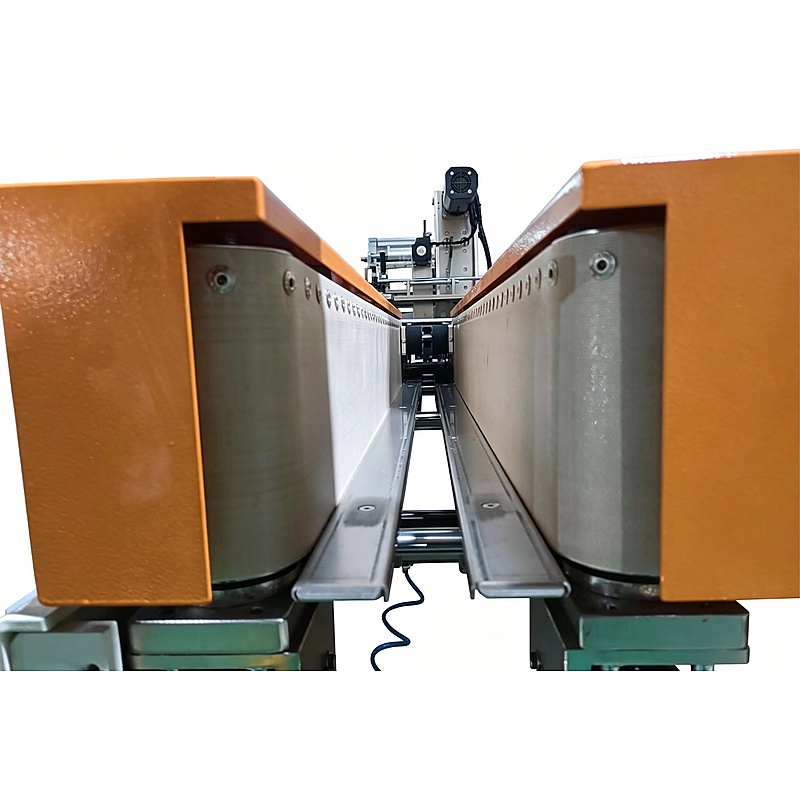
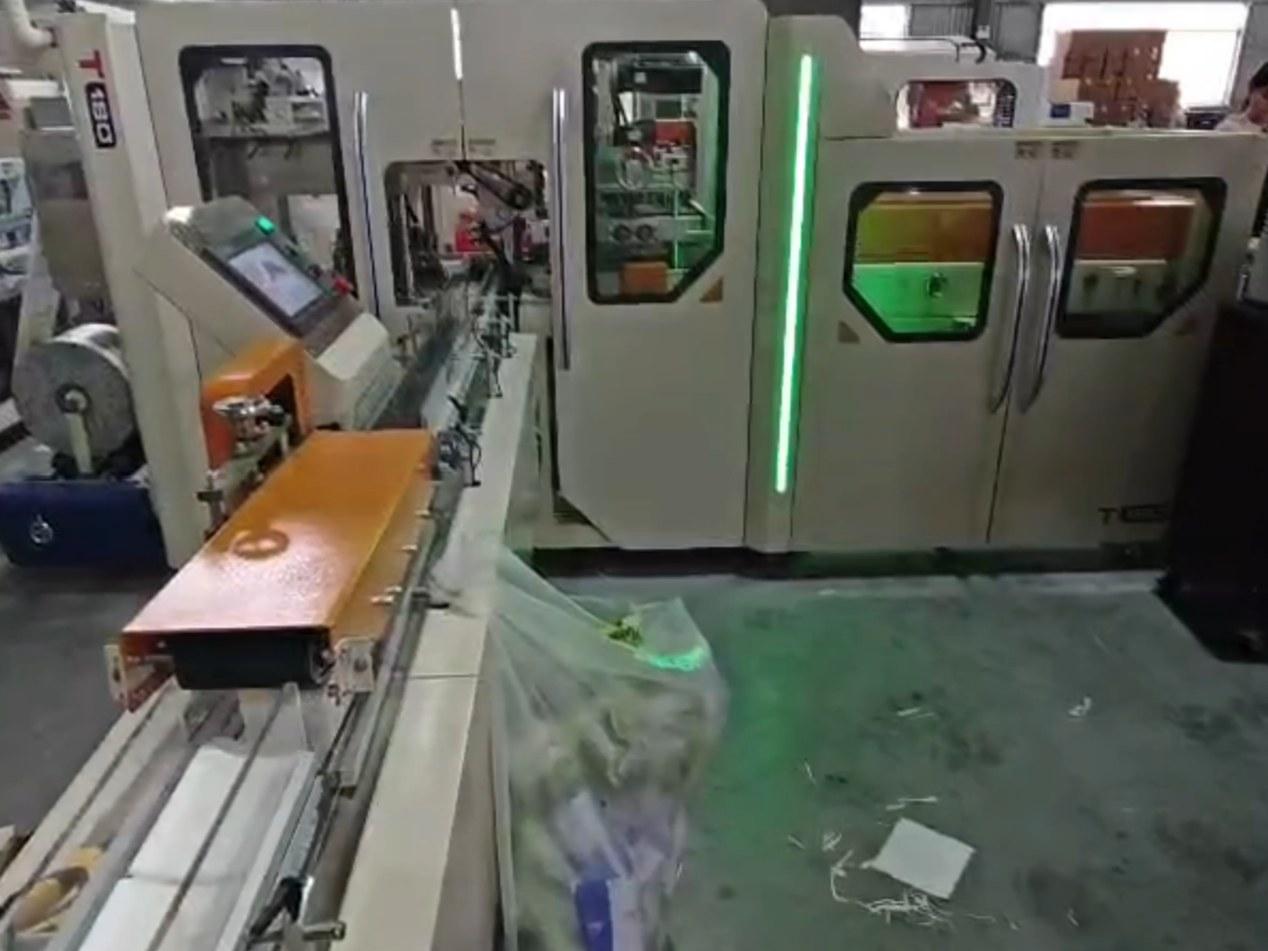
Facing belt assemblies appear in the DB-NK-150P gallery. Their appearance alone does not identify a complete machine model or establish the film layout for an ordered package.
Approve a technical print proof
Give the artwork supplier the agreed technical film drawing, rather than asking it to reconstruct dimensions from a finished pack. The print proof should show the artwork revision, supplied film width, proposed repeat and viewing face. Have the equipment supplier identify the features it needs on that drawing. Preserve the supplier's terminology where a feature has not yet been agreed.
The DB-NK-150P description mentions photoelectric film detection. That statement does not establish the detailed registration arrangement for every printed material or prove that a particular marking convention will be accepted. Request the required print features for the quoted configuration and let the film converter confirm that its production file follows them. Do not let an assumed sensor function become an unreviewed instruction on the printing order.
Keep customer-facing artwork and equipment-facing dimensions subject to their respective approvals. A brand owner may approve colour and wording while the machinery supplier is still reviewing the technical layout. Record both decisions rather than treating a signed visual proof as acceptance of the entire film specification. Where coding or opening features affect the print area, identify the reserved space without presuming that an optional device is included.
Use an explicit revision when a print proof is returned with corrections. A marked image in an email is useful discussion evidence, but it should not compete with the final file sent for production. Ask the film converter to acknowledge the released version and withdraw the superseded one from that order. The material specification can remain the same while the artwork changes, or the reverse; record which occurred.
Release the order in the right sequence
A practical sequence is to identify the stack, obtain the machinery supplier's proposed film specification, reconcile it with the film converter and then approve the print file. This is a suggested purchasing sequence, not a record of a completed customer trial. If a material sample or equipment assessment is needed, agree it before committing a full printed quantity, with the participants and acceptance questions recorded.
Keep the approved items together under one pack reference: tissue sample, product drawing, material declaration, reel specification and artwork revision. The purchasing instruction should say which versions belong to the order. It should also identify who can authorize a change. Otherwise, a corrected artwork file can arrive beside an earlier reel specification and leave the film converter to choose between them.
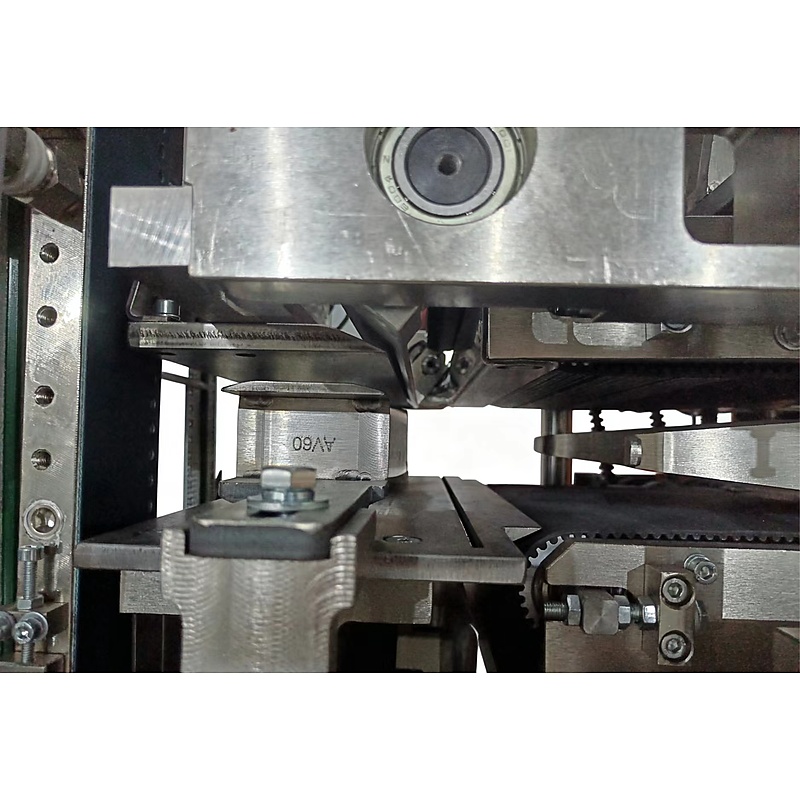
A close equipment detail from the published product gallery. The picture is not evidence of a sealing setting, print-registration method or material-acceptance result.
Make a repeat delivery identifiable
When film arrives, compare its identity and declared specification with the order before losing the reel labels. Retain the material, artwork and batch references in a receiving record. An apparently identical design can be printed on a different material or supplied in a different reel configuration. Visual similarity alone does not establish that the delivered supply matches the reviewed proposal.
If the converter proposes a substitution, send the changed field back for review. State whether the change concerns material, dimensions, winding, printing or delivery condition. The point is to keep a repeat order tied to an identifiable specification. It gives purchasing, the film converter and the packing supplier a common document when a difference needs to be assessed.
Keep a small identified reference from the accepted supply under the buyer's normal sample-control arrangements. It can help the participants compare a later delivery without relying on memory of a transparent film's appearance. The reference supplements the declared specification; it does not replace it or prove a future reel's performance. Agreement still belongs to the material and machine suppliers reviewing the actual proposed change.
Give the final film specification to everyone placing repeat orders, including any purchasing office outside the factory. A repeat order should refer to that approved version instead of rebuilding the specification from an earlier invoice description.




 Tel: +8613908196540
 Email: info@doubletissuemachine.com
 MP/WhatsApp: +8613908196540
 Manufacturer Address:Dongguan, Guangdong, China