When a wrapped toilet roll looks wrong, first establish whether the visible condition was present before wrapping. A distorted roll can affect the final presentation, while a sound incoming roll can leave in an unsatisfactory wrapper. Those are different observations. Keep the incoming product and the finished paper wrapping identifiable so that the supplier can review the relevant evidence without guessing which stage first showed the problem.
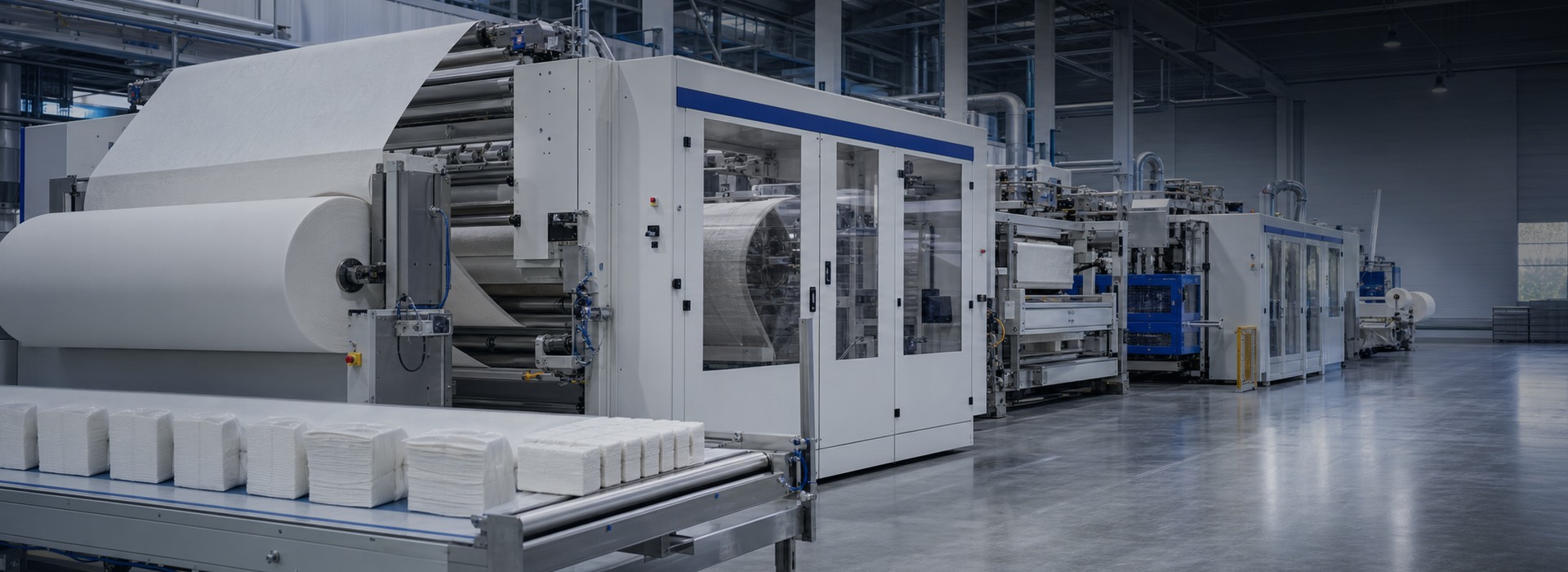
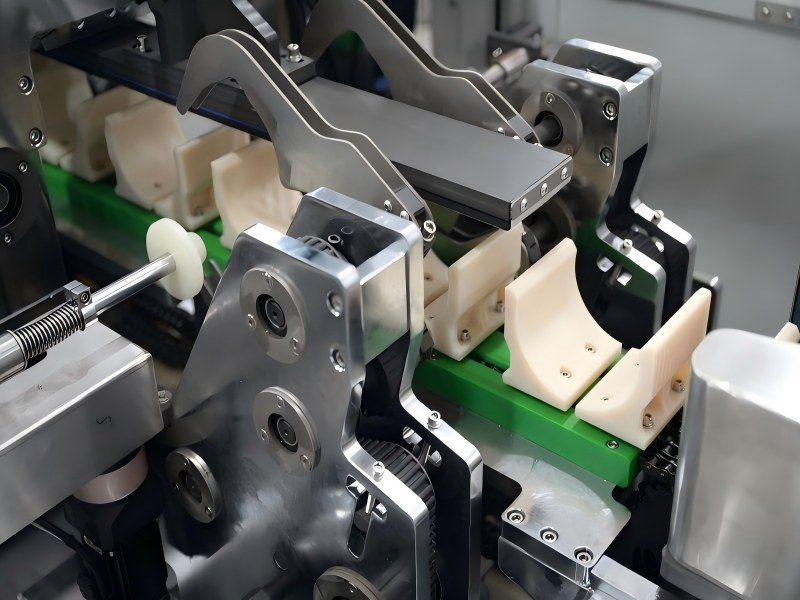
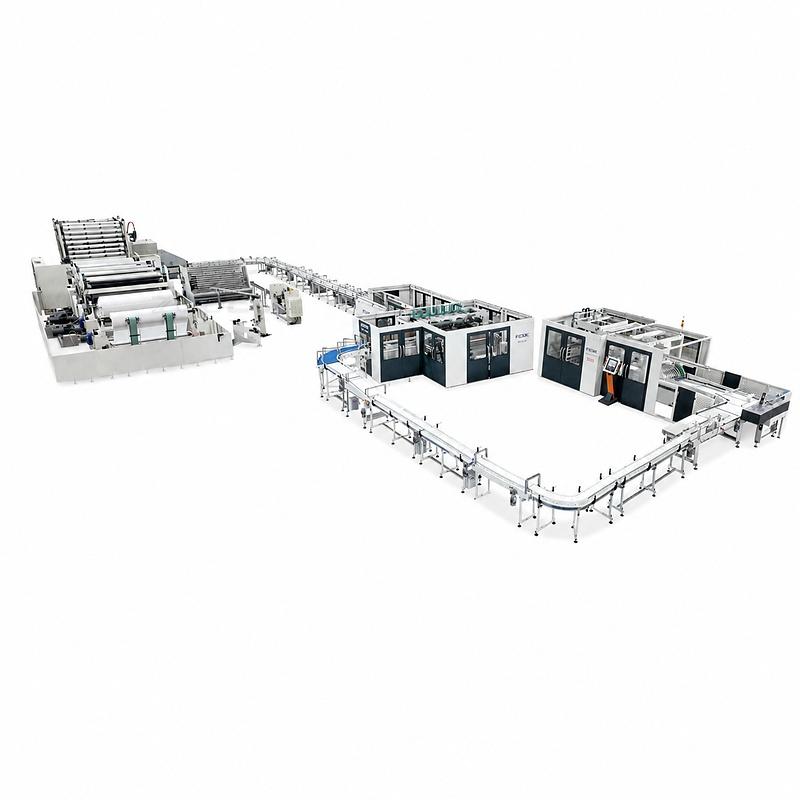
A roll among handling components in the DB-TR-120P gallery. This is equipment context, not a before-and-after inspection or a diagnosis.
Choose an observation boundary for one paper-wrapped roll
The DB-TR-120P toilet roll wrapping machine is described for individual rolls wrapped in paper. It is not a film-shrink or multi-roll bundle wrapper. Use that single-roll package as the inspection object. A standard for the appearance of a plastic retail bundle will not define the expected folds and paper presentation of this product.
For a proposed review, distinguish the roll at the agreed entry observation point from the wrapped item at the agreed exit point. Identify the selected roll specification, the wrapping-paper specification and the intended finished appearance. The published product range includes roll length 90–130 mm and diameter 95–130 mm; the actual ordered format still needs confirmation.
If the review is intended to compare the same roll before and after wrapping, agree how its identity will be preserved without disturbing the product or its handling. Do not present two unrelated photographs as a matched pair. If individual matching is unavailable, describe the evidence as an incoming sample group and an outgoing sample group, with that limitation visible.
Describe the incoming roll without blaming its maker
Record visible shape, edge condition and any surface feature relevant to the agreed finished-product standard. Use a consistent viewing orientation and identify which end or side is shown. A crushed-looking edge, a displaced-looking core and an uneven-looking outer surface are observations to retain; each may need a more precise examination before its significance is established.
Keep product measurements separate from appearance descriptions. Where a dimension is relevant, state the measurement method and reference points used by the responsible team. A photograph taken at an angle cannot reliably supply a missing diameter or prove that a roll met the agreed range. Nor does a roll inside a catalogue dimension range automatically satisfy all incoming-quality requirements.
Do not use this inspection to infer rewinder settings or material properties. The wrapper review can establish which incoming conditions were observed, but it cannot diagnose how a roll was wound from its appearance alone. If an incoming discrepancy is confirmed, refer it to the responsible product team with the sample identity and the actual evidence.
Use location words that survive the handover between teams. Identify the roll axis and the viewed end, then mark the region in a photograph or sketch. “Left edge” can reverse when a roll is turned around. A named region lets the incoming and outgoing records refer to the same physical feature even when the product is held differently.
Separate a condition recorded on receipt from a condition first seen at the wrapper entry. There may be transport, storage or handling between those points. If that interval was not observed, leave it outside the claimed evidence. The record can still show that a discrepancy existed before wrapping without pretending to know when or how it was introduced.
Then give the wrapper its own description
At the agreed output point, inspect the paper wrapping against the selected reference. Identify the main visible faces, the end presentation and any printed areas that matter to the buyer. Describe misplaced paper, unintended tears, surface marks or an uneven-looking fold by location. Avoid a single note such as “bad roll,” which does not say whether the concern is tissue or wrapping.
The model's published wrapping-paper thickness is 0.03–0.05 mm. Record the actual paper specification used in the proposed review instead of assuming that every sample has the intended wrapper. Appearance on an unidentified paper cannot confirm the buyer's selected material, and a published thickness range does not establish a particular finished visual result.
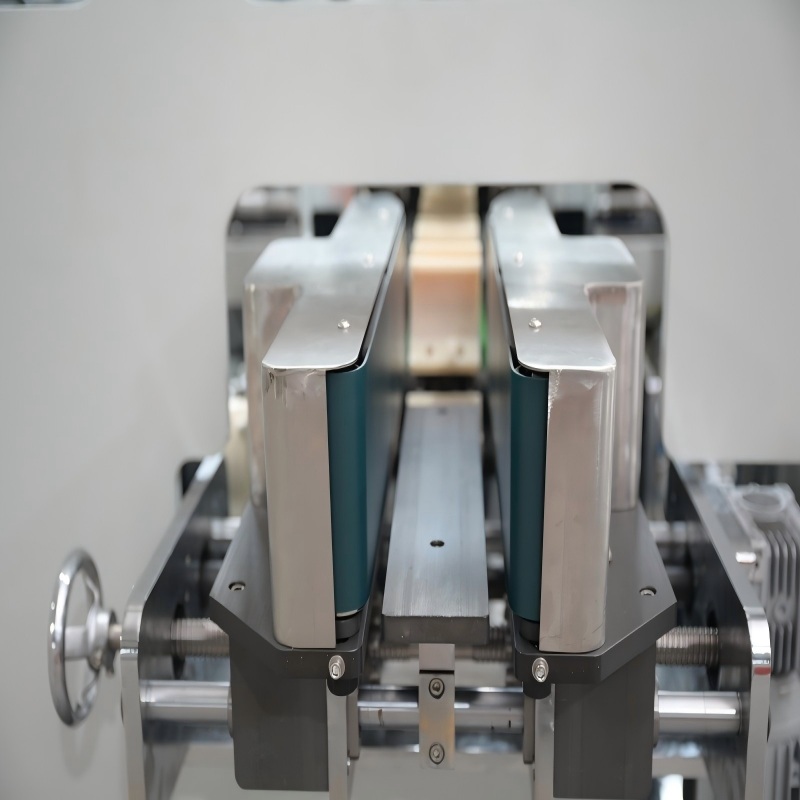
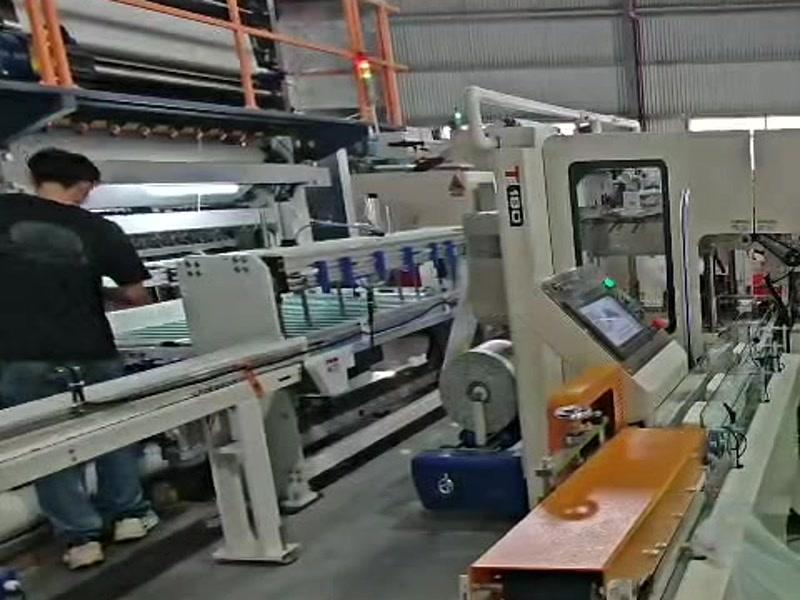
Opposed guides and belt assemblies in the published gallery. Their visible arrangement does not establish the cause of a mark or justify an adjustment.
Ask whether the observed condition belongs to the intended design before classifying it as a defect. A planned fold and an unintended crease can look similar in a close photograph. Retain the approved reference and the questioned sample together. The buyer's stated acceptance criterion, rather than an enlarged image alone, should decide which appearance differences require action.
Keep four possible outcomes available
Incoming observation
Finished-wrapper observation
Useful next record
No relevant discrepancy identified.
Matches the agreed presentation.
Retain the evidence for the sampled items and the inspection basis.
A relevant discrepancy is already visible.
The same region looks unsatisfactory after wrapping.
Record its presence before wrapping; do not assign a new cause without review.
No relevant discrepancy identified.
A wrapper discrepancy is observed.
Retain the paper and finished sample for the supplier's technical review.
Incoming identity or condition is uncertain.
A discrepancy is observed at output.
Keep the cause unresolved and improve the missing observation evidence.
The table is a proposed observation framework, not a claim that any of these outcomes has occurred on the DB-TR-120P. “Not identified” also differs from “proved absent.” The inspection method may miss a condition or may not examine every surface. Record that limitation instead of giving the incoming product a stronger verdict than the evidence supports.
Keep an agreed vocabulary for recurring observations. “Wrapper torn at the viewed end” identifies a material and a place. “Roll damaged” does neither. A short shared description can help the team sort the retained examples, while the photographs preserve details that the words cannot convey. Do not turn that vocabulary into a diagnosis code unless the technical finding supports it.
If different people inspect the incoming and outgoing samples, arrange a review of the disputed examples together. One person may be comparing with a product drawing while another is comparing with a retail reference. Resolve the reference being used before their verdicts are combined. Conflicting inspection standards can create an apparent process problem that the available evidence does not actually establish.
The agreed record should identify which reference governs each judgement, including its revision, so later inspectors can repeat the same review.
A result can involve both product and wrapper. There is no need to force every questioned sample into a single department's category before it has been reviewed. Retain the two observations and ask the relevant parties to agree the disposition. Separating the evidence should make the discussion clearer, not serve as a way to transfer responsibility without proof.
Use sample sets that remain comparable
State which product and paper were used, when samples were collected and whether any handling occurred before inspection. If a roll was removed from a carton and handled repeatedly before its photograph was taken, that condition belongs in the record. A mark observed only after later handling should not be described as an observed wrapper-exit condition.
For a proposed comparison, keep the sampling basis consistent across the conditions being compared. Do not select only attractive incoming examples and then retain every questionable outgoing item. Define how samples are selected before the review, and retain enough identity to connect each observation to its group or matched roll.
Also distinguish an untouched output sample from one opened to examine the tissue. Once the wrapper has been disturbed, its later appearance no longer represents the untouched output. Photograph or record the original condition first if that condition is relevant to the agreed review. Retain separate sample states when both examinations are needed.
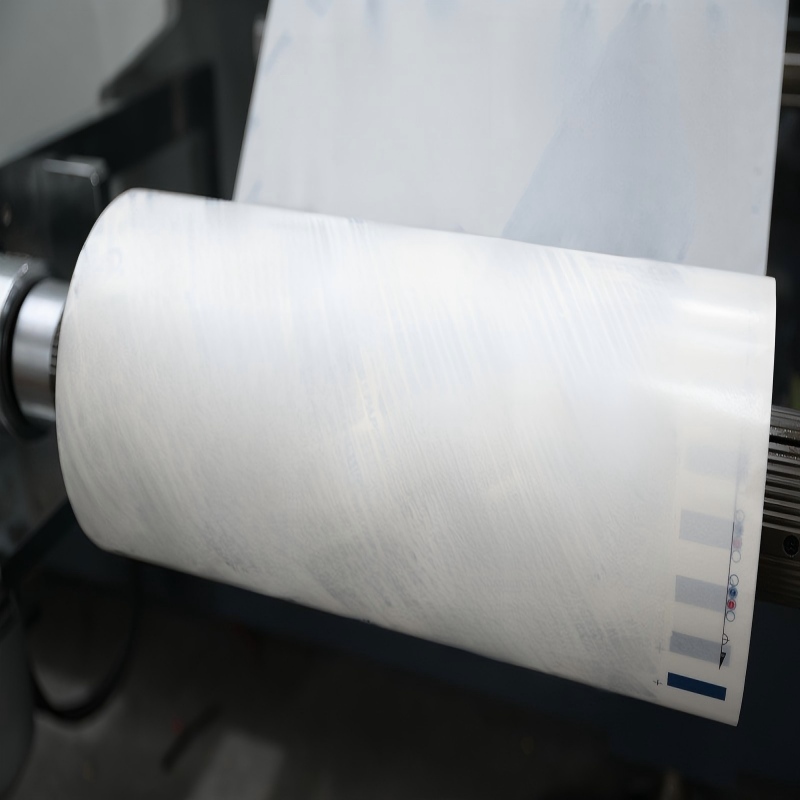
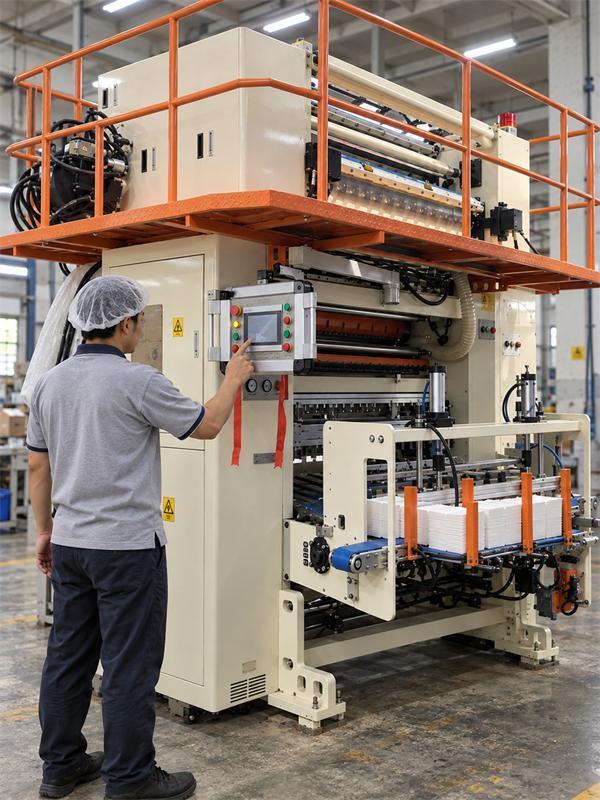
A wrapping-paper reel from the DB-TR-120P gallery. The actual paper identity and sample condition belong in the inspection record.
Send a technical question rather than a guessed remedy
A useful supplier review package contains the product identity, paper identity, inspection locations and the disputed samples or photographs. State when the condition was first observed. Ask what further evidence is needed to distinguish the possible explanations. The review should not start with an unsupported instruction to change a clamping, vacuum or other machine setting.
Where an acceptance criterion remains unclear, resolve that criterion separately from the cause investigation. The parties may agree that a sample is unacceptable before they know why it occurred. Keep both statements visible: the product disposition and the technical explanation. Neither should silently stand in for the other.
Once the review is closed, retain the agreed finding beside the initial observation and any follow-up evidence. That gives the next inspector a usable example of the condition and its disposition. It also preserves the distinction at the centre of the exercise: the tissue roll arriving at the wrapper and the paper-wrapped product leaving it are related, but they require their own evidence.



 Tel: +8613908196540
 Email: info@doubletissuemachine.com
 MP/WhatsApp: +8613908196540
 Manufacturer Address:Dongguan, Guangdong, China