Non-stop rewinding on a toilet paper machine describes a production process. It should not become a promise that every activity around a toilet paper line continues without interruption. DOUBLE describes the DB-R300 with non-stop surface winding. For a buyer, the useful next question is what that description covers in the offered configuration. Keep it attached to the named operation, then ask separately about events outside that operation. This makes the continuity requirement precise enough for a supplier to answer.
Start with the operation actually named
The DB-R300 technical specification identifies its rewinding type as non-stop, with surface winding in parentheses. The page describes toilet rolls and kitchen towels, cored and coreless roll forming, and independently driven units. Those published descriptions provide a starting scope. They do not explain every event through which the complete ordered line will continue operating.
Use the phrase non-stop surface winding in the enquiry instead of shortening it to never stops. The latter expands the claim from one named process to all possible circumstances. It leaves no room to distinguish normal production from an empty paper supply, a planned product change or work performed under a maintenance procedure. A machinery offer should answer the actual intended requirement, rather than an unlimited version created by an abbreviated heading.
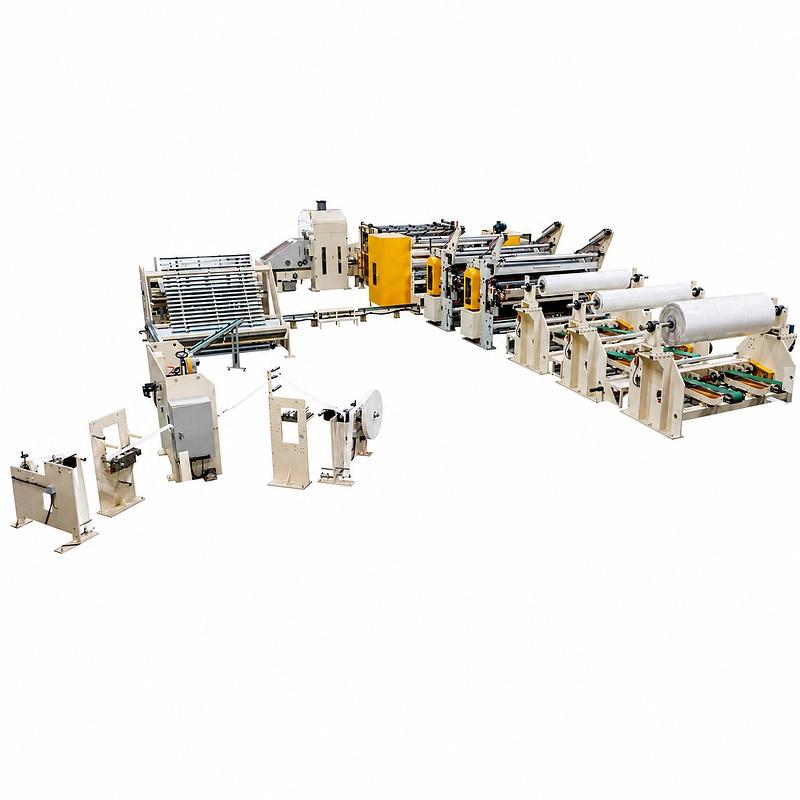
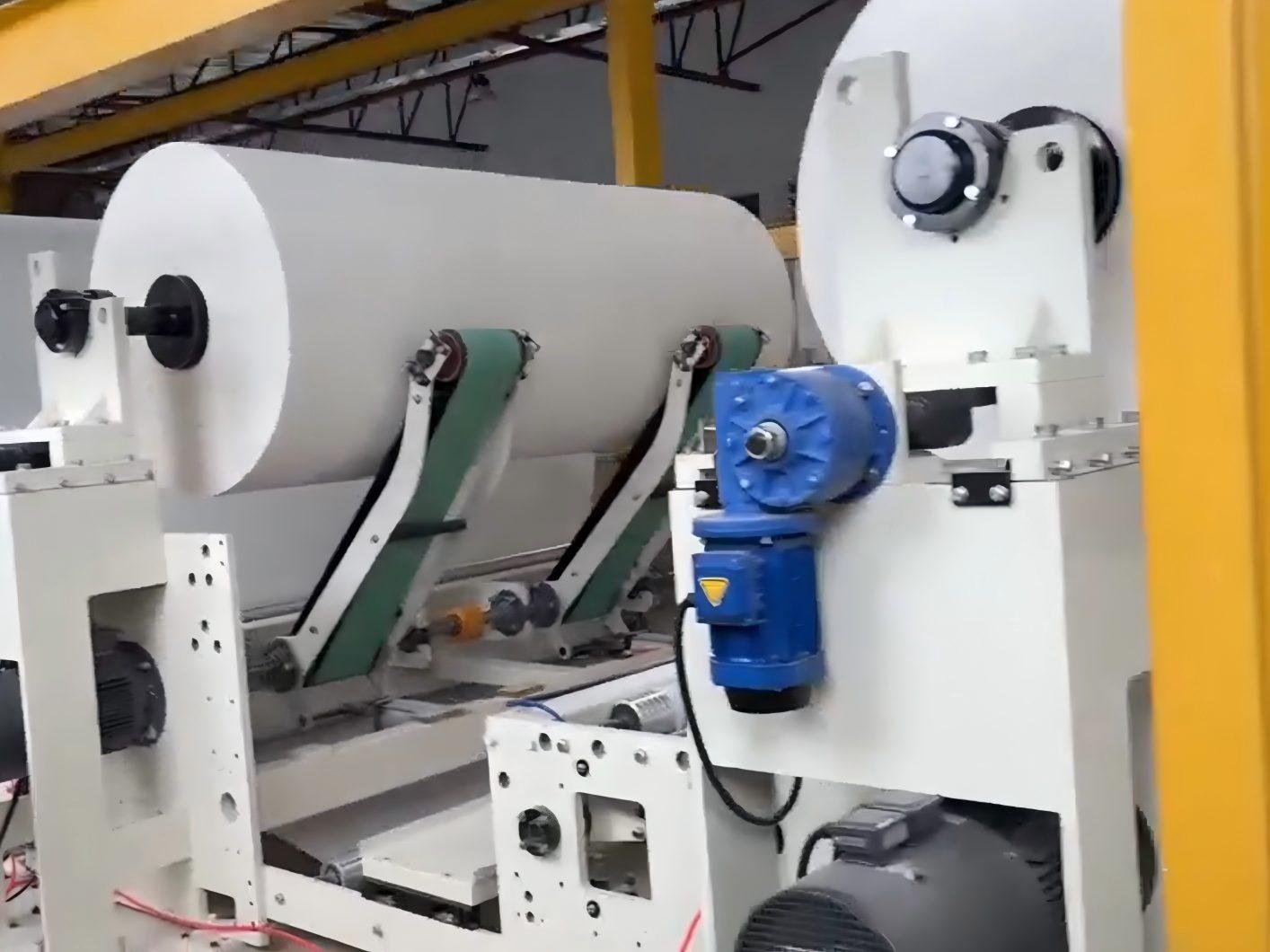
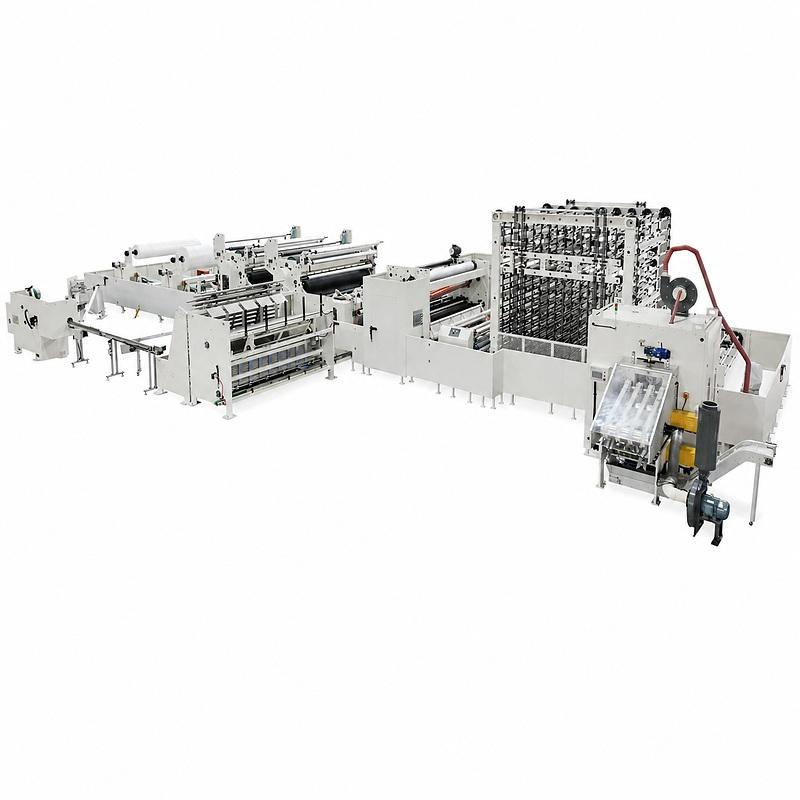
The DB-R300 source-gallery arrangement gives line context. It is not evidence that every surrounding operation remains running.
Ask the supplier to explain which part of its offered operation the description refers to. A clear technical answer can name the process boundary and the conditions assumed. The buyer does not need to invent a mechanical explanation from the model name or an image. If the public description leaves a particular event unanswered, record that event as a question.
Turn a broad uptime request into named events
A project team may use continuous production to mean several different things. One person means the normal winding cycle. Another expects parent-roll replacement without loss of production. A third includes changes between finished products. These expectations should not share one unqualified acceptance sentence. They concern different events and may require different equipment scope or operating arrangements.
List only the events that matter to the intended purchase and ask the supplier how its proposed configuration treats each. Do not fill the answer column with assumed capabilities. The DB-R300 page does not establish automatic splicing, a verified uninterrupted parent-roll replacement sequence or universal continuous operation during all product changes. Independent drives alone do not supply those missing answers.
Continuity question
What the source establishes
What to obtain for the offer
Normal rewinding process
Non-stop surface winding is the published rewinding type.
The supplier's explanation of the offered process scope and conditions.
Parent-roll replacement
No complete uninterrupted replacement sequence is established here.
A direct response for the proposed paper-supply arrangement.
Change of finished product
Cored and coreless product scope is described.
The supplied change procedure and any planned interruption.
Cleaning or maintenance
The production description is not a servicing instruction.
The delivered equipment's approved instructions and access requirements.
This is a proposed way to clarify a purchase requirement, not a report of a demonstration already carried out. Leaving an answer pending is appropriate when its scope has not been confirmed. It protects the project from treating a reasonable question as a capability already included in the price.
Read an exclusion as useful technical information. If an event is outside the offered continuous process, the buyer can plan for it explicitly or request another proposal. Hiding that distinction behind a broad uptime slogan leaves neither party with a clear requirement to meet.
A running speed does not measure availability
The specification lists a stable production speed of 300 m/min and separately lists 250 m/min for coreless production. Retain the distinction. Neither number tells the buyer how much of a shift the ordered line will spend producing, how often paper is replaced or how much time a chosen product change requires. A running-speed entry describes a different quantity from availability over an operating period.
For this enquiry, avoid converting the catalogue figure into a whole-shift promise. That would require information about the actual product and operating plan that the speed row does not contain. The supplier should answer the continuity questions in their own terms rather than using a high running number as a substitute. A confirmed process scope and a catalogue rate can coexist without being the same evidence.
Likewise, a brief video of material moving does not establish an uninterrupted transition that occurs outside the clip. It can show the visible operation during the recording. If a particular transition is important to the purchase, ask for evidence addressing that event and identifying the proposed configuration. Do not infer its outcome from an attractive sequence of ordinary running footage.
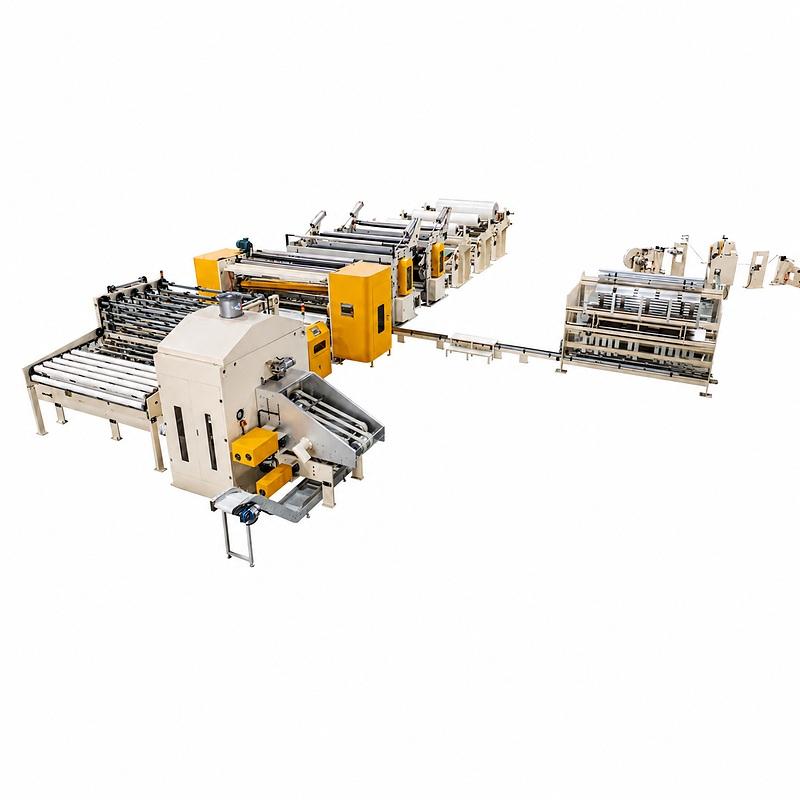
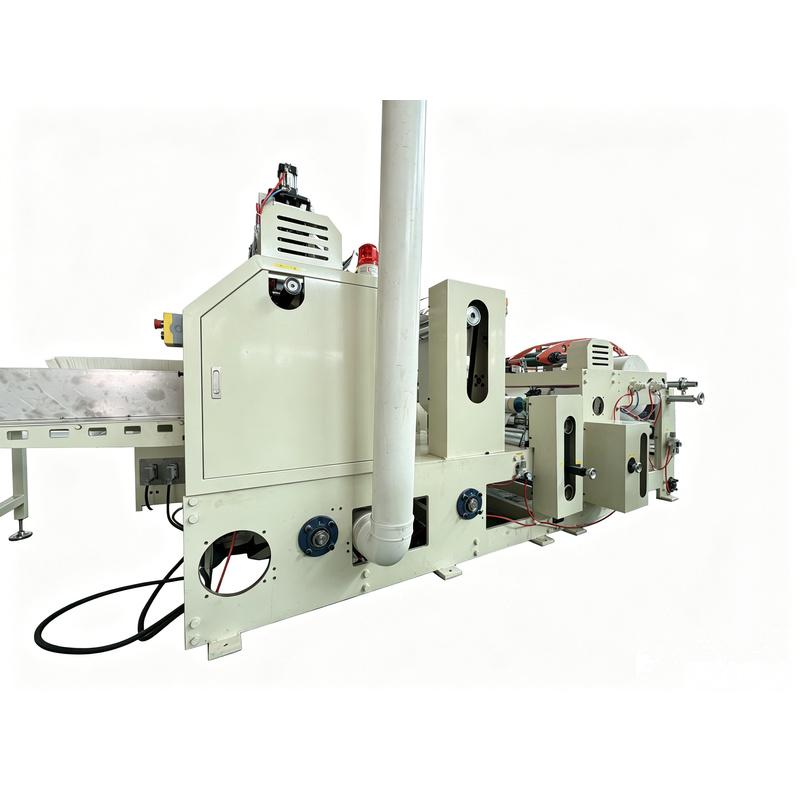
Another DB-R300 gallery angle shows associated equipment. A static view cannot establish a transition sequence or its duration.
Read continuity with the selected product scope
The DB-R300 toilet and kitchen paper rewinder line lists unwind layers, embossing, edge embossing, printing and glue lamination among configuration choices. The technical response should identify what the offer includes. Do not apply a continuity answer for one described configuration indiscriminately to every optional combination. Ask whether the supplier's response still applies to the selected product and included units.
Cored and coreless products also need to remain distinct in that response. The catalogue names both and uses different speed entries. It does not provide a verified changeover time for the buyer's formats. A statement that both types can be supplied does not explain whether a proposed change requires selected parts, a planned interruption or another arrangement. The supplier should describe the delivered scope rather than leaving purchasing to infer it.
Keep unresolved product choices visible during the quotation stage. If the business has not selected the cored or coreless product mix, say which alternatives remain under review. An equipment proposal can be preliminary while those decisions are open. It becomes misleading only when an unresolved alternative is later treated as an approved continuity condition without a new response.
Separate the rewinder from the wider production plan
Continuity language can also become inconsistent between departments. Production may accept a defined interruption for one event while purchasing keeps a sentence saying uninterrupted operation under all conditions. Bring that difference back to the supplier before the order is released. The signed requirement should express the agreement actually reached, rather than preserve a stronger phrase that nobody has reviewed against the proposed build.
Where the supplier uses a term differently from the buyer, ask for a short explanation in ordinary process language. A translated brochure heading may not carry the detail of the technical response. Preserve both the named process and the explanation, with the order reference. This avoids arguing later about a single English adjective when the underlying question is which event was included in the continuity agreement.
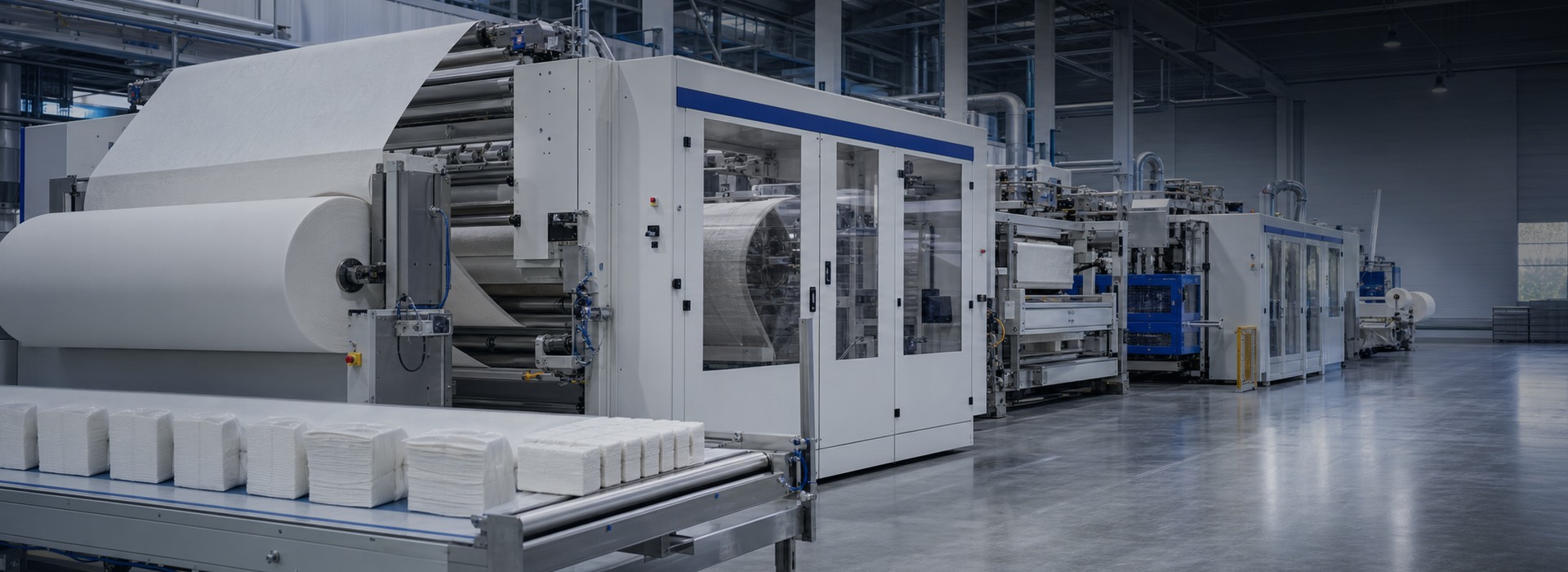
A continuous rewinding description does not define the availability of every upstream and downstream activity. Paper supply, later handling and packaging need their own equipment and responsibility definitions. Ask where the supplier's continuity explanation begins and ends. A general line photograph cannot establish that everything visible is included, connected in the same way or covered by one performance promise.
If the buyer's main concern is an interruption at another operation, name that operation directly. A question about downstream receiving capacity should not be answered only by repeating non-stop surface winding. The supplier may need information from the receiving-equipment provider before it can explain the intended arrangement. Identifying that boundary is progress, even when the final answer needs another party's input.
Planned maintenance belongs in a separate operating discussion. Non-stop is not permission to inspect, clear or service moving equipment. The buyer should obtain the delivered instructions and plan the required work accordingly. This article offers no isolation sequence, access method or machine adjustment; those actions depend on the actual equipment and its approved procedures.
A change in the supply proposal should reopen the affected continuity answer. If optional units, the paper-supply arrangement or the intended product changes, ask the supplier whether its earlier explanation remains applicable. Keep unchanged answers where they still apply, but do not copy every previous confirmation automatically. The point is to preserve a connection between the promised process and the equipment now being purchased.
Toilet and taller towel roll samples from the source gallery illustrate product forms. They do not document coreless changeover, uptime or an accepted production trial.
Before accepting the offer, return the supplier's explanation with each important continuity event identified as confirmed, excluded or still open. Preserve the conditions attached to a confirmation. The result should let production staff tell which process is offered as continuous and which activities still require their own planning. That is a usable meaning of non-stop for a specific order, without turning a legitimate rewinding description into an unsupported promise about the entire factory.




 Tel: +8613908196540
 Email: info@doubletissuemachine.com
 MP/WhatsApp: +8613908196540
 Manufacturer Address:Dongguan, Guangdong, China