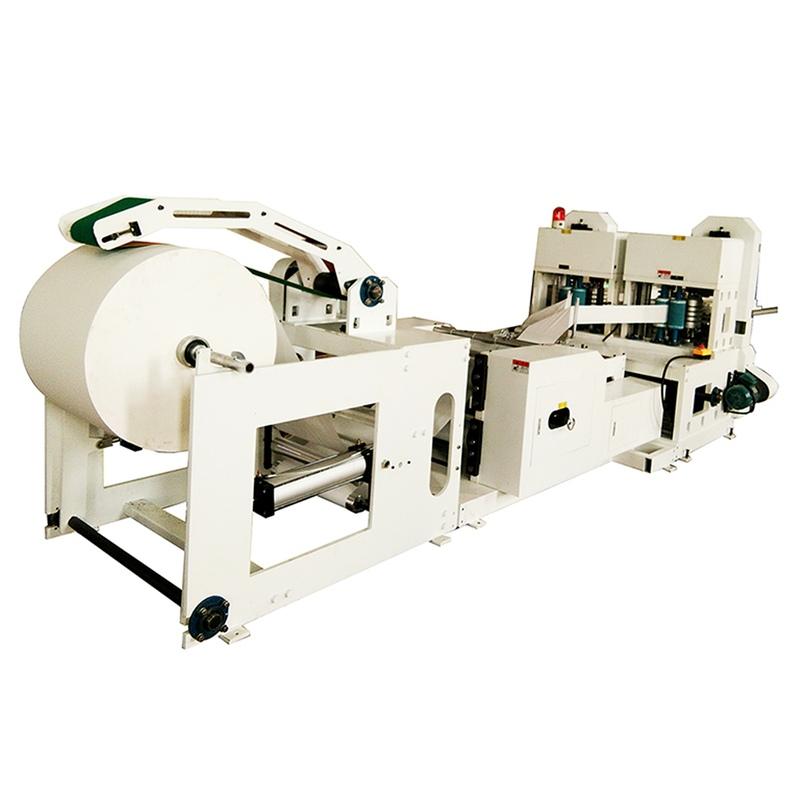
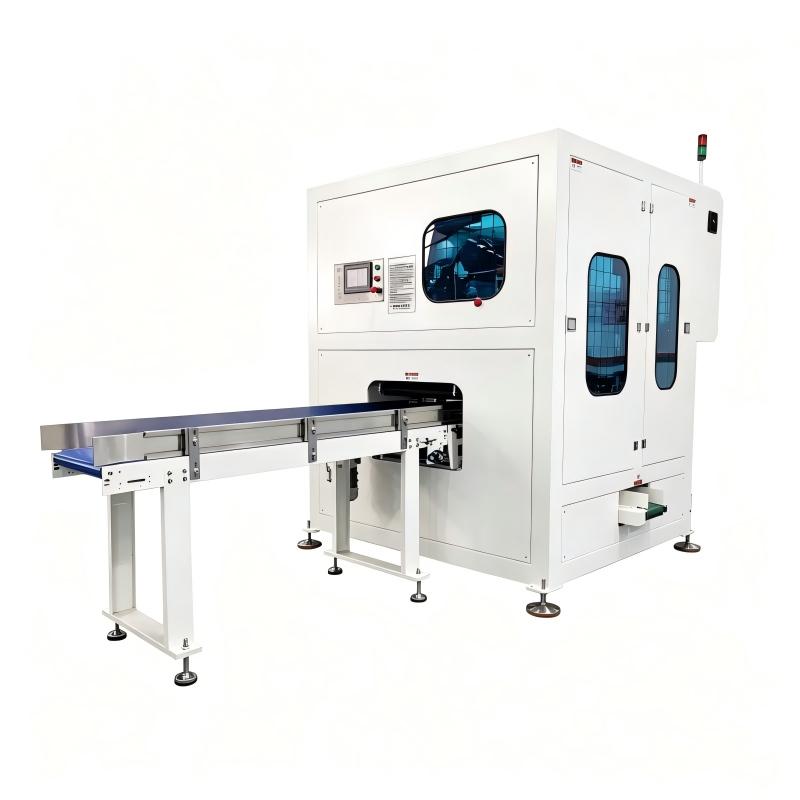
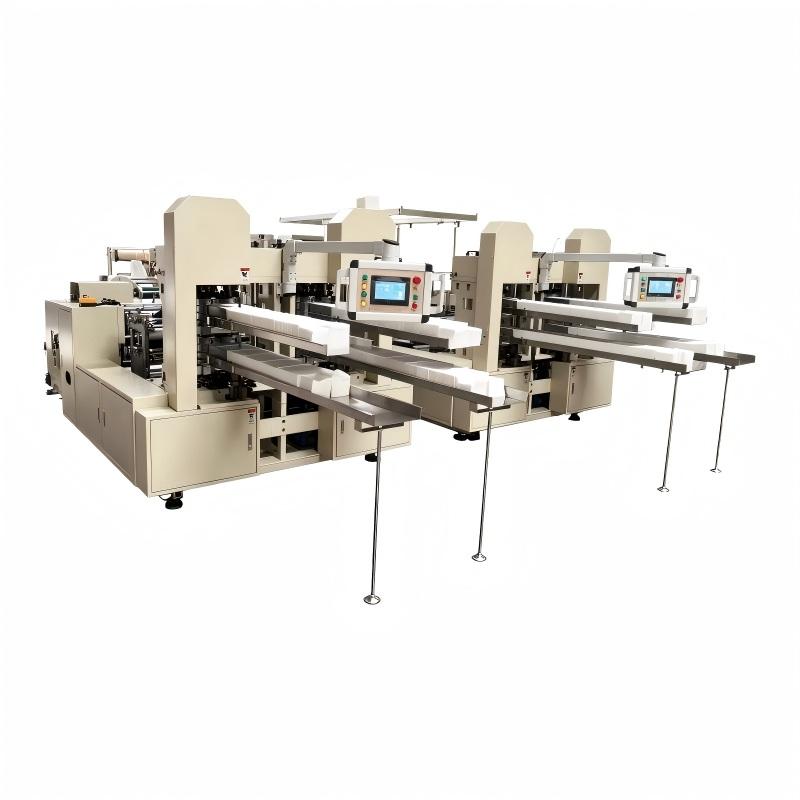
A non-stop toilet paper and kitchen towel rewinder line is built for tissue converters who need continuous production without stopping the machine to unload finished logs. Instead of interrupting the cycle at the end of each batch, the line transfers finished logs automatically and starts a new winding cycle, so the rewinder keeps running while downstream equipment continues to process the previous output. This guide explains how the process works, which configuration points matter, and what buyers should confirm before requesting a quotation.
What "Non-Stop" Means on a Tissue Rewinder Line
On a conventional rewinder, the operator stops the machine, cuts the web, and removes the completed log before a new core is started. A non-stop line automates that sequence. The web is cut and transferred to a new core while the finished log leaves the winding station, which reduces idle time between batches and keeps the parent roll feeding more consistently.
The practical benefit is not only higher output. Fewer manual interventions also mean less handling of finished logs, more consistent log formation, and a steadier supply of logs to the log saw and packing equipment downstream. The exact gain depends on the finished product format, parent roll quality, and how well the line is matched to the equipment that follows it.
How the Rewinding Process Runs
-
The parent roll is unwound and the web is fed under controlled tension.
-
Embossing, perforation, and ply bonding are applied according to the finished product requirement.
-
The web is wound onto cores to build logs at the required diameter and sheet count.
-
At the end of the log, the web is cut and transferred to a new core without stopping the winding cycle.
-
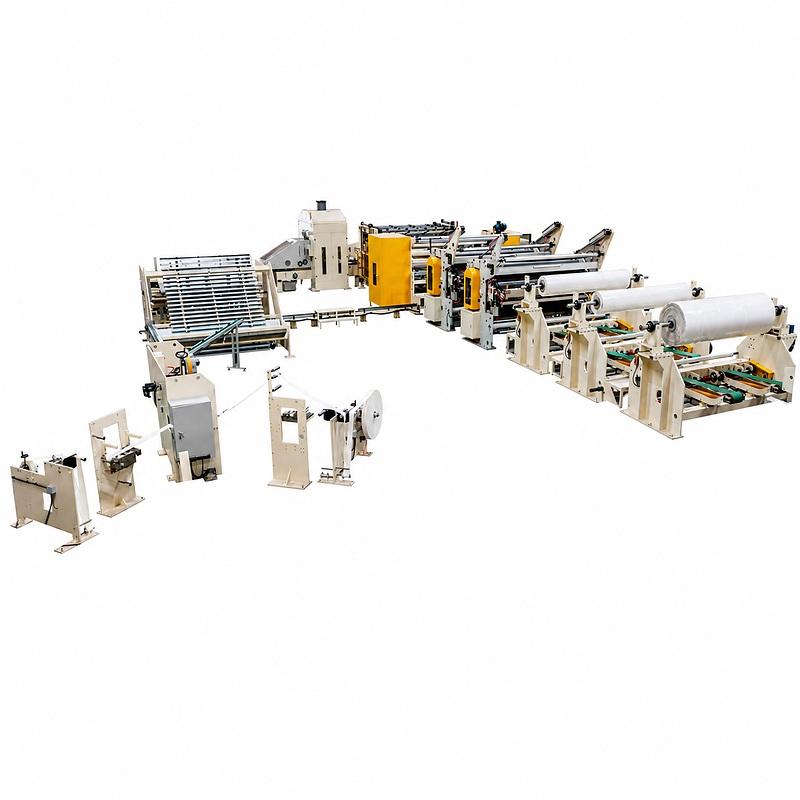
Finished logs are discharged and passed to the log saw, then to wrapping, bundling, or cartoning equipment.
Each of these stages interacts with the others. Web tension at the unwind affects log firmness, transfer reliability depends on clean cutting and core positioning, and downstream speed determines whether the rewinder's capacity is actually used. Buyers should treat the line as one connected process rather than a single machine.
Configuration Points That Decide Line Performance
Two lines with the same model name can behave very differently depending on how they are configured. The table below lists the decision points that most often change the final specification.
|
Decision point
|
Why it matters
|
What the buyer should confirm
|
|
Finished product format
|
Toilet paper rolls and kitchen towels differ in sheet width, roll diameter, and pack format
|
Roll diameter range, sheet count, ply, and embossing or perforation requirement
|
|
Parent roll specification
|
Web width, diameter, and paper grade affect tension control and transfer stability
|
Parent roll width, diameter, core size, and furnish
|
|
Target output
|
Determines rewinder speed and whether downstream equipment can keep pace
|
Required logs per minute or tons per shift, and the working speed expected in daily operation
|
|
Automation level
|
Affects operator workload, log handling, and connection to the log saw and packing line
|
Manual, semi-automatic, or fully linked line operation
|
|
Downstream integration
|
Log saw, wrapping, and bundling equipment must match log size and line speed
|
Existing downstream equipment, conveyor layout, and available floor space
|
|
Utilities
|
Power, air, and vacuum supply affect stable running and transfer reliability
|
Available voltage, compressed air capacity, and factory conditions
|
Toilet Paper and Kitchen Towel: Where the Requirements Differ
Toilet paper and kitchen towels are often produced on the same type of rewinding platform, but the finished product requirements are not identical. Toilet paper typically involves smaller roll diameters, higher sheet counts per roll, and tight control of roll firmness for a clean unwind by the end user. Kitchen towels are usually wider, may use higher ply or embossed structures, and often need different perforation and sheet-length settings.
If a converter plans to run both products on one line, the changeover procedure becomes a key selection point. Buyers should ask how sheet length, roll diameter, embossing pattern, and core size are changed, how long a changeover takes, and whether the transfer system needs adjustment between product types. A line that runs one product well is not automatically efficient at switching between two.
Buyer Checklist Before Requesting a Quotation
Suppliers can only propose a suitable configuration when the requirement is clear. Preparing the following information shortens the technical discussion and reduces the risk of a mismatched specification.
-
Finished product type: toilet paper, kitchen towel, or both.
-
Roll diameter range, sheet length, sheet count, and ply.
-
Embossing and perforation requirements, including pattern references if available.
-
Parent roll width, diameter, core size, and paper grade.
-
Target output per shift and the working speed expected in normal production.
-
Existing log saw, packing, and bundling equipment that the rewinder must connect to.
-
Factory layout, available floor space, and the planned line direction.
-
Power supply, compressed air capacity, and other utility conditions.
-
Preferred automation level and the number of operators available per shift.
Stability Checks During Commissioning
Most running problems on a non-stop rewinder appear at the transfer point or at the interface with downstream equipment. During commissioning, engineers typically check web tension across the full speed range, confirm that the cut and transfer are clean at each product size, verify log firmness and diameter consistency, and test the handover to the log saw and packing line.
It is also worth confirming maintenance access before the line is fixed in place. Core loading, cutting blade access, and transfer mechanism adjustment all need safe reach without dismantling guarding. Planning this at the layout stage is easier than correcting it after installation.
Common Questions from Tissue Converters
Can one line produce both toilet paper and kitchen towels?
In many cases yes, but the changeover procedure and the range of roll diameters and sheet lengths the line supports should be confirmed with the supplier against the actual product list.
Does a non-stop line require a fully automatic packing section?
Not necessarily. The rewinder can run with semi-automatic downstream handling, but the log saw and packing equipment must be able to keep pace with continuous log discharge.
What most often limits real output?
Downstream bottlenecks, parent roll quality, and transfer reliability at higher speeds are common limits. The rewinder's rated speed is only useful if the rest of the line can match it.
What information is needed for a reliable quotation?
Product format, parent roll specification, target output, downstream equipment, utilities, and floor space. Without these, any proposed configuration remains provisional.
Comparing Rewinder Options
Buyers comparing non-stop rewinder lines should look beyond the headline speed. The more useful comparison covers the supported product range, changeover time between toilet paper and kitchen towel, transfer reliability at the intended working speed, integration with existing downstream equipment, and the engineering support available during installation and commissioning.
For a closer look at a specific model in this category, see the DB-R300 kitchen towel non-stop rewinder line. Buyers who want to review the wider equipment range before shortlisting can start from the toilet paper and kitchen towel machine catalog.
Send Your Product and Line Requirements
Share your finished product type, roll diameter and sheet count, parent roll specification, target output, downstream equipment, utilities, and available floor space. Our engineering team will review the requirement and propose a suitable rewinder line configuration.





 Tel: +8613908196540
 Email: info@doubletissuemachine.com
 MP/WhatsApp: +8613908196540
 Manufacturer Address:Dongguan, Guangdong, China