The words virgin and recycled describe aspects of the proposed paper. It does not identify a complete grade, prove a finished tissue claim or show that a particular material has run on the ordered machine. DOUBLE's DB-IF-V listing accepts both paper origins within its stated application scope. Read that as permission to discuss a defined candidate, then obtain a response to that candidate. Otherwise, a short catalogue sentence can become a much broader promise than the source makes.
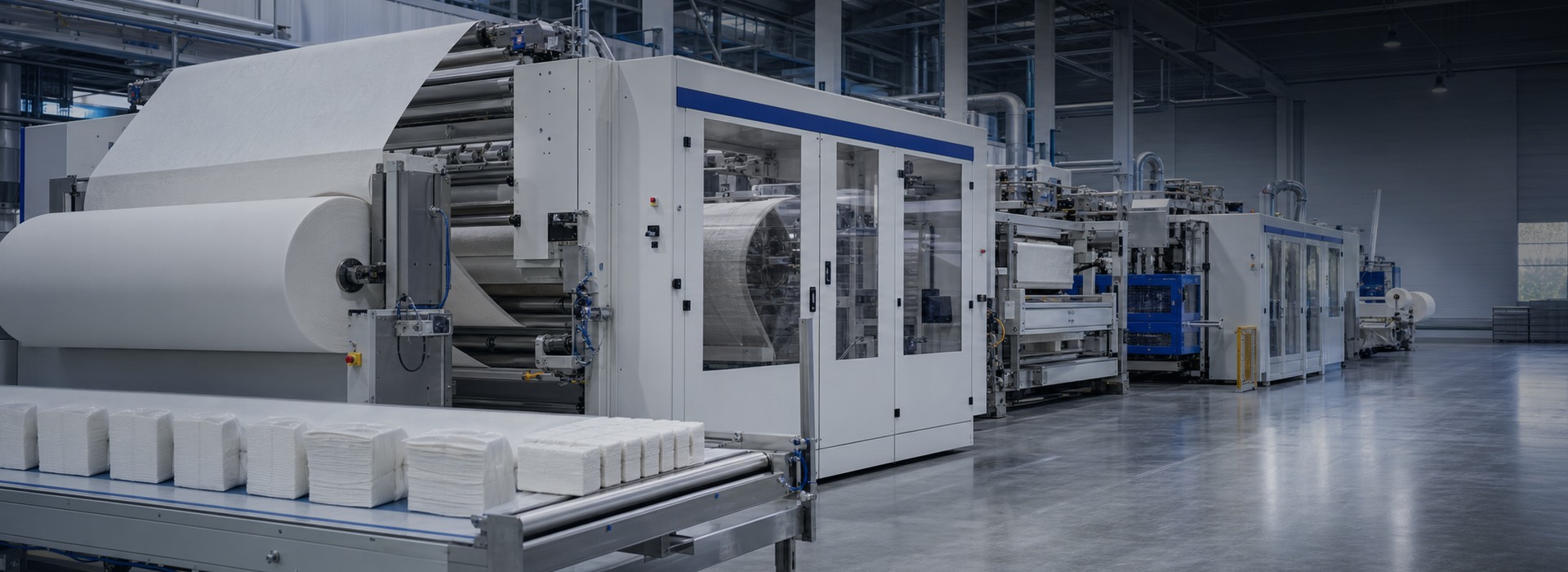
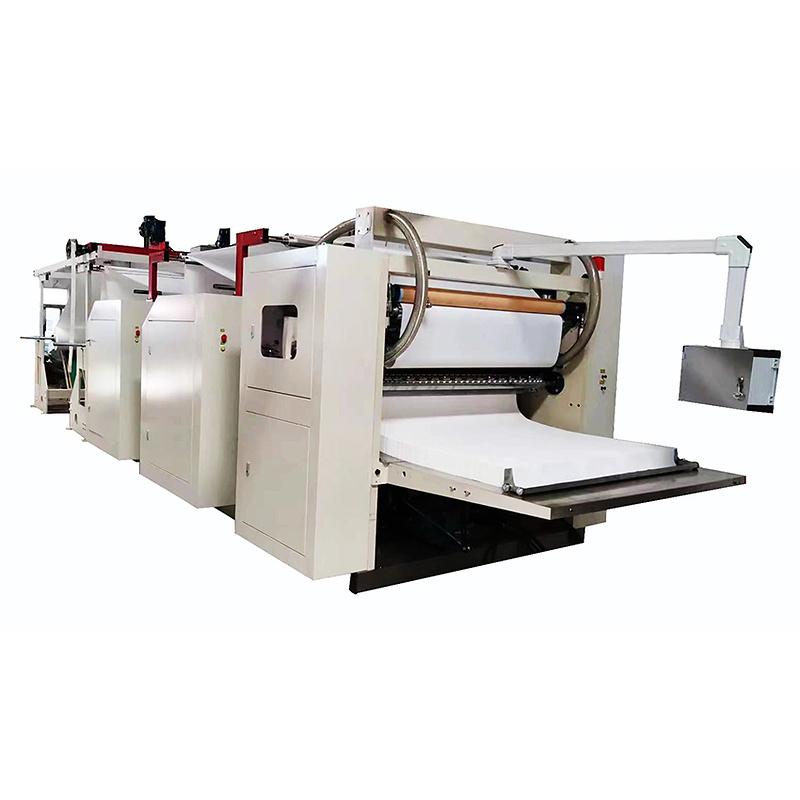
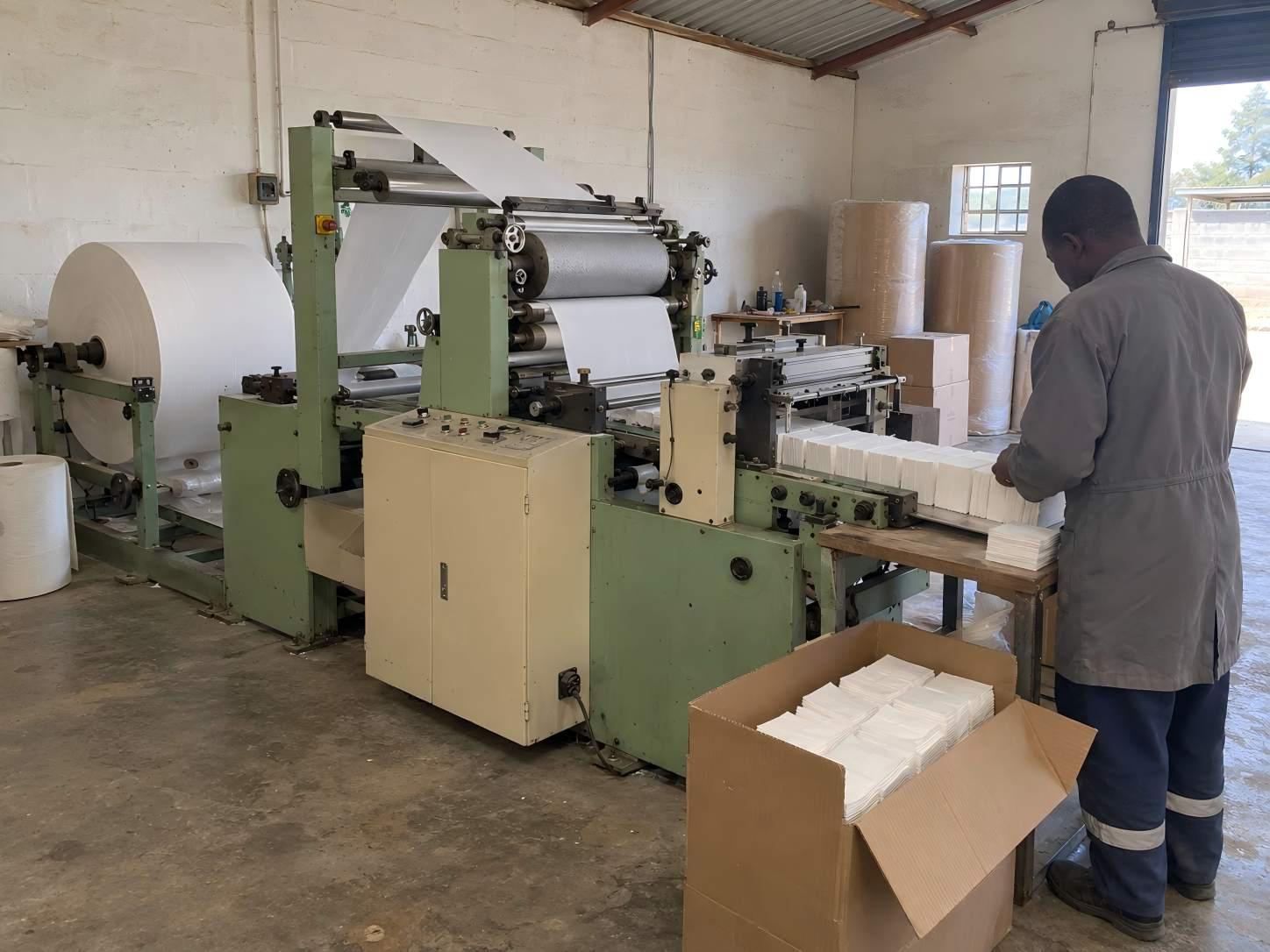
DB-IF-V source-gallery equipment with a visible web. White paper in a photograph does not disclose fibre origin, a mill grade or a material assessment.
Three statements that need different evidence
A conversation about recycled facial tissue often moves between three questions without noticing the change. Can the machinery supplier consider the proposed input? What material will the paper mill actually supply? What may the finished tissue seller claim about that material? The answers are connected, but evidence for one question does not automatically answer the others.
Machine application
The machinery supplier reviews an identified paper for a defined configuration and finished product.
Paper identity
The paper supplier describes the grade offered, including the declaration behind its virgin or recycled wording.
Finished-product statement
The seller establishes the evidence needed for the specific claim it plans to make about the tissue.
The DB-IF-V facial tissue machine page says virgin and recycled pulp paper are acceptable within the supported GSM range. It also identifies facial tissue and hand towel applications as configuration-dependent. This supports an enquiry about the buyer's actual input. It does not name a recycled-content percentage, certify a source of fibre or document a completed run with the buyer's paper.
Start by identifying which of those three answers the project still lacks. A machine quotation may be technically specific while a proposed environmental claim remains unsupported. Equally, a mill may provide a clear material declaration while the machinery supplier has not yet assessed that grade for the intended facial tissue. Keeping the questions separate exposes the missing decision.
The distinction is useful even when no product claim is planned. Purchasing may simply want an alternative source of paper. The supplier still needs an identifiable candidate rather than an instruction to accept anything described as recycled. A broad origin category cannot stand in for the material the machine is expected to process.
Keep the application wording attached to the paper entry
The DB-IF-V specification gives 13–20 g/m², two-ply, for facial tissue. It separately lists 26–42 g/m², one-ply, in the configuration-dependent product specification. These are separate entries. The second is not an extension of the facial tissue range, and combining the lowest and highest values would erase the distinction the page preserves.
For a facial tissue enquiry, send the intended paper with its declared basis weight and supplied ply construction. Ask the supplier how that declaration is interpreted for the proposed IF configuration. The word recycled does not make a material outside a confirmed application acceptable, just as the word virgin does not remove the need to identify the paper.
The source also states that practical speed depends on paper quality. An origin label therefore cannot establish identical output for two papers. If the buyer is considering a virgin candidate and a recycled candidate, request a response to each actual grade rather than applying one unqualified speed statement to both.
A paper may have the same nominal basis weight as another product without being the same supplied material. Retain its mill reference and the declaration used in the enquiry. The point here is to preserve identity, rather than to infer converting behaviour from fibre origin or reduce the comparison to one catalogue number.
Do not treat the listed acceptance of recycled pulp paper as acceptance of mixed unknown deliveries. The candidate should remain recognizable from the supplier discussion through purchasing. If the mill changes the grade behind a commercial description, obtain the updated declaration and return that difference for the relevant review.
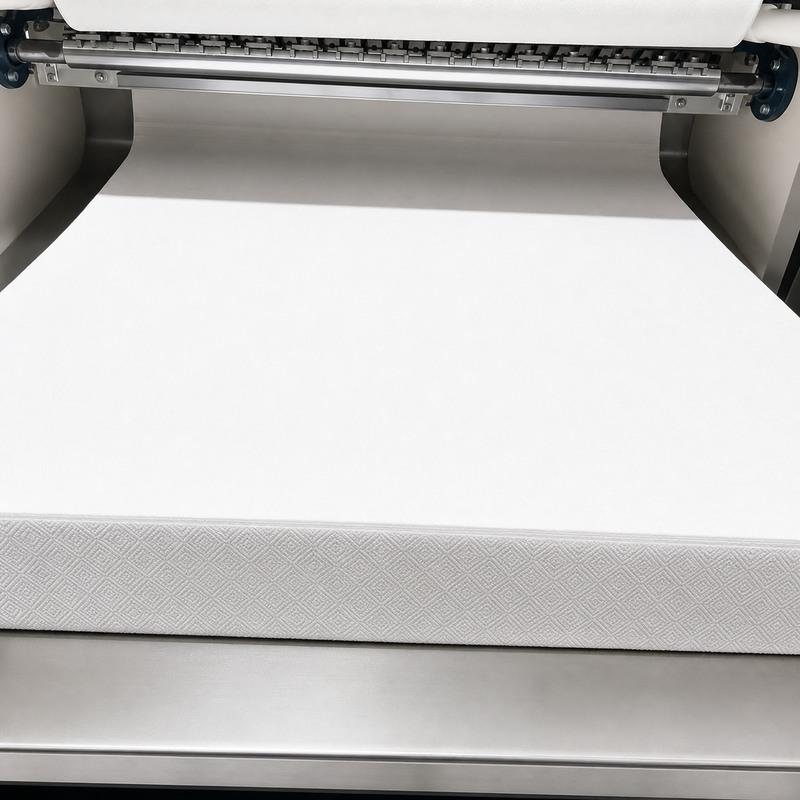
A second DB-IF-V gallery view shows a web and folded stack. Their appearance cannot establish whether the material is virgin, recycled or part of a buyer-specific trial.
There is also a distinction between paper-origin information and incoming roll geometry. A material-origin decision does not settle stand compatibility, and a suitable roll envelope does not settle the paper question. Keep any already agreed physical supply requirements in their own record so that an origin discussion does not accidentally replace them.
Where the material description is incomplete, say which information is missing. For example, a named paper may have a clear mill identity but an unclear declaration of ply construction. That is a specific question to resolve. Replacing it with a familiar grade's data would make the enquiry look complete while describing a different input.
Ask the paper supplier what its origin declaration means
Retain the mill's exact wording and ask what product it covers. A declaration may concern a named grade, a particular supply or another stated scope. Purchasing should understand that scope before shortening the wording into a machine specification or a finished-product description.
If a percentage is relevant to the buyer's intended claim, request it from the party supplying the material evidence. The DOUBLE machine page publishes no recycled-content percentage for a finished tissue. Do not create one by interpreting a machine's ability to consider recycled paper as proof of the paper's composition.
Keep a broad mill description separate from a declaration about the ordered grade. A mill may sell several papers with different origins under one business name. Evidence concerning the mill as a company is not automatically a description of every item it sells. Ask the supplier to identify the paper to which its declaration applies.
Similar care is needed when a sales description uses words such as blend. Obtain the actual declared material description before repeating it in an enquiry. The machine listing does not define that term or allocate a composition to it. The buyer should preserve the paper supplier's answer rather than fill an ambiguity with an assumed percentage.
Similarly, brightness, cleanliness, softness and hygiene are not established by the word virgin or recycled alone. A buyer needing evidence for a particular finished-product property should identify that property and obtain the appropriate material or product evidence. The converting equipment's application statement cannot supply a missing quality declaration.
An attractive finished tissue photograph can help communicate a desired appearance. It cannot replace those declarations. White colour is not a fibre-origin measurement, and a visible embossing pattern does not indicate the source of the pulp. Keep images in the discussion for what they actually show.
When marketing language is proposed, review the exact sentence rather than a general ambition to sell a greener product. A statement about material content, a statement about sourcing and a statement about machine compatibility are different claims. The responsible seller needs evidence appropriate to the sentence it intends to publish, with its scope and limitations retained.
If artwork or a product description changes later, compare the new wording with the evidence that supported the original statement. A stronger claim is not justified simply because the same machine still makes the tissue. Return the changed statement to the responsible seller for review against the current material evidence and the actual paper being purchased.
This does not require the machinery supplier to become the authority for every paper claim. Its role is to state what it has reviewed for its equipment. The paper supplier provides material information, and the finished-product seller remains responsible for the claims it makes. Clear roles prevent one technical response from being reused for a purpose it did not address.
An embossed sample published with DB-IF-V. The animal motif and dots are visible finish details; no fibre-origin, composition or hygiene result is inferred from them.
Return to a named candidate before making the purchase
A useful machinery response identifies the submitted paper and the finished facial tissue being considered. It should make clear whether the supplier has accepted the proposed application, requested further information or proposed an assessment. Those are different outcomes. None should be translated into unlimited acceptance of the entire recycled-paper category.
If an evaluation is proposed, agree its purpose and identify the material to be supplied. Keep the resulting observations attached to that candidate and configuration. This article reports no such evaluation. An observation on one paper should not later be described as evidence for every paper sharing the same origin label.
During purchasing, compare the mill's final item description with the candidate reviewed by the machinery supplier. A change in grade identity or material declaration should remain visible even if the commercial name stays similar. Ask for the relevant response before relying on the earlier application decision.
The practical outcome is a narrower and more useful agreement: this identified paper, described by its supplier, is the candidate covered by this machinery response. Any finished-tissue claim retains its own evidence. That agreement gives virgin and recycled inputs a fair route into the project without making fibre origin stand in for grade identity, converting performance or product certification.





 Tel: +8613908196540
 Email: info@doubletissuemachine.com
 MP/WhatsApp: +8613908196540
 Manufacturer Address:Dongguan, Guangdong, China