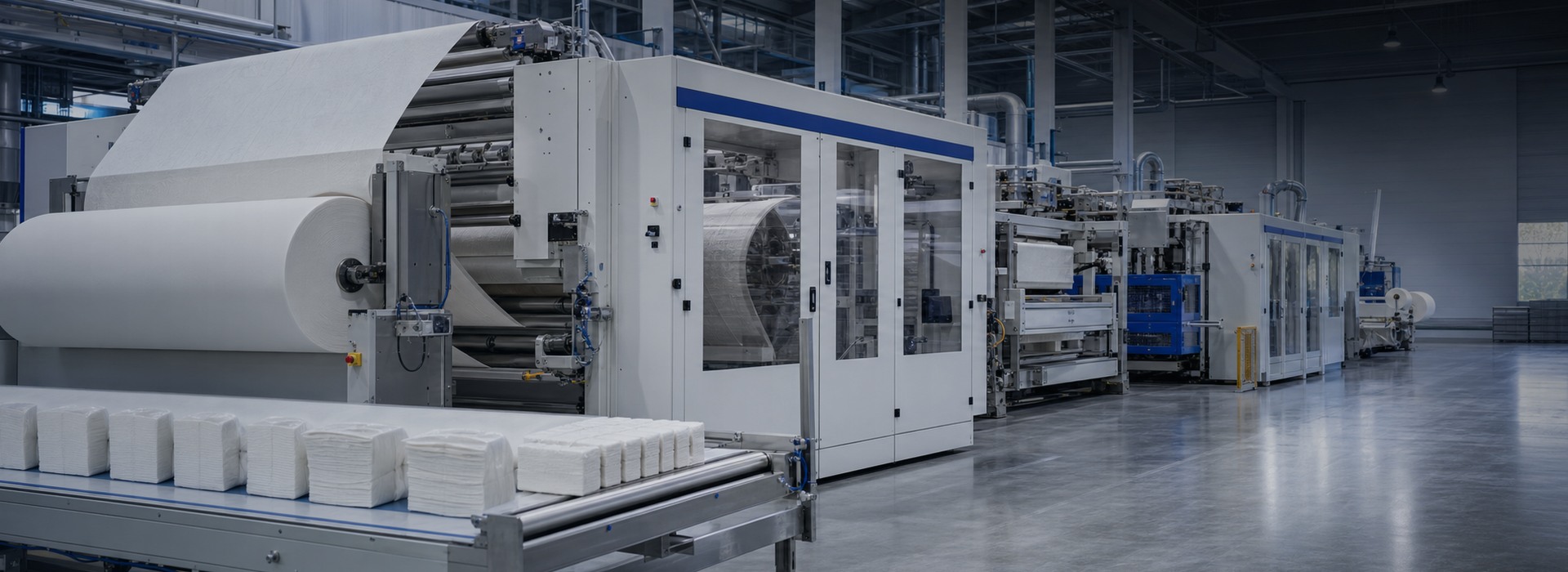
A hand towel folder can deliver more sheets without increasing the number of saleable packs leaving the factory. To locate the constraint, follow one towel specification from folded output to sealed pack and count accepted product over the same period. A growing queue identifies a mismatch worth investigating; an empty queue points in the other direction. Before changing a machine setting, separate missing supply, slow handling, quality rejection and a planned stop. These conditions can look similar from the control panel but call for different decisions.
Start where the finished packs leave
Choose a normal order with a defined C-fold size, paper grade and sheets per pack. Record completed packs at the packing exit, then record what happened to the folded towels needed for those packs. Product still waiting on a table or conveyor is work in progress, not finished output. Rejected packs belong in a separate count even when they can later be recovered. This first boundary prevents a high folding count from being mistaken for a high dispatch count.
Use a common clock for the observations. Measuring the folder during its best minute and the packer across a whole shift creates a misleading comparison. A useful observation period includes ordinary replenishment and handling, with each interruption labelled. The period length and operating conditions should be agreed before collecting numbers. Retain the original records rather than replacing short stops with an average that hides their causes.
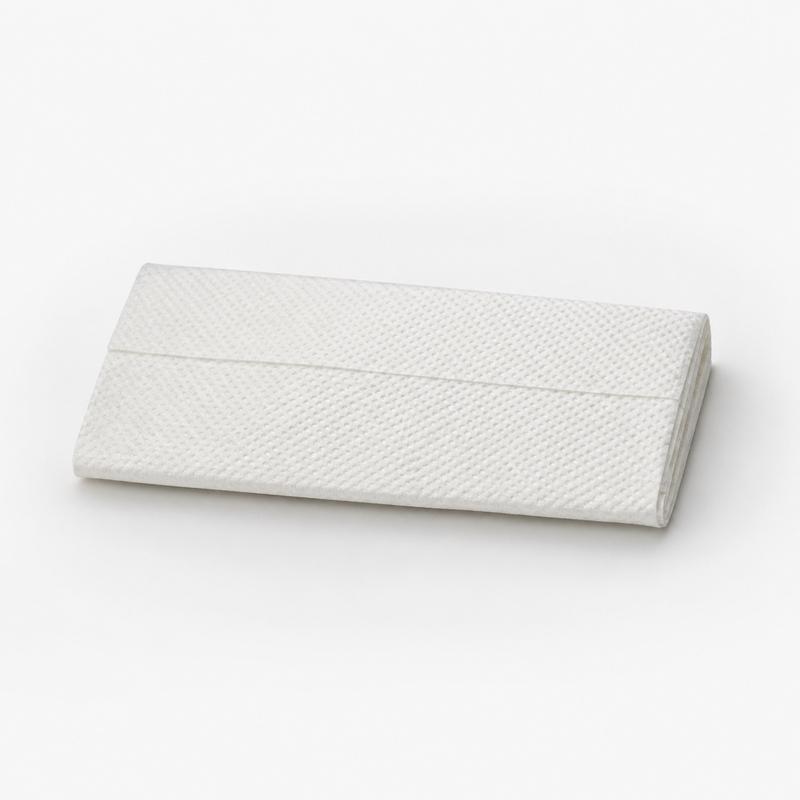
The towel format, paper and pack count define the product being followed through the process.
Translate each station into one unit
Folders may be discussed in sheets, handling sections in stacks and packers in packs. Convert these quantities before comparing them. If a pack contains a specified number of sheets, divide the accepted sheet rate by that count to obtain the equivalent pack rate. Count all active output lanes once. Do not multiply a total machine rating by the lane count again. Where the counter convention is unclear, verify it against a manually counted sample.
There is also a difference between the rate while running and the output over elapsed production time. The former helps compare a transfer or packing cycle; the latter includes paper changes, film replenishment, adjustments and other interruptions. Keep both figures with their units. An apparent capacity shortage may actually be a replenishment issue, while a smooth short run can hide a persistent shortage of accepted product across the working period.
Two useful records: accepted packs per elapsed minute at the exit, and accepted equivalent packs per running minute at each upstream station. Neither record replaces the other.
Read the queues as evidence
Observed pattern
Next observation
Possible explanation to test
Folded towels accumulate before packing.
Check whether the packer runs continuously or waits for a correctly presented stack.
Capacity may be limited by packing or by the handoff into it.
The packer repeatedly runs empty.
Trace the last available stack back to the output lane.
Folding supply, separation or transfer may be interrupted.
The queue rises and then disappears in bursts.
Time stack release and operator handling separately.
Batch handling may be creating an uneven arrival pattern.
Counts appear balanced but accepted packs remain low.
Record rejects and rework at each boundary.
Quality losses may be consuming nominal capacity.
A queue is evidence of flow, not an instruction to increase storage. Record its position, size and change over time. A long queue can temporarily keep a packer supplied while concealing a transfer delay elsewhere. Conversely, a small accumulation may be the intentional separation between cycles. The equipment layout and agreed operating logic determine which condition is expected. Discuss the observations with the supplier before changing that logic.
Check how the towel reaches the next machine
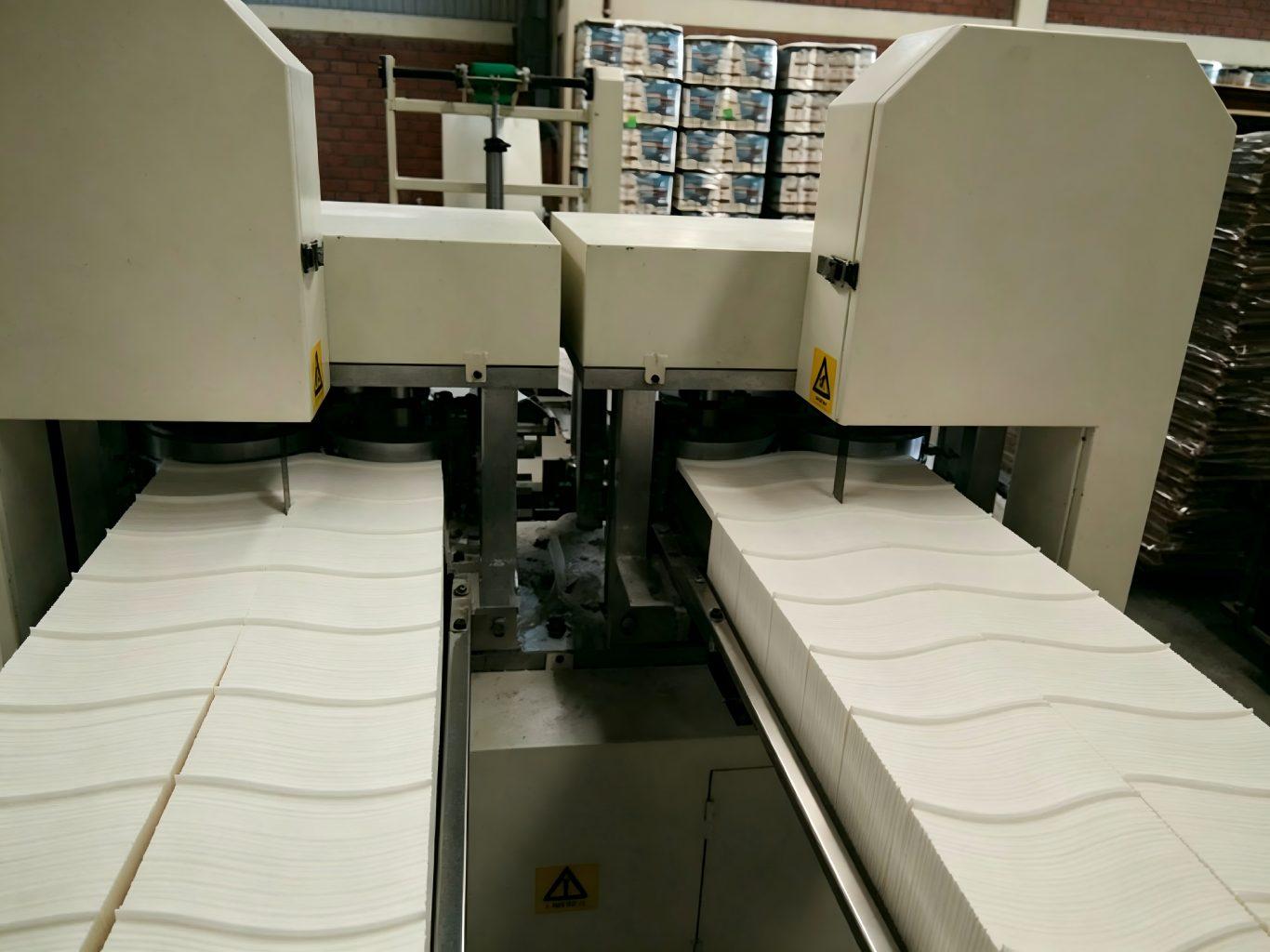
The DOUBLE DB-C-250 product information describes dual-lane output and inkjet counting. It also presents downstream packing as an integration option. These facts do not establish the capacity or handling method of a particular customer's packer. The transfer proposal still needs to identify how the counted output becomes a pack-ready stack, how the two lanes are collected and which orientation the receiving machine requires.
Observe whether towel edges remain aligned at that boundary. Note leaning stacks, separated groups, count marks that are difficult to identify and manual corrections. If people must repeatedly square the product before loading, the packer may spend time waiting even though enough sheets have been produced. Count that correction time independently. It is different from the normal packing cycle and may require a change to presentation rather than a faster packing drive.
A component view shows a published product view; queue diagnosis requires observations from the installed process.
Find losses before assigning a speed target
Folded output is not automatically usable output. Separate towels rejected for cut condition, fold alignment or another agreed product criterion from towels delayed by transfer. Check whether the issue appears on both lanes, after a parent-roll change or with one paper batch. This narrows the investigation without assuming a cause from the symptom alone. Keep suspect samples labelled so that later adjustments can be compared with the same defect.
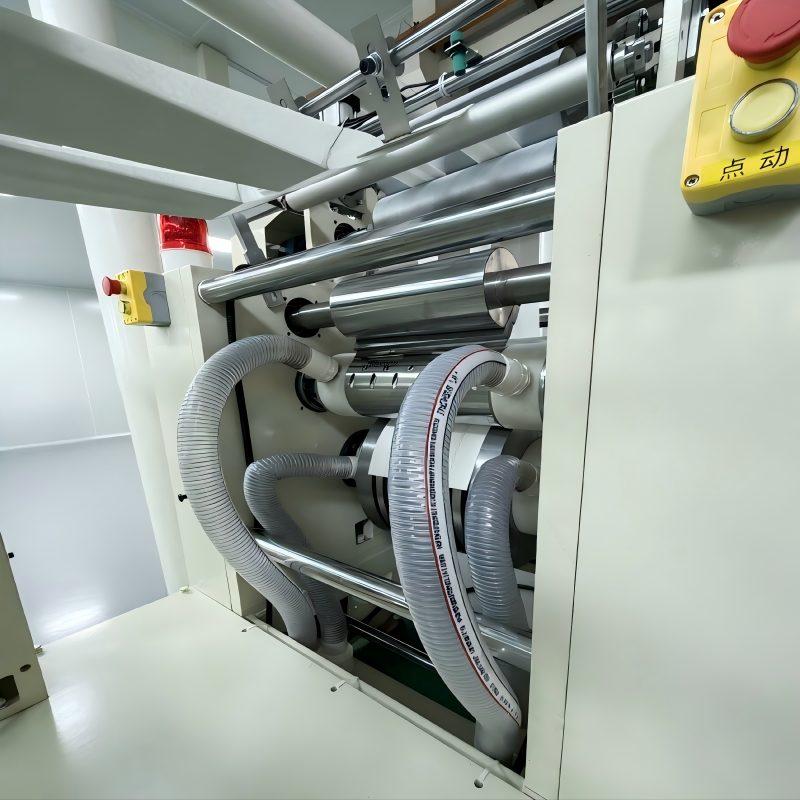
The DB-C-250 listing includes vacuum suction cutting and steel-to-steel embossing. For a production review, the relevant question is whether the chosen paper and approved setup deliver the agreed towel consistently. An embossing change can alter stack bulk, and a change in bulk may affect handling or pack fit. Treat that as a condition to check, not a guaranteed effect of every paper grade. Avoid comparing two runs that also differ in pack count and downstream format.
Separate interruptions from a continuous limit
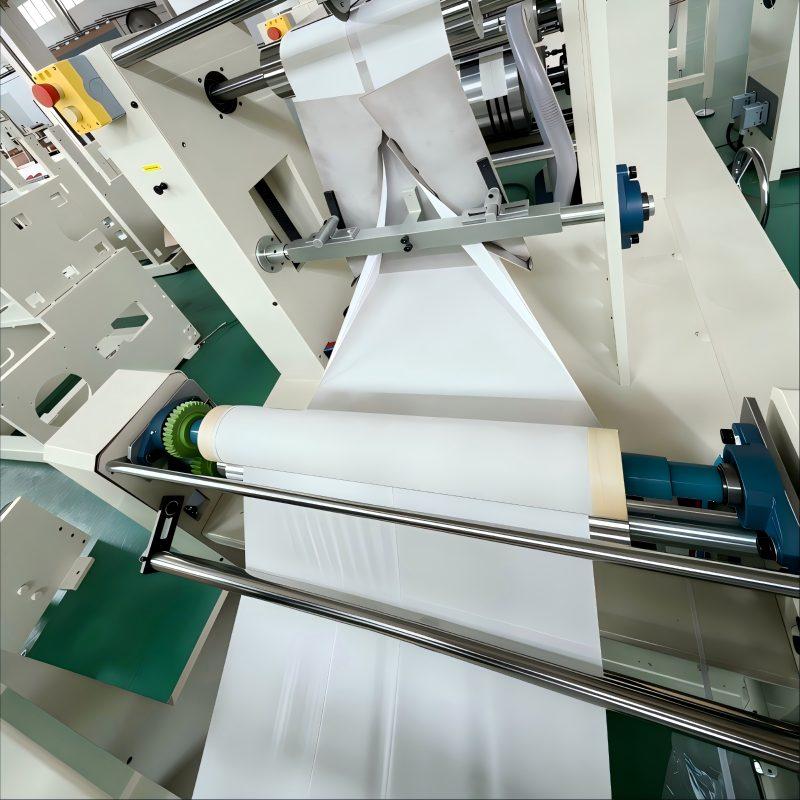
Label ordinary stops by the material or task involved: parent paper, packing film, completed pack removal, carton handling or adjustment. For each one, record whether production resumes immediately or whether several stations must wait for product to arrive again. A short interruption at the far end can leave a longer disturbance upstream. The recovery sequence is therefore part of the capacity assessment.
Where handling is manual, record the work that must occur within each pack cycle. Moving stacks, checking counts and removing finished product can compete for the same person's time. Adding a larger upstream machine does not remove those tasks. Where handling is automatic, request the actual transfer and receiving conditions in the proposal. Compare these conditions with the product used during the observation, including stack dimensions and orientation.
Paper supply and finished-pack removal belong at opposite ends of the same elapsed-time record.
Compare the two lanes before adding capacity
Where the installed arrangement permits separate observations, compare the two output lanes over the same interval. Note which lane is waiting and whether its counted groups are collected at the same frequency as the other lane. A shared packing operation may receive one lane more readily because of the collection position or transfer sequence. That unevenness can be missed when only the total sheet count is recorded.
Retain separate samples if towel quality differs between lanes. A handling delay caused by correcting one lane's stacks needs to be distinguished from insufficient total folding output. The machine's published dual-lane description establishes an output arrangement, not equal accepted throughput under every installed condition. Use the observations to identify the specific lane and boundary that needs technical review, while leaving machine adjustments to the approved operating procedure.
Reconcile the material left in the process
At the end of the observation, count or estimate the product waiting at each agreed boundary using the same pack-equivalent convention. Include the product present when observation began. The change in this stock helps explain why folding and pack-exit totals differ. If the apparent gap cannot be explained by waiting product and recorded rejects, check the counting convention and collection records before making a capacity decision.
Do not increase the buffer simply to make the totals look balanced. More waiting product can consume space and handling time without increasing accepted pack output. Ask whether a proposed buffer has a defined purpose, product limit and receiving condition. For a tight layout, its physical location and access also belong in the discussion. This makes the proposed remedy accountable to the diagnosed flow problem.
Test the smallest justified change
Once a likely constraint has been identified, change one agreed condition and repeat the observation with the same product. A better stack presentation, a revised replenishment arrangement or a matched receiving cycle may be more informative than raising the folder speed. Record both the pack-exit result and the queue pattern. An improvement that merely moves the accumulation to another station has not yet established a balanced process.
For an equipment enquiry, the DB-C-250 C-fold hand towel machine provides the starting product reference. Send the towel sample, pack count, downstream machine details and annotated observations together. Ask the proposal to state the assumed receiving conditions and the evidence needed to confirm output. The buying decision then rests on the flow of accepted packs, with a clear account of where time and product are being lost.




 Tel: +86 139 0819 6540
 Email: info@doubletissuemachine.com
 MP/WhatsApp: +86 139 0819 6540
 Manufacturer Address:Dongguan, Guangdong, China