Non-Stop Toilet Paper Rewinding Line Installed in Ecuador in 2024
In 2024, a tissue manufacturer in Ecuador invested in a non-stop toilet paper rewinding line to expand its local converting capacity. The project was planned for the production of standard household toilet rolls supplied to wholesalers, supermarkets, and regional distributors.
Project Background
The customer previously depended on older converting equipment with frequent production interruptions between finished logs. As order volumes increased, the existing process created delays and required operators to make repeated manual adjustments.
The company wanted a more continuous toilet paper converting process while retaining flexibility for different parent-roll widths, finished roll diameters, and core specifications. Stable web tension was also important because the customer sourced tissue parent rolls from more than one paper supplier.
Customer Requirements
Before confirming the machine configuration, the customer provided information about its parent rolls, finished toilet roll samples, paper basis weight, perforation length, core diameter, target roll diameter, factory utilities, and available installation space.
The main requirements included:
-
Continuous rewinding with fewer production interruptions
-
Stable tension control for different tissue paper grades
-
Consistent perforation and finished log diameter
-
Production of both cored and coreless toilet rolls
-
Compatibility with the planned downstream log cutting process
-
Convenient adjustment when changing finished roll specifications
-
A compact layout suitable for the existing workshop
Equipment Configuration
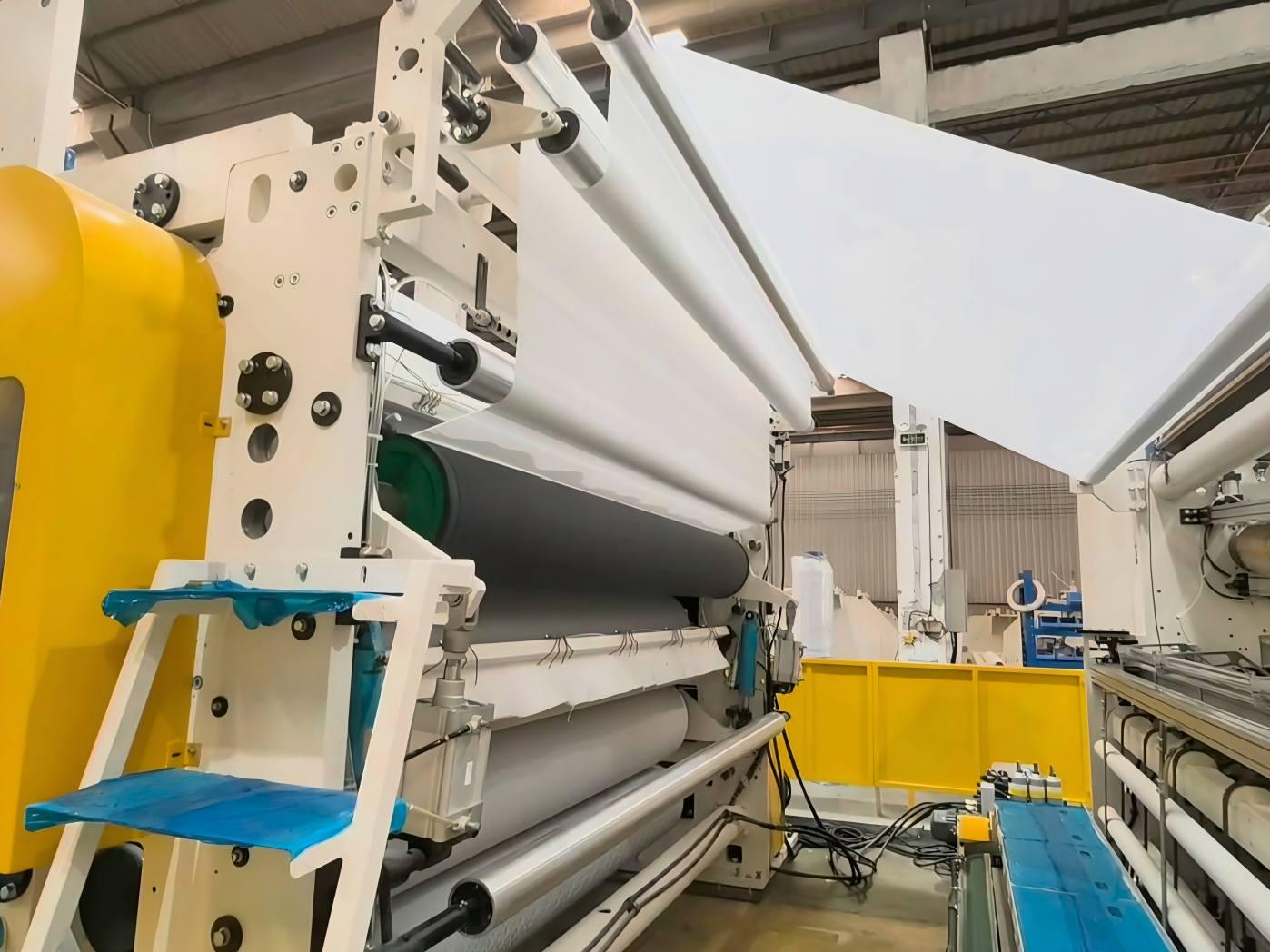
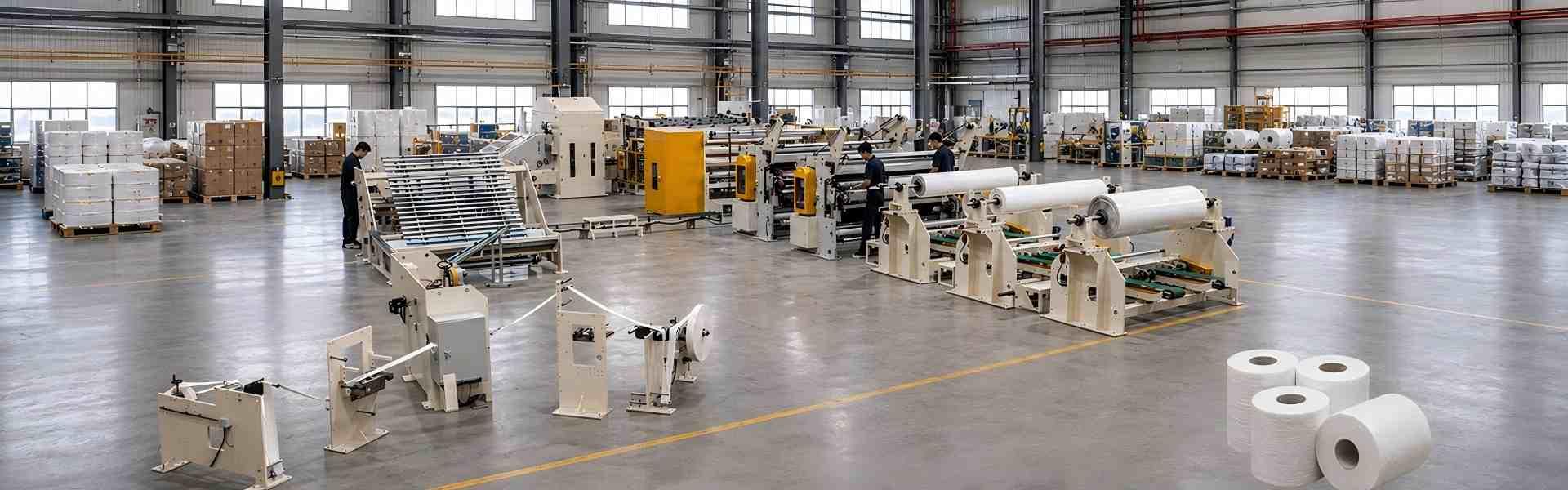
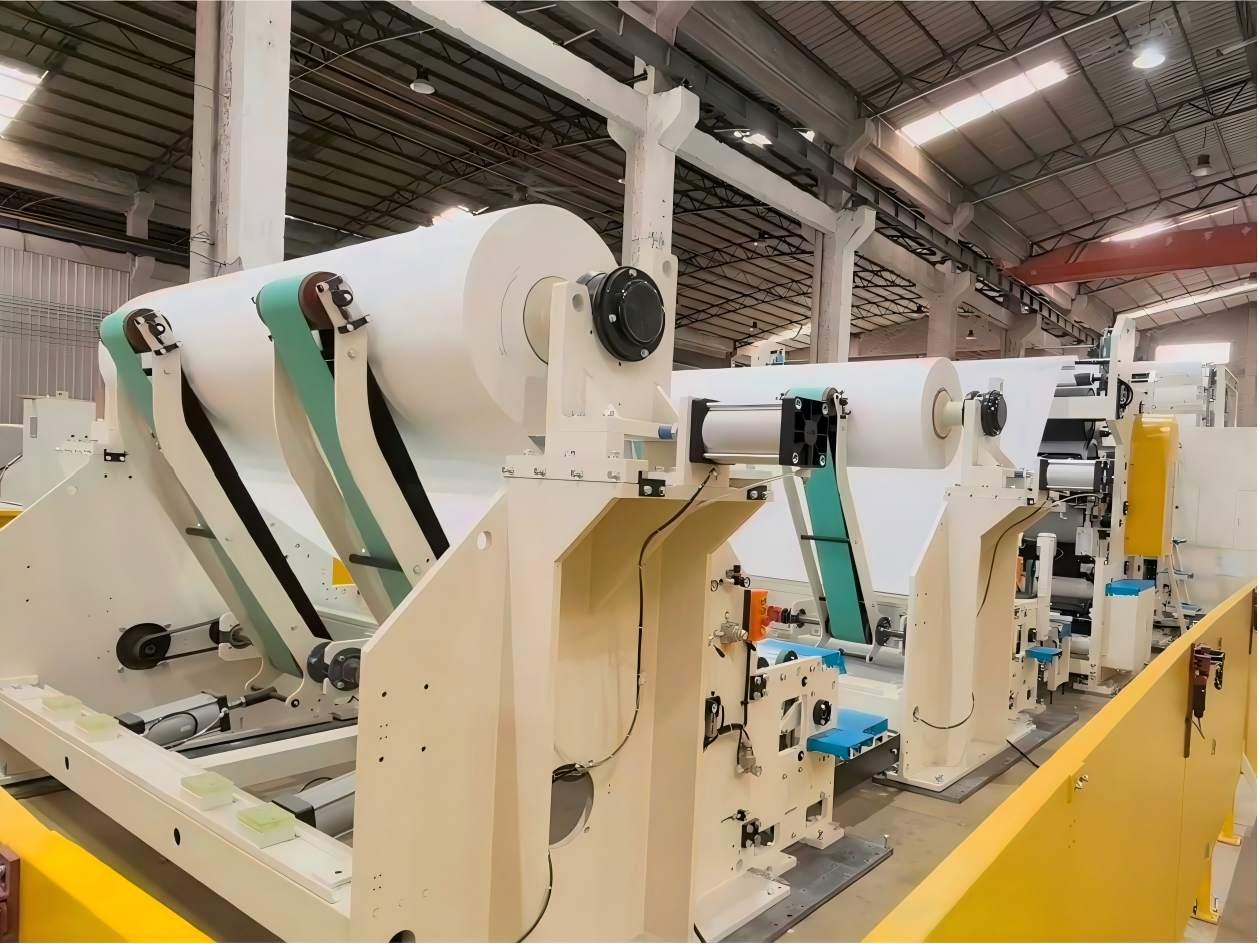
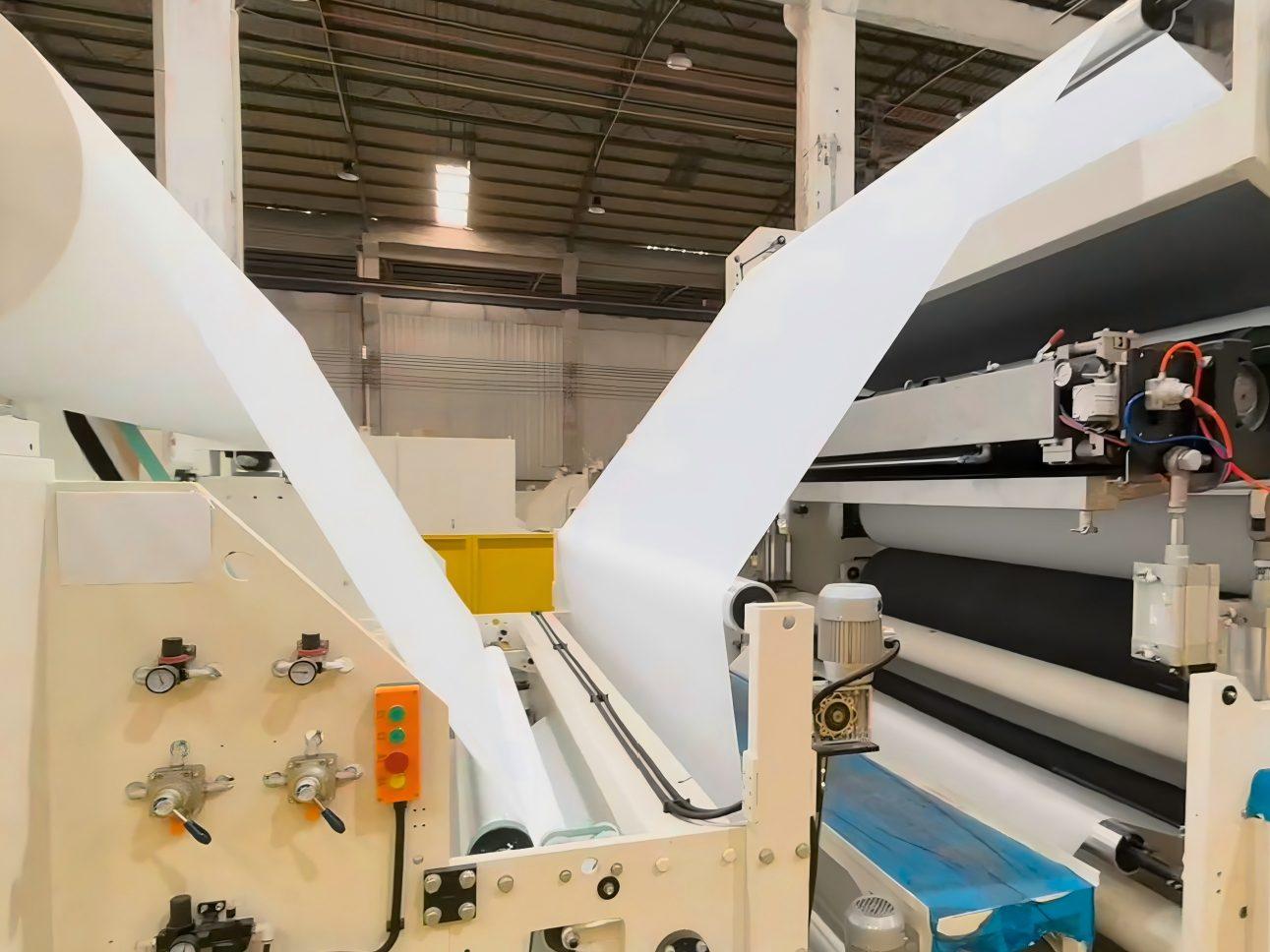
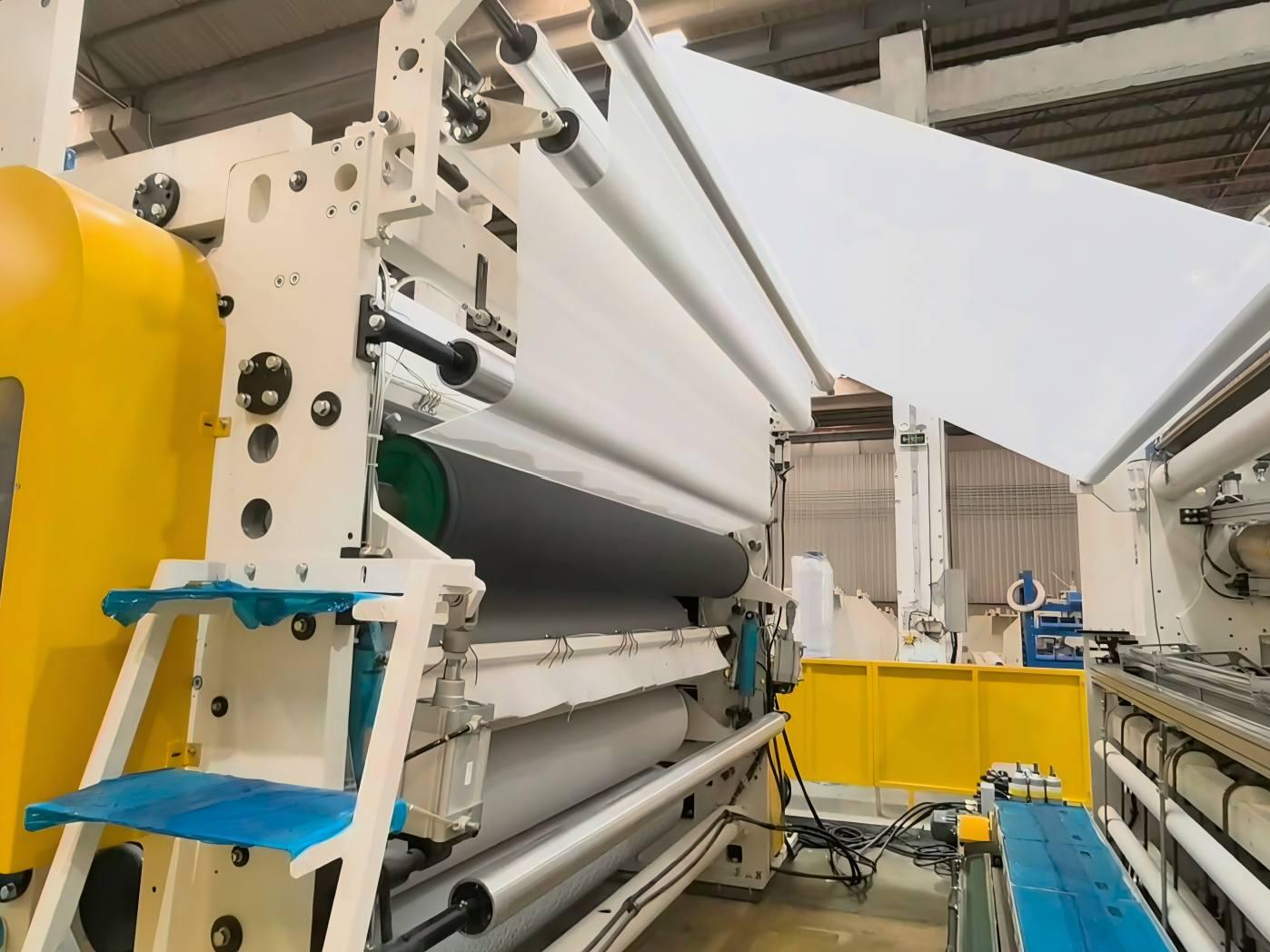
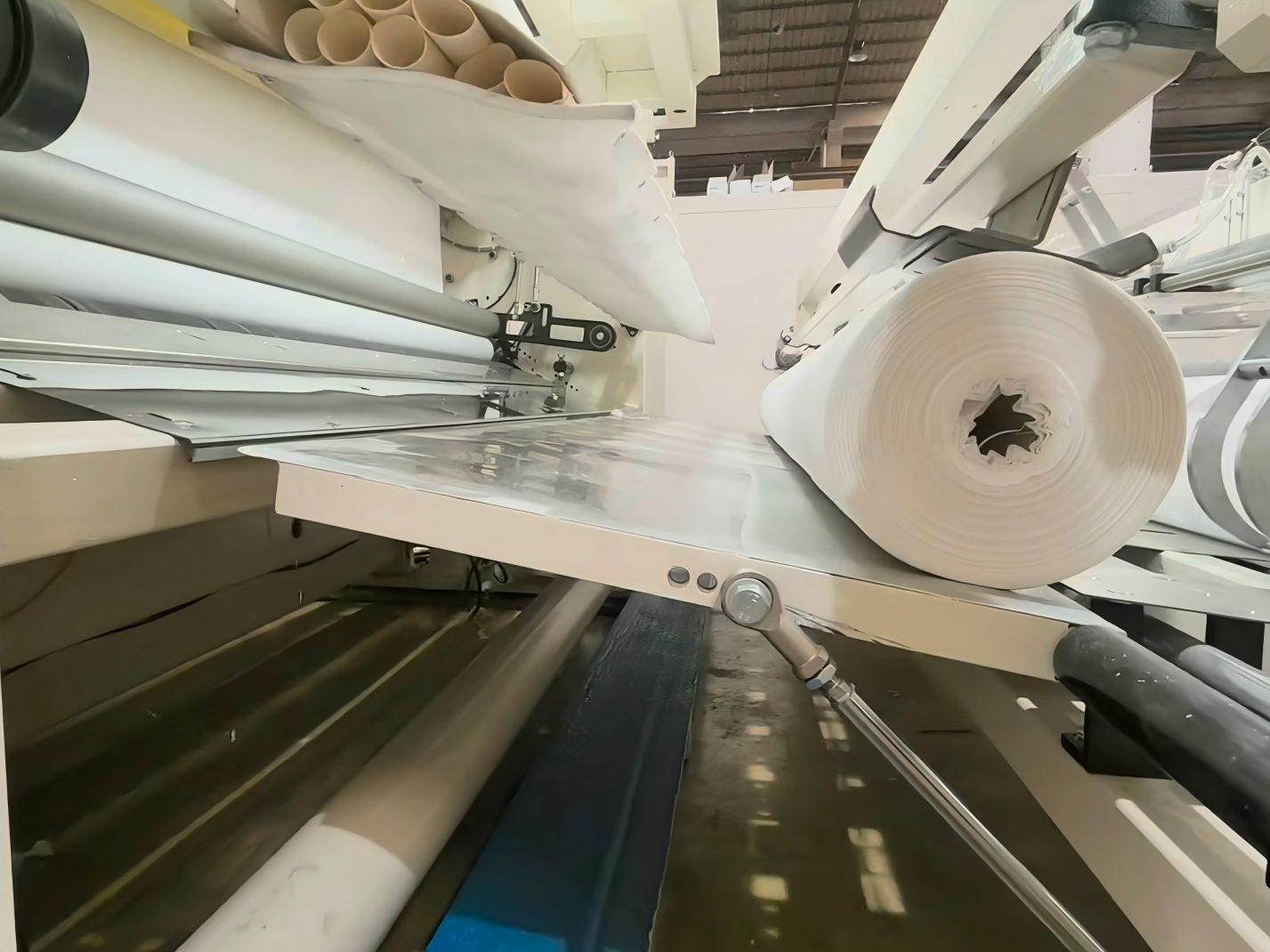
Based on these requirements, the DB-R300 toilet and kitchen paper non-stop rewinder line was selected for the project. The machine uses a non-stop surface rewinding configuration and is suitable for converting parent rolls into toilet paper or kitchen towel logs.
The working width can be configured between 2,000 and 3,650 mm according to the parent-roll specification. The published stable rewinding speed is up to 300 m/min, while the stable speed for coreless production is listed at 250 m/min. Actual operating speed depends on paper quality, ply, embossing configuration, roll diameter, perforation setting, and downstream handling capacity.
For this project, the machine was configured around the customer's household toilet roll format. The line setup considered a finished log diameter within Ø80–150 mm and the required core specification for cored products. More equipment information is available on the DB-R500 non-stop toilet paper rewinder line.
Installation and Commissioning
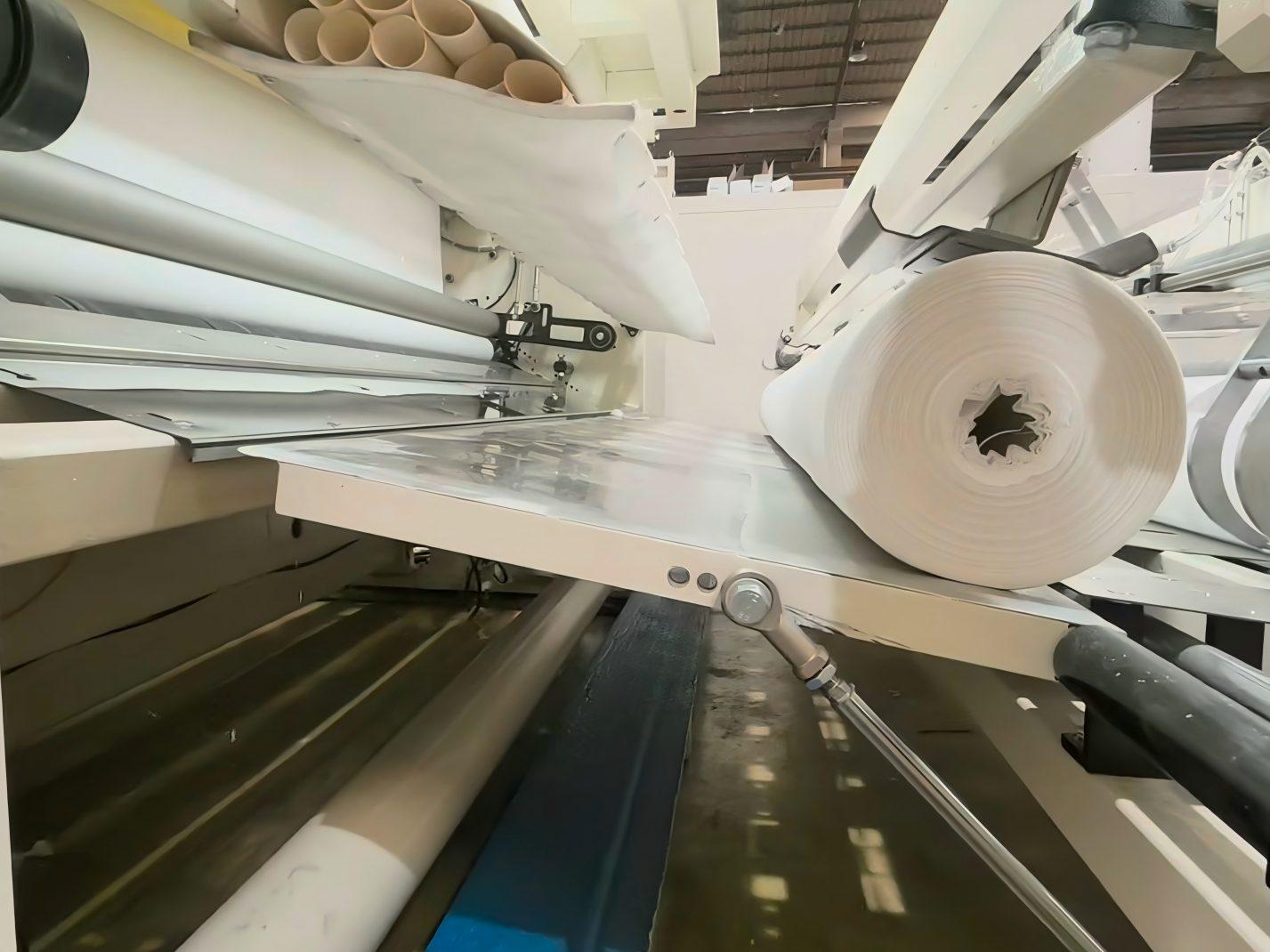
The rewinder was positioned according to the customer's parent-roll loading direction and downstream production flow. Commissioning began at a moderate speed using the customer's own tissue paper.
The technical team checked:
-
Parent-roll alignment and web tension
-
Perforation position and sheet length
-
Embossing pressure
-
Core feeding and roll-start performance
-
Finished log diameter and firmness
-
Tail sealing and log discharge
-
Coordination with downstream log cutting
Because the customer used parent rolls with different softness and tensile strength, separate operating settings were recorded for the main paper grades. This made subsequent material changes more predictable for the operators.
Project Result
The new rewinding line gave the factory a more continuous production process and reduced the interruptions associated with its previous equipment. Finished logs showed more consistent diameter, perforation, and winding firmness, helping them move more smoothly into the cutting stage.
The ability to adjust production for cored and coreless toilet rolls also gave the customer greater flexibility when responding to different market requirements. Instead of relying on one fixed product specification, the factory could organize production around retail orders, distributor requirements, and the parent-roll materials available locally.
Buyer Takeaway
For a similar toilet paper rewinding project, buyers should confirm the parent-roll width, paper basis weight, number of plies, finished roll diameter, core diameter, perforation length, embossing requirement, target output, and downstream cutting and packing method.
The highest published machine speed should not be treated as the guaranteed production speed for every paper grade. Stable daily output depends on matching the rewinder, raw material, finished roll specification, and downstream equipment as one complete production process.
Planning a similar toilet paper rewinding project? Share your parent-roll width, paper basis weight and ply, finished roll diameter, core specification, perforation length, target output, available floor space, voltage and utilities, and downstream cutting and packing requirements so the line configuration can be matched to your factory.




 Tel: +8613908196540
 Email: info@doubletissuemachine.com
 MP/WhatsApp: +8613908196540
 Manufacturer Address:Dongguan, Guangdong, China