“Packs per minute” can describe several different numbers on the same napkin packing job. It might be the selected machine rate, the quantity passing an exit or the quantity accepted after inspection. A useful purchasing record names the number it reports. For a paper napkin packing machine handling individual packs, accepted packs divided by elapsed minutes gives a result that can be reconciled with finished product. Establish that calculation before comparing a demonstration with a production requirement.
Define the completed unit before starting the clock
The DB-NK-150P is described as an automatic single-pack film wrapper for napkin tissue and related products. Its published maximum is 180 packs per minute, with actual speed dependent on package size. That figure does not establish accepted output for an unspecified stack, film or observation period. Use the intended individual pack as the counting unit, with its napkin quantity and agreed package specification attached.
Do not substitute a stack count for a finished-pack count. A stack waiting to enter the wrapper has not completed the wrapping operation. Nor should a carton become the counting unit without stating how many accepted individual packs it contains. Keeping the unit fixed allows the buyer to compare the record with an order for finished packs rather than with a counter whose location is unclear.
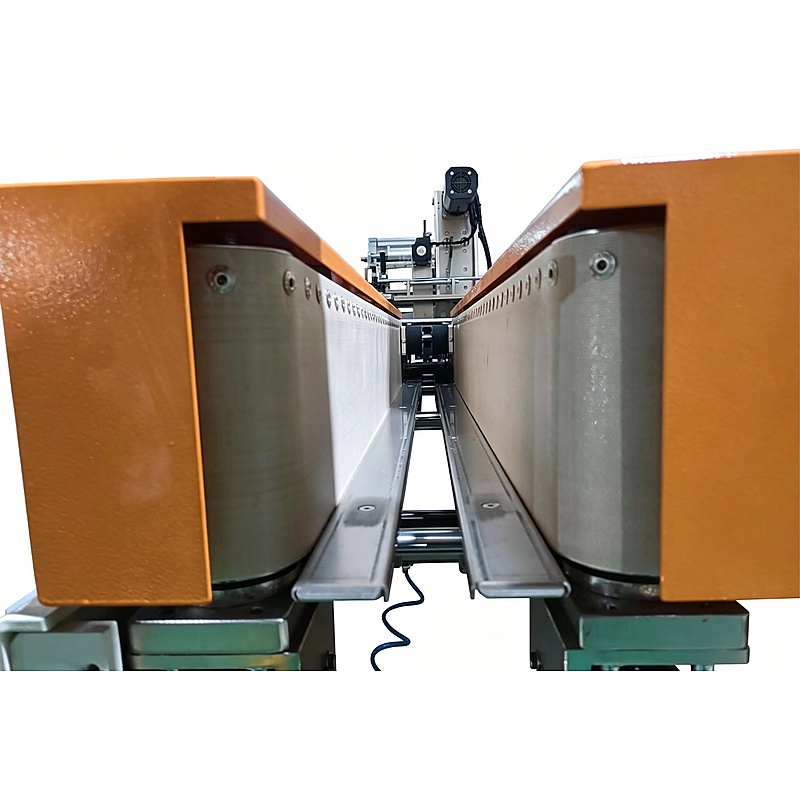
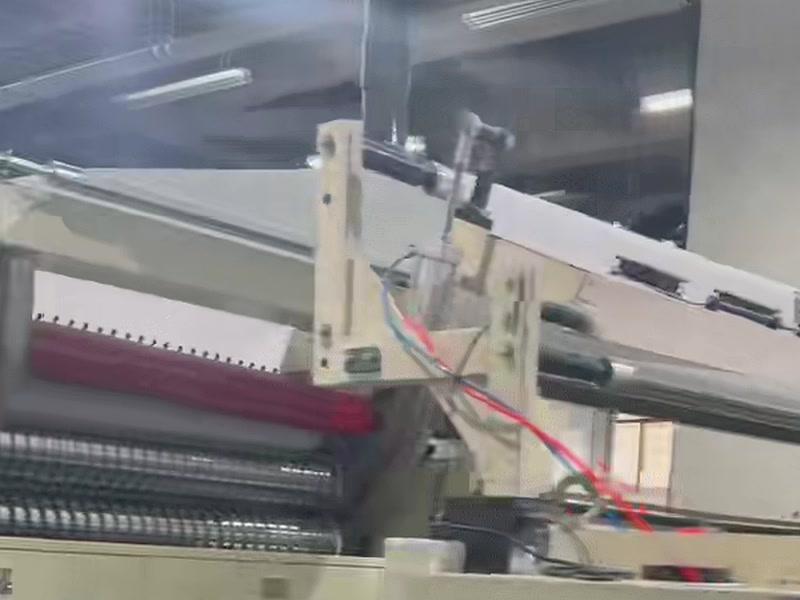
This detail is published in the DB-NK-150P gallery. Visible belts and guides do not establish a pack count, an operating rate or the supplied arrangement for a particular order.
Write the acceptance condition in product terms. It might include the selected pack dimensions, napkin count and agreed wrapper appearance and closure checks. Those criteria must come from the order and reviewed samples. This article does not set a universal packaging-quality standard. Product awaiting a decision should remain held, with its final disposition recorded when that decision is made.
Open and close one elapsed-time interval
Record the start and finish timestamps of a defined observation interval. Elapsed time includes every minute between them. If the buyer also wants running-time output, keep that as a second calculation with its own timing basis. Removing stops from one result while calling it elapsed output makes comparison impossible. A clear report can show both results without asking either to represent the other.
Agree what product is inside the selected boundary when the interval starts. Packs already completed before the start should not enter the new output total merely because they are collected during the interval. Where collection or inspection happens later, identify the observed production group so that its accepted count can be closed after inspection without changing the original timestamps.
The same principle applies at the finish. A partly wrapped item or a stack still at the input is unfinished work at that boundary. State how it is identified and whether it belongs to a later interval. The record should avoid counting it once as work completed during the first interval and again as a finished pack during the next.
Choose the observation duration before seeing its result. A short interval can be useful for a defined question, but it should not later be presented as a whole-shift record. If the intended question includes ordinary replenishment, select a period and observation plan that allow that task to be seen. The appropriate duration belongs in the supplier agreement; it cannot be supplied by the maximum pack-rate figure.
Proposed reporting calculation: accepted individual packs from the identified interval ÷ elapsed minutes in that interval = accepted packs per elapsed minute.
Use this as a manual reporting convention unless the supplier confirms an equivalent machine record. The product page lists detection, control and alarm features, but it does not establish that an automatic counter performs this exact acceptance calculation. A displayed production number needs its counter location and reset behaviour explained before it becomes evidence for the agreed result.
Close the product tally before reporting the rate
Keep accepted, rejected and held packs in separate groups for the selected interval. A held pack is not yet a reject, and it is not accepted output until the decision is made. Preserve the initial tally and record the final movement between groups. This makes a later acceptance decision visible instead of quietly increasing a number in the finished report.
If product is reworked, identify its original group and the later result. Do not count the same pack twice because it crossed an observation point a second time. The useful question is how many distinct acceptable packs the interval produced, with recovery work and its timing disclosed. A recovery result can be reported separately where its completion falls outside the original interval.
Sampling and complete inspection produce different kinds of records. If only a sample is examined, report the sample size, selection method and observed findings separately from the total exit count. Do not call every uninspected pack accepted on the strength of a few attractive samples unless the parties have expressly agreed a disposition method that supports that decision. The count should say what was actually checked.
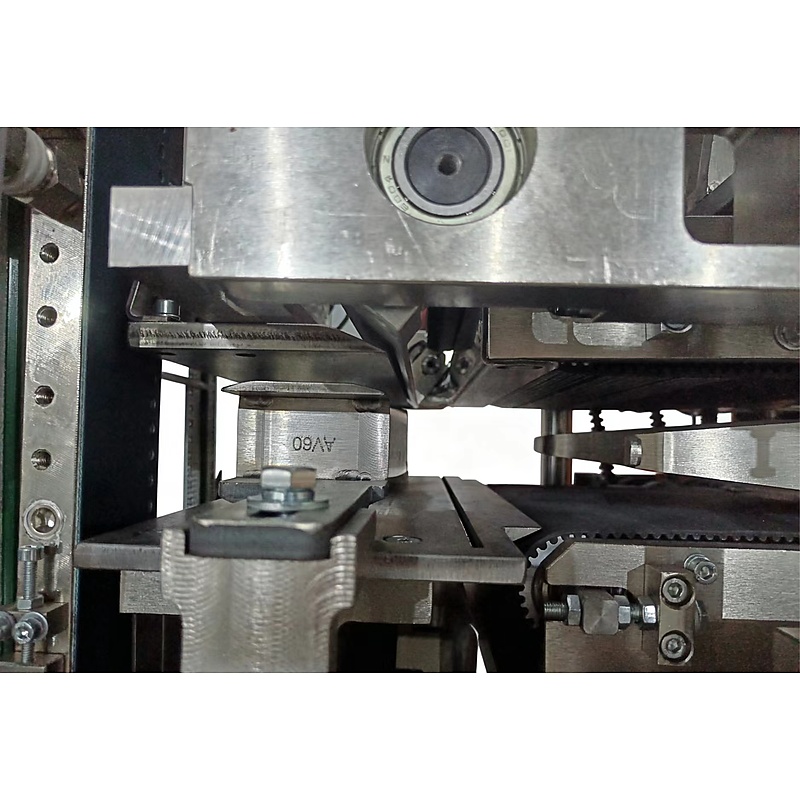
A mechanical detail from the source gallery provides context for the packing equipment. Accepted-output reporting requires observations of the finished packs.
Investigate an unexplained difference between the observed output tally and disposition totals before issuing a rate. Possible recording questions include whether a collection tray contained earlier product, whether one pack was entered twice or whether a held group was omitted. These are checks of the record, not diagnoses of machine behaviour. Retain a note for any quantity that remains unresolved.
Use arithmetic that leaves its assumptions visible
Consider a purely hypothetical ten-minute observation, unrelated to any DB-NK-150P trial. Suppose the identified output group contains 900 individual packs. After inspection, 870 are accepted, 20 rejected and 10 held. The accepted result at that point is 87 packs per elapsed minute. The 90-pack exit rate answers a different question because it includes product that has not been accepted.
If eight of the held packs are later accepted, the report can be revised to 878 accepted packs for that original group, with the later inspection decision dated. Its elapsed production interval remains ten minutes. If new wrapping or recovery work is needed instead, describe that additional work and its time rather than presenting its result as an unchanged original run. The example illustrates bookkeeping; it supplies no performance promise.
A running-time figure would require a separate statement of how much of those ten minutes qualified as running time. It cannot be calculated from the three product totals alone. In particular, do not assume every rejected pack corresponds to stopped time or that every held pack reduces machine speed. Quantity disposition and elapsed-time events are separate observations that may be examined together.
Preserve the result for each interval before calculating a longer-period summary. When intervals differ in length, adding their accepted quantities and elapsed minutes gives a different calculation from taking a simple average of their rates. State which calculation is used. Do not quietly discard the lower result as an exception; retain its conditions and explain any agreed reason for excluding it from a particular comparison.
Keep a short event strip beside the result
Record the start and finish of material replenishment, product waiting, collection delays or other observed interruptions in a simple event strip. Use neutral descriptions of what happened. “No incoming stacks observed” is a different statement from “upstream machine too slow,” which would require more evidence. The event strip explains the time basis without turning a pack-count exercise into an unsupported fault diagnosis.
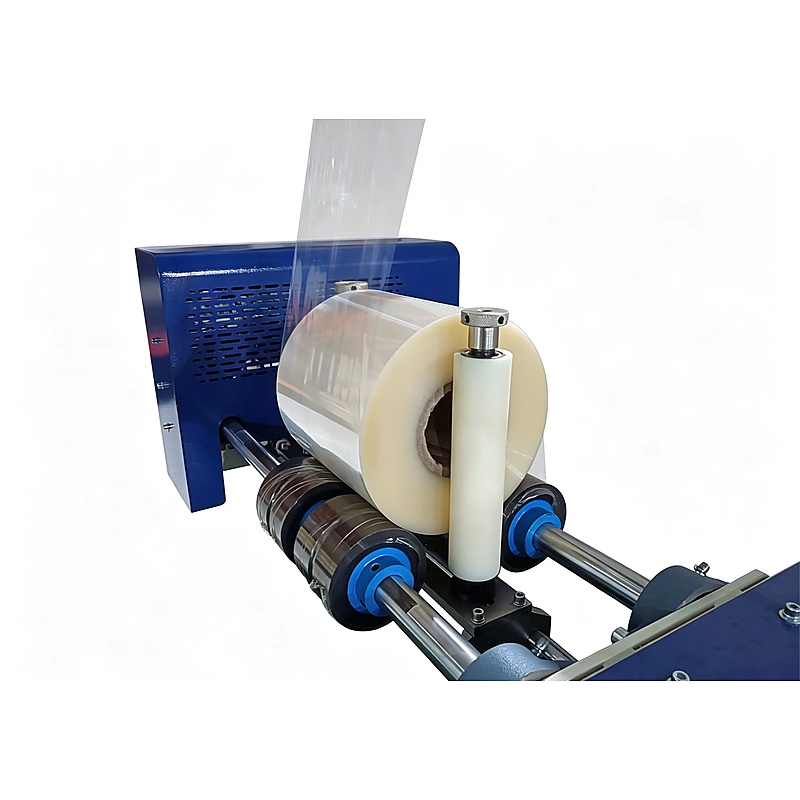
Attach the material identity to the interval. The published wrapping specification is double-side heat-sealable CPP film, 0.04–0.05 mm thick. Identify the actual selected film and pack geometry rather than using that broad specification as proof that all compatible-looking materials give the same output. The supplier should confirm the package and film used for any proposed demonstration.
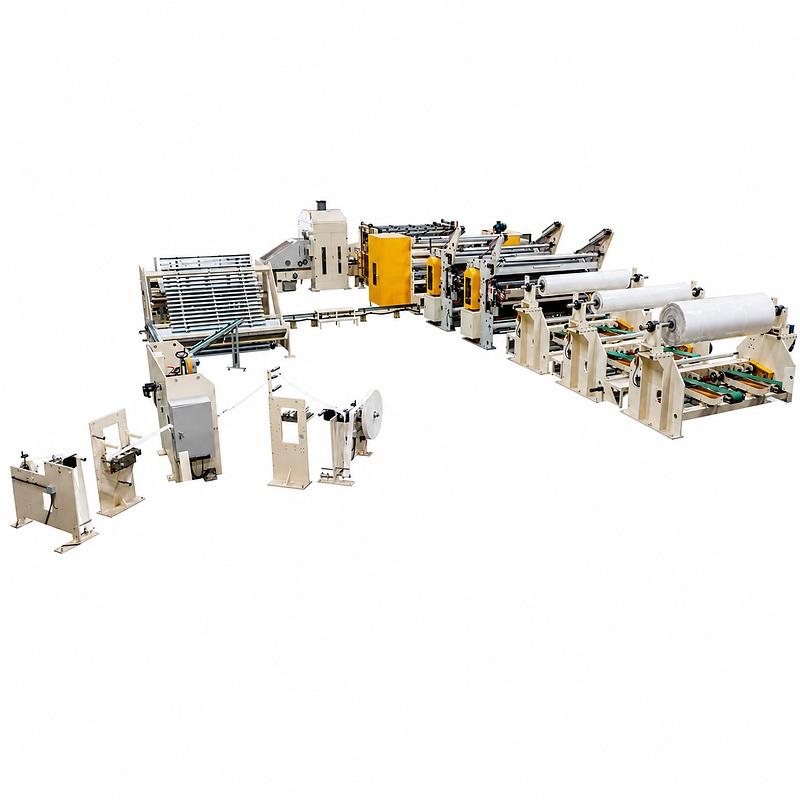
The gallery's film-roll view supports a discussion of material identification. It is not evidence of the CPP grade or output achieved in an observed interval.
When comparing two observations, show differences in product, film, acceptance rule and time basis beside the results. A higher pack count does not by itself establish a better result if one observation leaves more product held or excludes replenishment from its clock. A comparison that preserves these differences can still be useful; it simply needs to explain what has and has not remained the same.
Link a promised output condition to the product revision in the order. If the buyer later changes napkin count, pack height or wrapper presentation, ask the supplier to review the proposed output basis for that revised pack. Retaining an earlier number without its original product definition would conceal the change. A clear record can preserve the earlier result while leaving the new requirement open for confirmation.
For a DB-NK-150P packing-machine enquiry, state the required accepted packs per elapsed minute together with the planned product and observation conditions. Ask the proposed demonstration record to retain raw counts, dispositions and timestamps. The resulting number will then have a defined meaning that purchasing, production and inspection staff can each verify.




 Tel: +8613908196540
 Email: info@doubletissuemachine.com
 MP/WhatsApp: +8613908196540
 Manufacturer Address:Dongguan, Guangdong, China