A bin of paper beside a tissue log saw machine does not tell a converter how much saleable tissue was lost. Some material may be the intended head and tail trim. Other pieces may be complete cut stacks rejected for a separate reason. A useful trim record keeps those streams apart, then shows what remained inside the measurement boundary when the record ended. That distinction matters when purchasing compares proposals, when a trial is reviewed, and when production asks why a waste figure changed.
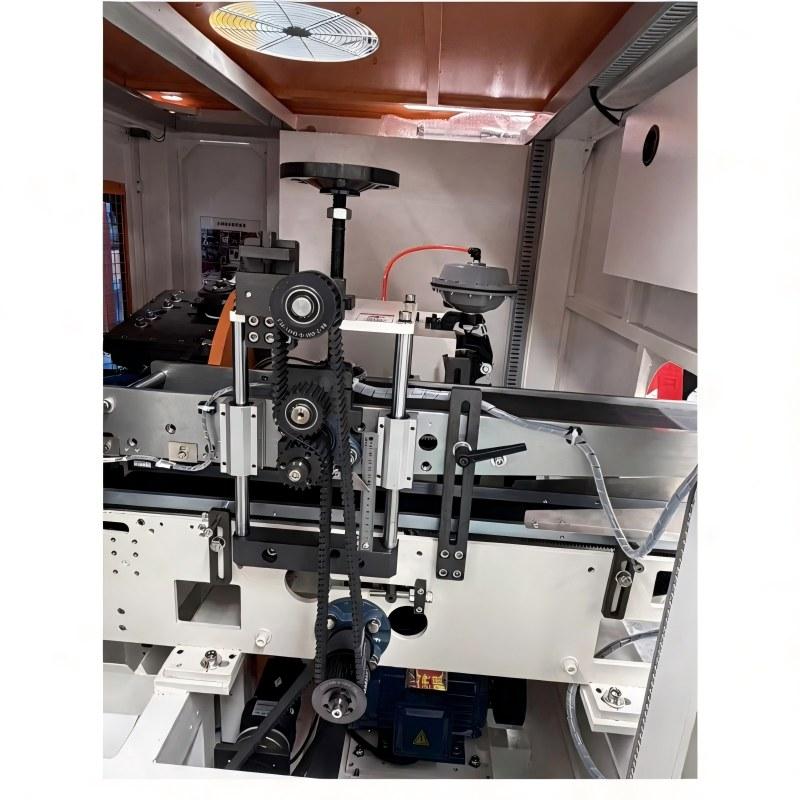
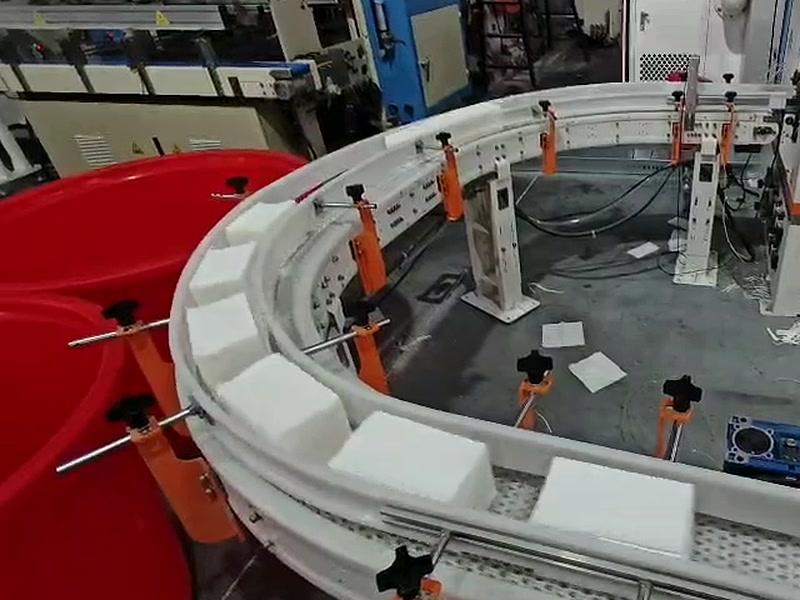
An open-housing detail from the DB-L-320C gallery. It supplies equipment context, not evidence of a particular waste collection arrangement or yield.
Name the material before choosing a percentage
The DB-L-320C tissue log saw description lists automatic head and tail trimming with waste recovery. Its stated application is folded soft-pack facial tissue logs. This establishes a trimming function in the published equipment scope. It does not provide a guaranteed trim allowance, a demonstrated material yield, or an explanation of how a factory should account for every discarded piece.
Give the expected offcuts their own name. These are the end portions deliberately removed under the agreed cutting plan. A full cut stack removed because it fails a product requirement belongs in a different field. Paper brought to the saw already damaged is a third matter. If all three are called “saw waste,” the total cannot show whether the cutting plan, incoming material or subsequent rejection deserves attention.
Classification should describe the material's status, not accuse a component. “Complete stack retained for cut-face review” is useful; “blade caused rejection” is a diagnosis that the record alone may not support. The first wording preserves the observation for technical review without turning an unresolved question into a machine fault.
Material category
What the proposed record identifies
What it should not imply
Planned end trim
Head or tail portion removed under the selected product plan.
Every item collected near the saw is planned trim.
Rejected cut stack
A complete stack withheld against a named acceptance criterion.
The saw has already been established as the cause.
Incoming nonconforming material
Material whose condition was identified before the cutting boundary.
It should silently disappear from the input record.
Unresolved material
Pieces retained until their category can be established.
They can be assigned to whichever category improves the result.
Put the start and finish around one identifiable population
Decide where the accounting boundary begins. For a proposed saw review, it may begin when identified folded logs are accepted at the saw entry and end when cut stacks are handed to the next stage. Mark those points on the review sketch. Material rejected by a later wrapper should not automatically be charged to this boundary simply because it originated from the same tissue batch.
Use a start time, an end time and a product identity. The product identity should lead to the agreed log drawing, target cut dimensions and paper construction. Without that connection, a smaller end trim on one product may be compared unfairly with a different log plan. The record needs to make the reason for a difference visible before a percentage is discussed.
Account for material already inside the boundary at the start and still there at the finish. A partially processed log or a group of stacks awaiting collection does not become a loss when the clock stops. Record that work in progress separately. The same applies to retained samples: a sample taken for inspection has left normal output, but it has not necessarily been rejected.
Identify the containers or collection points used during the review. If old offcuts remain in a container, record the initial amount or use a suitable separately identified collection arrangement agreed by the responsible team. Do not treat an unobserved change in a bin as measured waste from the current product. These are proposed accounting controls, not operating instructions for the saw.
Keep the units compatible with the question
Stack counts can answer a finished-product question. Mass can answer a material question. They are not interchangeable merely because both appear on the same sheet. A weighed collection of irregular offcuts cannot be reported as a number of rejected stacks without an agreed, justified conversion basis. Paper grade, dimensions and sheet count must remain attached to any calculation that depends on them.
If material recovery is being compared by mass, define what is included in each weighing and keep packaging, containers and unrelated paper outside the tissue figure. State the measurement method and any uncertainty relevant to the review. If accepted output is counted as stacks, state the criterion that makes a stack accepted and the location at which it is counted.
Use separate lines rather than forcing incompatible units into one balance. For example, a proposed record may show accepted stacks as a count and collected end trim as a mass, with no combined percentage. That incomplete but honest account is more informative than a precise-looking yield figure built from quantities that do not share a basis.
Write the denominator before reporting a loss proportion. “Trim as a share of input tissue mass” and “rejected stacks as a share of inspected stacks” have different meanings, even if both are expressed as percentages. Name the input or inspected population and the exclusions beside the result. Otherwise, a change in the reporting method can look like a change in the cutting process.
Do not combine end trim from several product plans without retaining their separate records. A total collection weight may be useful for factory material handling, but it will not explain which product generated it. Purchasing needs the product-level basis when discussing a proposed cutting plan; the waste contractor may need an entirely different collection total. Each record should remain suited to its purpose.
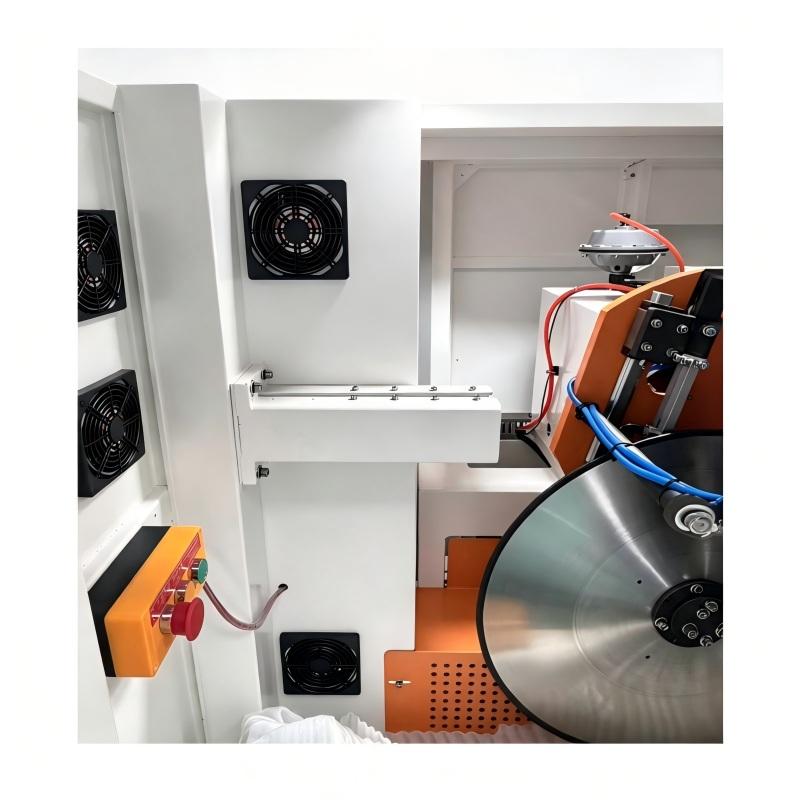
The gallery view shows a circular blade and surrounding housing. It does not establish trim quantity, extraction equipment or the cause of a rejected stack.
Explain exceptions without rewriting the original totals
A retained stack may later be accepted, or a previously unresolved piece may be classified as planned trim. Preserve the initial observation and add its disposition. Removing the original line makes it difficult to understand why the end-of-review figures differ from the first count. A short linked correction is enough; the record need not become a complicated reporting system.
Keep interruptions visible when they change the population being measured. A material change, an incomplete log at the boundary or samples taken for another purpose can affect the interpretation of the totals. Record the event and its affected material. Avoid an explanation such as “normal stoppage” when it hides which tissue was included or excluded.
Reintroduced material also needs an identity. If a retained stack returns to the reviewed output, show the transfer so that it is not counted once when first collected and again when finally accepted. If the review ends before its disposition is known, leave it unresolved. Closing the reporting interval does not require the team to invent a final category.
Agree who may change a classification and what evidence accompanies the change. One reviewer might recognize a piece as a planned tail offcut; another might need the log plan to confirm it. Preserve that supporting reference. A consistent classification rule is more useful for later comparison than a waste total that depends on the judgement of whoever emptied the container.
Do not use the catalogue maximum of 320 cuts per minute as a substitute for material accounting. A cut count is not a count of accepted packs, and it does not reveal the amount removed at the log ends. The published speed and the material record answer different questions. Neither supplies the missing denominator for the other.
Ask what waste recovery actually includes in the order
The phrase “waste recovery” should lead to a scope discussion. Ask the supplier to identify the supplied collection route, the handover point and any equipment provided beyond the cutting unit. Obtain the relevant drawing or equipment list for the quoted build. The brief product description does not establish a dust extraction system, a baler, or a particular external collection installation.
The buyer should also identify who handles the collected material after that handover. A collection container and a factory recycling route are different responsibilities. Record any separately supplied items and the site information required to confirm their arrangement. Photographs of open housings cannot settle that commercial boundary.
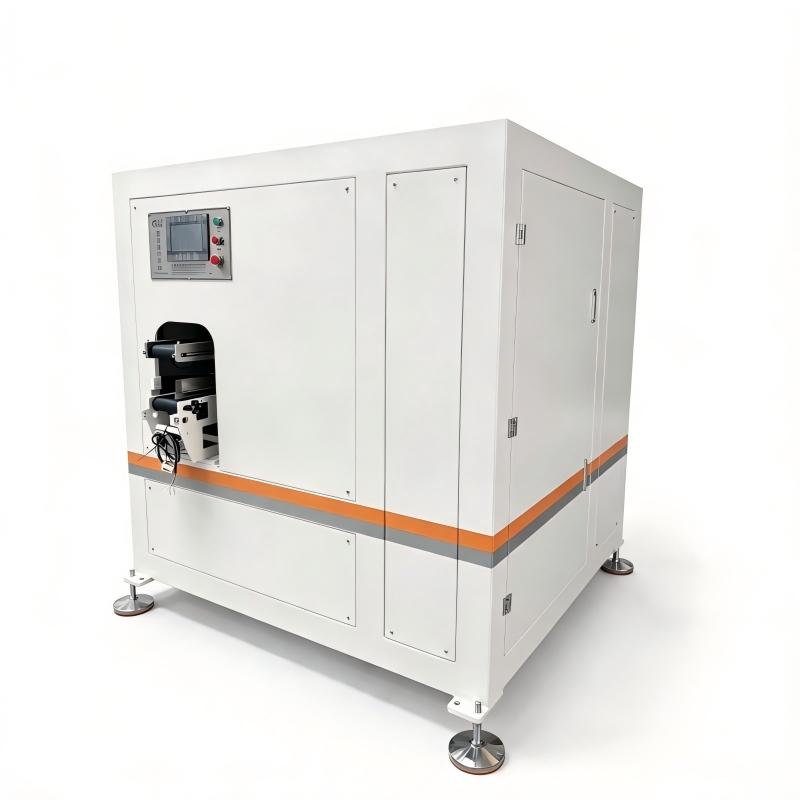
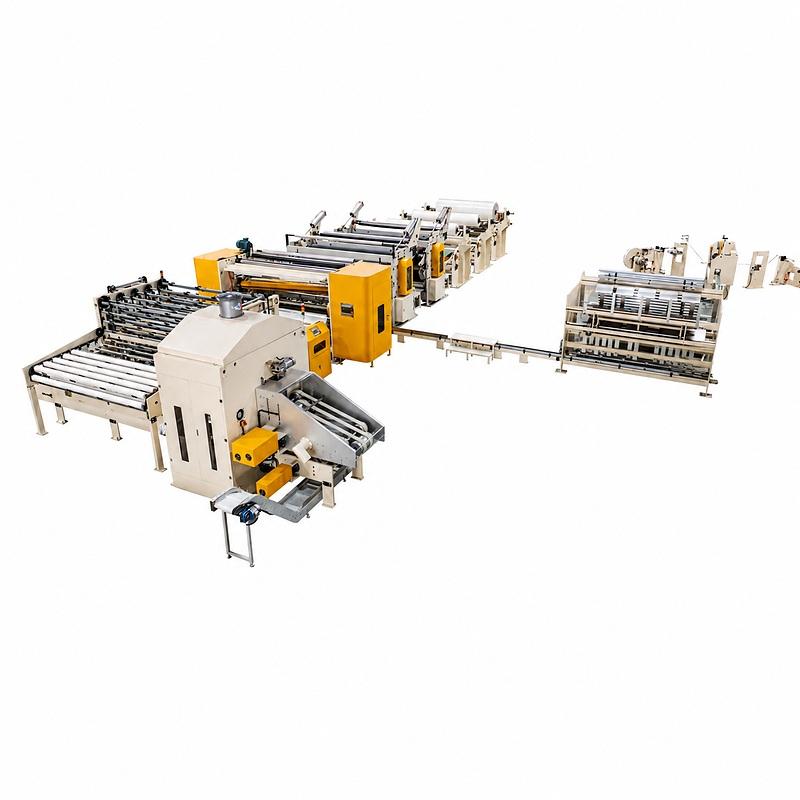
Overall equipment photograph published with DB-L-320C. The supplied recovery route and site handover need their own confirmed documents.
Read the completed record as a material story
A sound review can explain where identified input went: accepted stacks, planned end portions, rejected stacks, retained samples and material still awaiting disposition. It can also show which quantities were measured by mass and which by count. Those explanations should be understandable before anyone calculates a summary result.
When two records differ, first compare their product plans, boundaries and classification rules. Only then investigate the remaining difference with the supplier. A trim record is useful because it narrows the question. It should not conceal an uncertain cause behind a single waste percentage.




 Tel: +8613908196540
 Email: info@doubletissuemachine.com
 MP/WhatsApp: +8613908196540
 Manufacturer Address:Dongguan, Guangdong, China