A box packer can be ordered with hot-melt sealing while its first adhesive supply remains undefined. The equipment description names a process, but purchasing still needs to know which material to buy, who confirms it and what happens when that material changes. Resolve the adhesive as an identifiable consumable for the selected carton and supplied equipment. A bag labelled hot melt does not, by itself, answer those questions.
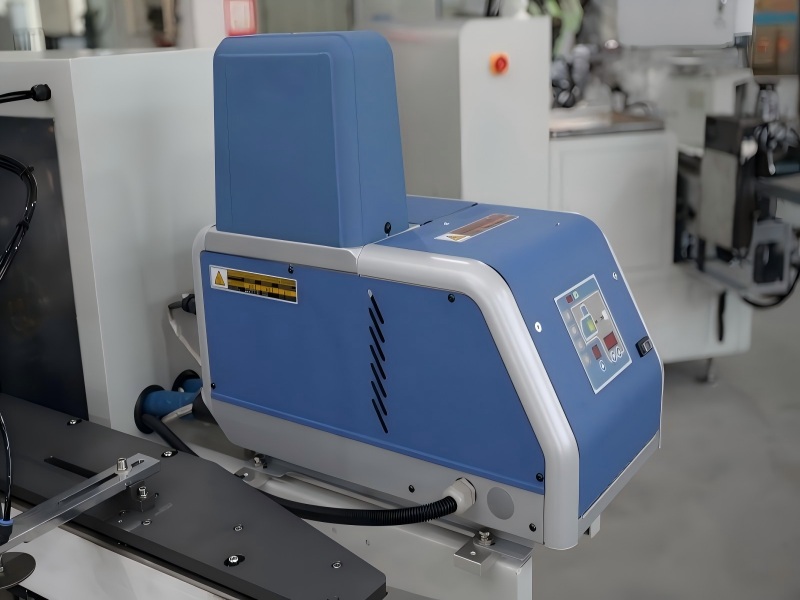
A blue equipment unit and nearby guides in the DB-BF-100B gallery. Its appearance does not identify an adhesive grade, application temperature or approved carton bond.
Hot-melt sealing names the process, not the glue grade
DOUBLE's DB-BF-100B facial tissue box packing machine description includes automatic box opening, tissue loading, hot-melt glue sealing and box output. It gives a separate 4 kW hot-melt-machine rating and 2.7 kW motor rating, with a listed total of 6.7 kW. These equipment ratings do not disclose an adhesive formulation or material consumption.
The reviewed page does not name an adhesive manufacturer, product reference, working temperature, viscosity, bead dimension or glue quantity per box. None should be invented from the phrase hot melt. Request the relevant material and application information from the responsible suppliers for the actual order.
This is a different purchasing item from the carton blank. The carton specification describes what the box supplier delivers. The adhesive specification identifies the sealing material that will be used with that carton and the selected equipment. The two records need to refer to each other without becoming one vague line called packaging materials.
Decide who supplies the first usable adhesive
Ask whether adhesive is included with the machinery delivery, supplied separately by the machinery vendor or bought locally by the customer. An included applicator does not establish that a first production supply is included. State the answer in the commercial scope so that neither party discovers the omission when cartons are ready to run.
If the buyer will source locally, provide the proposed adhesive's exact supplier and product reference to the machinery supplier. Ask what documentation and sample material are required for assessment. A local product described as equivalent needs an identified basis for that comparison; the description alone is not approval.
If the machinery supplier recommends a product, request its purchasing identity rather than only a sales photograph. The buyer needs enough information to order the same material later and distinguish it from another grade with similar packaging. Retain the recommendation with its stated application and any unresolved qualification.
Different organizations may make the recommendation, sell the material and approve its use in the project. Name those responsibilities. Purchasing should know whom to contact about supply, while the technical team should know who must review a proposed replacement. A supplier name without a product identity leaves both conversations incomplete.
When a distributor sells the adhesive under its own item code, ask how that code maps to the material being recommended. Retain the confirmed relationship in the purchase record. Otherwise, an internal stock number can survive while the product behind it changes, leaving the production team with an apparently familiar item and an unreviewed material.
Supply decision
Information worth retaining
Question it resolves
Initial adhesive
Supplier, exact product reference and included supply scope
What will be available for the agreed start?
Application acceptance
Named carton construction, equipment configuration and supplier response
What combination was actually reviewed?
Later replenishment
Ordering identity, delivery identification and substitution route
How will purchasing obtain the same accepted material?
Make the recommendation specific to a combination
An adhesive recommendation should identify the carton to which it applies. Use the accepted carton item and revision rather than restarting its whole blank specification inside the adhesive order. If several cartons are planned, ask which combinations are covered by the recommendation and which still require assessment.
Keep the actual sealing equipment in that discussion. A recommendation for another applicator or another carton construction should not silently transfer to this order. Ask the machinery supplier and adhesive supplier to resolve the relevant compatibility questions together, using their own technical information rather than a general-purpose material claim.
Where a supplier proposes a sample evaluation, agree what materials will be supplied and what question the evaluation is meant to answer. The record should identify the adhesive, carton and equipment used. A sample closed with an unnamed adhesive cannot establish which replenishment product the buyer should purchase.
The commercial team also needs to know whether a recommendation is final or conditional. A material may be suggested for evaluation before it is accepted for routine supply. Preserve that distinction in purchasing records. Calling both states recommended can cause a trial candidate to become the default consumable without a clear decision.
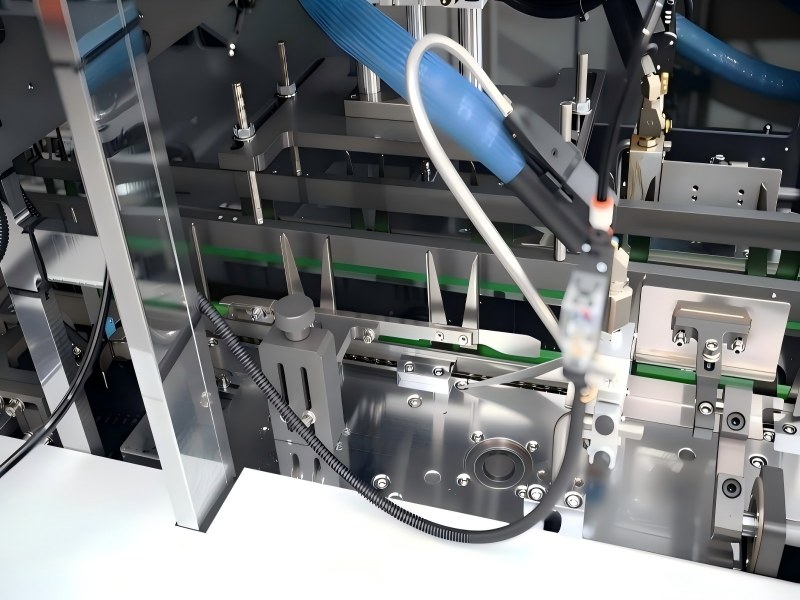
A hose-connected head and conveyor-side mechanisms are visible. This gallery photograph is equipment context, not proof of the material in use or a completed adhesive evaluation.
Obtain material instructions without guessing settings
Request the current technical and handling information for the identified adhesive. The responsible suppliers should specify the information applicable to their material and equipment. This article supplies no melting temperature, nozzle setting or operating adjustment. A number copied from another glue grade could describe a different material entirely.
Keep material handling and machine operation documents identifiable. If the two appear inconsistent, ask the suppliers to clarify the application before treating either document as a complete answer. The operator should not be expected to reconcile an unclear material recommendation through trial adjustments.
Storage and usable-life information also needs the adhesive supplier's wording. Ask how the delivered material should be identified and retained under the conditions relevant to the receiving factory. Do not substitute a generic shelf-life figure or assume every hot-melt product has the same requirements.
The document date matters when a product is revised. Ask which current material document applies to the proposed supply and whether a changed product reference replaces an earlier one. Retaining that answer lets the buyer distinguish an administrative renaming from a material substitution requiring technical review. Neither interpretation should be made from similar trade names alone.
For a first order, agree the form and quantity of material that will actually be delivered. The catalogue power rating cannot be used to calculate this quantity. Starting supply, evaluation supply and routine replenishment can have different commercial purposes; identify the purpose of the order rather than inventing consumption from machine speed.
Keep closure observations separate from product claims
A closed box gives an observable result, but it does not identify why that result occurred. Where closure evidence is requested, retain the material identities and the supplier-agreed examination method. A photograph of a neat seam cannot establish long-term bond performance or attribute a later difference solely to the adhesive.
If a carton is intended for a market with particular material requirements, ask the responsible packaging and adhesive suppliers what documentation applies. The machine's hot-melt process description is not a food-contact declaration, hygiene certification or statement of compliance for the finished package. Keep those claims with the parties and evidence that support them.
Likewise, a preferred package appearance is a buyer requirement rather than a published guarantee that every adhesive will achieve it. Describe the expected closure outcome to the suppliers and obtain their response for the reviewed combination. Do not turn an attractive gallery image into a universal bond specification.
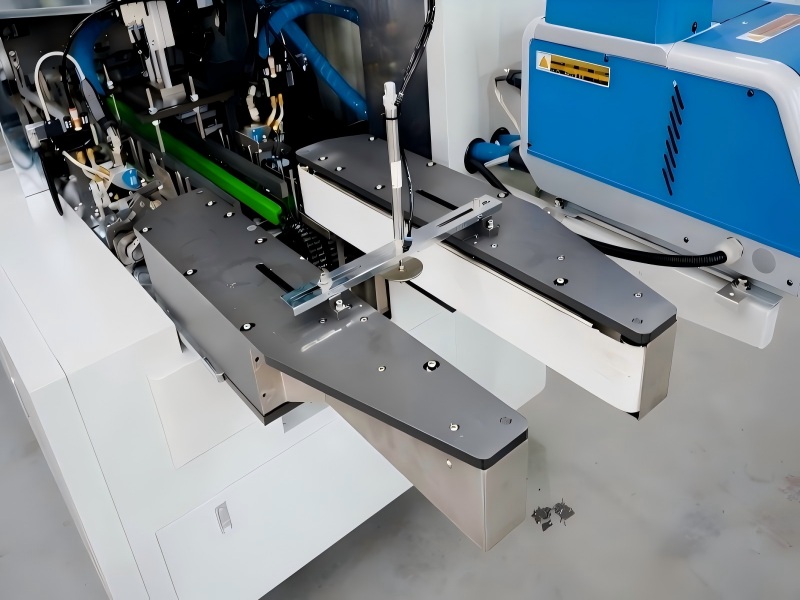
Guides and conveyor equipment in the same source gallery. Carton and adhesive identities must come from the project records, not from the visible colour or shape of these components.
Treat replenishment as a named material purchase
The next adhesive delivery should be ordered against the accepted product reference, not an abbreviated description such as tissue-box glue. Ask the supplier how the delivered identity and batch are shown. Receiving staff then have a definite purchase item to compare with the material that arrives.
A later supplier substitution needs a stated decision path. Retain the proposed alternative's exact identity and refer it to the parties responsible for the application. Similar colour, shape or sales wording does not establish equivalence. Keep uncertain material identifiable while its status is resolved.
Replenishment orders also need an agreed commercial unit. A supplier's package size and the buyer's internal stock unit may differ, even when they refer to the same adhesive. Resolve the ordering quantity from the supplier's actual offer and show the material reference beside it. This is a purchasing clarification, not an estimate of glue used per carton or a recommendation to hold a particular quantity.
Changes can also originate outside the adhesive order. If the carton supplier changes a contact surface or construction, refer that change back to the existing material recommendation. The purpose is to ask whether the accepted combination still applies, rather than assuming the glue remains suitable because its product number has not changed.
For the DB-BF-100B order, a complete adhesive supply decision names the initial material, its supplier, the combination reviewed and the route for later replenishment. That is a usable consumable record. It leaves formulation, settings, performance evidence and material claims with the suppliers responsible for establishing them.



 Tel: +8613908196540
 Email: info@doubletissuemachine.com
 MP/WhatsApp: +8613908196540
 Manufacturer Address:Dongguan, Guangdong, China