Why Finished Tissue Size Varies: A Practical Troubleshooting Guide
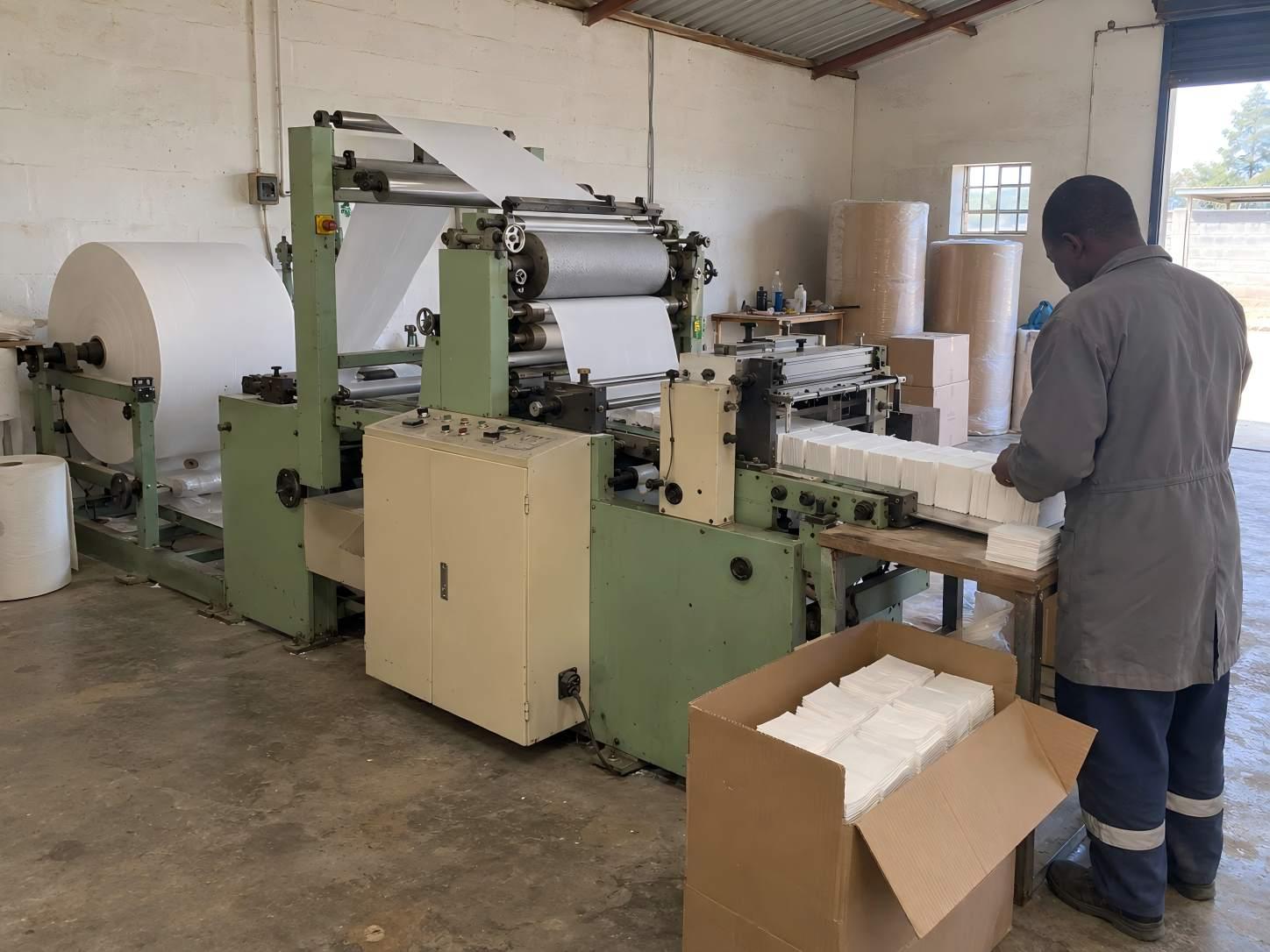
In tissue converting, consistent finished product size is essential for appearance, stacking, and smooth packing. When facial tissue, napkin tissue, hand towels, or toilet paper come out uneven, the cause is usually traceable to a few key areas: paper feeding, web tension, cutting position, folding alignment, or machine synchronization. This guide walks through each check in a logical order so operators can identify and correct the source of size variation.
1. Start With Paper Feeding Stability
If the paper web does not feed smoothly, finished tissue size can change during production. Paper drifting, wrinkling, or slipping all contribute to variation. Before adjusting cutting or folding sections, confirm the feeding path is stable.
Operators should check:
-
Whether the paper is feeding straight into the machine
-
Whether the paper edge remains stable during running
-
Whether the parent roll is wound evenly
-
Whether the paper web slips at any point
-
Whether the feeding section shows abnormal movement or vibration
If the paper is already unstable before cutting or folding, the final size will reflect that instability. Correcting feeding issues first often resolves downstream size problems.
2. Verify Web Tension Consistency
Unstable tension is one of the most common reasons for inconsistent tissue size. If tension changes during operation, the paper may stretch, shrink, or move unevenly before reaching the cutting or folding section.
Check whether web tension is too high, too low, or changing suddenly during machine startup, speed adjustment, or continuous running. Tension that drifts as the parent roll diameter changes can also cause gradual size shifts.
3. Inspect Cutting Position and Timing
For many tissue products, cutting accuracy directly affects finished size. If the cutting position is not stable, product length or edge condition may become inconsistent.
Possible causes include:
-
Cutting timing not synchronized with paper feed
-
Blade position incorrect or shifted
-
Paper feeding speed unstable at the cutting section
-
Product length setting does not match actual output
-
Paper slips just before cutting
If size variation appears mainly in product length, check the cutting and feeding sections first. A simple test at reduced speed can help isolate whether the issue is timing-related.
4. Check Folding Alignment for Folded Products
For folded tissue products such as facial tissue, napkins, or hand towels, folding alignment affects both final size and appearance. Even when paper is cut correctly, a shifted folding position makes the finished product look uneven.
Check whether folding plates, guide parts, and the paper entry position are properly aligned. If the problem appears after changing product size or paper type, the folding section likely needs readjustment to match the new specifications.
5. Evaluate Machine Speed Effects
Some size problems only become obvious at higher production speeds. When the machine runs faster, small feeding, tension, or synchronization issues become more pronounced.
If finished size becomes more stable after reducing speed, the issue may relate to speed settings, tension response time, or machine adjustment. Running a size check at different speeds can help identify whether the problem is speed-dependent.
6. Record Key Production Data Before Contacting Support
When finished tissue size remains inconsistent, recording basic production information helps technical support diagnose the issue faster. Useful information includes:
-
Product type being produced
-
Target tissue size and actual measured variation
-
Running speed at the time of the problem
-
Paper feeding condition and parent roll quality
-
Cutting or folding position settings
-
Photos or videos of the finished products
-
Any recent material or product setting changes
Having this information ready reduces back-and-forth and allows engineers to identify likely causes more quickly.
Need Help With Tissue Size Problems?
If your finished tissue size is not consistent during production, contact DOUBLE Machinery with product photos, videos, and the basic production information listed above. Our technical team can help determine whether the issue is related to feeding, tension, cutting, folding, or machine adjustment, and recommend the appropriate correction.







 Tel: +86 139 0819 6540
 Email: info@doubletissuemachine.com
 MP/WhatsApp: +86 139 0819 6540
 Manufacturer Address:Dongguan, Guangdong, China