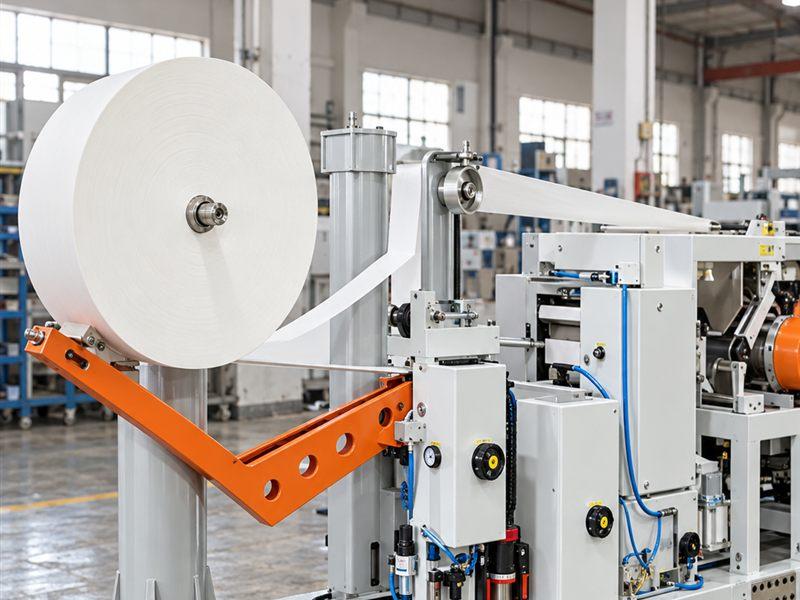
A tissue paper machine should be chosen from the finished tissue back to the process. A folded facial tissue, a dispenser refill, a restaurant napkin and a toilet roll all start with tissue parent rolls, but they require different folding or rewinding paths. DOUBLE's equipment range covers these converting operations and their downstream connections.
Find the branch that makes your product
Facial tissue
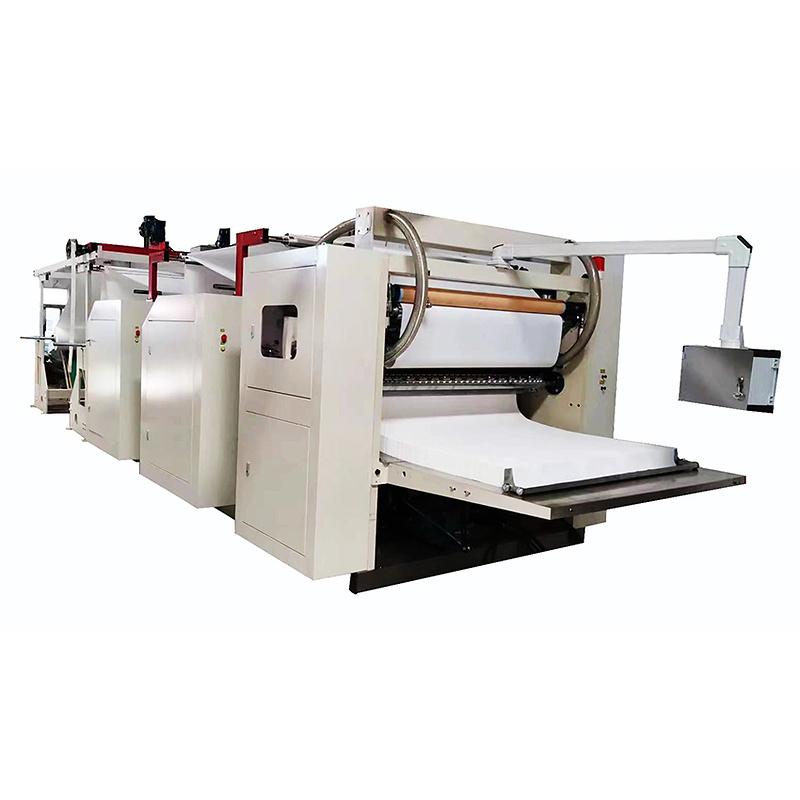
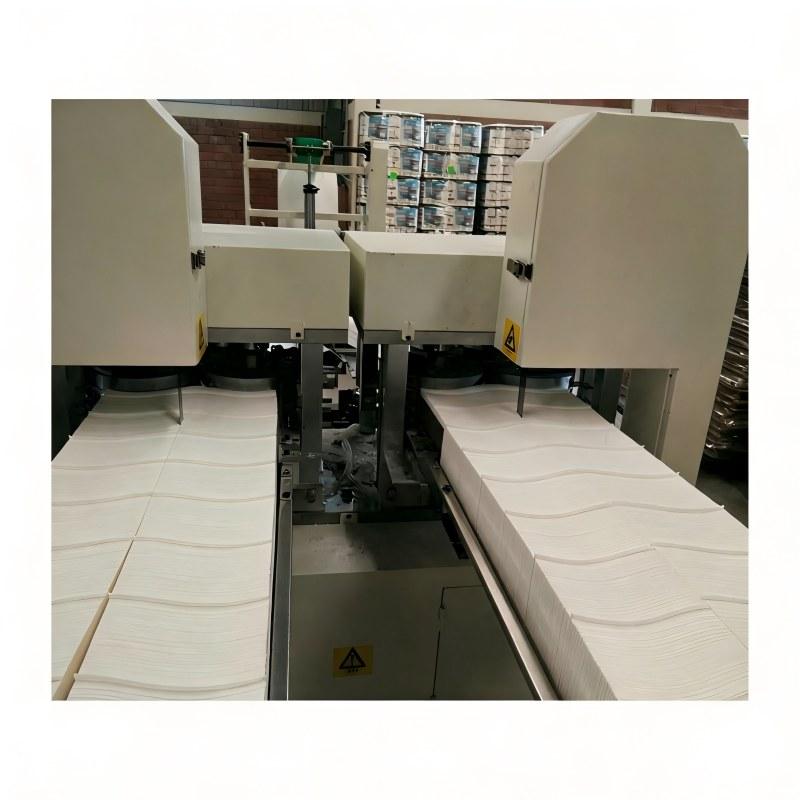
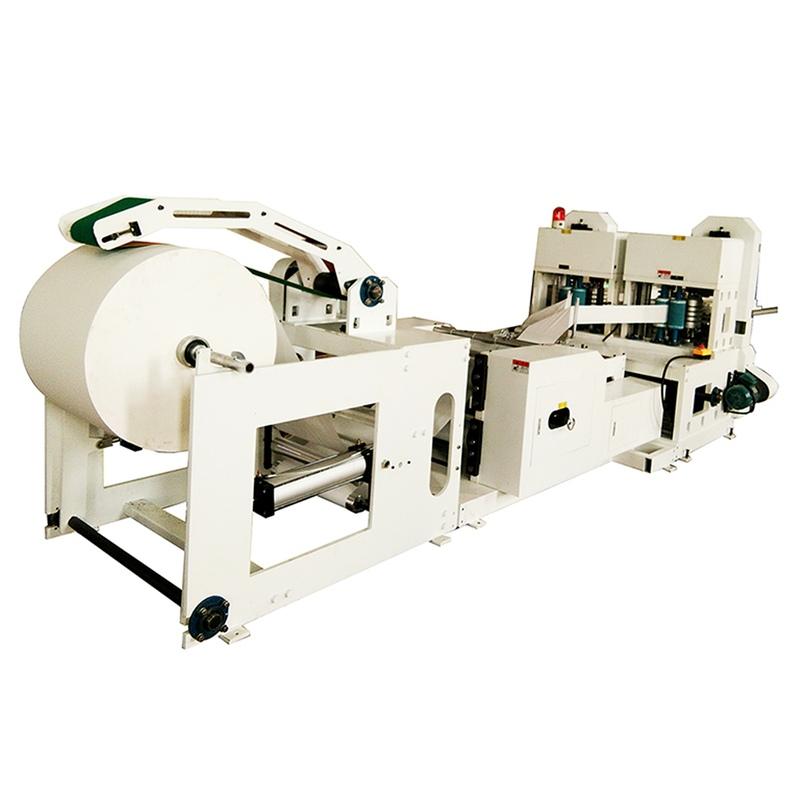
Begin with the fold, sheet dimensions and count. Interfolders prepare the tissue for the agreed cutting and packing arrangement. Explore facial tissue machines, including the V-fold DB-F-V-200.
Hand towels
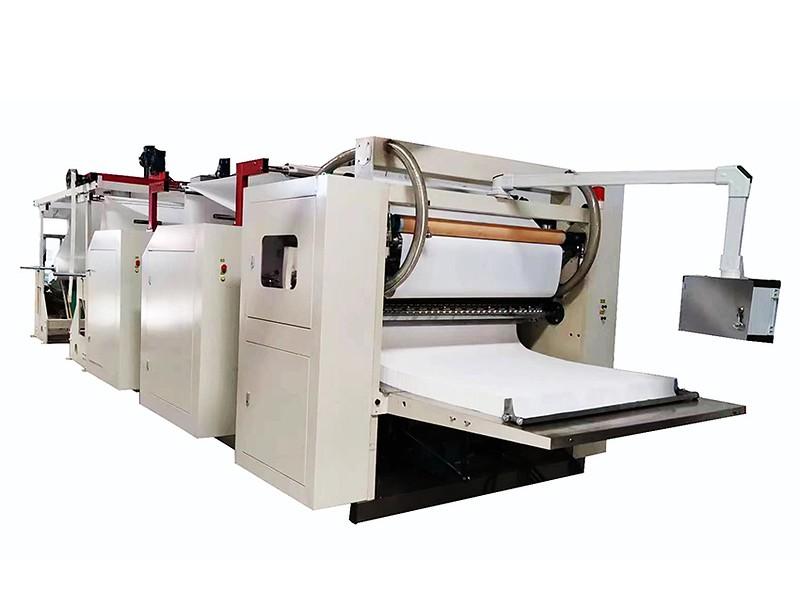
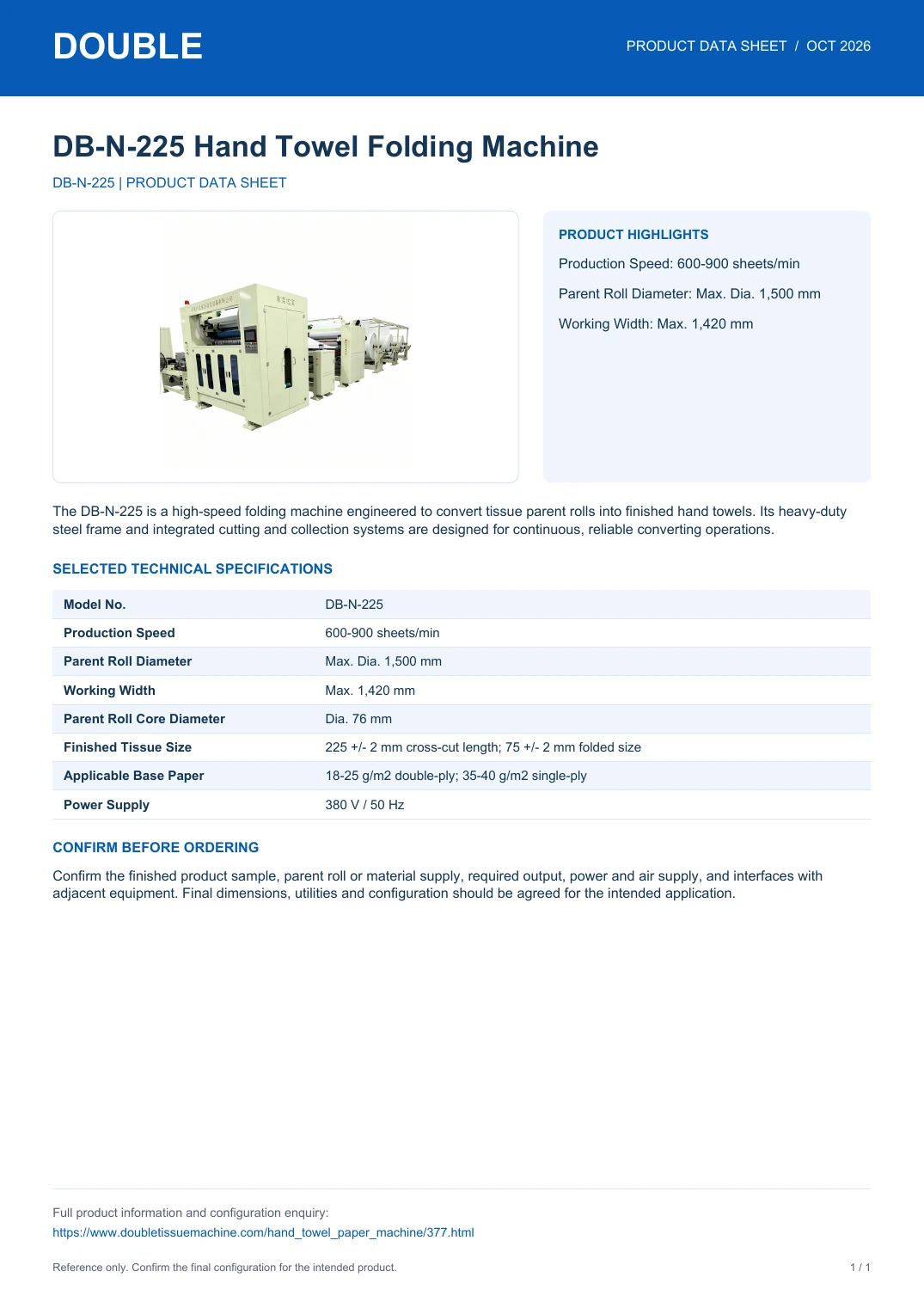
The towel must fit its intended dispenser as well as its retail or refill pack. Compare the C-fold branch and sample-specific folding requirements in hand towel machinery.
Paper napkins
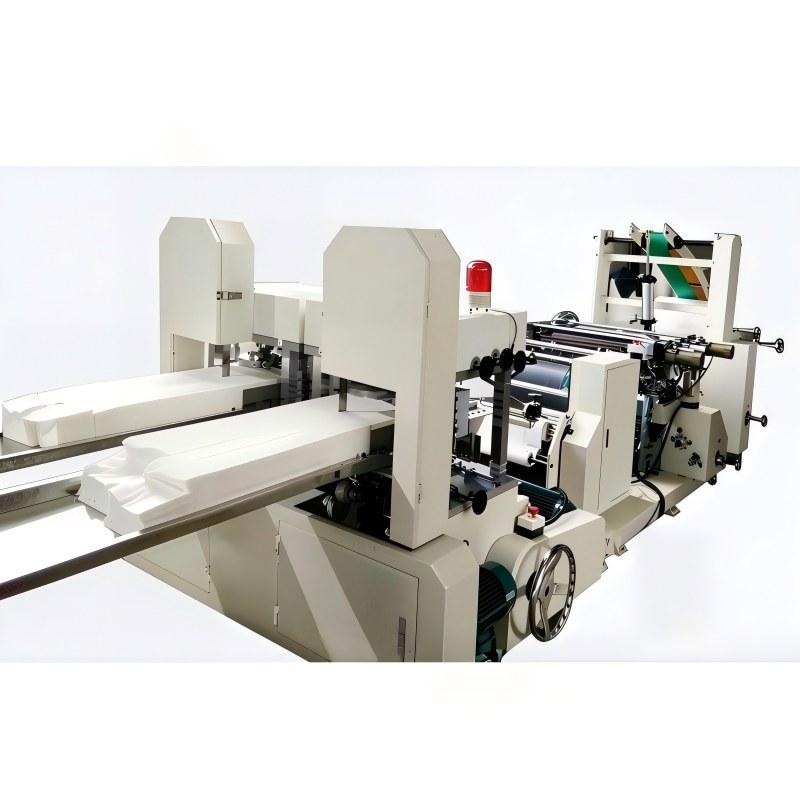
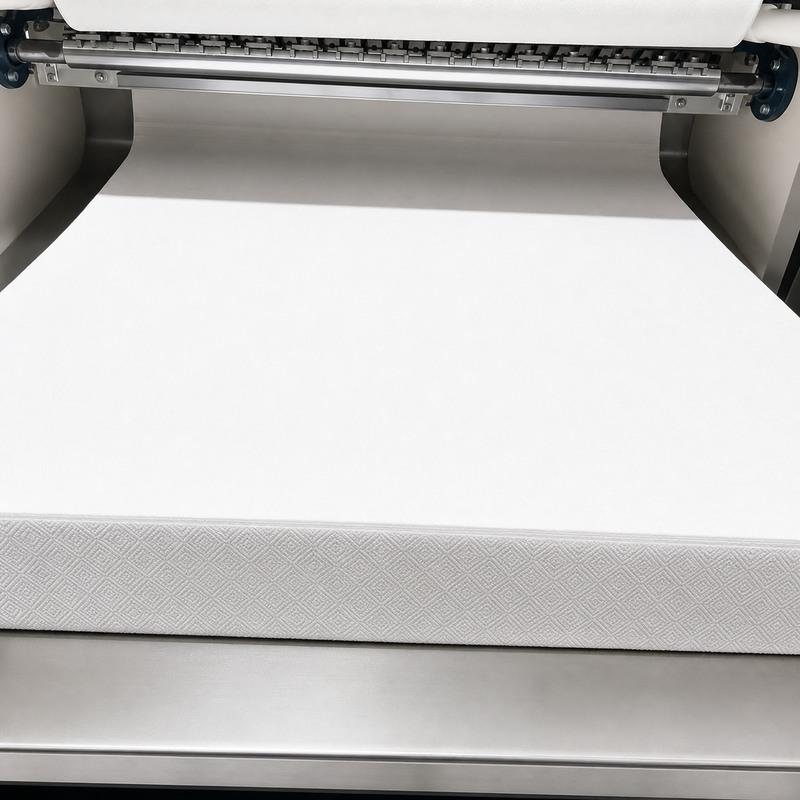
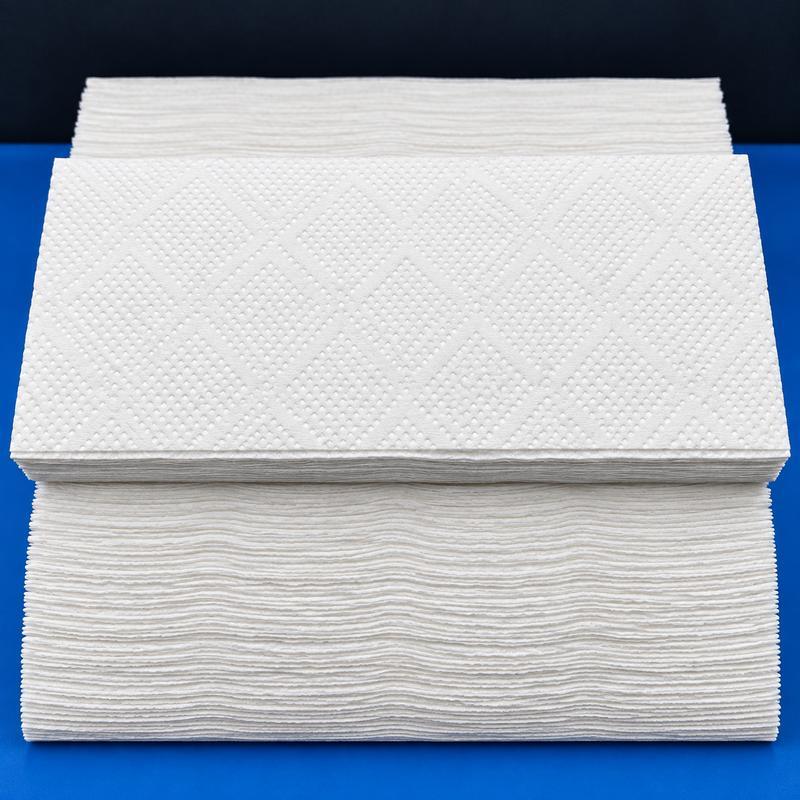
Specify the unfolded sheet, folded presentation and embossing pattern. Napkin converting machines differ in fold options, counting, cutting and output handling.
Toilet tissue rolls
Choose the finished roll and core arrangement first. Toilet tissue rewinders use a different process from sheet interfolders; selected modules shape the roll product and its cutting interface.
A machine quotation and a line quotation cover different work
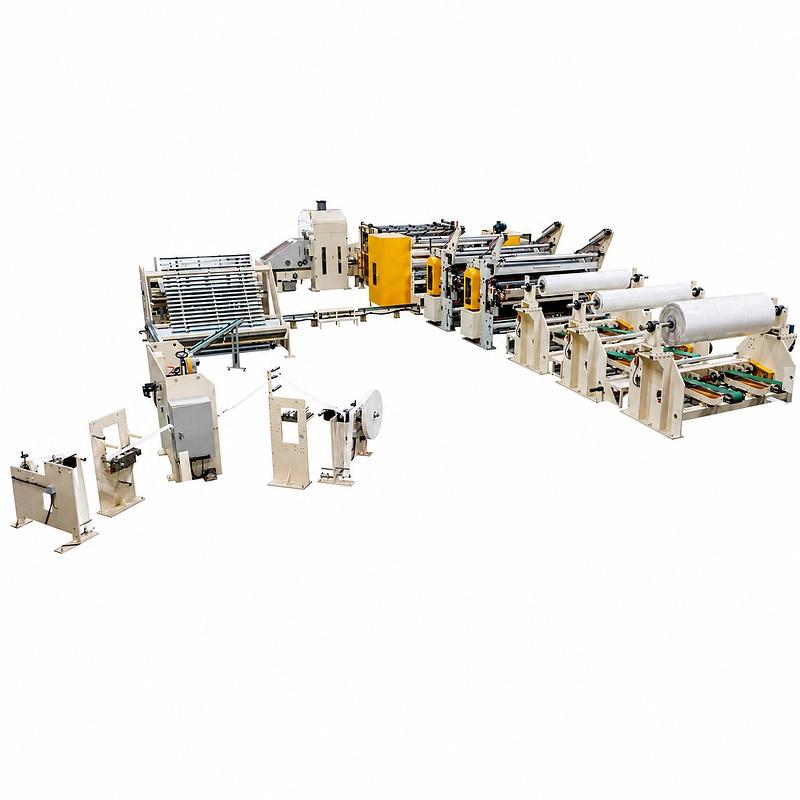
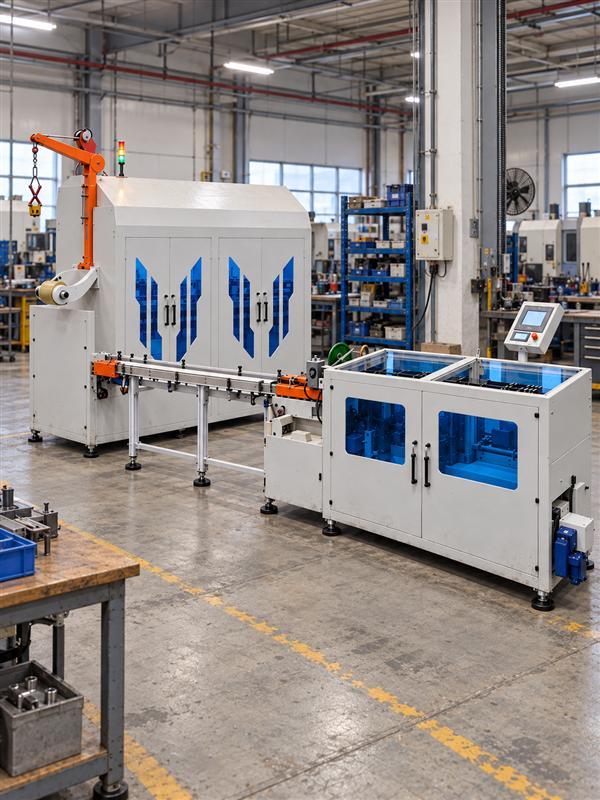
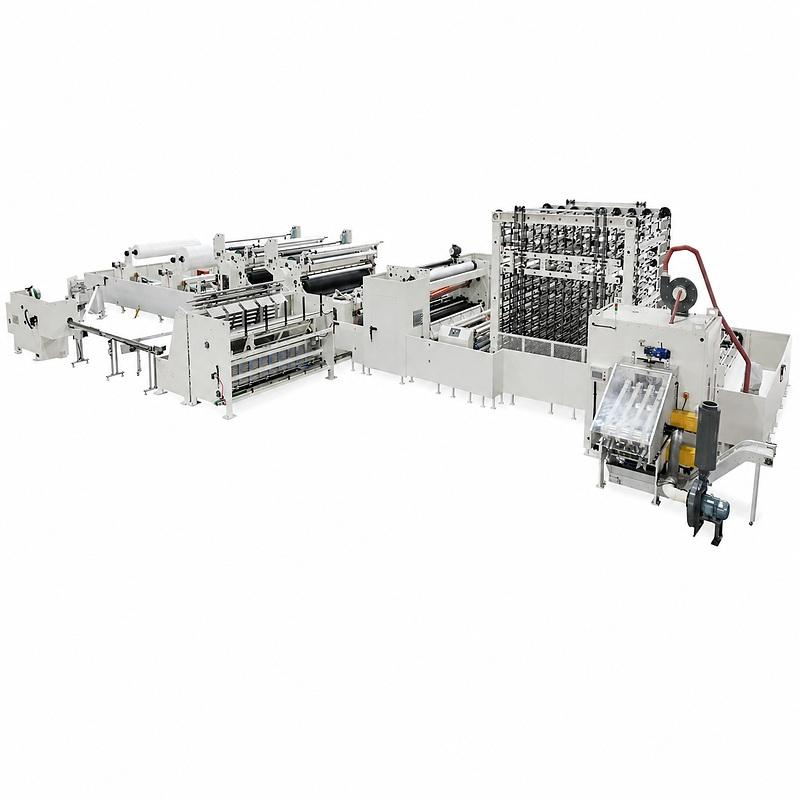
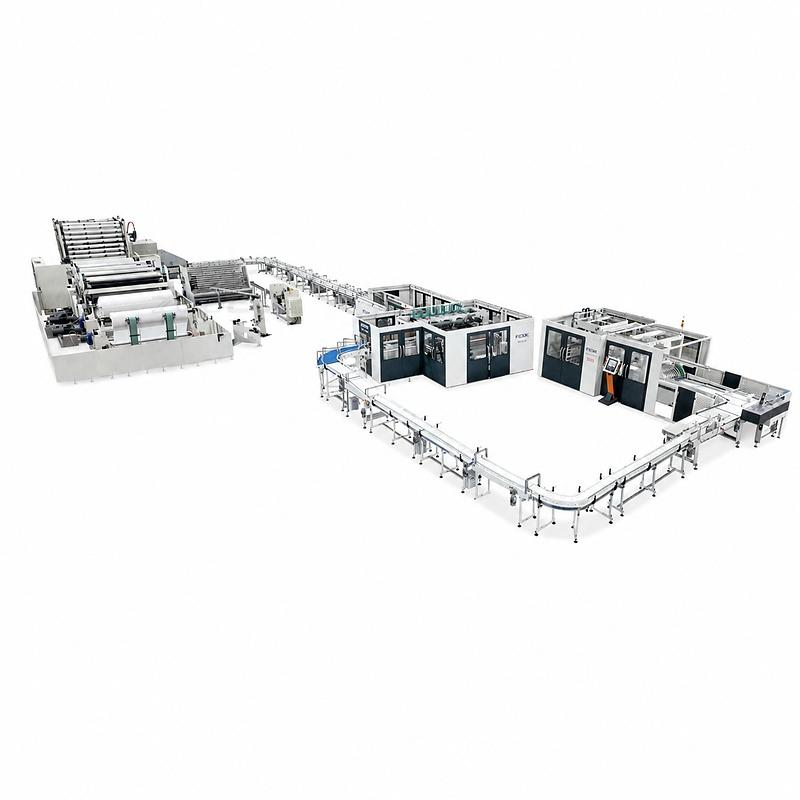
A folding machine's discharge is not automatically a finished retail pack. Cutting, stack transfer, wrapping and outer packing must each have an agreed place in the project. For a connected system, use the tissue converting line guide to define what every station receives and delivers. For film packs or cartons, continue to the packing equipment guide.
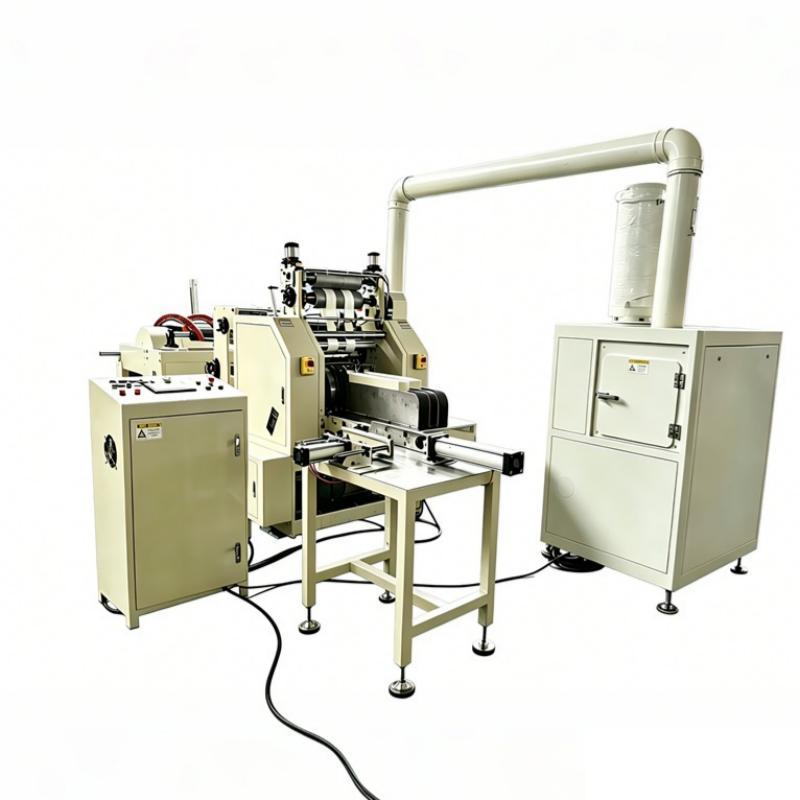
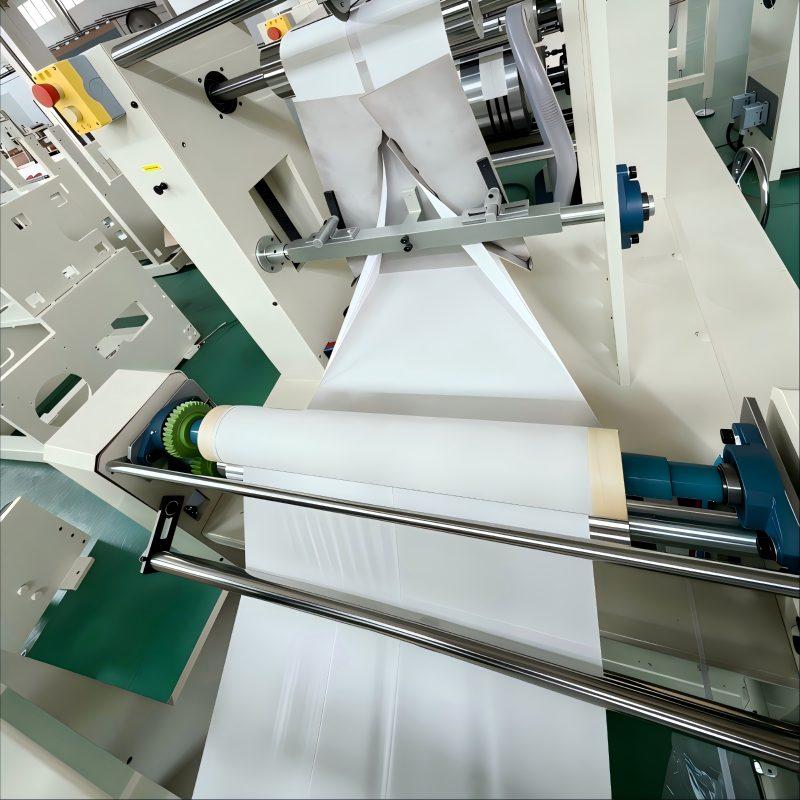
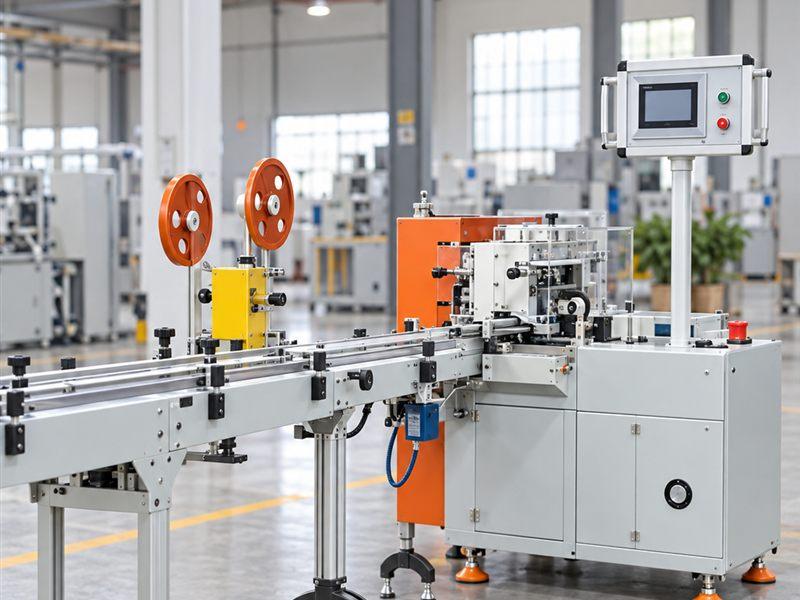
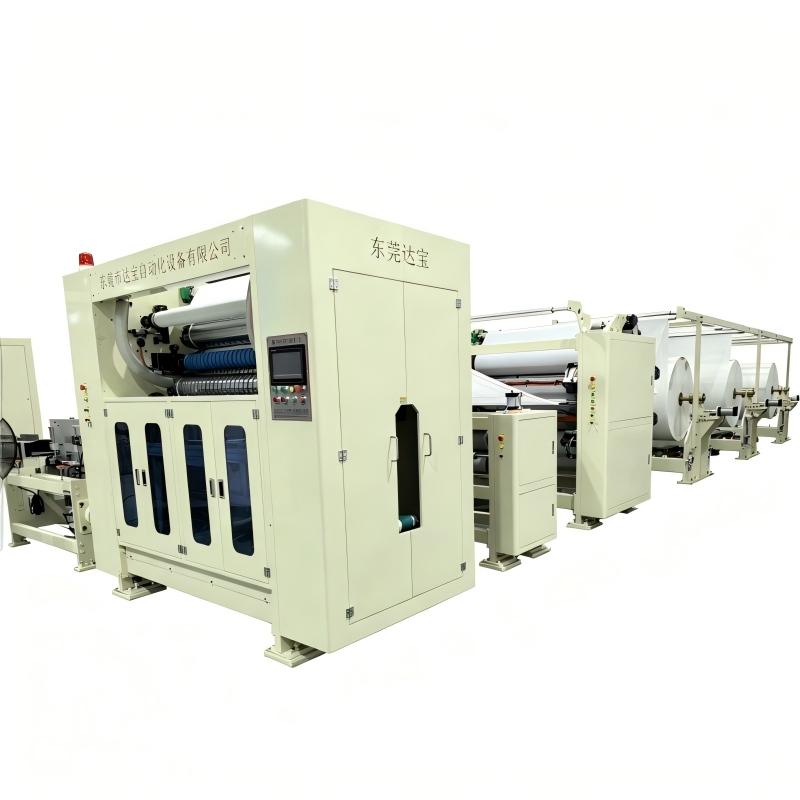
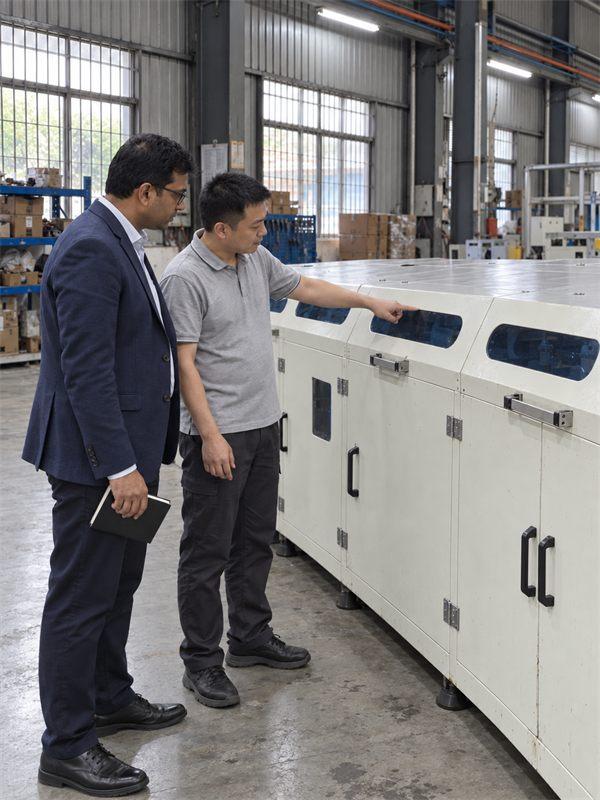
Send a finished sample, parent-roll dimensions, paper basis weight, ply and desired pack format with the output target. State whether the quotation is for one machine or connected stations. The cover photograph shows a hand-towel folding machine, one of the converting branches above.
Read DB-IF-V virgin and recycled paper coverage as an application enquiry, keeping grade identity, material declarations and tissue claims distinct....
Compare published DB-HK-130P and DB-HK-150P power data without mixing models, rating definitions or the connection requirements of the quoted build....
Build a tissue log saw material record that separates planned end trims, rejected cut stacks, retained samples and work still inside the review boundary....
Check which pocket tissue operations an offer includes before adding another packer, separating individual packing, alternatives and downstream scope....
Turn a tissue log saw accuracy figure into a reproducible dimensional record, with agreed reference faces, stack support and boundary-reading decisions....
Build a tissue line parts list by cutting and sealing stage, with supplier item identities, configuration revisions and clear supply responsibilities....
Define one- or two-colour tissue printing separately from embossing. Identify the supplied unit, paper and ink references, design items and recurring materials....
Read napkin machine speed units with the product format and counting scope. Separate web travel, theoretical sheet rate and recorded accepted output....
Compare the DB-N-225 single-ply and double-ply paper ranges while keeping GSM measurement basis, actual layer construction and model-specific limits clear....
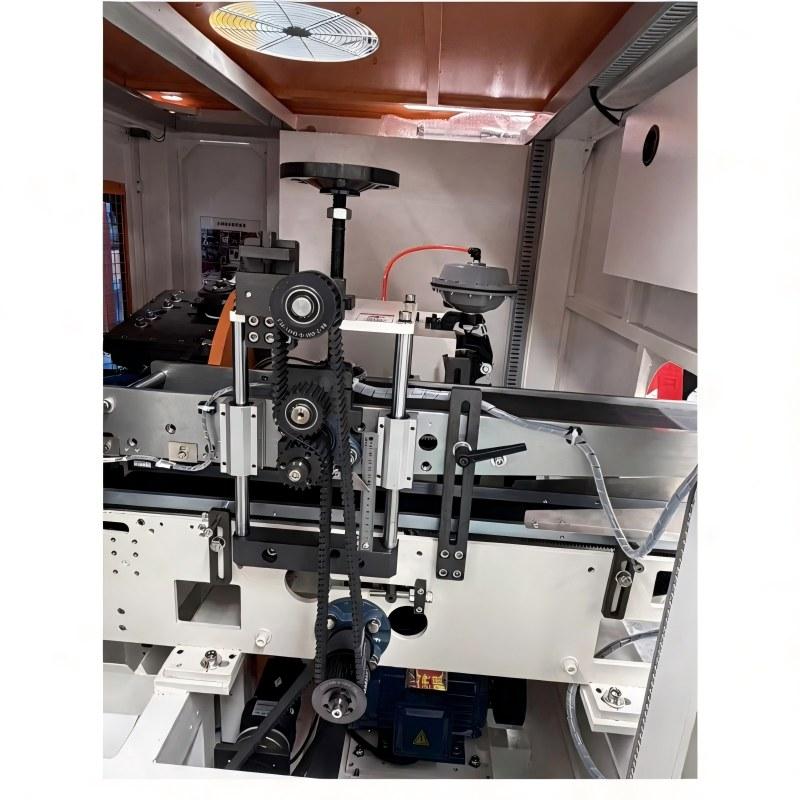
Belt turning conveyor for folded tissue stacks: transfer folded napkins and facial tissue between converting stages with controlled orientation and smooth handoff....




 Tel: +8613908196540
 Email: info@doubletissuemachine.com
 MP/WhatsApp: +8613908196540
 Manufacturer Address:Dongguan, Guangdong, China